 Bellingham Exterior
 Windows Built for Happy Valley's Marine Climate
Happy Valley homeowners deal with a specific combination of weather that most window installers never have to think hard about: salt-laden air off the water, wind-driven rain that comes in sideways for weeks at a stretch, and a moss season that seems to start earlier every year. None of that is exotic if you've lived here a while, but it's exactly the kind of exposure that separates a window installation that lasts twenty-plus years from one that starts failing at year eight. When we talk about custom windows for this neighborhood, we're talking about matching the product, the flashing detail, and the installation sequence to the way water and moisture actually move around a Bellingham house.
"Custom" doesn't mean expensive or unusual shapes — though we do that too. Most of the work is custom-sizing replacement windows to fit openings that were framed decades ago to dimensions nobody uses anymore, and custom-detailing the water management around each unit so it performs correctly in Whatcom County's weather rather than a generic installation designed for a drier climate.
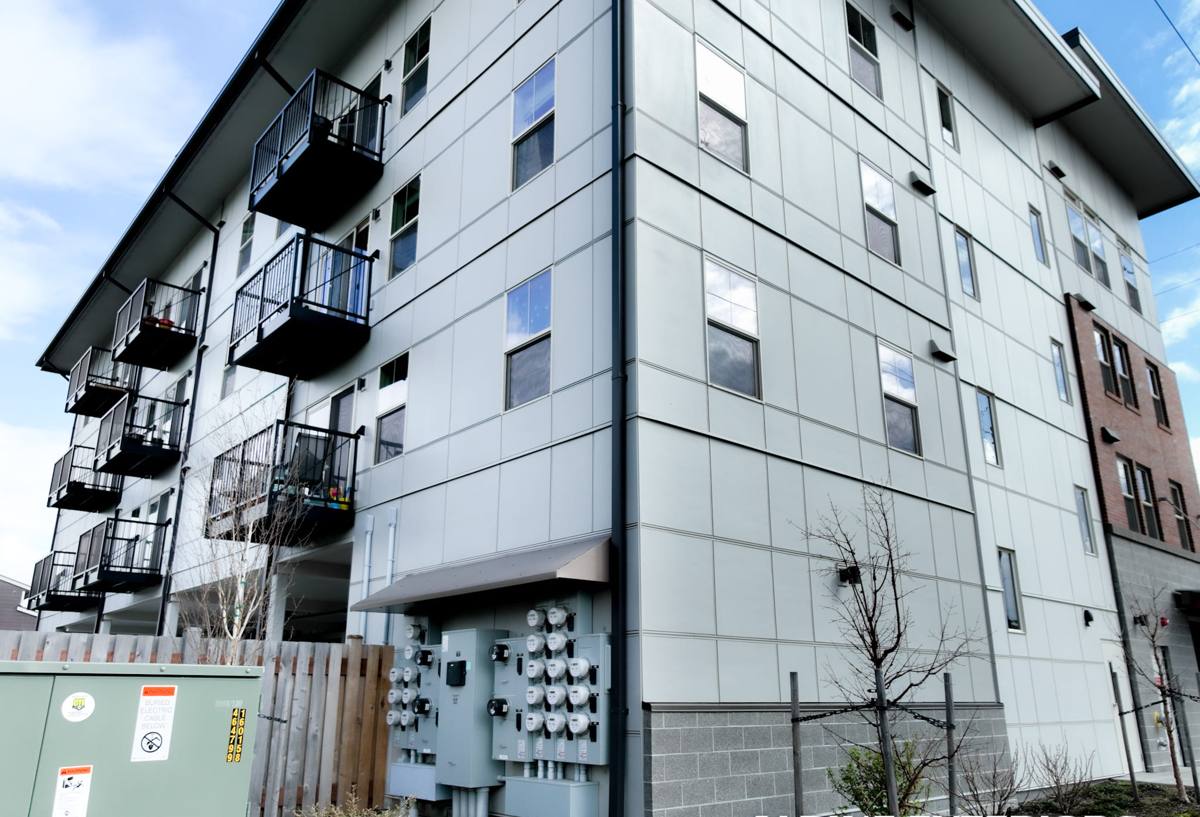
What Bellingham's Climate Does to Windows Over Time
Salt Air and Metal Corrosion
Homes closer to Bellingham Bay and the broader Salish Sea shoreline get a steady, low-grade dose of salt in the air. It's not dramatic like a beachfront property might see, but it's constant. Over years, that salt exposure accelerates corrosion on window hardware — hinges, cranks, locks, and especially uncoated or poorly finished aluminum components. Cheaper hardware finishes chalk, pit, and eventually seize up. This is one of the first things we check on an older window: does the hardware still move freely, or has salt-driven corrosion already started eating into it?
Wind-Driven Rain and Water Intrusion
Whatcom County doesn't just get rain — it gets rain pushed horizontally by wind for days at a time, especially during fall and winter storm systems. A window that's watertight in a light, straight-down rain can still leak under wind-driven conditions if the flashing, sill pan, or sealant details aren't right. Water intrusion around windows is one of the most common hidden damage sources we find in older homes here, often showing up as soft framing or staining well before anyone notices a drip.
Moss, Algae, and Trapped Moisture
Long, wet, mild winters mean moss and algae have plenty of time to take hold on anything that stays damp — window sills, trim, and the gaps around frames where debris collects. Beyond the cosmetic issue, moss and organic growth hold moisture against wood trim and frame material, which speeds up rot in a way that dry climates simply don't have to deal with. Correct detailing around a window — proper slope on the sill, gaps for drainage, durable trim material — is what keeps moss from becoming a structural problem instead of just an eyesore.
Signs Happy Valley Homeowners Should Watch For
Because window failure here tends to be gradual and hidden, it helps to know what to actually look for during a walk around the house:
- Soft or spongy wood at the sill or bottom corners of the frame
- Visible moss or dark staining building up on sills, trim, or the wall just below a window
- Windows that are hard to open, close, or lock — often a sign of corroded or swollen components
- Condensation forming between panes (a sign the seal has failed on a double-pane unit)
- Drafts you can feel near the frame even when the window is fully latched
- Paint or finish peeling specifically around the window opening, not the wall generally
- A musty smell in a room after several days of heavy rain
Any one of these on its own isn't necessarily an emergency, but a few of them together usually means water has been getting past the window assembly for a while.
What a Correct Custom Window Installation Involves
Flashing and Water Management
This is the part of the job nobody sees once the trim goes back on, and it's also the part that determines whether the window leaks in year three. Correct installation means a sloped sill pan that directs any water that gets past the sash back outward, properly lapped flashing tape integrated with the house wrap (not just caulk smeared over gaps), and a drainage path so incidental moisture has somewhere to go instead of sitting against wood framing. In a climate with as much wind-driven rain as ours, skipping or rushing this step is the single biggest cause of premature window failure we see.
Frame Materials That Hold Up
We size and specify frame material based on where the window sits on the house and how exposed it is. A window on a covered porch wall has a very different exposure profile than one facing open weather on the water side of a Happy Valley lot. Material choice, cladding, and hardware finish all get adjusted accordingly rather than treating every opening the same.
Fit and Sizing for Older Homes
A lot of Bellingham housing stock predates modern standard window sizes, which means off-the-shelf replacement units often don't fit without either shimming gaps (bad idea — gaps are where air and water get in) or cutting into the existing framing (also bad, unless it's done deliberately and correctly). Custom sizing means the window is built or ordered to match the actual opening, and the surrounding framing and trim are repaired properly rather than patched around a poor fit.
Choosing the Right Window Materials for This Climate
There's no single "best" material for every home — it depends on exposure, budget, and how much upkeep you want to do. Here's how the common options generally compare for a wet, salt-air, moss-prone climate like ours:
| Material | Moisture Resistance | Maintenance | Typical Trade-offs |
|---|---|---|---|
| Vinyl | Good — won't rot, minimal corrosion risk | Low | Frame flexes less well in very large sizes; color/finish options more limited |
| Fiberglass | Very good — stable in wet/dry cycling | Low | Higher upfront cost than vinyl |
| Wood (clad exterior) | Depends on cladding quality; interior wood needs protection from any leaks | Moderate to high | Best look for period-appropriate homes, but least forgiving of installation mistakes or hidden leaks |
| Aluminum | Prone to corrosion in salt air unless properly finished | Low to moderate | Thermally conductive — more prone to interior condensation in our winters |
For most Happy Valley homes we lean toward vinyl or fiberglass for straightforward replacements, and clad-wood when a homeowner wants to match an older home's original character — as long as the installation detailing around it is done right, since wood is the least tolerant of a bad seal.
Our Process From Estimate to Final Walkthrough
- On-site assessment — we look at each opening individually: exposure, current condition, signs of past water intrusion, and how the home was originally framed.
- Product and material recommendation — matched to that specific window's exposure, not a blanket spec for the whole house.
- Measurement and custom sizing — exact dimensions for each opening, accounting for any framing repair needed first.
- Removal and framing repair — any soft or water-damaged framing gets addressed before the new window goes in, not covered over.
- Installation with full flashing detail — sill pan, flashing tape integration, and air-sealing done to spec, not shortcuts.
- Interior and exterior trim finish — matched to the home's existing finish where possible.
- Final walkthrough — operation check on every window (open, close, lock) and a look at the finished exterior detailing with the homeowner.
Why Local Experience in Happy Valley Matters
A crew that mostly works drier inland climates will often spec and install windows the same way regardless of exposure — because in their normal conditions, they can get away with it. In Whatcom County, that approach catches up with a house within a few wet seasons. Working regularly in Bellingham and the surrounding areas means we've already seen how salt air ages hardware, how wind-driven rain finds the weak point in a poor flashing job, and how fast moss takes hold on trim that doesn't drain properly. That's not theory — it's the pattern we see when we're called out to fix a window that failed early, and it shapes how we detail every installation from the start.
Energy Efficiency and Comfort Considerations
Beyond keeping water out, window performance affects comfort and heating costs through our long, mild-but-damp winters. Double-pane units with a good low-E coating are the standard baseline for this climate; triple-pane can make sense for north-facing or particularly exposed walls, though the added cost doesn't always pay off on every elevation of a house. Proper installation matters here too — a well-built window with a sloppy air-seal around the frame will still feel drafty and lose the efficiency gains the glass package is supposed to provide.
If you're weighing whether it's time to replace windows in your Happy Valley home, or you just want a second opinion on a leak or draft you've noticed, we're happy to come take a look. Reach out for a free, no-pressure estimate — there's a form below to get started.