 Bellingham Exterior
 Deck Building for South Hill's Hillside Lots
South Hill is one of Bellingham's older, more established neighborhoods, and it's built on terrain that flatland suburbs don't have to deal with. Lots slope, tree canopy is heavy in places, and a lot of homes were designed to take advantage of views toward Bellingham Bay and the islands beyond. That's a great setup for a deck — but it also means a deck here has to answer to grade changes, root systems, shade patterns, and drainage in ways a deck on a flat inland lot never will.
We build and replace decks all over Whatcom County, but South Hill jobs get their own read before we ever talk material or design. Slope direction, how much direct sun a spot actually gets through the tree cover, and where water wants to go when it rains sideways off the Strait all shape the plan before a single footing goes in.
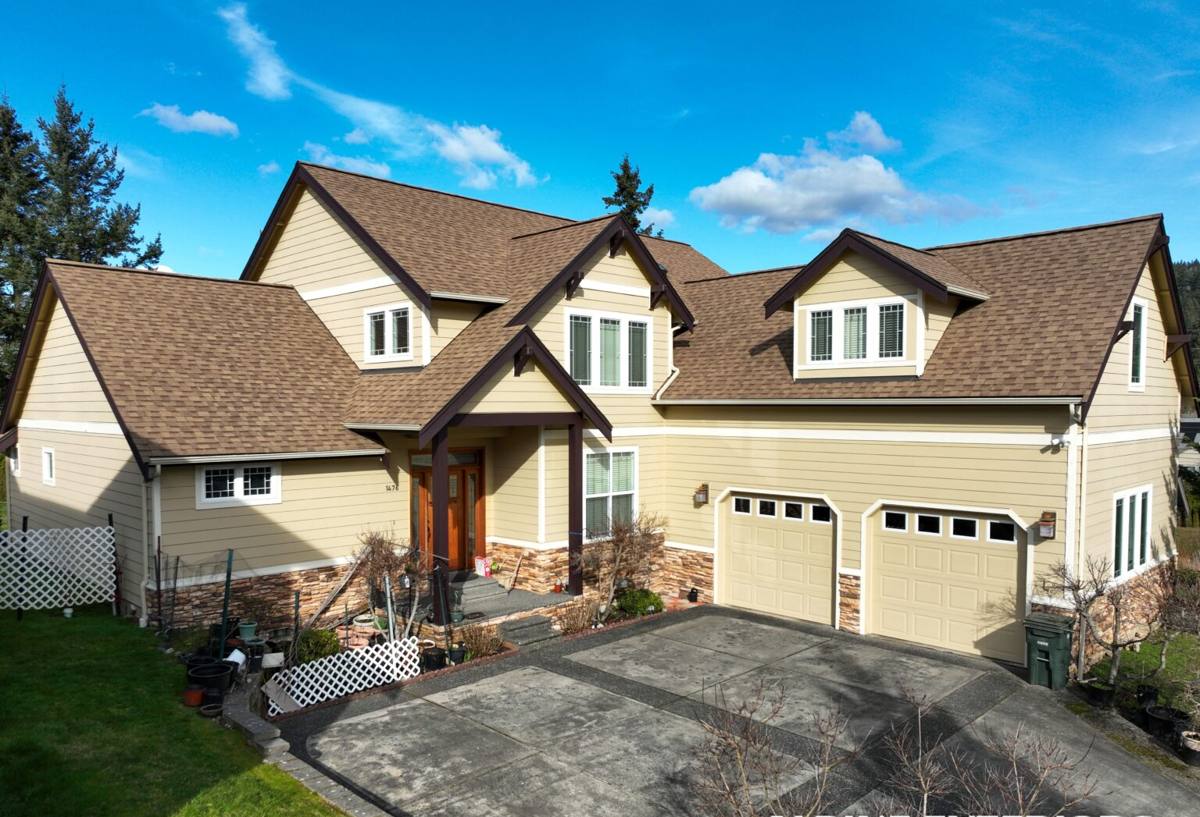
What Bellingham's Climate Actually Does to a Deck
Homeowners moving here from drier parts of the country are usually surprised by how hard the Pacific Northwest is on exterior wood and metal — not because of heat or freeze-thaw cycling, but because of near-constant moisture. Three things do most of the damage on South Hill decks specifically:
- Salt-laden air off Bellingham Bay accelerates corrosion on fasteners, hinges, and any unprotected metal hardware, even a few miles inland.
- Driving rain that comes in at an angle during fall and winter storms gets up under railings, into end grain, and behind ledger boards if flashing wasn't done right the first time.
- A long moss season — shaded and north-facing decks under South Hill's tree cover can stay damp for months at a stretch, which is exactly what moss and algae need to take hold.
None of this means a deck can't last decades here. It means the details that get skipped on a quick, cheap build — flashing, fastener coating, board spacing, drainage slope — are the details that actually matter in this climate. Skip them and you're not looking at a deck that fails from bad weather; you're looking at one that fails from moisture nobody planned for.
Choosing the Right Decking Material
There's no single "correct" decking material for Bellingham — it depends on how much upkeep you want to do and how shaded your specific lot is. Here's how the common options actually perform in this climate, not in a showroom:
| Material | Moisture & Rot Behavior | Moss/Algae Tendency | Upkeep |
|---|---|---|---|
| Cedar | Naturally rot- and insect-resistant, but still needs sealing to stay that way | Moderate — needs cleaning in shaded spots | Annual cleaning and periodic re-staining/sealing |
| Pressure-treated fir/hem-fir | Good rot resistance from treatment; framing-grade lumber, less refined appearance as decking | Moderate to high in shade | Sealing every 1-2 years to prevent checking and graying |
| Composite (e.g., Trex, TimberTech-type boards) | Won't rot or absorb water into the board itself | Still grows moss/algae on the surface in deep shade — it just doesn't damage the board | Periodic washing; no staining or sealing |
Composite has become popular on shaded South Hill lots specifically because it removes rot risk from the equation. But it's not maintenance-free — moss and mildew will still grow on any surface that stays wet and shaded, composite included, so it still needs a wash-down a couple of times a year. Cedar and treated lumber give you a more traditional look and lower material cost, at the price of ongoing sealing to keep moisture out of the wood itself.
Framing Lumber Matters as Much as the Decking
Whatever you choose for the walking surface, the framing underneath should always be pressure-treated for ground contact or better, with hardware rated to match. A beautiful composite deck built on undersized or improperly treated framing is still a deck with a short lifespan — the part you can't see fails first.
Building on a Slope: What's Different Here
A lot of South Hill backyards drop away from the house, sometimes sharply. That changes several things about how a deck gets engineered and built:
- Footings often need to go deeper or be sized differently to reach stable, load-bearing soil on a grade.
- Post heights vary across the same deck, which means beam and post connections need to be engineered for that variation rather than treated as uniform.
- Taller decks trigger guardrail and stair requirements sooner than a low deck would, which affects both design and permitting.
- Water running downhill toward the house has to be directed around and under the deck, not left to pool against the foundation or ledger.
None of this is exotic — it's standard deck-building knowledge — but it's the kind of thing that gets missed by a crew that mostly builds on flat suburban lots and treats every job the same way.
Ledger Attachment, Flashing, and Drainage: Where Most Failures Start
If a deck is going to fail early in this climate, it almost always starts at the ledger board — the piece that attaches the deck to the house — or at fastener corrosion. Both are preventable with the right details:
Ledger and flashing: The ledger needs proper flashing that sheds water away from the house's wall assembly, not just a bead of caulk. Done wrong, rain gets behind the ledger and rots the rim joist and wall sheathing behind it — a hidden problem that's expensive to fix once it's found. Done right, the flashing and any waterproof membrane keep that connection dry for the life of the deck.
Board spacing and slope: Decking boards need consistent gaps for airflow and drainage, and the whole deck surface should have a slight slope away from the house so water doesn't pool or run back toward the wall.
Fastener and hardware coating: This is where salt air makes a real difference. Standard electro-galvanized fasteners corrode faster near the water than most homeowners expect. Here's how the common hardware options compare for a coastal Whatcom County build:
| Hardware Type | Corrosion Resistance Near Salt Air | Typical Use |
|---|---|---|
| Standard galvanized | Lower — can show rust streaking within a few years near the bay | Interior framing not exposed to weather |
| Hot-dip galvanized (heavier coating) | Better — the standard for treated-lumber contact | Structural connectors, joist hangers |
| Stainless steel | Best — holds up longest in salt-air exposure | Visible fasteners, railing hardware, ledger bolts |
Paying a little more for the right coating on hardware you'll never see again after the boards go down is one of the cheapest insurance policies in the whole project.
Permits and Inspections in Bellingham
Most attached decks and any deck built above a certain height above grade require a building permit in Bellingham, along with footing and framing inspections along the way. Guardrails, stair geometry, and graspable handrails are all governed by code once a deck reaches certain heights or step counts. On a sloped South Hill lot, the permit reviewer will also want to see how footings are sized for the actual soil and grade conditions on your property, not a generic assumption.
We handle the permit application and coordinate inspections as part of the job — it's not an upsell, it's just part of building a deck correctly. A deck built without a required permit can create real problems later, from insurance questions to complications when you go to sell the house.
Our Deck Building Process
- Free on-site assessment: We walk the actual lot — slope, drainage, sun/shade exposure, existing structure if we're replacing a deck — before recommending anything.
- Design and material selection: We talk through decking material, layout, and railing options based on your budget and how much upkeep you want long-term.
- Permitting and engineering: We pull the permit and handle any engineering needed for footings, beams, or unusual slope conditions.
- Demolition (if applicable): Removal of the old structure, checked for any hidden rot or damage at the ledger or framing before we build over it.
- Footings and framing: Footings sized for your soil and grade, framing built to the engineered plan, hardware matched to exposure conditions.
- Decking, railing, and stairs: Installed with proper spacing, fastening, and slope for drainage.
- Final inspection and walkthrough: City inspection scheduled, then a walkthrough with you before we call the job done.
Keeping a South Hill Deck in Good Shape Year-Round
A well-built deck still needs some seasonal attention in this climate, especially under tree cover. A simple yearly routine goes a long way:
- Sweep debris and fallen leaves out of board gaps before they trap moisture
- Wash down the surface to remove moss and algae buildup, especially on shaded sections
- Check railing posts and stair connections for movement or loose fasteners
- Inspect the ledger flashing and caulking line for gaps or cracking
- Re-seal or re-stain wood decking on the manufacturer's recommended cycle
- Trim back overhanging branches to improve sun exposure and airflow where possible
- Check under-deck drainage after the heaviest rain stretches of the year
Why Local Experience on South Hill Matters
Deck building isn't complicated in theory, but building one that holds up to salt air, driving rain, and months of shade under a moss-friendly tree canopy takes more than a generic set of plans. A crew that's already worked South Hill's slopes knows how the water moves on these lots, which hardware actually holds up this close to the bay, and how the Bellingham permit process works for this kind of terrain. That experience shows up in the parts of the deck you never see — the flashing, the footing depth, the fastener coating — which are exactly the parts that determine whether you're re-doing this project in eight years or in thirty.
If you're planning a new deck or need to replace one that's showing its age, we're happy to come take a look and walk the lot with you. The estimate is free, there's no pressure attached to it, and you'll get an honest read on what your specific property actually needs — just fill out the form below to get started.