 Bellingham Exterior
 Why Decks in Silver Beach Wear Out Faster Than the Owner Expects
Silver Beach sits along Lake Whatcom, tucked under mature tree canopy that keeps the neighborhood shaded, cool, and green for most of the year. That's part of what makes it a great place to live — and it's also exactly why decks here take a beating that a homeowner in a more open, sun-exposed part of Bellingham never has to think about. Shade means slow drying. Slow drying means moss, algae, and mildew get a head start every fall and don't fully let go until late spring.
Layer on Whatcom County's broader marine climate — driving rain off the Sound, long stretches of drizzle, and humidity that never really disappears — and you get a deck environment that's tougher on wood and fasteners than most manufacturers' warranty language assumes. A deck built for a drier inland climate, or built without accounting for the shade a lakefront lot naturally has, will show its age in half the time.
That combination — moss season, driving rain, and low direct sun — is the reason we treat Silver Beach as its own case, not a copy-paste of a standard Bellingham deck job.
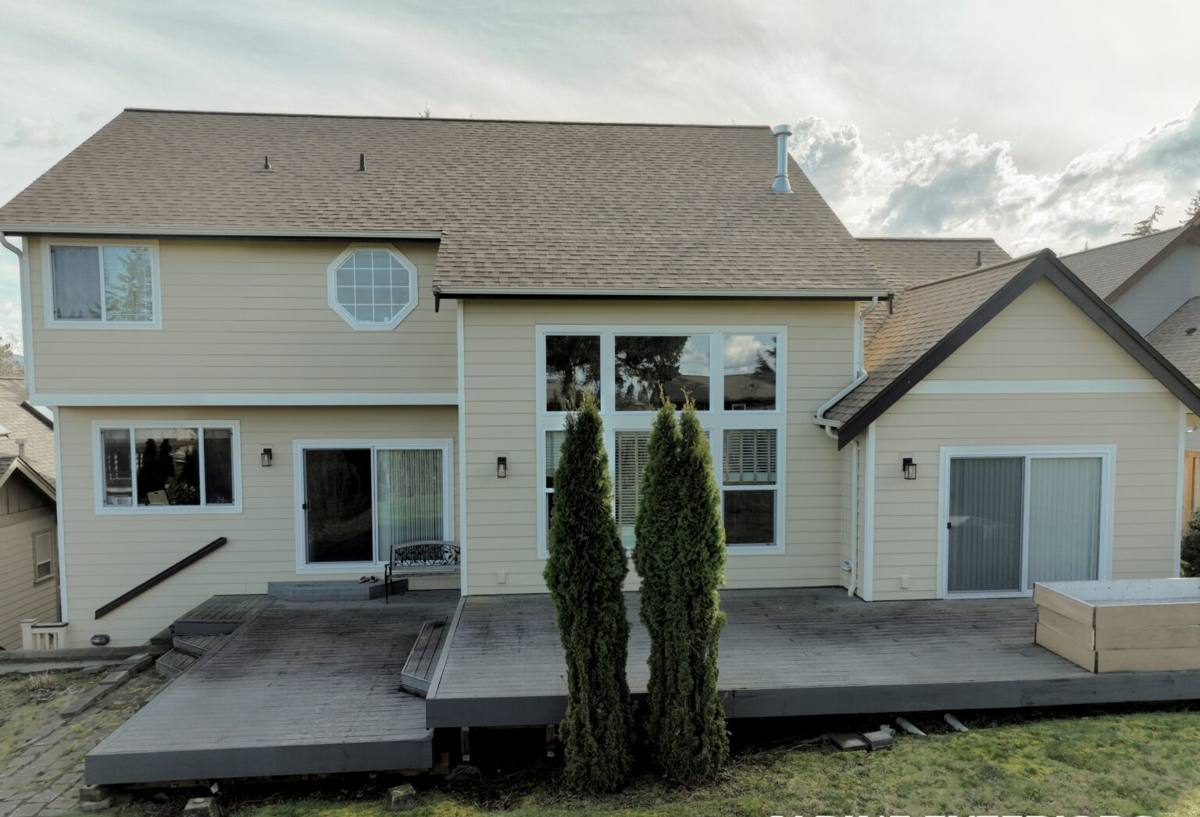
Signs You're Looking at Replacement, Not Repair
Not every tired-looking deck needs to come out. But there's a point where patching boards is just deferring the real cost. Here's how we tell the difference on a site visit:
- Soft or spongy decking in more than a few spots usually means moisture has gotten past the surface, not just stained it.
- Rot at the ledger board (where the deck attaches to the house) is a structural issue, not a cosmetic one — this is the single most common failure point we find on older lakefront decks.
- Rust streaking or loose fasteners tells us the hardware wasn't rated for a wet, shaded environment in the first place.
- Persistent green or black film that comes back within weeks of cleaning means the boards are staying damp longer than they should, which is often a drainage or airflow problem built into the original structure.
- Visible sag or bounce in the frame, even if the decking looks fine, points to joist or footing issues underneath.
If the problems are cosmetic and isolated, repair makes sense. If they're structural or widespread, replacement is the honest recommendation — and it's usually more cost-effective than repeated repairs over a few years.
Choosing Materials for a Shaded, Lakeside Lot
Material choice matters more in Silver Beach than in a sunnier part of town, because whatever you choose will spend more time wet and shaded than the marketing photos ever show. There's no single "best" decking material — there's a best fit for your budget, your maintenance tolerance, and how much direct sun your specific lot actually gets.
| Material | How it handles shade & moisture | Maintenance | Typical lifespan here |
|---|---|---|---|
| Pressure-treated wood | Prone to moss and algae in shaded areas; needs airflow underneath to dry properly | Annual cleaning, periodic staining/sealing | 10–15 years with upkeep |
| Cedar | Naturally rot-resistant but still needs to dry between rains; shade slows that process | Regular cleaning and refinishing to hold color and resist moss | 15–20 years with upkeep |
| Capped composite | Won't rot, but can develop surface mildew film in deep shade — cleanable, not structural | Occasional washing, no staining or sealing | 25+ years |
| PVC decking | Fully synthetic, most resistant to moisture and organic growth, doesn't absorb water at all | Lowest maintenance of the group | 25–30 years |
We're honest with clients about wood: it can look great in Silver Beach, but it demands more consistent upkeep than most people expect once shade and lake humidity are in the mix. If low maintenance is the priority, a capped composite or PVC board earns its higher upfront cost over the life of the deck. If you love the look and feel of real wood and are willing to clean and refinish it on a schedule, cedar performs better in these conditions than standard pressure-treated lumber.
What We Won't Do
We don't install decking or fastening systems that require regular inspection access we can't guarantee, and we don't recommend hidden fastener systems on shaded, high-moisture sites without ventilation gaps built into the frame — trapped moisture under the boards is the fastest way to shorten a deck's life, regardless of brand.
What a Correct Replacement Actually Involves
The decking boards are the part everyone sees, but the frame underneath is what determines whether the new deck lasts 10 years or 25. On a Silver Beach replacement, we pay particular attention to:
Footings and Posts
Older decks on sloped, tree-shaded lots were sometimes built on footings that were undersized or set too shallow for the soil conditions common near the lake. We check depth, bearing, and drainage around each footing before deciding whether existing posts can be reused.
Ledger Attachment
This is the connection between the deck and the house, and it's the most common point of hidden rot. We install proper flashing to keep water from tracking behind the ledger and into the house framing — a detail that's easy to skip and expensive to ignore.
Joist Spacing and Airflow
In a shaded lot, the gap between the ground and the deck framing needs to allow real airflow, or the underside of the deck stays damp long after a rain has passed. We space and orient joists to help the structure dry out between storms, not just hold weight.
Fasteners and Hardware
We use corrosion-resistant hardware rated for continuous wet exposure, not general-purpose fasteners. In a moss-season climate, the wrong screw or bracket rusts and stains the decking within a couple of years.
Permits, Setbacks, and Railing Requirements Near the Water
Deck replacement in Bellingham typically requires a permit once the structure is rebuilt beyond minor repair, and lakefront or near-shore properties can carry additional setback or shoreline considerations depending on the parcel. Railing height and baluster spacing also follow current building code, which matters most on elevated decks common on Silver Beach's sloped lots. We handle the permit application and inspection scheduling as part of the job — you shouldn't have to be the one chasing down city requirements.
Our Process, Start to Finish
- On-site assessment — we inspect the existing deck, frame, and footings, and talk through what your lot's shade and moisture pattern means for material choice.
- Written estimate — clear scope, materials, and timeline, no vague allowances.
- Permit handling — we submit what's required and schedule inspections so you don't have to manage the city process.
- Demo and disposal — old decking, framing, and debris removed and hauled off.
- Structural rebuild — footings, framing, ledger flashing, and hardware brought up to current standards.
- Decking and railing install — installed to manufacturer spec, with attention to drainage and airflow underneath.
- Final walkthrough — we go over care and cleaning specific to the material you chose and your lot's shade level.
Keeping a New Deck Ahead of Moss Season
A well-built deck still needs some seasonal attention in a climate like this one. A short annual routine keeps most problems from ever starting:
- Sweep leaves and debris off the deck regularly through fall — trapped organic matter is what feeds moss and algae growth.
- Rinse or wash the surface at least once a year, more often in heavily shaded spots, before growth has a chance to take hold.
- Check that gaps between boards stay clear so water drains instead of pooling.
- Inspect the ledger flashing and any visible framing once a year for early signs of moisture intrusion.
- Re-stain or reseal wood decking on the schedule the product actually calls for, not just when it looks faded.
- Keep nearby vegetation trimmed back where practical to let more air and light reach the deck surface.
Why a Crew That Already Works Silver Beach Makes a Difference
Deck replacement isn't a one-size-fits-all job, and a crew that mostly works drier, sunnier lots elsewhere in Whatcom County can miss the details that matter here — the airflow gaps, the ledger flashing, the material trade-offs that only show up after a few wet winters under tree cover. We work Silver Beach and the surrounding Bellingham lake-adjacent neighborhoods regularly, so we're not guessing at how a given material or framing detail holds up under this specific mix of shade, moisture, and moss. That familiarity shows up in fewer callbacks and a deck that still looks and performs the way it should five winters in.
If your deck is showing rot, persistent moss, soft spots, or just isn't standing up to the shade and rain the way it should, we're happy to take a look and give you a straight answer — repair, replace, or hold off — along with a free, no-pressure estimate. The form below is the easiest way to get started.