 Bellingham Exterior
 Edgemoor's Waterfront Setting Changes What Siding Has to Do
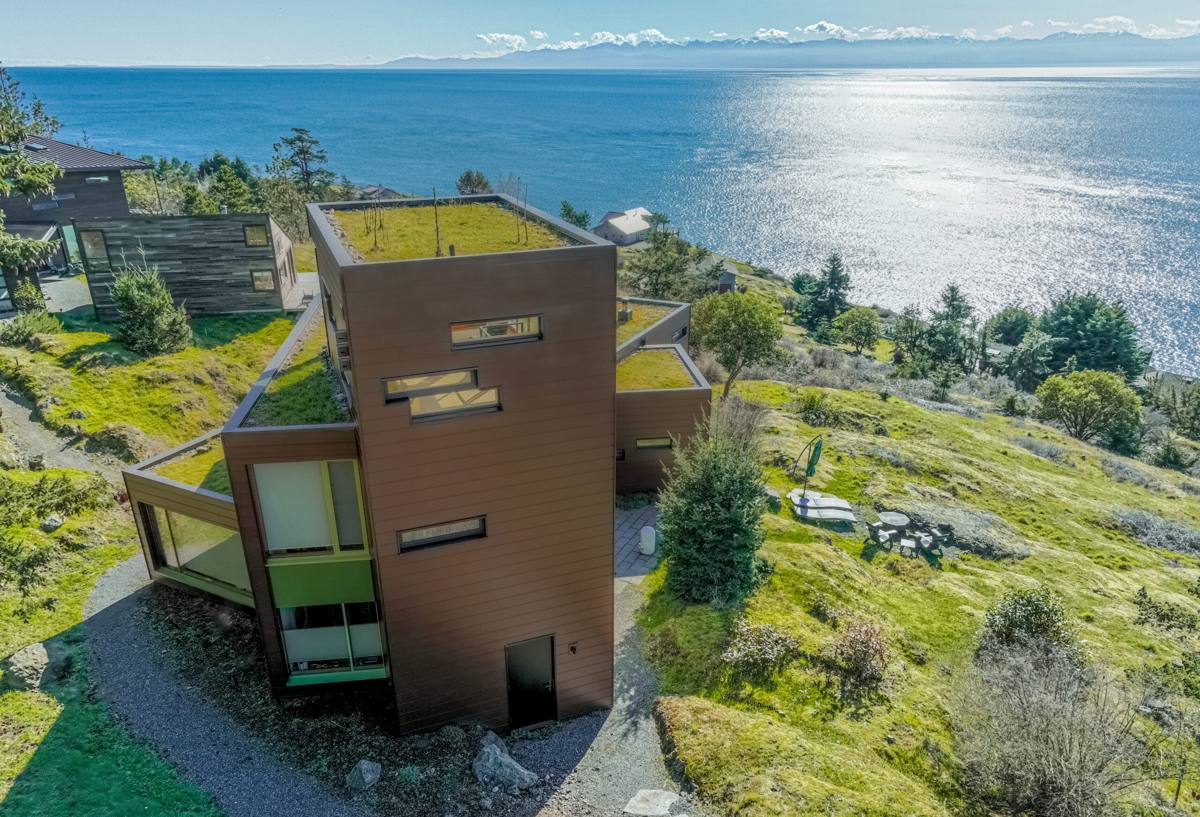
Edgemoor sits along Bellingham Bay on wooded, often steeply sloped lots, and that combination puts real demands on exterior siding that a house a few miles inland doesn't face in the same way. Homes here deal with wind-driven rain coming off the water, salt-laden air, and heavy tree canopy that keeps north and east-facing walls shaded and damp for long stretches of the year. Any siding installed in this neighborhood has to hold up to all three at once, not just one of them in isolation.
We've done board and batten siding work on Edgemoor properties long enough to know which details matter here specifically — where water tends to collect, which walls stay wet the longest, and where the standard installation instructions need to be tightened up for this exact setting. This page is about that: what board and batten needs to do right in Edgemoor, and how we build it so it actually does.
Why Board & Batten Fits Many Edgemoor Homes
Board and batten is a vertical siding profile — wide flat panels installed side by side with narrow battens covering the seams between them. It reads as clean, tall, and a little more architectural than standard horizontal lap siding, which is part of why it shows up so often as an accent or full-wall treatment on the craftsman, modern, and coastal-style homes common in and around Edgemoor. It pairs well with gable ends, dormers, and entry features, and it's a natural match for homes that want a more custom look than a straight run of lap siding provides.
The look is only half the story, though. Board and batten has a different water-management profile than lap siding because of those vertical seams, and how those seams are built determines whether the siding performs for decades or becomes a recurring moisture problem. That's the part homeowners rarely get told about until something's already gone wrong behind the wall.
The Climate Problems Board & Batten Has to Solve Here
Salt Air and Driving Rain
Proximity to Bellingham Bay means airborne salt settles on exterior surfaces year-round, and it's harder on fasteners, uncoated metal flashing, and cheap trim than most people expect. Combine that with wind-driven rain during winter storms — rain that doesn't just fall straight down but gets pushed sideways into vertical seams and under trim edges — and you have conditions that will find any weak point in a siding system within a few wet seasons. Fastener corrosion and seam failure are the two most common consequences, and both are preventable with the right materials and detailing, not with a different siding profile.
Moss Season Under the Tree Canopy
Whatcom County's long wet season is hard enough on siding on its own. On Edgemoor's tree-covered lots, shaded walls stay damp far longer after a rain than a wall in full sun, and that extended dampness is exactly what moss, algae, and mildew need to take hold. On absorbent or poorly finished siding materials, that growth isn't just cosmetic — it holds moisture against the surface and accelerates whatever deterioration is already happening underneath. A factory-applied, moisture-resistant finish that doesn't give organic growth much to grab onto matters more here than it does on an open, sunny lot across town.
What a Correct Board & Batten Installation Involves
Board and batten looks simple from the street, but the seams between panels are the entire game. A correctly built system manages water at every one of those seams instead of relying on caulk to do the job alone.
A Real Drainage Plane
Behind the panels, there should be a drainage gap — typically furring strips or a rainscreen product — that lets any water that gets past the outer surface drain down and out instead of sitting against the wall sheathing. On shaded, damp Edgemoor walls, skipping this step is one of the fastest ways to end up with hidden rot years before anyone notices a problem from outside.
Fastening and Flashing
Fasteners need to be corrosion-resistant and set at the spacing and depth the manufacturer specifies — not just "close enough." Flashing at window and door heads, at the base of the wall, and at any horizontal trim needs to shed water outward, not funnel it behind the panel. Kick-out flashing where a roofline meets a wall is a detail that gets missed constantly and causes concentrated water damage right at that junction.
Battens, Corners, and Caulk
Battens should be fastened independently of the panel underneath so the assembly can move without cracking the seam seal. Inside and outside corners need proper trim, not just butted panels caulked together. And caulk itself should be treated as a secondary defense, not the primary one — a board and batten wall that depends entirely on a bead of sealant to stay dry will eventually fail once that caulk ages, shrinks, or gets missed during a repaint.
Material Comparison: What Board & Batten Can Be Made Of
Board and batten isn't a material, it's a profile — you can build it out of several different products, and they don't hold up the same way in a salt-air, high-moisture setting like Edgemoor.
| Material | Moisture Behavior in This Climate | Fire Rating | Typical Lifespan | Maintenance |
|---|---|---|---|---|
| James Hardie fiber cement | Engineered for wet, freeze-thaw climates; factory-sealed edges resist moisture wicking | Non-combustible | Decades with correct install and upkeep | Periodic wash and repaint on schedule; ColorPlus finish extends repaint interval |
| Engineered wood (e.g. LP SmartSide) | Wood-based core is more sensitive to prolonged dampness and edge exposure | Combustible | Shorter than fiber cement in wet, shaded conditions | Closer attention to caulking, edge sealing, and moisture monitoring |
| Vinyl board & batten | Won't rot, but can warp, fade, and doesn't manage seams the same way — relies heavily on trim detailing | Combustible | Variable; UV and impact sensitive over time | Low, but limited repair and color options once faded |
| Solid wood | Handsome but highest maintenance burden in a wet, shaded, salt-air setting | Combustible | Shortest without diligent upkeep | Frequent refinishing and moisture vigilance |
We install James Hardie fiber cement exclusively — not vinyl, not engineered wood, not primed wood — because of how it performs specifically in conditions like Edgemoor's. It doesn't absorb water the way wood-based products can, it's manufactured in climate-specific formulations for regions with freeze-thaw cycles like ours, and the ColorPlus factory finish holds up to UV and salt exposure without needing a repaint every few years. For a vertical profile where seam performance is everything, starting with a material that doesn't swell, wick, or rot at the cut edges makes every other detail in the installation more reliable.
Our Process
- Assessment. We walk the exterior, check for existing moisture damage (more common on shaded, tree-covered walls), and evaluate the wall assembly before quoting anything.
- Tear-off and inspection. Old siding comes off and we inspect the sheathing underneath. On older Edgemoor homes, this step sometimes uncovers moisture issues that were invisible from outside — we address those before anything new goes on.
- Weather-resistive barrier and drainage plane. A proper barrier and drainage gap go in before a single panel is hung.
- Panel and batten installation. Hardie panels and battens are installed to manufacturer fastening schedules, with flashing detailed at every penetration and transition.
- Trim, caulking, and finish check. Corners, trim, and seams are finished, and we walk the job to confirm every detail is right before calling it done.
- Cleanup. Given the mature trees on many Edgemoor lots, we're careful with debris and site protection throughout.
Why a Crew That Already Works Edgemoor Matters
A lot of what makes a board and batten job hold up in Edgemoor isn't in the general installation manual — it's knowledge of this specific setting. That means knowing which walls take the worst of the wind off the bay, recognizing the signs of shade-driven moss and mildew before they've done real damage, and working carefully around mature trees and tighter access on older, wooded lots without cutting corners on staging or cleanup. It also means being familiar with the City of Bellingham's permitting process, and knowing that some Edgemoor properties carry neighborhood design expectations worth checking on before finalizing a color or profile.
None of that replaces sound installation technique, but it's the difference between a crew that treats every job identically and one that adjusts for the conditions actually in front of them.
What to Expect After Installation
Correctly installed Hardie board and batten is low-maintenance, but "low" doesn't mean "none" — especially on shaded, salt-exposed walls. A little routine attention goes a long way toward getting the full lifespan out of the siding.
- Rinse siding periodically to clear salt residue and organic buildup, especially on shaded or north-facing walls
- Keep tree branches and shrubs trimmed back from siding to improve airflow and sun exposure
- Inspect and refresh caulking at trim and penetrations on the manufacturer's recommended schedule
- Watch for moss or algae starting at the base of walls or under overhangs and address it early
- Repaint on the ColorPlus warranty schedule rather than waiting for visible fading
- Check gutters and downspouts near siding walls to make sure water isn't discharging against the panels
Get a Straight Answer for Your Home
Every Edgemoor property is a little different — how much shade it gets, how exposed it is to the water, how old the existing siding and wall assembly are. If you're considering board and batten siding and want a straightforward, no-pressure look at what your home actually needs, we're happy to come take a look and give you a real estimate, not a sales pitch.