 Bellingham Exterior
 James Hardie Siding in Edgemoor: What This Neighborhood Is Up Against
Edgemoor sits close to the water on Bellingham's south side, and that position shapes what a home's exterior has to deal with year-round. Salt-laden air moves through the neighborhood more consistently than it does further inland, driving rain arrives sideways off the water instead of falling straight down, and the tree cover and shaded lots common to the area keep walls damp long enough for moss to take hold and stay established for most of the year. None of that is unique to any single property here — it's the shared condition that every home in Edgemoor is quietly working against, whether the siding shows it yet or not.
We install James Hardie fiber cement siding for homes throughout Edgemoor and the rest of Bellingham and Whatcom County, and this page is specifically about what that service looks like here — what the climate demands, what a correct job actually involves, and how our process runs from a first look at the property to a finished wall that's built to hold up through the kind of weather this neighborhood sees every winter.
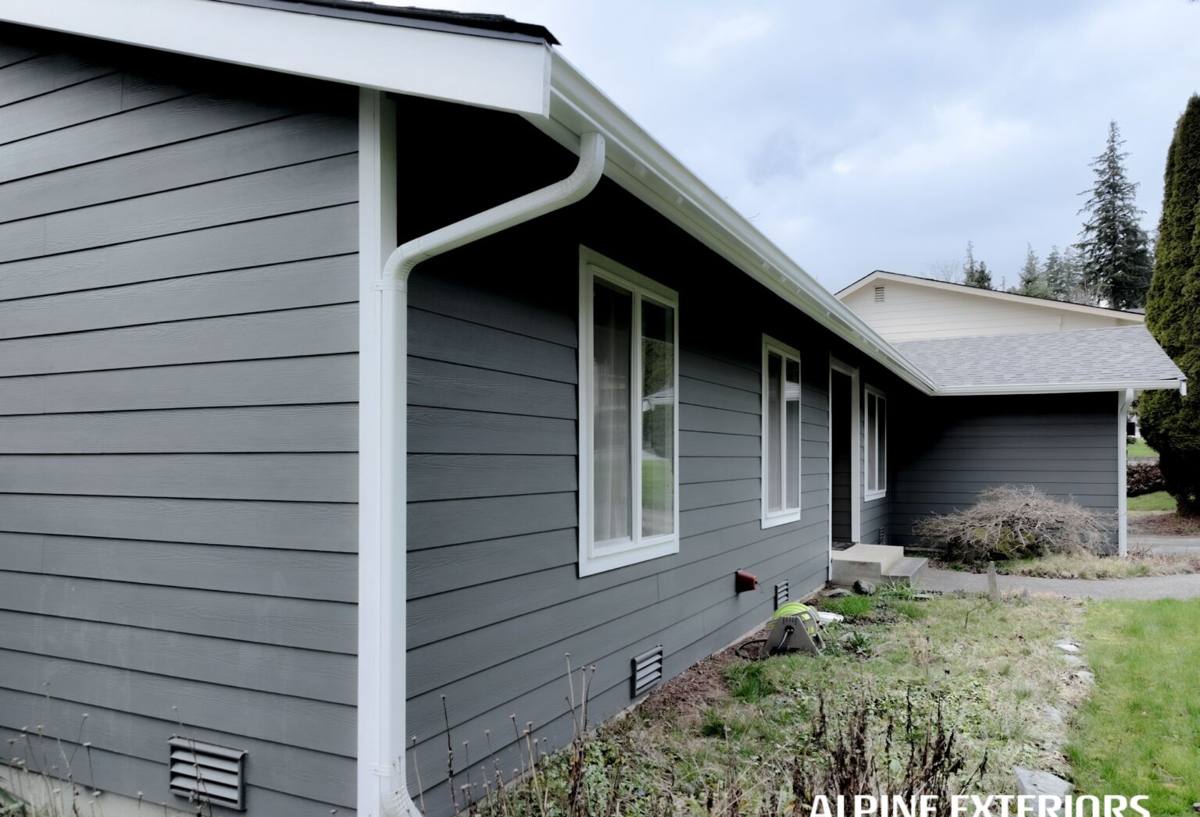
What Salt Air, Driving Rain, and Moss Do to an Edgemoor Home
Salt Air and Hardware
Homes close to Bellingham Bay take on salt-carrying air as an everyday condition rather than an occasional event. That air accelerates corrosion on exposed fasteners, hinges, and trim hardware, and it keeps painted or coated surfaces wet longer than they'd stay in a drier, more inland part of the county. Over years, that speeds up finish breakdown on anything not specifically built to resist sustained salt exposure.
Driving Rain and Wind Exposure
Rain pushed by wind off the water doesn't just run down a wall the way a calm, straight-down shower would — it gets forced into laps, seams, and fastener points that a sheltered inland home wouldn't need to account for nearly as much. Flashing details and clearances that would be adequate somewhere else start to matter a great deal more on an Edgemoor property, since wind-driven water finds every gap a rushed installation left behind.
Shade, Moss, and Sustained Dampness
Mature trees and larger, well-established lots are common in Edgemoor, and the shade they provide is a mixed blessing for an exterior. Shaded and north-facing walls stay damp for extended stretches through fall, winter, and much of spring — exactly the condition moss needs to establish. On wood-based or wood-look siding, that ongoing dampness isn't just cosmetic; sustained moisture against a moisture-absorbent material eventually leads to swelling, softening, and rot at the edges and seams.
Why We Install Only James Hardie Fiber Cement
We don't install vinyl siding, LP SmartSide, primed spruce, cedar, or other fiber cement brands. That's a professional standard we hold to, not a reflection of what we're capable of installing. In a climate like Edgemoor's, the products that tend to struggle over the long run share a common thread — they either absorb moisture directly, depend on a field-applied or factory coating to keep water out indefinitely, or expand and contract enough with temperature and humidity swings that seams gradually work themselves open.
James Hardie fiber cement is engineered specifically to resist that kind of exposure. It's non-combustible, it doesn't swell, rot, or feed moss the way wood-based products can, and its ColorPlus factory finish is baked on under controlled conditions and warrantied against the fading and chalking that constant moisture and UV cycling cause over time. Hardie also builds climate-specific HZ formulations rather than a single one-size-fits-all board — Edgemoor's cool, wet, marine climate falls into the HZ5 category, which is engineered for sustained moisture exposure and freeze-thaw cycling rather than a milder, drier region. Paired with a strong transferable warranty and installation carried out to spec, it's the system we trust to perform through a full Whatcom County year, not just look good on install day.
What We Ask Homeowners to Weigh Before Choosing Anything Else
Cheaper alternatives aren't dishonest products — vinyl, engineered wood, and primed wood all have legitimate uses in the right climate and price point. But this close to the water, the maintenance burden and moisture risk on those materials tends to land back on the homeowner within a decade or two, usually as caulking, repainting, or panel replacement that a fiber cement system simply doesn't demand as often.
What a Correct James Hardie Job Involves
James Hardie performs the way it's engineered to only when it's installed to the manufacturer's actual specification. Skipping or shortcutting any one of the following steps can undercut the material's real-world performance, regardless of how good the product itself is.
- Fastening and spacing: Hardie publishes exact fastener type, spacing, and placement requirements that vary by product line and exposure — following that spec is what keeps the manufacturer's warranty valid
- Clearance above grade and hardscape: Minimum clearance between siding and grade, decks, and roofing keeps the bottom edge out of standing water or splash-back, a common failure point on properties where soil or landscaping has built up over the years
- Weather-resistive barrier: A continuous, properly lapped and taped barrier underneath the siding does most of the real work of keeping wind-driven rain out of the wall assembly
- Flashing at every penetration: Windows, doors, hose bibs, vents, and light fixtures all interrupt the siding plane, and each one needs correct flashing so water is directed out and away rather than trapped behind the cladding
- Sealed field-cut edges: Any panel cut on site needs to be sealed or primed per spec before it goes up — an unsealed cut edge is one of the more common places fiber cement actually takes on water
We also pay attention to how a given wall performs in this specific setting — how much direct wind and rain exposure it gets based on orientation toward the water, how much shade keeps it damp longer than neighboring walls, and how that should inform decisions like drainage-gap detailing and touch-up paint matching down the road.
Choosing a James Hardie Product Line and Finish
James Hardie makes several distinct siding profiles, and the right choice for an Edgemoor home depends on the house's architecture, the homeowner's maintenance preferences, and how a given wall is exposed to the elements.
| Product Line | Typical Look | Where It Fits Best |
|---|---|---|
| HardiePlank lap siding | Traditional horizontal board look, several width and texture options | Most common choice; works on nearly any home style and holds up well on exposed, water-facing walls |
| HardieShingle | Staggered or straight-edge shingle profile | Homes wanting a cottage or coastal aesthetic without the moisture risk of real wood shingle |
| HardiePanel vertical siding | Smooth or textured vertical panels, often paired with battens | Modern or mixed-material designs, or as an accent alongside lap siding |
| HardieTrim boards | Fascia, corner boards, and window/door trim | Used alongside any of the above to finish edges and transitions correctly |
All of these come with the ColorPlus factory finish system, which matters more here than in a drier climate — a baked-on finish resists the fading and chalking that constant moisture and salt exposure accelerate on a field-painted surface. We'll walk through color and texture options as part of the estimate, but the underlying product and finish decision should be driven by how that specific wall or elevation is exposed, not by appearance alone.
Our Process, Start to Finish
Site and Exposure Assessment
Before anything is priced, we walk the property and look at how each wall is exposed — which faces take direct wind and rain off the water, which sit in shade or under tree cover, and where existing moss buildup or paint failure suggests a chronic moisture issue rather than a cosmetic one.
Tear-Off and Sheathing Check
Old siding comes off and the sheathing underneath gets inspected before any new material goes up. Installing new siding over damaged sheathing just buries the problem, so we'd rather find and address rot or soft spots at this stage even if it adds a step to the schedule.
Weather Barrier and Flashing
The water-resistive barrier goes on with proper overlap and taped seams, and flashing is set at every window, door, and penetration before siding covers it. This layer does most of the actual work of keeping wind-driven rain out of the wall, and it's completely hidden once the job is finished — which is exactly why it needs to be right the first time.
Siding Installation to Manufacturer Spec
Panels go up following Hardie's fastening, spacing, and clearance requirements as the baseline, not as an option. Field cuts are sealed as they're made, not batched for later.
Final Walkthrough
We walk the completed job with the homeowner, confirm the work matches what was estimated, and go over what basic maintenance looks like on a home this close to the water.
Timeline and Cost Factors for an Edgemoor Project
Every estimate is specific to the house, but a few factors consistently drive both timeline and price on a project in this part of Bellingham:
| Factor | Why It Matters |
|---|---|
| Square footage and number of stories | More area and height mean more labor and, on taller walls, more staging and access equipment |
| Trim and architectural detail | Homes with more windows, dormers, and roofline transitions require more flashing and cutting work |
| Sheathing condition underneath old siding | Rot or water damage found during tear-off adds repair scope before new siding can go up |
| Exposure to wind and water | Walls facing the bay typically warrant closer attention to flashing and drainage detail |
| Product line and finish selection | James Hardie offers multiple profiles, textures, and ColorPlus finishes at different price points |
Weather windows affect scheduling here more directly than in more sheltered inland areas — wind off the water can shut down safe staging and panel handling on days that would otherwise be workable a few miles away, so we build some flexibility into project timelines rather than promising a fixed date that a bad weather stretch is likely to break.
Signs an Edgemoor Home's Siding Needs Attention
Most homeowners reach out because something specific has caught their eye, not because they've been tracking every detail of their siding's condition. It's worth knowing what to look for before a small issue becomes an expensive one:
- Visible moss or green staining on shaded or north-facing walls
- Paint that keeps failing or peeling no matter how often it's redone
- Soft spots or slight give when pressing near a window or door trim
- Siding that's cupping, warping, or separating at seams
- Rust streaks below fasteners or hardware
- Visible daylight or drafts around older window frames where siding meets trim
Any one of these on its own doesn't necessarily mean a full replacement is needed. But they're worth having a professional actually look at rather than assuming they'll resolve on their own, since moisture-related damage in this climate tends to compound rather than stay static.
Why a Crew That Already Works Edgemoor Matters
A lot of what makes a siding job hold up in this neighborhood comes down to details a generic, out-of-area installation crew tends to overlook: how much wind-driven rain a given wall orientation actually takes on this close to the water, where moss is likely to establish first based on shade and tree cover, how much clearance siding needs above grade given how consistently damp the ground stays, and how flashing needs to be layered so it sheds water correctly through an entire wet season rather than just passing a dry-day inspection.
A crew that works Bellingham and Whatcom County exteriors regularly starts to recognize these patterns from one property to the next. That familiarity shows up in small, on-site decisions — where trim needs an extra flashing detail, where caulk is appropriate versus where flashing is required, how fasteners are spaced given local wind exposure — that homeowners rarely notice directly but absolutely feel in how the siding performs over the following decade.
If your Edgemoor home needs new James Hardie siding, a full re-side, or simply an honest second opinion on an existing installation, we're glad to take a look. Reach out using the form below to schedule a free, no-pressure estimate.