 Bellingham Exterior
 Building a Deck That Holds Up in Fairhaven
Fairhaven sits close to Bellingham Bay, and that proximity to saltwater shapes what a deck has to survive here. Salt-laden air accelerates corrosion on anything metal, wind-driven rain finds its way into joints and end grain that would stay dry elsewhere, and the long stretch of damp, low-sun months from fall through spring keeps every horizontal surface wet longer than homeowners expect. A deck built with generic, big-box specs might look fine for a season or two, but in this environment the shortcuts show up early — rusting hardware, soft framing, slick moss-covered boards, and railings that loosen faster than they should.
A correctly built custom deck for Fairhaven starts with material and hardware choices matched to that reality, not with whatever is cheapest or most common inland. We build decks in Bellingham and around Whatcom County every week, and the difference between a deck that lasts fifteen-plus years here and one that needs major repair by year five almost always comes down to decisions made before the first board goes down.
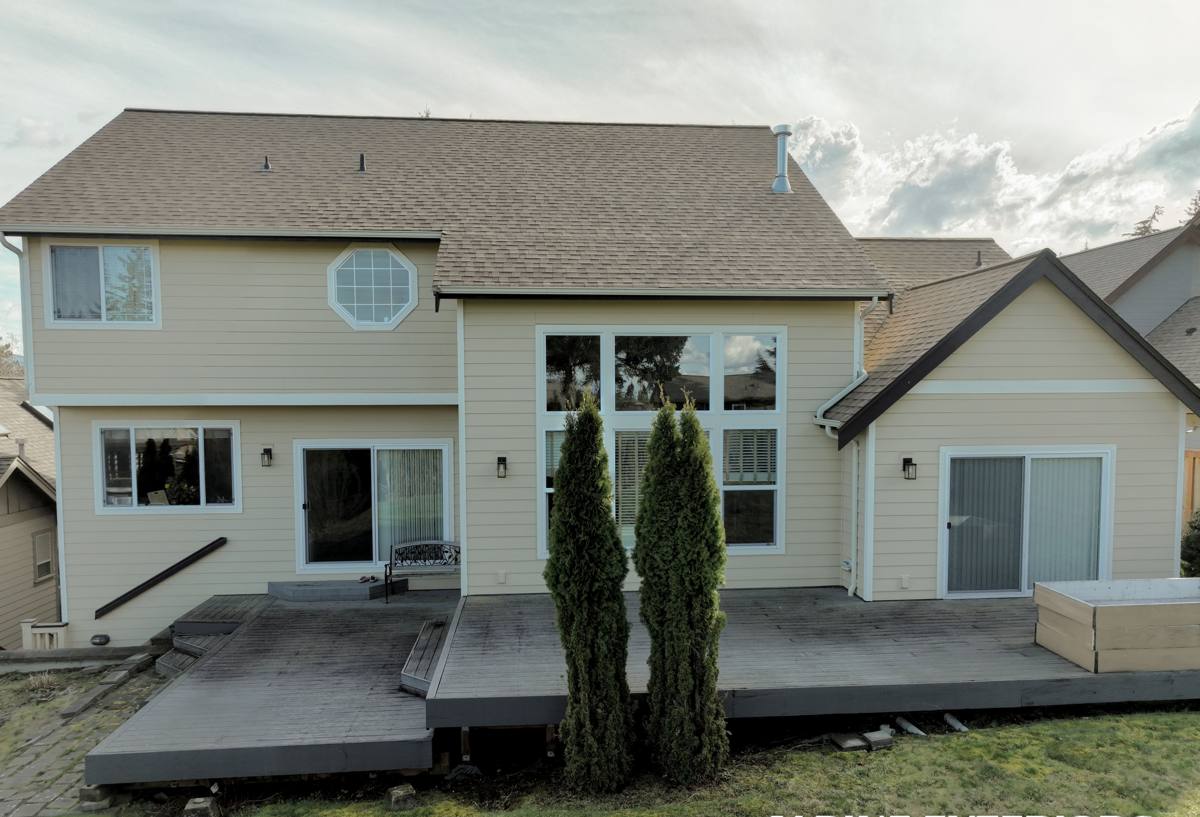
What Fairhaven's Terrain and Housing Stock Mean for Your Deck
Fairhaven is a hillside, waterfront-adjacent neighborhood with a mix of older homes and newer builds, and that combination brings a few recurring conditions into deck projects:
- Sloped and terraced lots that often call for taller, engineered footings rather than simple deck blocks
- Older homes with rim joists and siding that weren't detailed for a modern deck ledger attachment, requiring extra flashing work at tie-in
- Partial or full bay exposure, which pushes salt-laden moisture onto railings, fasteners, and any exposed metal far more than a deck a few miles inland
- Mature tree cover on many lots, which keeps decks shaded and damp longer after storms — ideal conditions for moss and algae growth
None of this makes a deck project in Fairhaven harder to plan for — it just means the plan has to account for the actual site instead of a generic template.
Choosing Decking Material for Salt Air and Heavy Rain
There's no single "best" decking material for every Fairhaven home — the right choice depends on how close you are to the water, how much sun the deck gets, your maintenance appetite, and your budget. Here's how the common options compare in this climate:
| Material | Moisture & Salt Air Performance | Maintenance | Typical Lifespan Here |
|---|---|---|---|
| Pressure-treated fir/hem-fir | Good if sealed and maintained; end grain and fastener holes are vulnerable points | Annual cleaning, resealing every 1-2 years | 10-15 years |
| Cedar | Naturally moisture- and insect-resistant, but still needs sealing near the bay | Cleaning plus periodic oil/sealer | 15-20 years |
| Capped composite | Excellent — doesn't absorb moisture or rot, resists staining | Occasional washing to prevent moss buildup on the surface | 25-30 years |
| PVC decking | Excellent, fully non-organic, best choice directly on the water | Lowest — soap and water | 25-30+ years |
Composite and PVC cost more upfront, but for homes with direct bay exposure or heavy shade, the reduced maintenance and resistance to moisture damage often make them the more honest long-term choice. For homes set back from the water with good sun exposure, a well-sealed cedar deck is still a solid, more affordable option — it just needs a homeowner willing to keep up with sealing on a schedule.
Framing, Fasteners, and Footings That Actually Last
Hardware
This is where a lot of decks near the water fail early, and it's almost always invisible until something breaks. Standard electro-galvanized screws and joist hangers corrode faster in salt air than most homeowners realize. For any deck within a mile or so of Bellingham Bay, we spec hot-dip galvanized or stainless steel structural hardware and fasteners rated for coastal exposure — it costs more upfront, but replacing corroded hangers under a finished deck is a much bigger job than paying for the right hardware the first time.
Ledger Attachment and Flashing
Where the deck ties into the house is the single most common failure point on older Bellingham homes. Wind-driven rain pushes water sideways into any gap at the ledger board, and without proper flashing and a drainage gap behind the ledger, that water rots the rim joist and sheathing behind the siding — often for years before it's visible. We flash every ledger connection properly and, where the existing wall assembly wasn't built for it, address that before attaching anything.
Footings
On sloped Fairhaven lots, footings need to go below frost depth and bear on undisturbed, stable soil — which sometimes means deeper or engineered footings than a flat-lot deck would need. We size footings to the actual soil and slope conditions on your property rather than using a one-size-fits-all spacing.
Permits and Code Basics for a Bellingham Deck
Most raised decks in the City of Bellingham require a building permit, and elevated decks typically need engineered guardrails, proper stair geometry, and inspected footings before the decking goes on. Requirements can vary based on deck height, size, and whether it's attached to the house, and Fairhaven's older housing stock sometimes surfaces additional considerations around the existing structure at the ledger connection. We handle the permitting and inspection process as part of the job, so you're not the one tracking down requirements or scheduling inspections.
Guardrails and Stairs
For any deck more than a modest height above grade, code sets minimum guardrail heights, baluster spacing, and stair rise/run tolerances. These aren't just paperwork items — on a bay-view deck, a properly engineered guardrail is also what keeps the deck safe to actually use for the view it was built for.
Moss, Mildew, and Long-Term Maintenance
Whatcom County's long, wet moss season is a fact of life for any exterior surface, and decks are no exception — especially under tree cover, which is common on Fairhaven lots. A few things make a real difference over the life of the deck:
- Boards installed with correct gapping so water drains through rather than pooling between them
- Decking oriented and sloped slightly away from the house for positive drainage
- Solid decking (wood or composite) cleaned at least once a year to keep moss and algae from getting a foothold
- Under-deck ventilation where possible, so the framing below can dry out between storms
- Keeping overhanging branches trimmed back to let more sun and air reach the surface
A deck that's designed with drainage and airflow in mind from the start needs far less scrubbing and pressure-washing down the road than one that wasn't.
Our Process for a Fairhaven Deck Project
- Site visit and assessment — we look at slope, soil, sun/shade exposure, proximity to the water, and the condition of the existing structure at any tie-in point
- Design and material selection — sized to your layout and budget, with decking and hardware matched to your specific exposure
- Permit and engineering — we pull permits and handle engineering for footings and guardrails where required
- Framing and flashing — footings, structural framing, and ledger flashing done to hold up in this climate, not just pass inspection
- Decking, railings, and finish work — installed with proper gapping and drainage in mind
- Final walkthrough — we cover basic maintenance so you know what to expect in year one and beyond
Why Local Experience in Fairhaven Matters
A contractor who's already worked on decks in Fairhaven has seen how the hillside lots, the bay exposure, and the older housing stock actually behave — not just in a spec sheet, but after a few winters of driving rain and salt air. That experience shows up in smaller decisions that add up: knowing which hardware grade is worth the upcharge this close to the water, recognizing an under-flashed ledger on an older home before it becomes a rot problem, and sizing footings correctly for sloped terrain instead of guessing. It also means fewer surprises during permitting, since the same inspection standards and City of Bellingham requirements come up on nearly every project in the neighborhood.
Questions Worth Asking Before You Build
- What grade of fasteners and structural hardware will be used, and is it rated for coastal/salt air exposure?
- How will the ledger board be flashed where it meets the house?
- Are footings sized for my specific slope and soil, or based on a standard spacing chart?
- What's the realistic maintenance schedule for the decking material I'm considering?
- Is the permit and inspection process included, or is that on me?
If you're planning a new deck or replacing one that's showing its age, we're happy to walk your Fairhaven property, talk through material and design options honestly, and put together a straightforward estimate — no pressure, no obligation. Use the form below to get started.