 Bellingham Exterior
 Fairhaven's Climate Asks More of Your Siding Than Most Places
Fairhaven sits close enough to the water that homes here take on a different kind of weather load than siding a few miles inland deals with. Salt-laden air off Bellingham Bay accelerates corrosion on fasteners and trim, driving rain off the water pushes moisture sideways into seams and laps that would stay dry elsewhere, and the shaded, damp lots common in this part of Whatcom County stretch moss and algae season out for most of the year. None of that is unusual for the area — it's just the baseline a siding system here has to handle, year after year, without babysitting.
Wood-based products lose that fight over time. Paint film breaks down faster in salt air, end grain wicks moisture, and moss holds water against the surface long enough for rot to start underneath a coat of paint that still looks fine from the sidewalk. Fiber cement doesn't have that vulnerability built in — but only if it's the right product, installed the right way, for this specific environment. That's the whole point of this page.
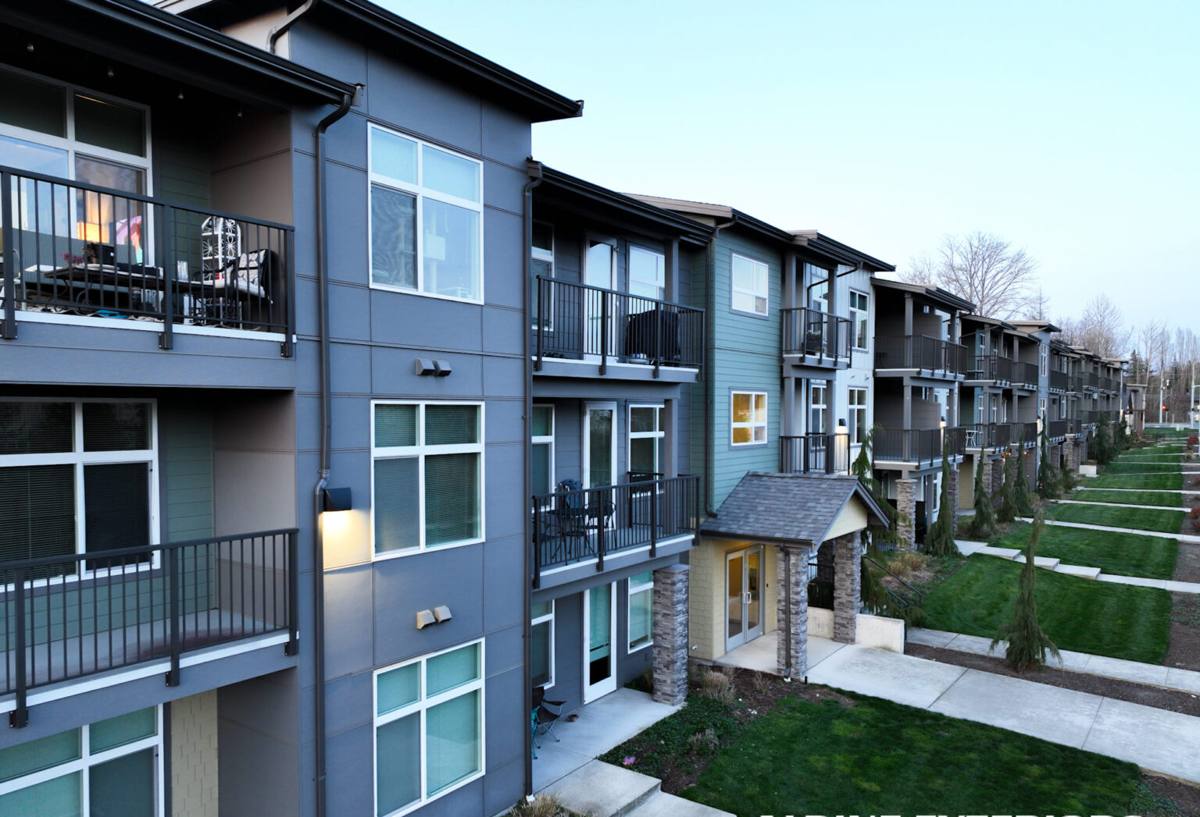
Why We Only Install James Hardie Fiber Cement
We don't install LP SmartSide, vinyl, Cemplank, Allura, primed spruce, or raw cedar. Every one of those has a place in the market, and some of them are perfectly reasonable products for the right buyer. Our decision to standardize on James Hardie isn't about tearing those down — it's about what we're willing to put our name behind on a coastal Whatcom County home.
- Non-combustible core — fiber cement doesn't feed a fire the way wood-based composite sidings can.
- ColorPlus factory finish — baked-on color that resists the fading and chalking salt air causes on field-painted surfaces, with a color-specific warranty backing it.
- Climate-engineered HZ product lines — Hardie builds specific formulations for moisture-heavy climates, which the Pacific Northwest qualifies as.
- A transferable warranty that survives a home sale, which matters in a neighborhood where houses turn over and buyers ask questions.
Other manufacturers make fiber cement too. We're not claiming theirs fails — we're saying Hardie's engineering, finish system, and warranty structure are the combination we're comfortable standing behind on every job we take in this area.
Picking the Right Hardie Line for a Fairhaven Lot
Hardie's HZ5 formulation is engineered for climates with significant moisture exposure — freeze-thaw cycling, sustained rain, and humidity — which describes Fairhaven's weather almost exactly. On homes with heavier shade, tree cover, or a north-facing wall that stays damp longer after a storm, we'll also talk through moisture-management details at the plane level: rainscreen gap, flashing at every penetration, and drainage at the bottom of the wall assembly. The siding panel itself is only one layer of the system — the water management behind it is what actually determines whether a fiber cement install performs for thirty years or needs attention in ten.
ColorPlus finishes also matter more here than in a drier inland market. Field-applied paint has to be recoated on a cycle that salt air and UV exposure shorten. A factory-cured finish removes that maintenance item almost entirely for the length of the finish warranty, which is a real difference in a neighborhood where a lot of homes get repainted more often than owners would like.
What a Correct Fiber Cement Job Actually Involves
Fiber cement is unforgiving of shortcuts in a way vinyl isn't — it's a rigid material that has to be cut, fastened, and flashed to spec or it fails early in exactly the ways that show up as moisture damage. A correct install includes:
- Removal of existing siding and inspection of the sheathing underneath for hidden rot or damage before anything new goes up
- Repair or replacement of any compromised sheathing, framing, or trim found during tear-off
- A weather-resistive barrier installed continuously, lapped correctly at every seam
- Rainscreen furring where the wall assembly calls for one, to keep the siding off the sheathing and let incidental moisture drain and dry
- Correct fastener type, spacing, and penetration depth — under- or over-driven nails are one of the most common causes of early fiber cement failure
- Factory-mitered or properly sealed field cuts at corners, and flashing at every window, door, and roof intersection
- Manufacturer-specified clearances at grade, decks, and roof lines so the bottom edge of the siding never sits in standing water
Every one of those steps is inspectable, and every one of them is something a rushed crew skips first. On a lot exposed to driving rain off the bay, skipping any of them shortens the life of the siding regardless of how good the panel itself is.
Our Process, Start to Finish
Estimate and Assessment
We walk the exterior, check existing siding and trim for moisture damage, and look at drainage, grade, and roof-to-wall intersections — the details that matter most for a home exposed to Fairhaven's rain and salt air. You get a written scope, not a verbal guess.
Product Selection
We talk through Hardie's plank profiles, panel options, and ColorPlus colors against your home's exposure and your own preferences, and land on the HZ line and finish that fits.
Tear-Off and Inspection
Old siding comes off, and we stop to show you anything we find underneath before covering it back up — sheathing rot, prior water intrusion, or trim damage doesn't get hidden behind new siding.
Installation
Barrier, furring where called for, siding, and flashing go in to manufacturer spec, in the sequence that keeps the wall assembly dry for the long term, not just the sequence that's fastest.
Final Walkthrough
We go around the house with you, check the details, and make sure the finished job matches what was scoped at the estimate.
How Siding Materials Actually Hold Up in This Environment
| Material | Salt air / moisture behavior | Moss & algae resistance | Maintenance burden |
|---|---|---|---|
| James Hardie fiber cement | Non-combustible, dimensionally stable, engineered HZ formulations for wet climates | Factory finish resists staining better than field-painted surfaces | Low — no repainting cycle within the finish warranty period |
| Vinyl | Can warp or fade with UV and temperature swings; seams are a moisture entry point | Textured surfaces trap moss and algae readily | Low upfront, but limited repair options if damaged |
| Cedar / primed spruce | Wicks moisture at end grain and fastener points; salt air accelerates finish breakdown | Organic surface, most prone to moss and rot without regular upkeep | High — recoating and spot repair on a recurring cycle |
| LP SmartSide / other composites | Wood-strand core is moisture-sensitive at cut edges and joints if not sealed correctly | Moderate — depends heavily on installation and sealing quality | Moderate — edge sealing and caulking need periodic attention |
This isn't a claim that any of these products fail outright — plenty of them perform fine when installed correctly and maintained on schedule. It's why, given Fairhaven's specific combination of salt air, rain, and moss exposure, fiber cement is the category we recommend, and Hardie specifically is the fiber cement system we install.
Signs a Fairhaven Home Already Needs Attention
- Persistent green or black staining that comes back within weeks of cleaning
- Soft or spongy siding near ground level, decks, or downspouts
- Paint that's peeling, chalking, or fading unevenly across the same wall
- Visible gaps or separation at trim, corners, or window flashing
- Cracked or buckled panels, especially on walls facing prevailing weather off the bay
- A noticeable jump in heating costs, which can point to a compromised weather barrier
Any one of these is worth a look before it becomes a sheathing repair instead of a siding job.
Living With Fiber Cement Siding Here
Once Hardie siding is installed correctly, upkeep in Fairhaven is straightforward: an annual rinse to keep moss and salt residue from building up, a walk-around after major storms to check caulking and flashing points, and prompt attention to any impact damage. Because the color is factory-cured rather than field-painted, you're not on a repainting schedule the way you would be with wood — which matters in a spot where recoating cycles run shorter than they would a few miles inland.
Why It Matters That We Already Work in This Neighborhood
A crew that's worked Fairhaven knows which lots hold water longest, which walls take the worst of the weather off the bay, and where moss builds up fastest — before they ever get a ladder up. That's the difference between a generic install and one that's actually built for the site. We're a Bellingham-based crew serving Whatcom County, and Fairhaven's combination of salt exposure, rain, and shade is one we plan for specifically, not something we're guessing at from a manual.
If your Fairhaven home needs new siding, or you're just not sure whether what's on the walls now is holding up, we're happy to take a look. There's a free, no-pressure estimate form below — no obligation, just an honest read on where things stand.