 Bellingham Exterior
 Fairhaven's Waterfront Location Means Your Roof Works Harder
Fairhaven sits right up against Bellingham Bay, and that location shapes what a roof in this neighborhood has to deal with all year long. Salt-laden air off the water accelerates corrosion on exposed metal — flashing, fasteners, vent caps, gutter hardware — in a way that inland Whatcom County homes simply don't experience at the same rate. Add in wind-driven rain coming off the Sound during winter storms, and you've got water being pushed sideways into laps, seams, and fastener penetrations that were only ever designed to shed water moving straight down.
Then there's moss. Bellingham's long, wet, mild winters give moss and algae months of uninterrupted growing conditions on north-facing and shaded roof slopes — common in Fairhaven's tree-covered lots. Moss doesn't just look bad. It holds moisture against the roofing material, lifts shingle edges as it grows, and works its way under flashing over time. A roof that's already carrying a moss mat going into a storm is far more likely to show damage afterward than a roof that's been kept clean.
None of this means Fairhaven roofs are poorly built. It means storm damage repair here has to account for conditions a generic repair crew from outside the area might not think to check.
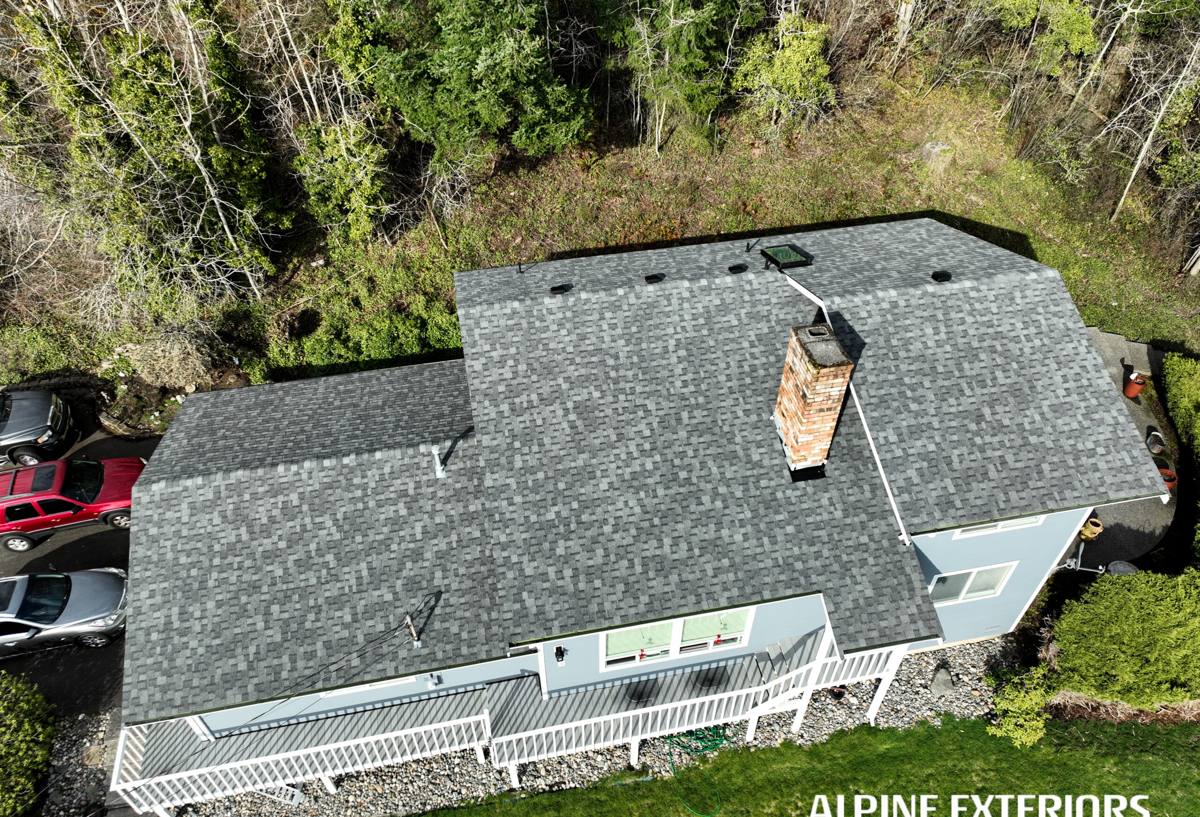
What Actually Qualifies as Storm Damage
Homeowners often assume storm damage means something dramatic — a tree limb through the roof, missing shingles scattered across the yard. Sometimes that's exactly what it looks like. But a lot of storm damage in this area is quieter and easier to miss:
- Shingles that were lifted or creased by wind but didn't blow off entirely
- Nail heads backed out or popped by wind flex, now exposed to weather
- Flashing around chimneys, vents, or skylights bent or separated by wind pressure
- Granule loss from wind-driven rain and hail, thinning the shingle's protective layer
- Gutters pulled loose or clogged with storm debris, causing water to back up under roof edges
- Soft spots or staining on interior ceilings that show up days after the storm, once water has had time to travel
The delayed cases are the ones that cause the most long-term damage, because homeowners don't connect a ceiling stain in March to a windstorm in January. That's part of why a proper inspection after any significant storm is worth doing even if the roof looks fine from the ground.
What a Correct Storm Damage Repair Involves
A Real Inspection, Not a Drive-By
A correct repair starts with someone actually getting on the roof — not assessing it from the driveway with binoculars. That means checking every slope, not just the side facing the street, and paying particular attention to valleys, penetrations, and edges where wind and water concentrate their force. In Fairhaven specifically, that inspection should also include a look at metal components for early salt corrosion, since a fastener or flashing piece that's starting to corrode is a weak point the next storm will find.
Matching Materials, Not Just Patching
Storm repairs go wrong most often when a crew patches over damage with whatever's on the truck instead of matching the existing roofing material's type, profile, and, where possible, color. A mismatched patch isn't just a cosmetic issue — different materials expand, contract, and shed water differently, and a poor match can create a new leak point at the seam between old and new.
Flashing and Underlayment Get Checked Too
Most leaks that get blamed on "bad shingles" actually trace back to flashing or underlayment that failed first. A correct storm repair checks the flashing around every penetration in the damaged area, not just the shingles directly overhead, and confirms the underlayment underneath hasn't already taken on water. Replacing shingles over damaged underlayment just hides the problem for a season.
How Our Process Works
1. Call or Request an Estimate
We start with a conversation about what you're seeing — visible damage, a leak, or just a storm you'd like checked out before it becomes a bigger problem.
2. On-Site Inspection and Documentation
We get on the roof, document what we find with photos, and walk you through it in plain terms. No pressure, no scare tactics — just what's actually there and what it means.
3. Temporary Protection if Needed
If there's active exposure — a hole, missing shingles, damaged flashing letting water in — we can get temporary protection in place quickly so the interior of your home isn't taking on more water while a full repair is scheduled.
4. The Repair Itself
We repair to match your existing roof wherever possible, address the underlying cause of the damage (not just the visible symptom), and confirm flashing, fasteners, and underlayment in the repair area are sound before we close it back up.
5. Follow-Up
We stand behind the work and are reachable if anything comes up after the fact — storm repairs sometimes reveal secondary issues only after a hard rain fully tests the area.
Temporary Fix vs. Full Repair vs. Replacement
Not every storm-damaged roof needs the same level of work. The right approach depends on the extent of the damage, the age and condition of the roof underneath it, and how much of the roof's remaining service life is left. Here's roughly how the three options compare:
| Approach | Best For | Typical Timeline | What It Doesn't Fix |
|---|---|---|---|
| Temporary tarp / emergency cover | Stopping active water intrusion right after a storm | Same day to next day | Underlying damage — it's a stopgap, not a repair |
| Targeted storm repair | Isolated damage on an otherwise sound, reasonably aged roof | Usually one to a few days once scheduled | Damage elsewhere on the roof unrelated to this storm |
| Full roof replacement | Roofs already near the end of their service life, or damage spread across most slopes | Several days depending on size and material | N/A — starts the service life over |
We'll tell you honestly which category your situation falls into. A roof with 20 good years left and one storm-damaged slope doesn't need to be replaced — and a roof that was already failing before the storm hit isn't well served by patching around the edges of a bigger problem.
Common Storm Damage Repairs We Handle in Fairhaven
- Wind-lifted or creased shingle replacement, matched to existing roofing
- Flashing repair and replacement around chimneys, vents, and skylights
- Re-securing or replacing fasteners backed out by wind flex
- Gutter and downspout repair where storm debris or wind has pulled hardware loose
- Underlayment and decking repair where water has already gotten underneath the surface
- Moss removal and treatment on slopes where buildup contributed to the damage
- Interior leak tracing, to confirm the repair addresses the actual water path, not just where the stain shows up
Why Hiring a Crew That Already Works Fairhaven Matters
A roofer who's worked in Fairhaven regularly already knows what this neighborhood's roofs tend to be dealing with — the salt exposure near the water, the moss pressure on shaded lots, the way certain rooflines catch wind coming off the bay differently than roofs a mile inland. That's not a small thing when you're trying to figure out whether a leak is a one-time storm event or a sign that flashing and fasteners in that area are due for attention regardless of the next storm.
It also matters for responsiveness. Storm damage isn't something you want to wait weeks on, especially with more rain in the forecast. A crew already working in and around Bellingham and Whatcom County can typically get an inspection scheduled faster than an outside company driving in from elsewhere, and they're not disappearing after the job — if a follow-up question comes up in six months, they're still local and reachable.
Reducing the Odds of Repeat Damage
Storm damage repair is a good moment to also deal with the conditions that made the damage worse than it needed to be. That usually means clearing moss before it re-establishes, making sure gutters are actually carrying water away from the roofline instead of overflowing onto it, and confirming flashing around penetrations is in good shape before it's tested by the next windstorm rather than after. None of this prevents every storm from causing any damage — Bellingham's weather is what it is — but it narrows the gap between "the roof took a hit and shrugged it off" and "the roof took a hit and started leaking."
If you're dealing with storm damage in Fairhaven, or you just want a roof checked after a rough stretch of weather, we're happy to take a look. Estimates are free and there's no pressure to move forward with anything — just fill out the form below and we'll get in touch.