 Bellingham Exterior
 Building New in Ferndale? The Windows Have to Match the Climate
If you're framing a new home, an addition, or a major remodel in Ferndale, the window package you choose and how it's installed will decide how that wall performs for the next 30-plus years. Ferndale sits close enough to Bellingham Bay and the Salish Sea that salt-laden air is a real factor, and Whatcom County's wet season brings weeks of steady, wind-driven rain along with a long stretch of shade and moss growth on north-facing walls and rooflines. New-construction windows go in before the siding is on, which means this is the one point in the build where the flashing, the water-resistive barrier, and the window itself can be integrated correctly from the start. Get it right here and you avoid the far more expensive problem of chasing leaks after the walls are closed up.
Why This Page Is Different from a Generic Window Page
Replacement windows and new-construction windows are not the same product or the same job. This page is specifically about windows installed during the building process, into open framing, on a Ferndale-area project — new build, addition, or gut remodel down to the studs.
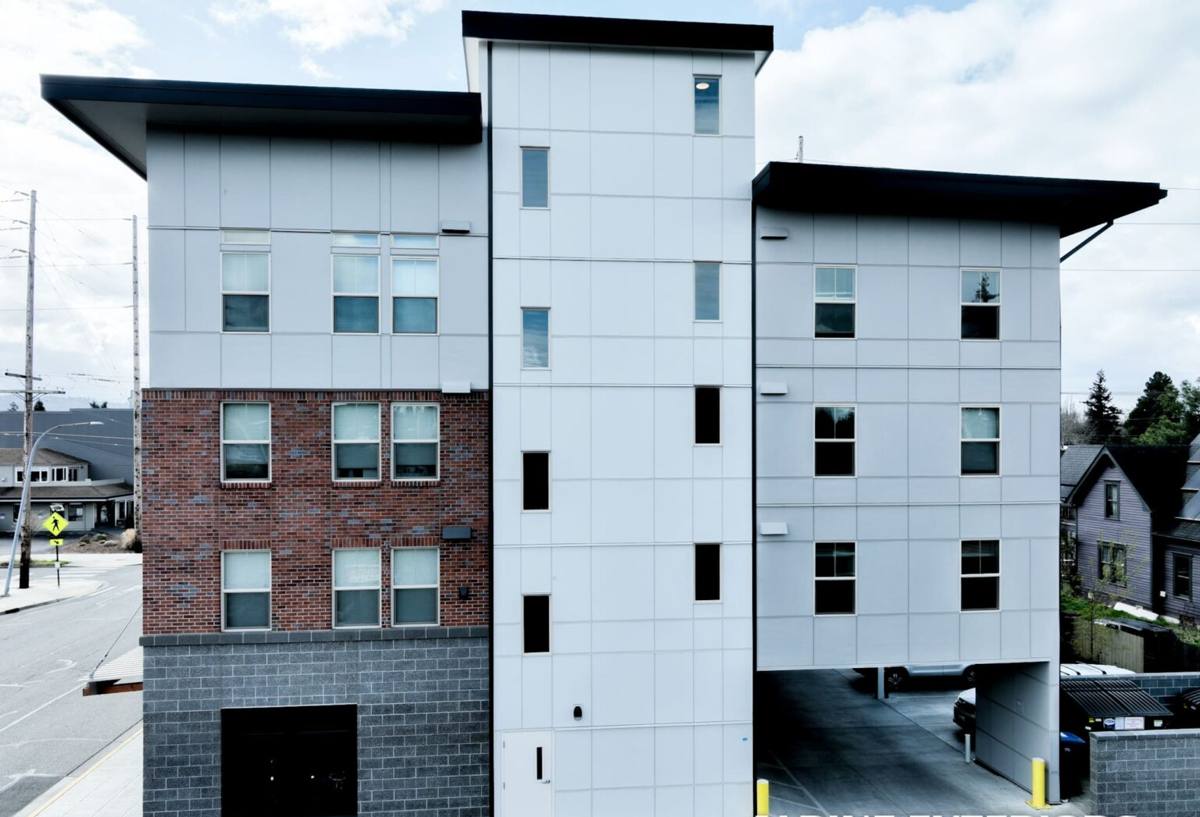
New-Construction vs. Replacement: Why the Distinction Matters
A new-construction window has a nailing fin (also called a nail flange) around the perimeter of the frame. That fin gets fastened directly to the wall sheathing and then integrated into the building's water-resistive barrier — the house wrap or building paper — before siding or trim goes on. A replacement or "insert" window, by contrast, is built to slide into an existing frame with no fin, using the old frame as the mounting surface.
Because a new-construction window ties directly into the wall's drainage plane, the installation sequence matters as much as the window itself. Get the flashing order wrong at this stage and there's no siding or trim to hide the mistake — water finds the gap and it stays hidden inside the wall until it shows up as rot, mold, or a stained ceiling below a window head.
What Whatcom County Weather Does to a Window Over Time
Three things define window performance requirements in this area, and they're worth planning for at the design stage, not after the windows are ordered.
Salt Air and Corrosion
Proximity to the water means airborne salt settles on exterior surfaces even a few miles inland. Over years, salt exposure accelerates corrosion on lower-grade hardware, screws, and cladding fasteners. It doesn't ruin a window outright, but it does mean hardware finish and fastener material are worth specifying correctly rather than defaulting to whatever's cheapest.
Driving, Wind-Blown Rain
Ferndale doesn't just get rain, it gets rain pushed sideways by wind off the water. That kind of weather tests a window's water-resistance rating and, more importantly, tests whether the flashing around it actually sheds water outward instead of trapping it against the sheathing. A window with a great water rating installed with backward-lapped flashing tape will still leak.
Long Moss Season
Shaded, north- and west-facing walls in this climate stay damp for extended stretches, and moss and algae growth on siding and sills is common. Damp-loving growth around a window sill holds moisture against the frame and finish longer than a dry climate would. Sill design, drainage, and material choice all matter more here than they would in a drier region.
The Installation Details That Separate a Correct Job from a Callback
Most window leaks aren't caused by a defective window. They're caused by an installation detail that got skipped or done out of order. On new construction, this is where it either gets built right or gets built wrong for good.
- Sill pan flashing: A sloped, corner-dammed sill pan under the window directs any water that gets past the frame back outside, rather than into the wall cavity.
- Shingle-lap sequencing: Flashing tape and house wrap have to be layered like shingles — each layer overlapping the one below it — so water is always directed down and out, never trapped behind a seam.
- Proper fin integration: The nailing fin gets sealed and taped into the WRB on the sides and top, with the bottom typically left as a drainage path, not sealed shut.
- Correct fastening: Nailing fins fastened per the manufacturer's schedule, not just "enough to hold it," which affects both structural performance and warranty coverage.
- Shimming and squaring: A window that's out of square binds, doesn't seal well against weatherstripping, and stresses the frame over time.
- Interior sealant and insulation: Low-expansion foam or backer rod and sealant at the interior gap, sized to avoid bowing the frame.
None of this is visible once the siding and trim go on, which is exactly why it has to be done correctly the first time.
Choosing a Frame and Glass Package for This Climate
There's no single "best" window material — the right choice depends on the project's budget, the home's design, and how exposed the walls are to weather. Here's how the common options compare for a Ferndale-area build.
| Frame Material | Moisture & Salt-Air Resistance | Maintenance | Typical Relative Cost | Best Fit |
|---|---|---|---|---|
| Vinyl | Good — won't rot or corrode, seams matter more | Low | Lower | Budget-conscious builds, rental/spec construction |
| Fiberglass | Very good — dimensionally stable, resists warping | Low | Mid to upper-mid | Full-time exposed walls, owners who want long-term stability |
| Wood interior / clad exterior | Good on the exterior clad face; interior wood needs protection from condensation | Moderate | Higher | Design-forward projects wanting a wood interior look |
| Aluminum | Fair — conducts cold and can corrode near salt air without proper finish | Low to moderate | Mid | Modern designs, larger commercial-style openings |
Glass package matters as much as the frame. In this climate we generally steer builders toward a Low-E coated, argon-filled dual-pane unit with a U-factor and solar heat gain coefficient suited to the Pacific Northwest — good at holding heat in during the wet, gray months without overheating rooms with west or south exposure in summer. The NFRC label on the window will list these numbers; it's worth checking rather than assuming.
Our New-Construction Window Process
- Plan review and window schedule check: We confirm rough opening sizes against the ordered units before anything is installed, catching sizing mismatches before they become a framing problem.
- Opening prep: Sheathing and WRB are inspected and prepped, openings squared, and sill pans built.
- Flashing and setting: Sill pan flashing goes in first, the window is set, shimmed, and fastened per the manufacturer's schedule, then side and head flashing is layered in shingle-lap order.
- WRB integration: House wrap is taped and lapped back over the flashing so the whole wall drains as one system, not a window sitting inside a separate patch job.
- Interior finish prep: Gaps are insulated and sealed without over-packing the frame, leaving it ready for interior trim.
- Coordination handoff: We walk the openings with the builder or trim crew before siding closes everything up, so any question gets answered while it's still visible.
Working Around Your Builder's Schedule
New-construction window work happens on a timeline set by the framing and siding crews, not in isolation. We're used to coordinating directly with general contractors and builders on Ferndale and greater Whatcom County jobs — showing up when the framing inspection is cleared, working around weather windows so openings aren't left exposed to driving rain longer than necessary, and being available for a quick site visit if a question comes up before trim covers the work.
Why a Crew That Already Works Ferndale Makes a Difference
Window installation quality is mostly about judgment calls made in the field — how much overlap a given flashing detail needs on a wall facing prevailing wind, whether a sill needs extra drainage capacity because of shade and moss exposure, which fastener finish makes sense that close to the water. A crew that's done this work across Whatcom County builds has already made those calls on similar walls, similar exposures, and similar weather, rather than working from a generic install sheet that wasn't written with this coastline in mind.
Before Your Windows Go In: A Quick Checklist
- Rough openings measured and confirmed against the window order before delivery
- Sill pan flashing plan agreed on for every opening, especially west- and north-facing walls
- House wrap and flashing tape sequencing confirmed as shingle-lap, not butted or reversed
- NFRC label U-factor and SHGC checked against the home's orientation and exposure
- Hardware and fastener finish specified with salt-air exposure in mind
- Manufacturer installation instructions on hand and followed — this is often a warranty requirement
- Install timing coordinated with the builder so openings aren't left exposed during a rain stretch
If you're framing a new home, addition, or remodel in Ferndale and want windows installed correctly the first time, we're happy to walk the plans or the job site with you and put together a free, no-pressure estimate — just use the form below.