 Bellingham Exterior
 Window Installation in Ferndale: Built for a Wetter, Saltier Climate
Ferndale sits close enough to the water and to the open flats of Whatcom County that its homes take a different kind of weather beating than houses twenty miles inland. Salt-laden marine air, long stretches of driving rain off the Strait, and a moss season that can run eight months out of the year all work on window frames, sills, and seals in ways that a generic install doesn't account for. A window that's correctly installed for a dry Eastern Washington town isn't necessarily correctly installed for Ferndale. The materials, the flashing detail, and the sequencing all need to respect what this climate actually does to a house over time.
This page is about one thing: replacing or installing windows on homes in and around Ferndale, done in a way that holds up to this specific climate rather than a generic one.
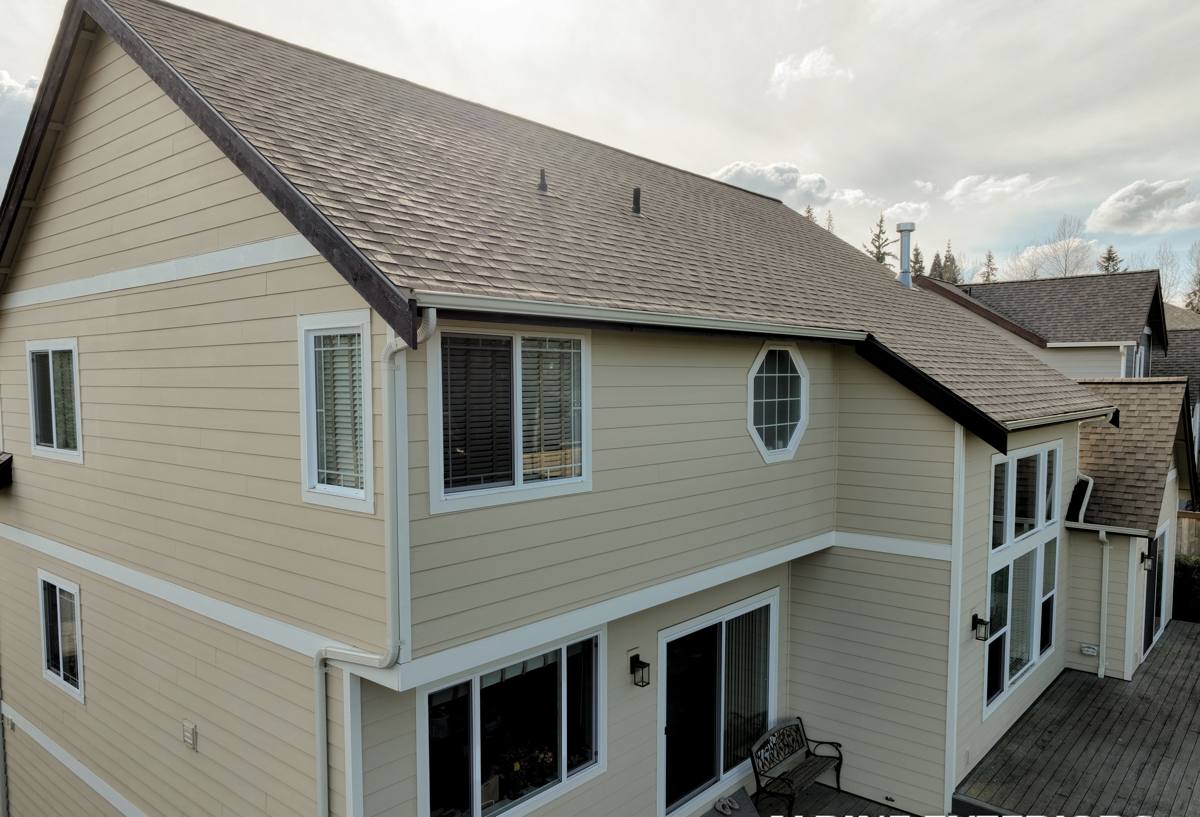
What Ferndale's Climate Actually Does to Windows
Salt Air and Corrosion
Homes closer to the water deal with airborne salt that settles on hardware, screens, and exposed metal. Over years, this accelerates corrosion on lower-grade fasteners, cheap balance hardware, and unprotected aluminum trim. It doesn't ruin a window overnight, but it shortens the life of anything not rated or finished to handle it.
Driving Rain
Wind-driven rain off the water doesn't just fall on a window — it gets pushed sideways into any gap in the flashing or sealant. This is the single biggest cause of hidden rot we see in window installations that weren't detailed correctly the first time. A window can look fine from the outside for years while water is quietly working into the framing behind it.
The Long Moss and Damp Season
Whatcom County's extended damp season keeps wood trim, sills, and casings wet for long stretches at a time. Combined with shaded exposures and mature landscaping common in Ferndale's older neighborhoods, that moisture has more time to soak into any exposed or poorly sealed wood before it gets a chance to dry out.
Signs a Ferndale Home Needs New Windows or a Correct Reinstall
- Fogging or a permanent haze between the panes of a double-pane window — the seal has failed and the gas fill is gone
- Soft or spongy wood at the sill or bottom corners of the frame, often hidden under paint that still looks intact
- Visible daylight or a draft you can feel with your hand near the frame on a windy day
- Windows that are difficult to open, close, or lock — frames can swell, twist, or settle out of square
- Streaking, staining, or a chalky white residue on siding directly below a window, which often points to water bypassing the flashing
- Rising heating bills without an obvious cause, especially in a home with original single-pane or early dual-pane windows
- Rust staining on hardware, screens, or exterior trim near the window opening
Any one of these on its own might not be urgent. Several together, especially rot at the sill combined with staining below, usually mean water has already been getting past the window for a while.
What a Correct Window Installation Actually Involves
The window unit itself is only part of the job. Most window failures we're called out to repair in this area trace back to installation shortcuts, not a bad product. A correct installation includes:
Proper Opening Prep
Removing the old unit cleanly, inspecting the framing and sheathing underneath for hidden rot or water staining, and repairing or replacing any compromised wood before the new window goes in. Skipping this step and installing a new window over damaged framing just hides the problem for a few more years.
Sill Pan Flashing
A sloped, sealed pan at the bottom of the opening gives any water that does get past the window a path to drain back out rather than sitting against the framing. In a climate with as much driving rain as this one, a sill pan isn't optional — it's the difference between a window that sheds water and one that slowly rots from the inside out.
Correct Flashing Sequencing
Housewrap, flashing tape, and the window's nailing fin all need to overlap in the right order — water-shedding from top to bottom, like shingles — so that any moisture that reaches the wall assembly is directed outward and downward, never trapped behind a layer that dead-ends it against the sheathing.
Sealing and Insulating the Gap
The gap between the window frame and the rough opening needs to be insulated and air-sealed without over-packing it, which can bow the frame and cause the window to bind or operate poorly.
Exterior Trim and Caulking
The final exterior seal — trim, caulk, and paint or finish — is what stands between the elements and everything installed underneath. In a marine climate, using a caulk and paint system rated for constant moisture exposure matters more than it would in a drier region.
Choosing Window Materials for Whatcom County Conditions
Not every window frame material handles salt air, constant humidity, and driving rain equally well. Here's how the common options generally compare for this specific climate:
| Frame Material | Moisture & Salt Air Resistance | Maintenance Needs | Typical Lifespan | Relative Cost |
|---|---|---|---|---|
| Vinyl | Very good — won't rot or corrode | Low; occasional cleaning | 20–30+ years | $ |
| Fiberglass | Excellent — dimensionally stable in wet, cold, and warm cycles | Low | 30+ years | $$$ |
| Wood (unclad) | Poor to fair without diligent upkeep | High — regular repainting and sealing | Varies widely with maintenance | $$ |
| Wood-clad (aluminum or vinyl exterior) | Good on the exterior face; interior wood still needs some care | Moderate | 25–35 years | $$$ |
| Aluminum | Fair; prone to condensation and corrosion near salt air unless thermally broken | Low to moderate | 20–30 years | $$ |
We don't push unclad wood windows on homes with real salt air or driving-rain exposure. It's not that wood is a bad material — it's that keeping unprotected wood ahead of this climate's maintenance demands is a losing battle for most homeowners. If you want the look of wood, a wood-clad or fiberglass unit gives you that appearance with far less upkeep.
Energy Performance and Washington State Requirements
New and replacement windows in Washington need to meet the Washington State Energy Code's U-factor requirements, which measure how well a window resists heat loss. In a climate like Whatcom County's — cool, damp, and overcast much of the year — a low U-factor keeps heating costs down and reduces the interior condensation that shows up on poorly performing glass during cold, humid stretches.
Beyond the code minimum, look for:
- Low-E coatings, which reduce heat loss without noticeably darkening the glass
- Argon or krypton gas fill between panes, which improves insulation over plain air
- Warm-edge spacers, which reduce the cold-edge effect that causes condensation to form first at the corners of the glass
These features matter more here than in a dry climate, because condensation on interior glass is usually a sign the window's edge performance can't keep up with the humidity load in the room.
Our Installation Process
- On-site assessment — we look at the existing windows, the condition of the framing where accessible, and any signs of past water intrusion before recommending a scope of work.
- Product selection — we walk through frame material, glass package, and style options suited to the specific exposure of that wall (a window facing prevailing wind and rain gets scrutinized differently than a sheltered one).
- Removal and inspection — old units come out carefully, and we check the rough opening and sheathing for hidden damage before anything new goes in.
- Repair as needed — any soft or rotted framing gets replaced, not covered up.
- Flashing and sill pan installation — done in the correct water-shedding order, every time, regardless of whether it's a single window or a whole-house replacement.
- Window installation, leveling, and insulation — set square, shimmed correctly, and insulated without distorting the frame.
- Exterior trim, sealing, and finish work — completed with materials suited to constant moisture exposure.
- Final walkthrough — checking operation, locking hardware, and a clean job site before we call it done.
Why Hiring a Crew That Already Works in Ferndale Matters
A contractor who works this specific area regularly has already seen how houses here age — which exposures take the worst of the wind-driven rain, which older homes are more likely to have hidden rot around original wood windows, and which details tend to get skipped by installers who don't usually work this close to the water. That's not something you can fully substitute with a generic install checklist from a manufacturer's manual. It comes from having pulled apart enough Whatcom County window openings to know what's actually behind the trim.
It also means realistic expectations about timing — scheduling around the wettest stretches of the year when possible, and understanding that a rushed install during a bad-weather window is exactly how flashing mistakes happen.
Keeping New Windows Performing Long-Term
A correct installation buys you decades, but a little upkeep keeps it working as intended:
- Rinse accumulated salt residue and grime off frames and hardware a couple of times a year, especially on wind-exposed sides of the house
- Check exterior caulk lines annually for cracking or gaps, and touch up before the wet season sets in
- Keep gutters and downspouts clear so overflow isn't running down the wall and pooling at window heads
- Trim back vegetation that keeps a window or its trim shaded and damp for extended periods
- Operate locking hardware periodically through the year so hinges and locks don't seize from disuse plus humidity
- Watch for early signs of trouble — sticking sashes, soft trim, or fresh staining below a sill — and address them before they spread
Get a Straightforward Estimate
If you're dealing with drafty, foggy, or rot-prone windows on a Ferndale home, we're happy to take a look and give you an honest read on what's going on and what it would take to fix it right. There's no pressure and no obligation — just a straight answer from a crew that understands what this climate does to a house. Use the form below to request a free estimate.