 Bellingham Exterior
 Fiber Cement Siding on Birch Bay's Waterfront
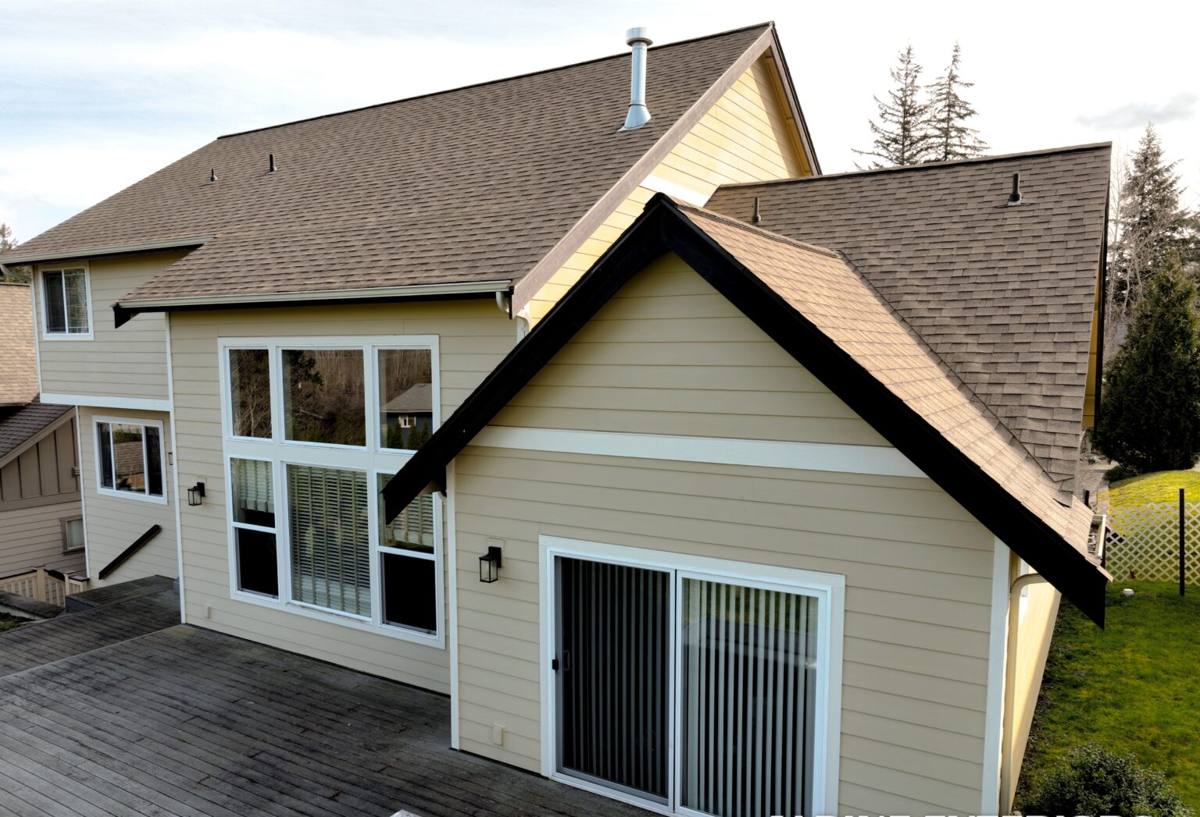
Birch Bay sits on open water in northern Whatcom County, and that location puts more stress on a home's exterior than most inland properties ever see. Siding here isn't just a cosmetic choice — it's the first line of defense against salt-laden marine air, wind-driven rain that comes in sideways off the water, and a moss and mildew season that can run most of the year on shaded walls. We install James Hardie fiber cement siding for homes in and around Birch Bay, and this page is specifically about that job: what the material needs to do here, what correct installation looks like, and why the exposure at Birch Bay is different enough to matter.
This isn't a general siding overview. It's written for homeowners weighing a siding project on a Birch Bay property, where the combination of salt, wind, and moisture calls for more attention to detail than a typical siding job a few miles inland.
What This Climate Actually Does to Siding
Salt Air and Corrosion
Homes directly on or near the bay take on more airborne salt than properties set back from the water. Salt accelerates corrosion in exposed fasteners, flashing, and trim, and it can break down lower-quality finishes faster than they'd fail in a drier climate. It doesn't damage fiber cement siding itself the way it can degrade some metals and finishes, but it does mean every fastener, corner piece, and trim detail around the siding has to be chosen with that corrosion risk in mind — not just picked for cost or appearance.
Wind-Driven Rain
Waterfront exposure brings more sustained wind, and wind-driven rain doesn't behave like a normal rainstorm. Instead of falling straight down and running off, it gets pushed sideways into wall assemblies, laps, and joints. That means water pressure testing siding details that would stay dry in a calmer, more sheltered location. Panel overlaps, joint treatment, and the drainage plane behind the siding all have to account for water arriving from an angle, not just from above.
A Long Moss and Mildew Season
Mild temperatures, shade, and near-constant moisture add up to a moss and mildew season that can stretch across most of the year in this part of Whatcom County. Siding that holds even slight surface moisture becomes a growth surface over time, especially on north-facing or tree-shaded walls. A dense, properly sealed material with a factory finish resists that far better than a porous or field-painted surface does.
Why Fiber Cement Handles This Exposure Well
Fiber cement is a mix of cement, sand, and cellulose fibers pressed into dense, dimensionally stable panels. That density is what makes it a good fit for Birch Bay specifically: it doesn't absorb water the way wood-based products do, it doesn't swell or cup through repeated wet-dry cycles, and it holds its shape through the wind loading that comes with living on open water. We install James Hardie's product line specifically, for a few reasons that matter in this exact climate:
- Non-combustible core: fiber cement doesn't feed a fire the way wood-based siding can, which matters for safety and can matter for insurance.
- Factory-applied ColorPlus finish: color and topcoat are baked on under controlled conditions rather than brushed on in the field, which resists fading, chalking, and moisture intrusion far longer than site-applied paint.
- Climate-engineered HZ formulation: Hardie's HZ5 product line is engineered for regions with sustained moisture and freeze-thaw cycling, which is a reasonable description of Whatcom County's coastal exposure.
- Dimensional stability: the panels don't warp or cup the way engineered wood siding can when it takes on repeated moisture over a wet season.
- A strong transferable warranty: backed by the manufacturer, provided the installation follows their published specification.
We don't install LP SmartSide, vinyl siding, Cemplank, Allura, primed spruce, or cedar. Those products all have a place in the market, and plenty of homeowners elsewhere are happy with them. On a shoreline exposure like Birch Bay, though, we've made the professional call to install one system we're willing to fully stand behind rather than offer a lower-cost option that quietly shifts more long-term maintenance onto the homeowner.
What Correct Installation Involves Here
Fiber cement only performs the way it's designed to when it's installed to spec. That matters everywhere, but it matters more on a wind- and rain-exposed lot like Birch Bay, where a shortcut in flashing or fastening shows up as a leak within a season or two instead of years down the road.
Clearance and Drainage
Hardie's specification calls for minimum clearances from grade, roof lines, and decks, along with a drainage plane behind the panels in most assemblies. On a waterfront lot, we don't treat those clearances as guidelines to shave down for a tighter look — they're what keeps bulk water moving out of the wall assembly instead of sitting against the bottom edge of the siding.
Fasteners, Flashing, and Trim
Every fastener and piece of flashing needs to be rated for the corrosion exposure this location sees. That includes nail or screw selection at the siding itself, and it extends to flashing at windows, doors, and any roof-to-wall transition, since those are the spots where wind-driven rain most often finds a way in. Undersized or mismatched hardware is one of the more common causes of early failure we see on homes that weren't built with this exposure in mind.
Joint Treatment and Factory Finish
ColorPlus panels are factory-finished on the face, but joints, cut edges, and any field-cut panel ends still need to be properly sealed or capped per spec. Leaving a cut edge exposed, even briefly, gives moisture a way into the substrate — and in a climate with this much sustained dampness, that detail doesn't get a pass.
Comparing Siding Options for Birch Bay's Exposure
| Material | Moisture Behavior | Maintenance in Salt Air | Typical Longevity Here |
|---|---|---|---|
| James Hardie fiber cement | Dense, dimensionally stable; resists swelling and cupping | Low; factory finish resists fading and chalking | 30+ years with correct installation |
| Vinyl siding | Can distort with heat and wind flex over time | Low upfront cost, but seams and fasteners are exposure points | Variable; often shorter in high-wind coastal spots |
| LP SmartSide / engineered wood | Wood-based core is moisture-sensitive at cut edges and joints | Moderate; ongoing edge-sealing and caulk upkeep required | Depends heavily on installation quality and upkeep |
| Cedar / primed wood | Absorbs and releases moisture readily | High; regular refinishing needed in wet, salty air | Shorter without consistent, disciplined maintenance |
Our Process for a Birch Bay Siding Project
The process itself isn't unusual — what changes for a Birch Bay property is how much attention goes into the exposure-sensitive details along the way.
- On-site assessment: we walk the existing siding and look specifically for how it has handled moisture and wind exposure — soft spots, failed caulk joints, corroded fasteners, and moss buildup on shaded walls.
- Written scope and product plan: we confirm the correct Hardie product line, profile, and color, and put together a clear written scope before any work starts.
- Tear-off and substrate check: once old siding comes off, we check the sheathing and framing underneath for hidden moisture damage before anything new goes up.
- Drainage and flashing detail: housewrap, flashing, and drainage plane details go in first, since these are what actually keep water out — the siding is the visible layer, not the only layer.
- Installation to spec: panels go up with correct clearances, fastener spacing, and joint treatment, following Hardie's published installation requirements for this climate zone.
- Final walkthrough: we go over the finished work with the homeowner, including what routine maintenance to expect and what the warranty covers.
What Birch Bay Homeowners Should Expect for Upkeep
Fiber cement is genuinely low-maintenance compared to wood-based sidings, but "low-maintenance" doesn't mean "no maintenance" on a property that sits this close to open water. A short seasonal routine goes a long way toward protecting the installation and keeping the warranty valid.
- Rinse salt spray and general grime off the siding a couple of times a year, especially on water-facing walls
- Check caulked joints around windows, doors, and trim annually for cracking or separation
- Keep gutters clear so water isn't overflowing directly onto siding below
- Trim back vegetation that's shading a wall and keeping it damp longer than it needs to be
- Watch shaded, north-facing sections for early moss or mildew growth and address it before it spreads
Why a Crew That Already Works Birch Bay Matters
A contractor who works this stretch of Whatcom County regularly already knows how salt air, sustained wind, and prolonged moisture behave differently here than they do even a few miles inland. That shows up in specific decisions — fastener grade, how flashing gets lapped at a window head, where extra drainage detailing gets added on a water-facing wall — and those decisions are what determine whether a siding job holds up for one wet season or several decades. It also means fewer surprises during the project itself, since the crew has already seen how this particular exposure treats an exterior wall assembly over time.
Questions Worth Asking Before You Hire
- What siding material do they install, and are they willing to explain why in plain terms?
- Do they carry current Washington contractor licensing and active insurance?
- How do they detail flashing at windows, doors, and roof-to-wall transitions for wind-driven rain specifically?
- What fastener and hardware grade do they use, given the salt exposure this close to the water?
- Will you get a clear, written scope of work before any contract is signed?
If you're considering fiber cement siding for a home in Birch Bay, we're glad to walk the exterior with you and give an honest read on what it needs and what a correct installation would involve. Reach out below for a free, no-pressure estimate.