 Bellingham Exterior
 Edgemoor's Setting Is Beautiful — and Hard on Siding
Edgemoor sits close to the water, under mature tree cover, on a landscape that stays shaded and damp for long stretches of the year. That combination is exactly what wears siding out faster than almost anywhere else in Whatcom County. You've got salt-laden air drifting off the bay, driving rain that comes in sideways during winter storms, and a moss season that can run from October through May on any surface that doesn't get direct sun and airflow.
None of that is unusual for a Pacific Northwest coastal neighborhood — but it means siding decisions that work fine on an open, sunny lot inland don't always hold up on a shaded, water-adjacent property. Salt air accelerates corrosion on fasteners and trim. Constant moisture without enough drying time between rain events keeps wood-based products damp longer than their finish is designed to tolerate. Moss and algae don't just look bad — they hold moisture against the siding surface and, on the wrong material, encourage rot and paint failure underneath.
Fiber cement siding is the right answer to this environment, but only when the product and the installation both account for it. That's the whole focus of this page.
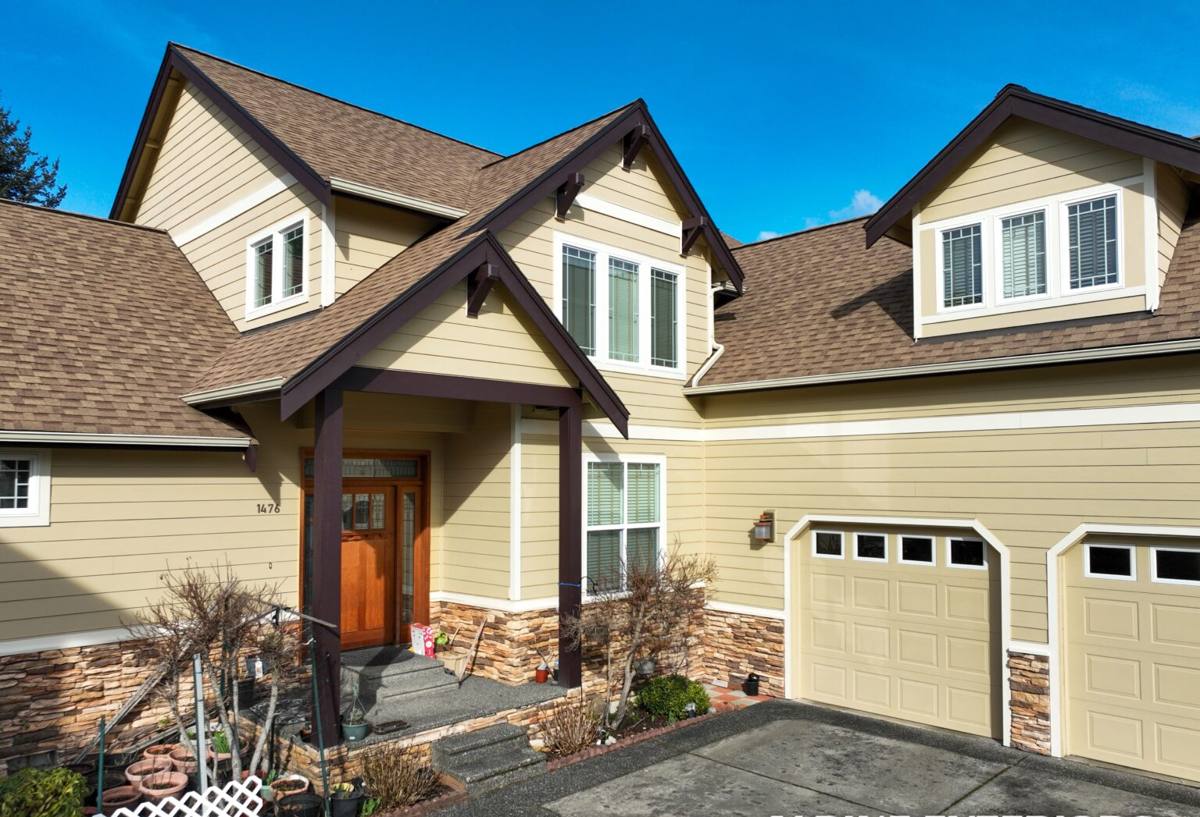
What Edgemoor Homes Actually Need From Their Siding
Moisture Management, Not Just Water Resistance
The real threat isn't a single rainstorm — it's cumulative dampness. Homes tucked under tree canopy or shaded by neighboring lots don't get the sun exposure that dries siding out between weather events. Siding on these homes needs a material that doesn't absorb and hold water, plus an installation that gives water an escape route: proper flashing, correct clearances, and drainage that doesn't trap moisture behind the cladding.
Resistance to Salt Air Corrosion
Bay-adjacent properties see faster corrosion on anything metal — fasteners, flashing, trim screws. Using the wrong fastener material, or skipping proper flashing details, shortens the life of a siding job regardless of how good the siding panel itself is.
A Surface That Doesn't Feed Moss and Algae
Moss needs a damp, textured surface to grip. Some siding materials — especially wood and some engineered wood products — give moss and algae more to hold onto, and once established, organic growth is genuinely difficult to fully clear without damaging the underlying material. A dense, factory-finished surface sheds growth more easily and holds up better to the cleaning it will eventually need.
Why We Install Only James Hardie Fiber Cement
We don't install vinyl, LP SmartSide, Cemplank, Allura, or primed wood siding. That's a deliberate standard, not a lack of options. James Hardie fiber cement is non-combustible, dimensionally stable in wet climates, and comes with a factory-applied ColorPlus finish that's baked on under controlled conditions rather than field-painted — which matters enormously in a neighborhood where humidity and rain limit the number of good painting days in a year.
Hardie also engineers specific product lines by climate zone. The HZ5 formulation used in the Pacific Northwest is built for exactly the freeze-thaw cycling, sustained moisture, and coastal exposure that Edgemoor sees. That's a meaningful difference from generic fiber cement — it's a product designed for this specific kind of weather, not a one-size-fits-all board.
The last piece is the warranty. Hardie's transferable warranty coverage on both the substrate and the ColorPlus finish gives homeowners real protection over a long ownership horizon — and it holds up specifically when the product is installed to Hardie's published specifications, which is why correct installation isn't optional on our jobs.
Choosing the Right Hardie Line for a Wooded, Waterfront-Adjacent Lot
HardiePlank Lap Siding
The most common choice for Edgemoor-style homes. It gives a traditional horizontal look, sheds water efficiently by design, and is available in a range of ColorPlus finishes and textures (smooth or cedar-shake grain) that suit both older character homes and newer construction in the neighborhood.
HardiePanel for Modern or Accent Applications
Vertical panel siding works well for contemporary homes or as an accent material paired with lap siding — common on garages, gables, or feature walls where a cleaner, more modern line is wanted.
HardieShingle for Character Homes
For homes with a more traditional or Craftsman-influenced look, HardieShingle gives the staggered or straight-edge shingle appearance without the moisture retention and moss vulnerability of real cedar shingles.
The right choice depends on the home's architecture, sun exposure, and how much of the siding sits under continuous tree shade — we walk each property before recommending a line and profile rather than defaulting to one product for every job.
How Fiber Cement Compares to the Alternatives Here
| Material | Behavior in salt air / driving rain | Moss resistance | Maintenance burden |
|---|---|---|---|
| James Hardie fiber cement | Dimensionally stable, doesn't absorb water like wood | Dense factory finish sheds growth more easily | Periodic wash; ColorPlus finish holds color without repainting |
| Vinyl siding | Can warp or become brittle with UV and temperature swings; seams can allow water intrusion | Moderate — smooth surface but seams and laps trap debris | Low, but damaged sections are hard to color-match after fading |
| LP SmartSide / engineered wood | Wood-based core is more vulnerable to sustained moisture exposure over time | Higher — textured wood surface holds organic growth | Requires more diligent caulking, painting, and edge sealing upkeep |
| Cedar / primed spruce | Natural material moves with moisture; needs consistent finish maintenance | Highest — organic material is a natural substrate for moss and algae | Regular refinishing and treatment needed to prevent decay |
This isn't a knock on every one of these products in every climate — some perform reasonably well in drier regions. It's specifically why we don't recommend them for a shaded, bay-adjacent, moss-season environment like Edgemoor.
What Correct Installation Actually Involves
Fiber cement siding is only as good as the installation behind it. On Edgemoor properties specifically, a few details matter more than usual:
- Proper flashing at every window, door, and roofline intersection — where the majority of water intrusion problems actually start
- Correct fastener spacing and type, chosen to resist salt-air corrosion over the long term
- Manufacturer-specified clearances from grade, roofing, and decking so siding doesn't sit in standing moisture
- A drainage plane behind the siding that lets any incidental moisture escape instead of getting trapped
- Tight, consistent caulking at joints and penetrations, using products rated for sustained wet exposure
- Careful cutting and sealing of exposed edges, since an unsealed cut edge is the fastest way for a fiber cement board to take on water damage
Skipping or rushing any one of these is how a siding job that looks fine on installation day starts showing problems within a few wet seasons.
Our Process, Start to Finish
Site Assessment
We walk the property, check existing siding and sheathing condition, note sun exposure and tree cover, and identify any moisture damage that needs to be addressed before new siding goes on — installing over a hidden problem never ends well.
Prep and Weather Barrier
Old siding comes off, sheathing is inspected and repaired as needed, and a proper weather-resistant barrier goes on before any Hardie product is installed.
Installation to Manufacturer Spec
Flashing, fastening, clearances, and caulking are all done to James Hardie's published installation guidelines — this is what keeps the warranty valid and the siding performing for decades.
Final Walkthrough
We review the finished job with the homeowner, confirm caulking and trim details, and make sure everything is clean and job-site debris is cleared.
Living With Fiber Cement Siding in a Moss-Prone Environment
Hardie siding needs far less upkeep than wood or engineered wood alternatives, but "low maintenance" doesn't mean "no maintenance" — especially under Edgemoor's tree cover. A little regular attention keeps it looking right for the long haul:
- Rinse siding down once or twice a year, especially on shaded, north-facing walls where moss and algae establish first
- Keep tree branches and shrubs trimmed back from siding to improve airflow and sun exposure
- Check and refresh caulking at joints and trim every few years, particularly on the sides of the house that take the most weather
- Address any gutter overflow or downspout issues promptly — misdirected water is one of the most common causes of localized siding damage
- Have any impact damage or cracked boards repaired promptly rather than waiting, since exposed edges are where moisture problems start
Why Local Experience Matters for This Job
A crew that already works in Edgemoor understands the practical realities of the neighborhood — tree-shaded lots that stay damp longer, bluff and slope conditions that affect access and staging, and the moisture patterns that come with proximity to the bay. That local familiarity shows up in small decisions: where extra flashing attention is warranted, which sides of a home need closer moisture inspection before covering them up, and how to sequence a job around the wetter stretches of a Whatcom County year. It's the difference between a siding job that's technically installed and one that's installed correctly for where it actually sits.
If you're planning a siding project in Edgemoor, we're happy to take a look and talk through what your home specifically needs. Reach out for a free, no-pressure estimate using the form below.