 Bellingham Exterior
 Building Decks for Happy Valley That Actually Hold Up
Happy Valley homes deal with a specific combination of weather that a lot of decks simply aren't built for: near-constant damp air off the water, driving rain that comes in sideways for months at a time, and a moss and algae season that can run from fall through spring. A deck built to a generic national spec will often look fine for the first year or two and then start showing problems — soft spots, black staining, slick surfaces, fasteners bleeding rust — well before it should. Building correctly for this specific neighborhood's conditions from day one is what separates a deck that needs real work again in five years from one that's still solid in twenty-five.
This page covers what actually matters for a custom deck project in Happy Valley: the climate factors at play, material tradeoffs, the framing details that get skipped on rushed jobs, and how we approach the work from first conversation to final walkthrough.
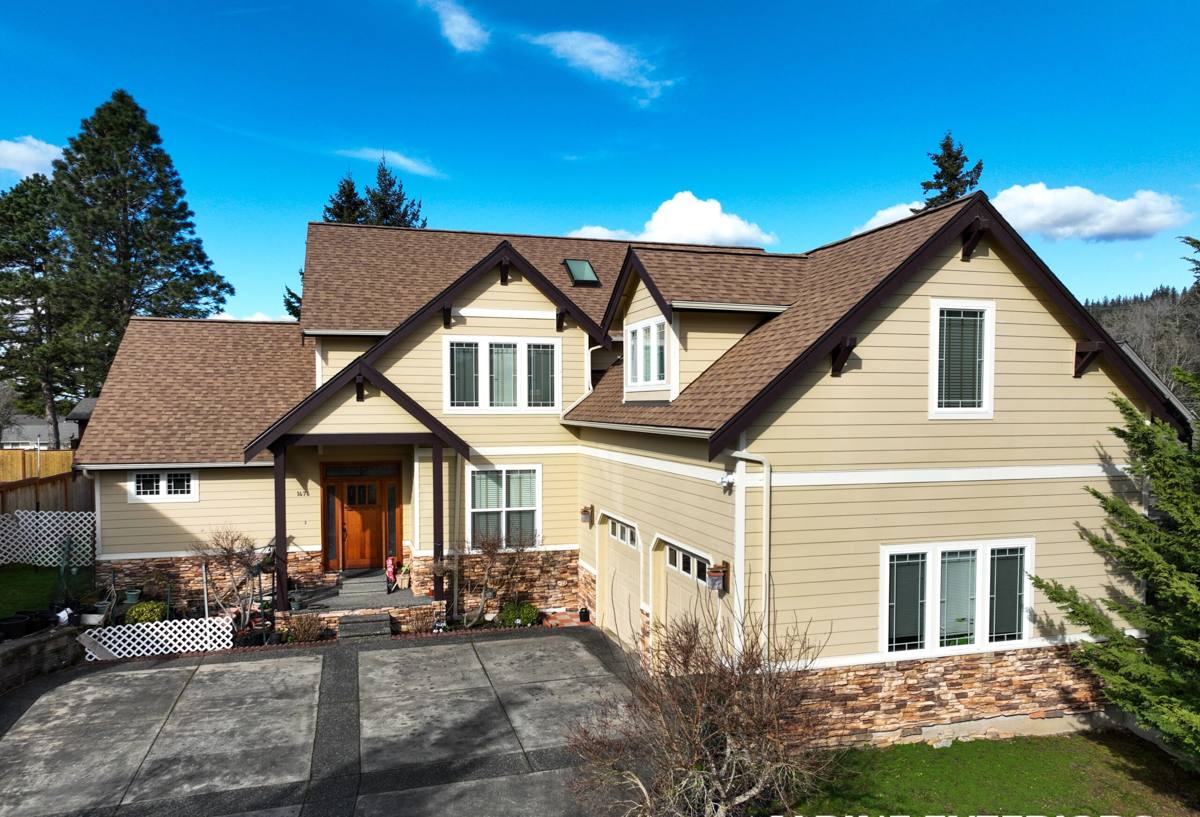
What Bellingham's Weather Does to an Unprotected Deck
Whatcom County's climate is mild compared to a lot of the country, which is part of why people don't always take deck durability as seriously as they should here. Mild doesn't mean gentle. The combination that does the real damage is moisture that never fully leaves, plus salt-tinged coastal air that accelerates corrosion on anything metal.
Moisture that doesn't dry out
In a lot of the country, decks get long dry stretches where wood can fully release trapped moisture. Around Bellingham, especially on decks with limited sun exposure or tree cover, that drying window can be short. Wood that stays damp for extended periods is where rot gets a foothold — not from a single storm, but from months of low-grade dampness sitting against end grain, fastener holes, and ledger connections.
Moss, algae, and surface staining
Moss and algae need shade and moisture to establish, and a lot of Happy Valley lots have both from mature tree cover. Left unaddressed, moss doesn't just look bad — it holds water against the decking surface and creates a genuinely slippery walking surface, which is a real fall hazard on stairs and ramps.
Salt air and hardware corrosion
Being close to the water means airborne salt reaches further inland than people expect. Standard fasteners and connectors that would be fine in a drier inland climate can start corroding within a few years here if they're not rated for coastal exposure. Corroding hardware is a structural issue, not a cosmetic one — it's the connection points that keep a deck attached to the house and standing upright.
Choosing the Right Decking Material for This Climate
There's no single "best" decking material — there's a best material for a given budget, sun exposure, and maintenance appetite. Here's how the common options actually perform under Bellingham conditions specifically.
| Material | Moisture Behavior Here | Maintenance Needed | Typical Lifespan |
|---|---|---|---|
| Pressure-treated lumber | Prone to moss/algae growth in shaded spots; needs regular sealing | Annual cleaning, reseal every 2-3 years | 15-20 years with upkeep |
| Cedar | Naturally rot- and insect-resistant, but greys and can get slick without upkeep | Cleaning and sealing every 1-2 years to hold color and grip | 20-25 years with consistent maintenance |
| Composite decking | Doesn't absorb moisture the way wood does; resists rot at the board level | Periodic washing to keep surface film from becoming slick | 25-30+ years, varies by manufacturer warranty |
| Tropical hardwoods | Very dense, low water absorption, but heavy and unforgiving to install wrong | Low, but requires oiling if color retention matters to you | 25+ years |
Composite has become popular in this area for a straightforward reason: it takes the wood-rot variable mostly off the table, which matters a lot when a deck sits in shade for half the day. But composite isn't automatically the right call for every project — cedar and hardwood still make sense for homeowners who want a specific look, are comfortable with periodic maintenance, and want to avoid the plastic feel some composite boards have underfoot. We'll walk through the real tradeoffs for your specific lot and sun exposure rather than pushing one material by default.
Framing and Substructure: Where Most Deck Failures Start
The decking boards are the part everyone sees, but the framing underneath is what determines whether a deck is safe and how long it actually lasts. This is also where corners get cut on lower-quality jobs, because framing mistakes don't show up for years.
Footings and posts
Footings need to be sized and set below frost depth and on undisturbed or properly compacted soil. On sloped Happy Valley lots, this often means deeper or stepped footings than a flat-lot deck would need — skipping that step is a common source of settling and uneven decks down the line.
Ledger board flashing
Where a deck attaches to the house is the single most common source of hidden water damage on decks anywhere in the Pacific Northwest. Proper flashing at the ledger — installed correctly, in the right order relative to the house's siding and weather barrier — keeps water from tracking behind the deck and into the wall framing. This is not a step to shortcut, and it's often invisible once the deck is finished, which is exactly why it needs to be done right the first time.
Joist spacing and airflow
Tighter joist spacing than code minimum, combined with intentional airflow underneath the deck, helps framing dry out between rain events instead of sitting wet. On shaded or low-clearance decks, this detail matters more here than it would in a drier climate.
Railings, Fasteners, and Hardware That Actually Last
Hardware choice is one of the least glamorous parts of a deck build and one of the most consequential for how it ages in this climate.
- Structural connectors and fasteners rated for coastal or high-moisture exposure, not standard interior-grade hardware
- Hidden fastener systems on composite decking to reduce surface water pooling around screw heads
- Railing posts properly through-bolted to framing, not just toe-screwed, for both safety and long-term rigidity
- Stainless or coated hardware at any connection exposed directly to weather
- Proper gapping between deck boards to let water shed instead of pool
Our Process, Start to Finish
We keep the process straightforward and communicate clearly at each stage, since most homeowners are trusting us with a project they only go through once or twice.
1. On-site assessment
We look at sun exposure, drainage, slope, and how the deck will tie into the house before recommending materials or layout — this is where climate-specific decisions actually get made, not in a generic quote.
2. Design and material selection
We walk through the tradeoffs in plain terms — what a given material or layout will cost to maintain over time, not just to install.
3. Permitting
Most deck projects in this area require a permit, particularly for elevated structures or anything attached to the house. We handle that process as part of the job rather than leaving it to the homeowner.
4. Construction
Footings, framing, flashing, and decking are each inspected as the work progresses rather than only at the end.
5. Final walkthrough
We go over the finished deck together, including basic care guidance specific to the material you chose.
Maintenance: Keeping Moss and Algae From Taking Over
Whatever material you choose, some level of upkeep is part of owning a deck in this climate. The goal isn't to eliminate maintenance — it's to build the deck so maintenance stays simple and infrequent rather than becoming a constant fight.
- Clear leaves and debris from between boards regularly, especially in fall
- Wash the surface at least once a year to interrupt moss and algae before it establishes
- Reseal wood decking on the schedule appropriate to the product — skipping a cycle here is what leads to premature graying and cracking
- Keep nearby vegetation trimmed back to let sun and air reach shaded sections of the deck
- Check railing and stair connections annually for movement or corrosion
Why a Crew That Already Works Happy Valley Matters
A contractor who builds decks all over the region, or mostly in drier inland areas, doesn't always default to coastal-grade hardware, proper ledger flashing sequencing, or footing depths suited to Whatcom County's soil and slope conditions unless specifically asked. A crew that regularly works Happy Valley and the surrounding Bellingham area treats those details as standard practice, not upgrades — because we've seen what happens when they're skipped, and we'd rather build it right the first time than get called back for a repair that shouldn't have been needed.
If you're planning a custom deck for your Happy Valley home, we're happy to take a look at your space and talk through what makes sense for your budget, sun exposure, and how you actually plan to use it. Reach out for a free, no-pressure estimate using the form below.