 Bellingham Exterior
 Happy Valley's Housing Stock Faces a Specific Set of Problems
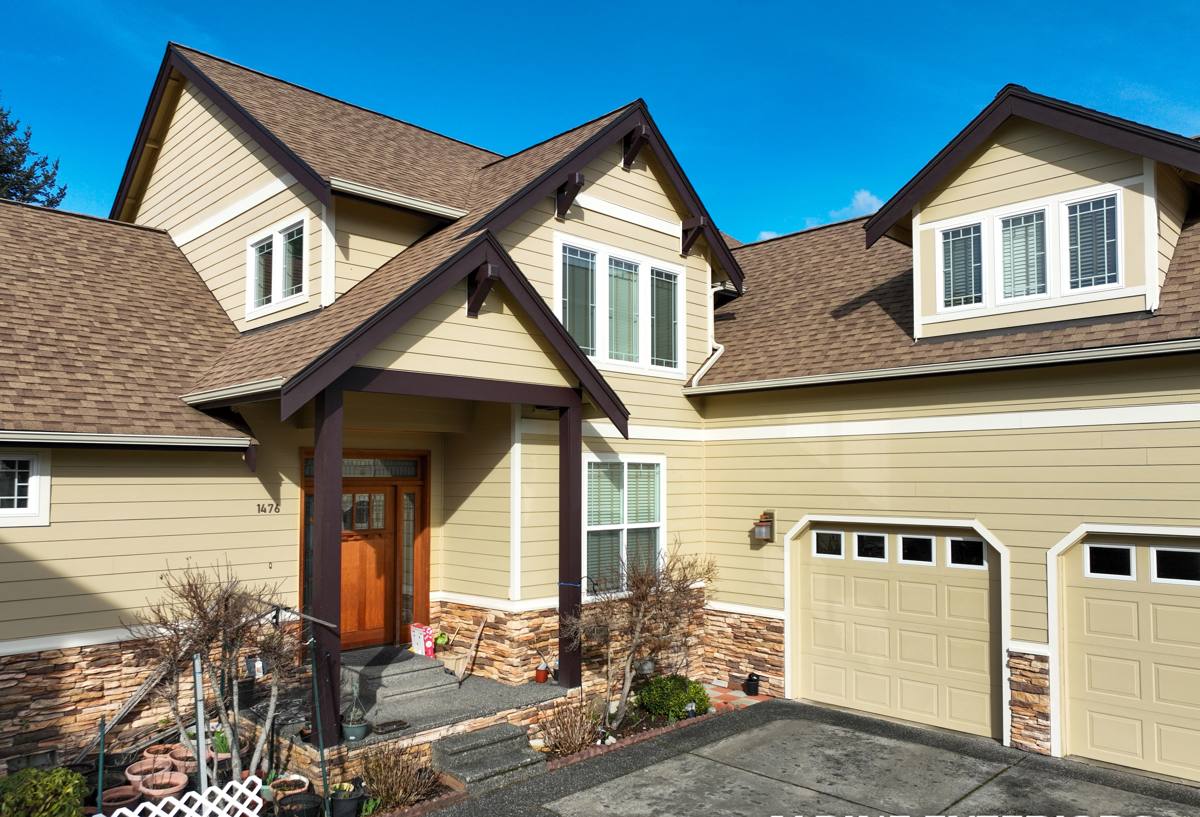
Happy Valley is one of Bellingham's older, established neighborhoods, and that means a lot of homes here are wearing their second or third exterior. Whatcom County's marine climate is hard on siding in ways that inland Washington homes never have to deal with: salt-laden air drifting in off the water, long stretches of driving rain, and a moss season that can run from fall through spring. A siding product or installation method that works fine in a dry climate can fail here in half the time. If you're looking at re-siding a home in Happy Valley, the material and the workmanship both need to be matched to this specific environment, not a generic national spec sheet.
What This Climate Actually Does to Siding
Salt Air and Moisture
Bellingham sits close enough to salt water that airborne salt reaches inland neighborhoods, including Happy Valley, especially during windier weather. Salt is hygroscopic — it pulls moisture out of the air and holds it against whatever surface it lands on. Over years, that means siding, fasteners, and trim stay damp longer than they would in a drier inland town. Any product or fastener that isn't rated for this kind of exposure corrodes, swells, or degrades faster than its warranty assumes.
Driving Rain
Storms here rarely come straight down. Wind-driven rain gets pushed sideways into wall assemblies, which puts real pressure on every joint, seam, and penetration in the siding system. This is where installation quality matters as much as the product itself — a technically good siding material installed with the wrong laps, gaps, or flashing details will still let water in.
Moss and Organic Growth
Shade, moisture, and mild temperatures make Whatcom County one of the better environments in the country for moss, algae, and lichen. Left unchecked, organic growth on siding holds moisture against the surface for extended periods, which accelerates any underlying rot or coating breakdown. North-facing walls and areas shaded by mature trees — common throughout Happy Valley's older lots — are usually the first places it shows up.
Why Fiber Cement Is the Right Material Class for This Neighborhood
Fiber cement is dimensionally stable — it doesn't expand and contract with moisture the way wood-based products can, and it's non-combustible. For a neighborhood dealing with sustained damp exposure and salt air, that stability matters: it means fewer opportunities for gaps to open at seams, fewer paint failures from substrate movement, and a product that doesn't rot the way wood siding, trim, or wood-based composite panels eventually will.
We install James Hardie fiber cement products exclusively. That's a deliberate standard, not a default. Hardie's ColorPlus factory finish is baked on and cured under controlled conditions, which holds up better against UV and moisture cycling than field-applied paint. Hardie also produces climate-specific HZ formulations engineered for the kind of wet, humid conditions the Pacific Northwest sees, and backs installations with a strong transferable warranty when the work is done to their specification. We don't install vinyl, LP SmartSide, Cemplank, Allura, primed spruce, or cedar — each of those has legitimate uses elsewhere, but for the moisture load and maintenance expectations of a Bellingham exterior, we think Hardie is the more honest long-term choice, and it's the only product we stand behind on our own jobs.
What a Correct Installation Actually Involves
Prep and Moisture Management
Before any siding goes up, the wall needs a proper water-resistive barrier, correctly lapped and taped at every seam and penetration. This is the layer that actually stops bulk water if wind-driven rain gets past the siding — the siding itself is the first line of defense, not the only one. Any existing rot or soft sheathing needs to be found and replaced before new siding goes on; covering up a moisture problem just hides it.
Clearance and Flashing
Fiber cement needs proper clearance from grade, roof lines, decks, and horizontal surfaces — typically several inches minimum, more in wetter conditions. Every window, door, and roof-to-wall intersection needs correct flashing and kick-out details so water is directed out and away from the wall assembly instead of running behind the siding.
Fasteners and Fastening Pattern
Corrosion-resistant fasteners are non-negotiable in a salt-air environment. Fastener spacing, blind-nailing vs. face-nailing, and butt-joint treatment all follow Hardie's published installation instructions — deviating from that spec is one of the fastest ways to void the manufacturer warranty and shorten the life of the job.
Caulking and Joint Treatment
Joints need the right sealant, applied at the right points — not everywhere, since over-caulking can trap moisture just as easily as under-caulking lets it in. This is a detail that separates a crew that's installed a lot of Hardie from one that's treating it like any other lap siding.
How Our Process Works for a Happy Valley Project
- Walkthrough and assessment — we look at the existing siding, sheathing condition, moss and moisture patterns, and any trouble spots specific to the lot (shade, drainage, wind exposure).
- Written estimate — scope, product line, color, and a clear breakdown of what's included, with no vague allowances.
- Tear-off and inspection — old siding comes off, sheathing gets inspected, and any rot or damage is documented and addressed before we move forward.
- Weather barrier and flashing — water-resistive barrier, window and door flashing, and kick-out flashing installed to spec before a single piece of siding goes up.
- Hardie installation — installed per manufacturer fastening, clearance, and joint specifications to keep the product warranty intact.
- Final walkthrough — we go over the finished job with you before calling it done.
Cost Factors for Happy Valley Homes
Every home is different, but the factors that actually move the price on a Happy Valley siding job tend to be the same ones:
| Factor | Why It Matters Here |
|---|---|
| Sheathing/rot repair needed | Older homes with a history of moisture intrusion often need hidden repair work discovered during tear-off |
| Home size and wall complexity | More corners, dormers, and roof intersections mean more flashing detail and labor time |
| Siding profile (lap, panel, shingle) | Different Hardie profiles have different material and labor costs |
| ColorPlus vs. field-painted | Factory-finished ColorPlus costs more up front but reduces future repainting |
| Access and lot conditions | Steep or tightly wooded lots, common in the neighborhood, can affect staging and labor |
Maintenance That Actually Matters in This Climate
Fiber cement is low-maintenance, not no-maintenance. In a neighborhood dealing with salt air and moss pressure, a few habits go a long way:
- Rinse siding annually to remove salt residue and organic buildup, especially on shaded or north-facing walls
- Keep gutters clear so overflow doesn't run down the siding face
- Trim back vegetation and tree limbs that keep siding shaded and damp
- Inspect caulking at joints, windows, and doors yearly and re-seal where it's cracked or pulled away
- Address any moss or algae growth early rather than letting it sit against the surface for a full season
- Watch drainage at grade level so water isn't pooling against the base of the wall
Signs an Existing Siding Job Is Failing
A lot of the calls we get in this neighborhood start with one of these:
- Soft or spongy spots when you press on the siding, usually near the bottom courses or under windows
- Paint that's bubbling, peeling, or chalking well ahead of schedule
- Visible gaps opening at butt joints or trim
- Persistent moss or dark streaking that keeps coming back after cleaning
- Warping or bowing on wood-based siding or trim
Any of these are worth having looked at before they turn into sheathing or framing damage, which costs a lot more to fix than the siding itself.
Why It Matters That We Already Work This Neighborhood
A crew that's worked Happy Valley knows which walls take the worst of the wind-driven rain, which lots hold shade and moss longer into the season, and what the older housing stock in this part of Bellingham tends to be hiding under existing siding. That's not a substitute for doing the installation correctly — the flashing details and fastening spec don't change from neighborhood to neighborhood — but it does mean fewer surprises during tear-off and a more accurate estimate from the start. Combined with a single-product standard, it means every recommendation we make is about what actually holds up here, not what's easiest to sell.
If you're weighing a siding replacement in Happy Valley, we're happy to walk your home, point out what we see, and put together a straightforward, no-pressure estimate — just fill out the form below.