 Bellingham Exterior
 Siding That Has to Work in Happy Valley's Climate, Not Just Look Good on Day One
Happy Valley sits close enough to Bellingham Bay and the surrounding tree cover that its homes deal with a specific combination of stresses most siding products were never engineered for: salt-laden air moving off the water, long stretches of driving rain in fall and winter, and a moss season that can run most of the year in shaded, tree-lined lots. Any one of those on its own is manageable. Together, over years, they expose the weak points in cheaper siding systems fast — swelling seams, peeling paint, soft spots at the bottom courses, and moss and algae staining that never fully washes out.
We install James Hardie fiber cement siding exclusively, and Happy Valley is a good example of why. Homes here need a product that resists moisture intrusion at the material level, holds its factory finish without repainting every few years, and can be detailed correctly around the kind of tree cover, hillside grading, and shaded north walls that are common in this part of Bellingham.
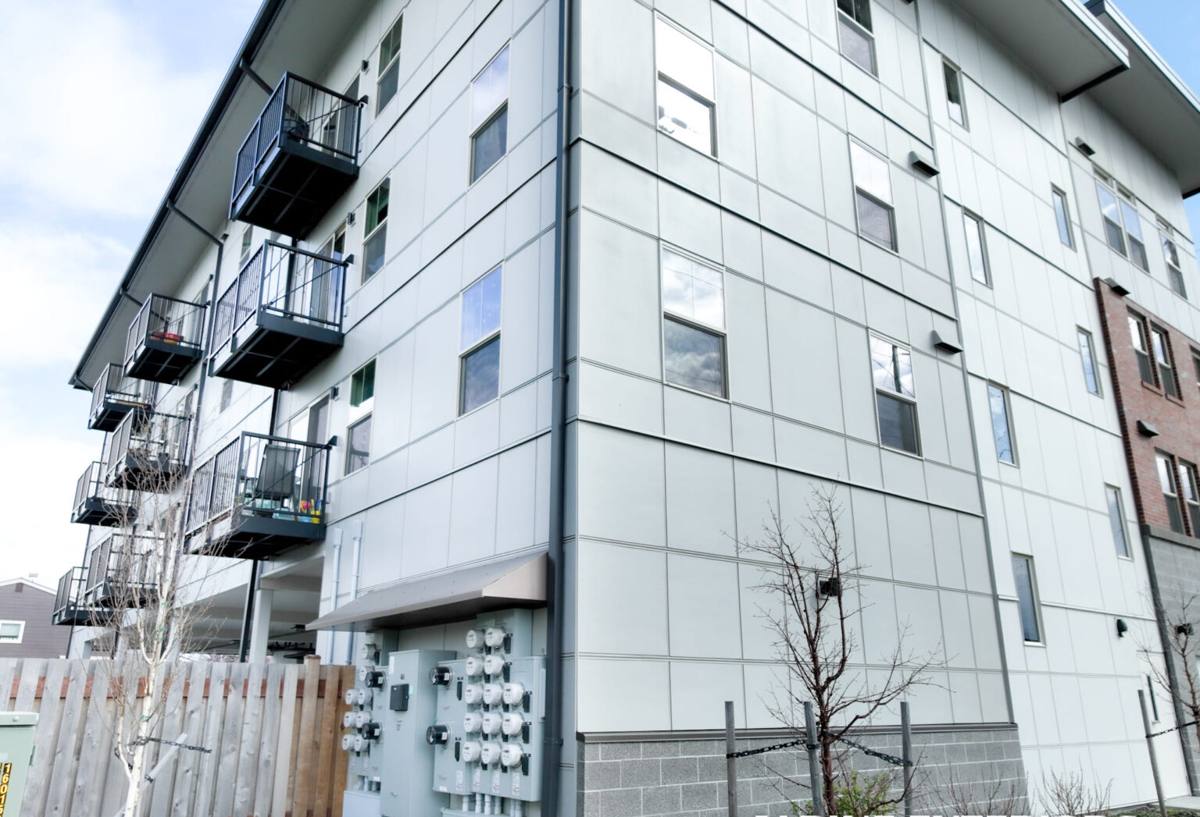
What Salt Air, Rain, and Moss Actually Do to Siding Over Time
Salt Air
Proximity to the bay means airborne salt settles on exterior surfaces even a mile or more inland. On wood-based and engineered wood siding, that salt exposure accelerates finish breakdown and creates a slightly abrasive, moisture-holding film that keeps the surface damp longer after rain. On metal fasteners and trim, it speeds corrosion if the wrong hardware was used.
Driving Rain
Whatcom County's rain doesn't just fall straight down — wind off the water pushes it sideways into wall assemblies, which is why lap siding, flashing, and caulking details matter more here than in drier climates. A siding system that's only rated for vertical rain exposure, or installed with gaps in the water-resistive barrier, will eventually let moisture behind the cladding.
Moss and Algae
Shaded lots, tree canopy, and damp northern exposures give moss and algae exactly what they need to establish on any surface that stays wet for extended periods. On absorbent siding materials, moss doesn't just sit on the surface — it can hold moisture against the substrate long enough to contribute to rot underneath.
Why We Standardized on James Hardie for Homes Like This
James Hardie fiber cement is a cement, sand, and cellulose fiber composite. It doesn't absorb and swell the way wood-based products can, it's non-combustible, and its ColorPlus factory-applied finish is baked on and warrantied separately from the substrate — which matters directly for a climate that's hard on paint. We don't install LP SmartSide, vinyl, Cemplank, Allura, or primed wood siding, because each of those asks a Happy Valley homeowner to accept a maintenance burden or moisture risk that Hardie's system was specifically engineered to reduce.
That's a standard we hold across every job, not a sales pitch for this one page — but it's worth being direct about it here, because siding decisions in this neighborhood get tested by the climate faster than in most.
HZ5 — Hardie's Climate-Zone Engineering
James Hardie makes region-specific formulations under its HZ (HardieZone) system, and the Pacific Northwest falls under HZ5, engineered for wet, marine climates. It's a meaningful distinction from siding sold as one-size-fits-all nationally, and it's part of why we spec Hardie's HZ5 products for every Bellingham-area job, Happy Valley included.
Factory Finish vs. Field-Painted Siding
One of the biggest practical differences homeowners notice over time is finish durability. In a climate with heavy rain and salt air, a factory-cured finish behaves very differently than paint applied on-site.
| Factor | ColorPlus Factory Finish | Typical Field-Applied Paint |
|---|---|---|
| Cure process | Baked on in controlled conditions for full, even cure | Cures on-site, subject to weather during application |
| Coverage consistency | Uniform coat thickness across every board | Varies by applicator, weather, and number of coats |
| Fade/chalk resistance | Engineered for UV and moisture exposure | Depends heavily on paint quality chosen |
| Repaint cycle | Typically well beyond 10-15 years before touch-up | Often needs attention within 5-8 years in this climate |
| Warranty | Separate finish warranty from Hardie | Usually painter's labor warranty only, if any |
What Correct Installation Involves on a Happy Valley Home
Fiber cement siding performs the way it's supposed to only when the assembly behind it is done right. This is where most of the long-term problems we get called to fix actually started — not with the siding material itself.
- A properly lapped, continuous water-resistive barrier behind the siding, with no gaps or reverse laps that let driving rain track inward
- Correct flashing at every window, door, and roofline intersection, since these are the points where wind-driven rain finds its way in first
- Manufacturer-specified fastener type, spacing, and embedment — under- or over-driven nails are one of the most common causes of premature siding failure
- Proper clearance between the bottom of the siding and grade, decks, and roof lines, so splash-back and standing moisture don't sit against the board
- Caulking and sealant only where Hardie's install specs call for it — over-caulking traps moisture just as easily as under-caulking lets it in
- Attention to shaded, tree-covered wall sections where airflow is limited and moss pressure is highest
On lots with significant tree cover or hillside grading — both common around Happy Valley — we also pay close attention to drainage paths and roof runoff patterns before siding ever goes up, since water management around the foundation directly affects how the wall assembly performs above it.
Where Moss and Algae Cause the Most Trouble
Not every wall on a home faces the same exposure. North-facing and heavily shaded elevations, areas under overhangs with limited sun, and sections near mature trees or dense landscaping are where moss and algae growth shows up first and worst. On these sections, we make sure siding is installed with correct clearances and drip edges so water sheds away rather than sitting against the surface, and we point out to homeowners which elevations will likely need periodic gentle cleaning regardless of the siding product, since airborne spores settle on any exterior surface in this climate.
Our Process, Start to Finish
1. On-Site Assessment
We walk the home, note tree cover, shading, drainage patterns, and the condition of the existing siding and any sheathing we can inspect, and talk through which HZ5 product line and profile fits the house.
2. Detailed Proposal
You get a written scope covering product, color, trim details, flashing plan, and a realistic timeline — no vague allowances that turn into surprise costs mid-project.
3. Tear-Off and Inspection
Old siding comes off and we inspect the sheathing and framing underneath for any moisture damage before anything new goes up. This step matters more in a climate that's been pushing rain into wall assemblies for years.
4. Weather Barrier and Flashing
A continuous, correctly lapped water-resistive barrier goes on first, with flashing detailed at every penetration and transition.
5. Installation to Manufacturer Spec
Hardie siding is installed with the fastening, spacing, and clearance details the manufacturer requires — the details that protect both product performance and the warranty.
6. Final Walkthrough
We review the finished work with you, cover basic care expectations for this climate, and make sure everything matches what was proposed.
What Drives Cost on a Job Like This
Every home is different, but these are the factors that most often move a Happy Valley siding project up or down in scope and price.
| Factor | Why It Matters |
|---|---|
| Home size and wall complexity | More corners, gables, and trim detail mean more labor and cutting |
| Sheathing condition underneath | Moisture damage found during tear-off may need repair before siding goes on |
| Siding profile and accessories | Lap width, trim boards, and soffit/fascia work all add to scope |
| Site access | Hillside lots, tree-close walls, or tight setbacks affect staging and labor time |
| Color and finish selection | Standard ColorPlus colors vs. custom or premium options |
We give a firm, written estimate after the on-site assessment rather than guessing over the phone — the only way to price this kind of work honestly is to actually see the walls.
Why It Matters to Hire a Crew That Already Works This Neighborhood
Siding installation isn't uniform across Whatcom County. A crew that mostly works drier inland areas can get the fundamentals right and still under-detail a house for the amount of wind-driven rain and salt exposure a Happy Valley property actually sees. Working in and around Bellingham regularly means we're not guessing at how much clearance a bottom course needs near a shaded planting bed, or which elevations are going to need extra attention to flashing because of how the rain hits them off the bay. That local pattern recognition is part of what keeps a siding job performing ten and twenty years out, not just on installation day.
Basic Upkeep Once It's Installed
James Hardie siding is low-maintenance compared to the alternatives, but "low-maintenance" isn't "no-maintenance," especially in this climate.
- Rinse the siding gently once or twice a year, more often on shaded or moss-prone elevations
- Keep landscaping and tree branches trimmed back from the siding so walls get airflow and sunlight
- Check and clear gutters regularly so overflow doesn't run down the face of the siding
- Address any caulking gaps or damaged trim promptly rather than letting water find a way behind the boards
- Avoid pressure washing directly at the siding face — a garden hose and soft brush is enough
If you're weighing a siding replacement or repair in Happy Valley or elsewhere in Bellingham, we're happy to take a look at your home and walk you through what it actually needs. Reach out for a free, no-pressure estimate using the form below.