 Bellingham Exterior
 Siding Installation Built for Happy Valley's Weather
Happy Valley sits close enough to Bellingham Bay that homes here take a steady diet of marine air, wind-driven rain, and the shade-and-moisture combination that keeps moss thriving most of the year. Siding in this neighborhood isn't just a cosmetic layer — it's the first line of defense against a climate that never really dries out. A siding job that would hold up fine in a drier inland town can fail early here if it's not installed with this specific weather pattern in mind.
This page covers what Happy Valley homeowners should know before replacing or installing siding: what the local climate actually does to a home's exterior, what a correct installation involves, and why the details of the job matter more here than in most parts of the country.
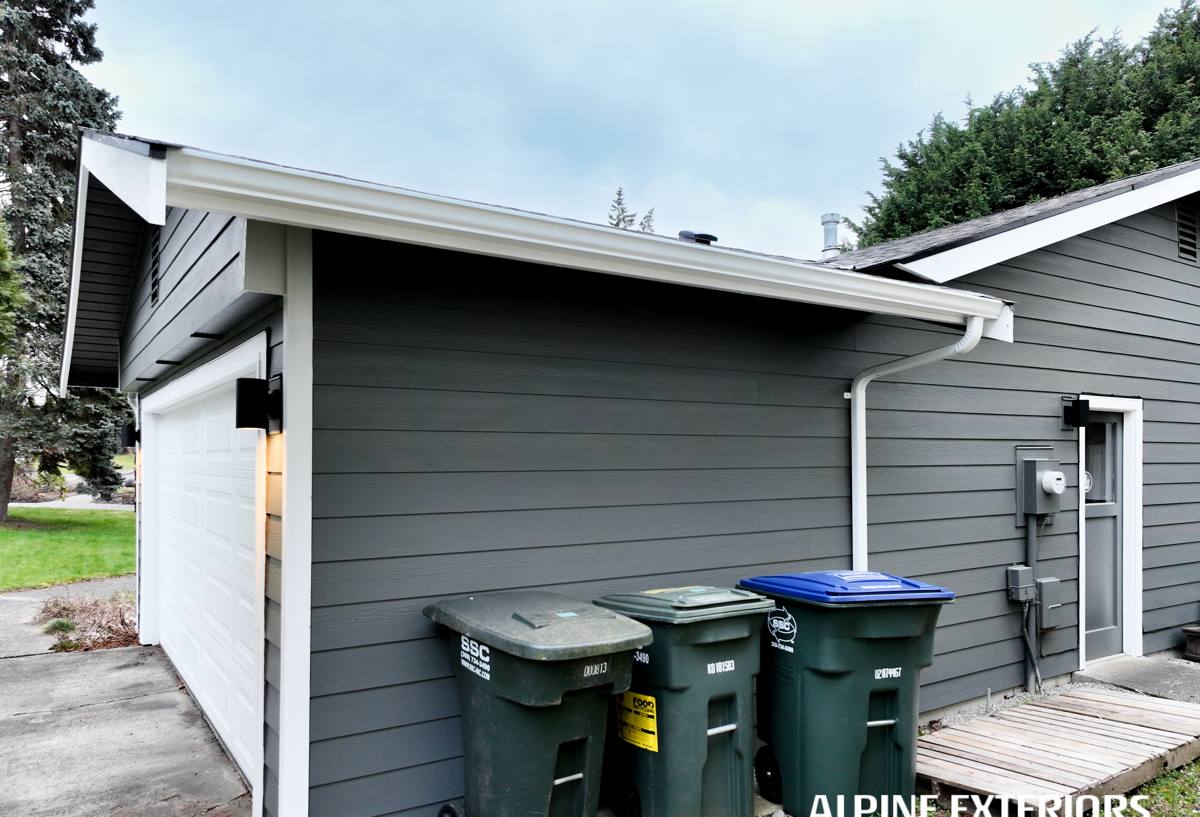
What Whatcom County's Climate Does to Siding Over Time
Salt Air and Corrosion
Proximity to the water means airborne salt settles on exterior surfaces and works its way into fasteners, trim seams, and any exposed metal. Over years, that accelerates corrosion in low-quality fasteners and flashing, which in turn creates the small gaps where water gets behind siding.
Driving Rain
Bellingham doesn't just get rain — it gets rain pushed sideways by wind off the water. That matters because driving rain finds every shortcut in an installation: unsealed butt joints, missight flashing, siding hung too tight to a wall, or house wrap that wasn't lapped correctly. A siding system built for gentle vertical rainfall isn't the same as one built to shed water moving horizontally under wind pressure.
The Long Moss Season
Shaded lots, tree cover, and near-constant damp conditions give moss and algae a long growing window in Happy Valley — often most of the year on north-facing walls and anywhere airflow is limited. Moss holds moisture against a wall surface far longer than open air would, which is exactly the condition that rots wood-based siding and degrades paint finishes prematurely.
Why Material Choice Matters Here
We install James Hardie fiber cement siding exclusively — we don't install vinyl, LP SmartSide, primed spruce, cedar, or other fiber cement brands. That's a deliberate standard, not a sales preference. In a climate that stays wet as long as Whatcom County's does, the material has to resist moisture absorption, hold paint without repeated repainting, and stand up to the freeze-thaw swings that happen even in a mild coastal winter.
James Hardie's fiber cement is non-combustible, doesn't swell or rot the way wood-based products can when they take on moisture, and comes with a factory-applied ColorPlus finish that's baked on rather than field-painted — which matters a lot in a place where a fresh paint job often has to cure through damp, low-sun conditions. Hardie also builds region-specific HZ product lines engineered for different moisture and temperature zones, which is relevant for a marine climate like this one.
What a Correct Siding Installation Actually Involves
The siding itself is only part of the system. Most siding failures we get called out to inspect aren't a defect in the board — they're a failure in what's behind it. A correct installation in a wet climate has to get every layer right:
- Water-resistive barrier: A continuous, properly lapped house wrap that sheds water downward and outward, with no gaps at seams or penetrations.
- Flashing at every transition: Windows, doors, roof-to-wall intersections, and deck ledgers all need flashing detailed to direct water out and away, not into the wall cavity.
- Rain screen or drainage gap: A ventilated gap behind the siding lets any moisture that does get through dry out instead of sitting against the wall.
- Correct fastening: Fasteners driven to the manufacturer's exact spacing and depth — not overdriven, not under a joint, and corrosion-resistant given the salt air.
- Proper clearances: Siding held above grade, decks, and roof lines per code and per Hardie's install specs, so water doesn't wick up from below.
- Sealed and caulked joints: Every butt joint and penetration sealed with a product rated for the exposure, not just cosmetically filled.
Skip any one of these and the siding may look fine for a few years while moisture quietly does damage behind it. This is why we treat installation quality as the deciding factor in how long a siding job actually lasts — the board is only as good as what's under it.
Our Process for a Happy Valley Siding Installation
1. On-Site Assessment
We walk the property, check the condition of the existing siding and sheathing, look for moisture damage or moss buildup, and note anything specific to the lot — shade patterns, drainage, wind exposure — that should shape the install plan.
2. Tear-Off and Substrate Check
Old siding comes off and we inspect the sheathing underneath. Any water-damaged or soft sheathing gets flagged and addressed before anything new goes up — covering a compromised substrate just hides a bigger problem.
3. Water Management Layer
House wrap, flashing, and a drainage gap go in first, detailed around every window, door, and penetration. This is the step that determines whether the job survives a decade of driving rain.
4. Hardie Installation
Panels or lap siding go up to Hardie's fastening and clearance specifications, with trim, corners, and joints sealed correctly for a marine climate.
5. Final Walkthrough
We review the finished exterior with the homeowner, check caulking and paint lines, and confirm clearances and drainage paths are correct before calling the job done.
James Hardie Product Lines for This Climate
Hardie makes climate-engineered HZ formulations designed for different moisture and temperature exposures across the country. In a marine climate like Whatcom County's, matching the right HZ line and panel profile to the home matters for long-term moisture resistance and warranty coverage. We select the product and profile based on the home's exposure — how much direct rain and wind it takes, how shaded it is, and how much salt air it's likely to see.
The ColorPlus factory finish is worth calling out specifically for this area: because it's cured in a controlled factory environment rather than painted on-site, it avoids the problems that come with trying to get a field-applied paint job to cure properly during Bellingham's long damp stretches.
Cost Factors for Happy Valley Siding Projects
Every home is different, but the factors that move a siding project's scope and cost tend to be the same ones across the neighborhood. This is meant to help you understand what you're pricing, not to substitute for an actual estimate.
| Factor | Why It Matters Here |
|---|---|
| Sheathing condition | Moisture-damaged sheathing found during tear-off adds repair scope before new siding can go on |
| Home exposure | Walls facing prevailing wind and rain need more attention to flashing and sealing detail |
| Existing moss/algae damage | Long-term moss growth can mean hidden rot that isn't visible until old siding comes off |
| Trim and detail complexity | Multiple windows, dormers, and roof intersections mean more flashing work per square foot |
| Siding profile chosen | Lap siding, panel siding, and shingle-style Hardie products differ in material and labor cost |
| Access and lot conditions | Slope, tree cover, and setback can affect staging and crew time on site |
Signs Your Siding May Need Attention
Homeowners in Happy Valley should keep an eye out for a few specific warning signs given the local climate:
- Persistent moss or algae growth that returns quickly after cleaning
- Soft or spongy spots when pressing on wood-based siding
- Paint that's peeling, bubbling, or failing faster than expected
- Visible gaps at butt joints, corners, or around windows and doors
- Staining or discoloration that suggests water is tracking behind the siding
- Warping, cupping, or panels that no longer sit flat against the wall
Any of these can indicate the water management layer behind the siding has already failed, even if the surface still looks mostly intact.
Why Local Experience with Happy Valley Homes Matters
A crew that already works in this neighborhood knows what to expect before the tear-off even starts — which wall orientations tend to carry the most moss, how local permitting and inspection work in Bellingham, and how to sequence a job around Whatcom County's rain patterns so the water management layer isn't left exposed longer than it has to be. That experience shows up in fewer surprises during the job and in an installation detailed for the conditions the home will actually face, not a generic install spec.
If you're considering siding replacement or new installation for a Happy Valley home, we're happy to walk the property, look at what you're currently dealing with, and put together a straightforward, no-pressure estimate. There's no obligation — just an honest look at what your home needs.