 Bellingham Exterior
 Why Siding Fails Faster in Sehome
Sehome sits close enough to Bellingham Bay that salt-laden air is a constant, low-grade stressor on every exterior surface in the neighborhood. Add Whatcom County's long wet season, driving rain off the water, and the shade and moisture that come with mature tree cover on the hill, and you have a climate that is genuinely hard on siding. Homes here don't fail because of one dramatic storm. They fail slowly, from years of moisture sitting where it shouldn't, algae and moss taking hold in shaded, damp corners, and paint or coatings breaking down faster than they would in a drier part of the state.
A lot of the housing stock in and around Sehome is older, which means many homes already have layers of past repairs, repaints, and patch jobs on their siding. That history matters when you're planning a replacement, because what's underneath the current siding often tells you more about the right approach than what's on the surface.
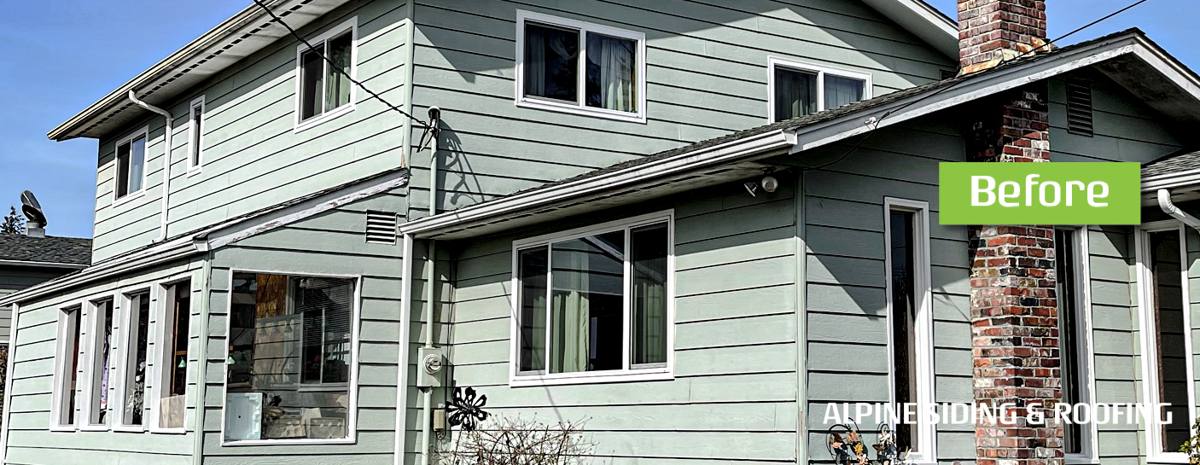
What Bellingham's Climate Actually Does to Siding
Salt air and moisture
Airborne salt accelerates corrosion on fasteners, flashing, and any metal trim components. It also interacts with cheaper paint films and coatings, breaking down surface bonds faster than manufacturers' ratings assume for drier inland climates. Siding systems that aren't engineered with coastal exposure in mind tend to show chalking, fading, and edge deterioration years ahead of schedule.
Driving rain
Wind-driven rain doesn't just hit a wall — it gets pushed sideways and upward into laps, seams, and penetrations. If the siding profile, flashing details, and drainage plane behind the cladding aren't correct, water finds its way behind the material. Once moisture gets behind siding in a climate that rarely gets a long, dry stretch to fully dry things out, it stays there.
The long moss season
Whatcom County's moss and algae season runs long compared to most of the country. North-facing walls, areas under eaves with limited sun, and anything near mature landscaping are especially prone to green and black staining. Some siding materials are far more hospitable to moss growth than others — porous surfaces and certain paint chemistries give it more to grip onto.
Why We Only Install James Hardie in This Climate
We standardized on James Hardie fiber cement siding company-wide, and a neighborhood like Sehome is a good example of why. Hardie's HZ5 product line is engineered specifically for climates that see significant moisture exposure — it's built to resist moisture-related damage, and it's non-combustible, which matters given how many homes in this area sit close to neighboring structures and mature trees. The factory-applied ColorPlus finish is baked on under controlled conditions and holds up to UV and moisture cycling far better than field-applied paint, which is a real advantage when salt air is already working against any coating.
We're not going to tell you every other siding product is junk — that's not fair or accurate. But we made a professional decision not to install vinyl, LP SmartSide, cedar, primed spruce, or composite products like Cemplank and Allura, because each of those comes with trade-offs — moisture sensitivity, maintenance burden, warping, or a shorter realistic service life in a climate like this one — that we're not willing to put our name behind. James Hardie, installed correctly, is what we believe holds up best on homes in Bellingham's climate over the long run.
James Hardie Product Lines for This Climate
| Product | Best Use on Sehome Homes | Why It Fits |
|---|---|---|
| HardiePlank Lap Siding (HZ5) | Most common exterior wall application | Engineered for wet, moderate climates; strong moisture and impact resistance |
| HardiePanel Vertical Siding | Accent walls, gables, modern facades | Clean lines with the same fiber cement durability |
| HardieTrim Boards | Corners, window and door trim, fascia | Resists the swelling and rot that plagues wood trim in wet climates |
| HardieShingle Panels | Accent areas, older home character details | Cedar-shake look without the moisture and pest issues of real wood shakes |
What a Correct Installation Actually Involves
The siding material is only part of the equation. Most premature siding failures we see on inspections trace back to installation shortcuts, not the product itself. On a climate-exposed neighborhood like Sehome, the details matter more than usual.
- A properly installed weather-resistant barrier and drainage plane behind the siding, so any moisture that does get past the cladding has somewhere to go
- Correct flashing at every window, door, and roofline intersection — the single most common failure point we find on older homes
- Proper fastener type, spacing, and depth per James Hardie's published installation guidelines, not generic siding nailing patterns
- Correct clearance between the bottom of the siding and grade, decks, or patios, so splashback and standing water don't sit against the material
- Factory-cut and properly sealed field cuts, so raw edges aren't left exposed to moisture
- Caulking and sealant only where James Hardie's specifications call for it — over-caulking traps moisture just as badly as under-caulking
Skipping any one of these doesn't usually cause an obvious problem on day one. It shows up two, five, or ten years later as trapped moisture, rot in the framing behind the siding, or premature paint failure — exactly the kind of slow-motion damage this climate is good at causing.
Our Process on a Sehome Project
1. On-site assessment
We look at the existing siding, the condition of the sheathing and framing underneath where accessible, drainage around the foundation, roofline and gutter behavior, and any areas already showing moss, staining, or moisture damage. Older Sehome homes often have layers of history in the walls, and we want to know what we're working with before we quote anything.
2. Scope and product selection
We walk through which James Hardie products and colors fit the home, and explain honestly where repairs versus full replacement make sense. Not every project needs a full tear-off, and we'll tell you that.
3. Prep and removal
Old siding and trim come off, and we inspect the sheathing and structural framing underneath for any moisture damage that needs to be addressed before new siding goes on. This is a step that gets skipped by crews trying to move fast, and it's the step that determines whether the new siding actually lasts.
4. Installation to spec
Weather barrier, flashing, and James Hardie siding installed per manufacturer specifications — the details covered above, not shortcuts.
5. Final walkthrough
We go over the completed work with you, cover basic care, and make sure everything meets the standard we'd want on our own home.
Why Local Experience in Sehome Specifically Matters
Bellingham's neighborhoods each have their own quirks — lot slopes, tree cover, prevailing wind exposure off the bay, and building age all vary block to block. A crew that already works in Sehome knows what to expect from the housing stock here: the common framing issues on homes of a certain era, how the hill's grading affects drainage against foundations, and which orientations tend to hold moisture and moss the longest. That local pattern recognition means fewer surprises once removal starts, and a more accurate quote up front instead of change orders mid-project.
There's also a practical side to hiring locally: permitting, disposal, and scheduling all go smoother with a contractor who already has working relationships in Whatcom County and isn't learning the local requirements on your project.
Maintenance Expectations After Installation
James Hardie siding is low-maintenance compared to wood or composite alternatives, but "low-maintenance" doesn't mean "no maintenance" — especially in a climate with a long moss season and salt air.
- Rinse siding annually to remove salt residue, pollen, and organic buildup before it has a chance to stain
- Keep gutters clear so overflow doesn't run down the face of the siding repeatedly
- Trim back vegetation and tree limbs that keep sections of wall shaded and damp longer than the rest of the house
- Inspect caulking at trim joints and penetrations every couple of years and address any cracking promptly
- Address any moss or algae growth early with gentle cleaning rather than letting it establish and spread
Cost Factors to Expect
| Factor | How It Affects Your Project |
|---|---|
| Home size and complexity | More corners, gables, and dormers mean more cutting, trim work, and labor time |
| Condition of existing sheathing | Hidden moisture damage found during removal can add repair scope |
| Product selection | Lap siding, panel siding, and shingle-style products carry different material and labor costs |
| Trim and accent work | HardieTrim boards and shingle accents add detail but also add cost |
| Access and site conditions | Steep lots, tight setbacks, and limited staging space common on hillside lots can affect labor time |
If you're considering new siding for a home in Sehome, we're glad to take a look and walk you through what we find — no pressure, no obligation. A free estimate gives you a clear, honest picture of your options before you decide anything.