 Bellingham Exterior
 Siding That Has to Work in York's Conditions, Not Just Look Good on Day One
York is one of the older, established residential pockets close to Bellingham Bay, and homes here take a specific kind of weather beating that inland neighborhoods don't see as much of. You've got salt-laden air rolling off the water, long stretches of driving rain that comes in sideways off Pacific storms, and a moss season that, in Whatcom County, can run nearly eight months out of the year on north-facing walls and anything shaded by mature trees. Siding in York isn't just cosmetic — it's the one layer standing between that combination and your sheathing, framing, and insulation.
We install James Hardie fiber cement siding exclusively, and we've done enough work in and around York to know which failure patterns show up first here: caulk joints that crack and let wind-driven rain track behind the cladding, bottom courses that wick moisture because they were installed too close to grade or hardscaping, and paint film that fails early because a product wasn't factory-finished to handle UV and salt exposure. A correct James Hardie installation addresses every one of those points directly, which is a big part of why we standardized on it rather than vinyl, LP SmartSide, or other fiber cement alternatives.
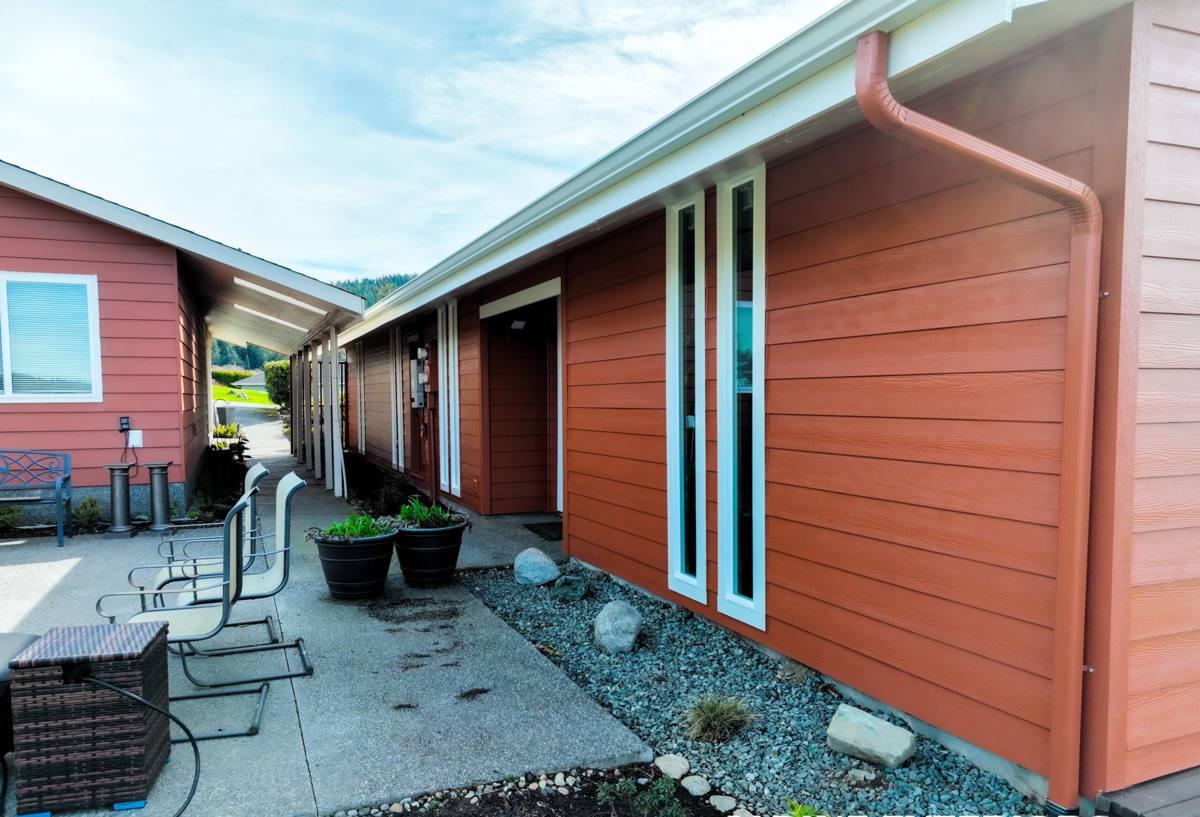
What Salt Air, Rain, and Moss Actually Do to Siding Over Time
Each of these three conditions attacks siding differently, and understanding the mechanism is what separates a siding job that lasts from one that looks fine for a few years and then starts showing problems.
Salt Air
Airborne salt is corrosive to exposed metal fasteners, flashing, and trim connectors, and it accelerates the breakdown of lower-grade paint and coatings. It also holds moisture against surfaces longer than dry inland air would, which matters for anything with a wood or wood-composite core.
Driving Rain
Bellingham's storms frequently push rain horizontally into the wall assembly rather than just falling straight down. That means lap overlaps, butt joints, window and door flashing, and penetrations (hose bibs, vents, light fixtures) all have to be detailed correctly, or water gets pushed past the siding face and into the wall.
Moss and Sustained Dampness
Shaded, north-facing, and tree-adjacent walls in York can stay damp for days after a storm. Moss and algae growth on a siding surface isn't just an appearance issue — sustained dampness against a wood-based product softens it over time, and organic growth held against caulk joints breaks them down faster.
Why We Install James Hardie and Nothing Else
James Hardie fiber cement is engineered around exactly these stressors. It's non-combustible, dimensionally stable in wet climates, and factory-finished with the ColorPlus coating system, which is baked on and backed by its own finish warranty rather than relying on job-site paint. We chose it over the alternatives for specific, practical reasons:
- Vinyl siding can warp and its seams open up under sustained wind-driven rain, and it doesn't hold color or rigidity the way fiber cement does over decades.
- LP SmartSide and other wood-strand composite products have an engineered wood core — well-made, but still wood, and wood-based products are more vulnerable to the sustained dampness and moss exposure common on shaded York walls.
- Primed spruce or cedar requires ongoing repainting and caulk maintenance to stay ahead of moisture, which is a real ongoing cost and labor burden for the homeowner, not a one-time expense.
- Off-brand fiber cement (Cemplank, Allura) can be a reasonable product, but the factory finish, HZ climate-zone engineering, and warranty structure of James Hardie are what we've found actually hold up under the conditions this region produces.
None of this means those products are junk — they all have a place. It means that for a coastal Whatcom County climate, we don't think they're the right long-term bet, and we'd rather turn down that work than install something we don't stand behind here.
James Hardie Product Lines That Make Sense for a York Home
James Hardie engineers its siding by climate zone (HZ5 is the cold/wet zone that covers this region), and the right product depends on the home's style and exposure.
| Product | Best Use | Why It Fits York |
|---|---|---|
| HardiePlank Lap Siding | Most single-family homes | Traditional lap profile, factory ColorPlus finish resists salt-air fading |
| HardieShingle | Accent gables, Craftsman-style homes | Staggered or straight-edge shingle look without cedar's moisture upkeep |
| HardiePanel | Modern facades, garages, accent walls | Clean vertical lines, fewer horizontal joints for water to track into |
| HardieTrim | Corners, window and door surrounds | Matches siding durability so trim doesn't fail before the field siding does |
What a Correct Installation Actually Involves
The siding material is only part of the equation — installation quality determines whether it performs the way it's engineered to. On a York home, we pay particular attention to:
- Proper weather-resistive barrier and flashing at every window, door, and penetration, lapped correctly to shed water downward and outward
- Minimum clearance from grade, decks, patios, and roof lines per James Hardie's fastening and clearance specifications
- Correct fastener type and spacing — improperly fastened boards are one of the most common causes of early failure
- Factory-caulked and painted cut edges, since exposed raw fiber cement edges are a weak point for moisture intrusion
- Rainscreen or proper drainage plane detailing on walls with heavier rain exposure, so any incidental moisture has somewhere to go
Skipping any one of these doesn't usually cause a visible problem in year one. It shows up in year five or six as staining, soft trim, or interior moisture issues — which is exactly the kind of slow failure that's expensive to trace back to its source.
Our Process, Start to Finish
We keep the process straightforward and don't push add-ons the home doesn't need:
- On-site assessment — we walk the exterior, check existing siding and sheathing condition, note grading, drainage, and shade exposure specific to the lot
- Written estimate — product line, color, trim details, and scope spelled out, no vague allowances
- Prep and tear-off — removal of existing siding, inspection of sheathing for hidden moisture damage before anything new goes up
- Weather barrier and flashing — the part that actually determines long-term performance, done before a single piece of siding is hung
- Installation — Hardie planks, panels, or shingles installed to manufacturer clearance and fastening specs
- Trim, caulking, and final detailing — corners, penetrations, and joints sealed correctly
- Walkthrough — we go over the finished work with the homeowner before calling the job done
Why Hiring a Crew That Already Works in York Matters
A crew that's worked this specific neighborhood knows things a generic estimate can't capture from a drive-by: which walls in York tend to hold moss longest based on tree cover and sun exposure, how close typical lot lines and setbacks run near the water, and what drainage patterns show up after a heavy Pacific storm. That local pattern recognition affects real decisions — where we push harder on flashing detail, whether a rainscreen gap is worth the extra step on a particular elevation, and which trim details are worth reinforcing given how the house sits relative to prevailing wind and rain direction.
It also means fewer surprises during the estimate. We're not learning Bellingham's climate behavior on your project — we've already seen how it plays out on homes nearby.
Maintenance After Installation
James Hardie siding is low-maintenance compared to wood or wood-composite alternatives, but "low-maintenance" isn't "no-maintenance," especially in a moss-prone coastal environment. A short seasonal routine keeps it performing the way it's designed to:
- Rinse shaded and north-facing walls once or twice a year to knock back moss and algae buildup before it takes hold
- Keep gutters clear so overflow doesn't run down the siding face repeatedly in one spot
- Trim back vegetation and tree limbs that keep a wall section shaded and damp longer than the rest of the house
- Check and re-caulk any joints around windows, doors, or trim if you notice cracking or gaps
- Watch for any soft spots, staining, or bubbling paint, which can indicate a flashing or drainage issue worth catching early
What Affects the Cost of a York Siding Project
| Factor | Why It Matters |
|---|---|
| Home size and wall complexity | More corners, gables, and dormers mean more cutting, trim, and labor |
| Existing siding removal and sheathing repair | Hidden moisture damage found during tear-off adds necessary repair scope |
| Product line and profile | Lap, shingle, and panel siding differ in material and labor cost |
| Trim and detail work | Full HardieTrim packages and rainscreen detailing add cost but extend performance |
| Access and site conditions | Slopes, tight lot lines, and limited staging area near the water can affect labor time |
Every York home carries its own combination of sun exposure, tree cover, and proximity to the water, so we don't quote siding jobs off a generic price sheet. If you'd like an honest look at what your home actually needs, we offer a free, no-pressure estimate — walk the property with us and we'll tell you straight what we see.