 Bellingham Exterior
 What Lynden's Climate Actually Does to a House
Lynden sits inland from the Salish Sea but still gets the full Whatcom County weather pattern: long stretches of low-intensity rain from fall through spring, high humidity that never fully lifts in the winter months, and enough marine air moving through the county to keep exterior surfaces damp for days at a time. Add in the shoulder-season freeze-thaw swings and the shaded, tree-lined lots common around Lynden's older neighborhoods, and you get siding conditions that are tougher than they look on paper.
None of this is exotic. It's the same climate that shapes siding decisions across Whatcom County. But it does mean that products and installation shortcuts that get away with it in a drier climate show their weaknesses here faster — sometimes within a few winters.
Moisture Is the Real Enemy
Wood siding and trim swell, crack, and rot when they can't dry out between rain events. Vinyl doesn't rot, but it moves with temperature swings and can warp or pull away from fastening points over years of freeze-thaw cycling. The common thread on every siding failure we've been called out to inspect in this area is moisture that had nowhere to go — trapped behind the cladding, wicking up from grade, or sitting in end-grain that was never sealed.
Moss, Algae, and North-Facing Walls
Whatcom County's moss season runs long. North- and east-facing walls, and anything shaded by mature trees, stay damp enough for moss and algae to take hold on almost any exterior surface. This is mostly a cosmetic and maintenance issue rather than a structural one, but it does mean siding material and finish matter — some surfaces hold onto moisture and organic growth far more stubbornly than others, and that affects how often a homeowner has to get up on a ladder.
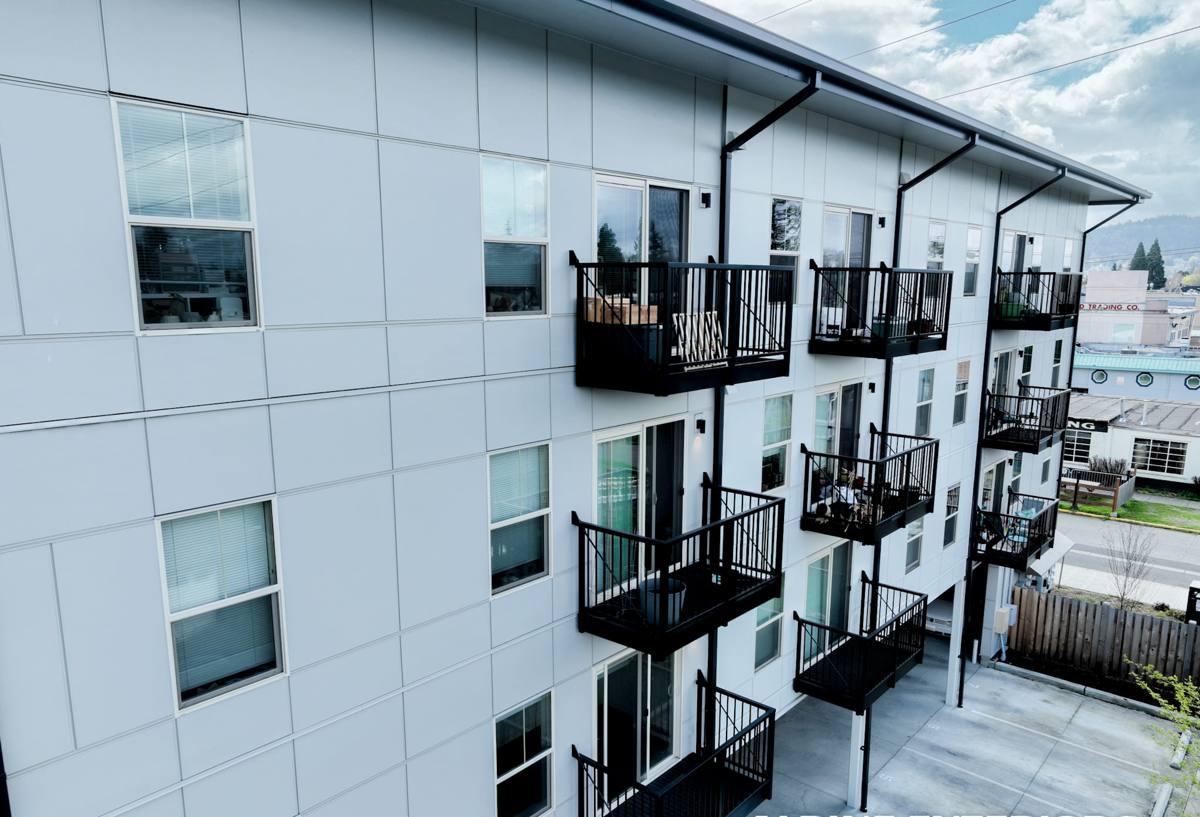
Why Fiber Cement Is the Right Material for This Climate
Fiber cement siding is made from cellulose fiber, sand, and portland cement, pressed and cured into a dense, dimensionally stable board. It doesn't rot, it doesn't feed insects, and it's non-combustible — a real advantage during the dry summer months when wildfire smoke and regional fire risk are part of the conversation across Western Washington. Unlike wood, it won't swell and shrink dramatically with humidity changes, which matters when a house sits through a wet Whatcom County winter and a comparatively dry summer every single year.
That said, fiber cement isn't magic. It still has to be installed with the right clearances, the right fasteners, and the right flashing details, or it will trap moisture just like anything else. The material solves problems that wood and vinyl can't solve on their own — it doesn't solve problems created by a rushed installation.
What a Correct Fiber Cement Install Looks Like Here
Drainage Behind the Cladding
In a climate this wet, siding should never be nailed flat against the wall sheathing with nothing behind it. A drainage plane — typically a weather-resistant barrier with a rainscreen gap — gives any moisture that does get past the siding a way to drain and the wall a way to dry. This detail matters more in Whatcom County than it would in a drier inland climate, because the wall assembly here spends more of the year at higher humidity.
Flashing at Every Penetration
Windows, doors, hose bibs, light fixtures, and deck ledgers are where siding jobs fail first. Proper step flashing, head flashing, and kick-out flashing at rooflines aren't optional extras — they're what keeps driving rain from finding its way behind the boards during a wind-driven winter storm.
Fastening and Gaps to Spec
James Hardie publishes specific fastener types, spacing, and clearance requirements — including gaps at butt joints and a minimum clearance from grade, decks, and roof lines. Skipping these to save time is one of the most common ways a fiber cement job voids its warranty and starts absorbing water years earlier than it should.
Sealant Only Where It Belongs
A well-detailed fiber cement installation actually uses caulk sparingly — most butt joints are designed to be left with a small gap rather than caulked solid, since caulk that fails becomes a moisture trap rather than a moisture barrier. Knowing where sealant helps and where it hurts is a detail that separates an experienced crew from one working from a generic playbook.
James Hardie Product Lines We Use
We install James Hardie exclusively, and Hardie builds region-specific formulations under its HardieZone system. For Whatcom County, that means HZ5 products, engineered for the Pacific Northwest's combination of rain, humidity, and moderate freeze-thaw activity — as opposed to the HZ10 formulation built for hot, humid Southeast climates. Getting the zone right isn't a marketing detail; it affects how the board handles moisture cycling over decades.
| Product Line | Typical Use | Why It Fits Lynden Homes |
|---|---|---|
| HardiePlank Lap Siding | Primary wall cladding | Most common profile locally; sheds driving rain efficiently when lapped and flashed correctly |
| HardiePanel Vertical Siding | Accent walls, gables, modern facades | Clean lines for contemporary remodels; needs correct joint detailing to manage water |
| HardieShingle | Accent siding, dormers, gables | Traditional look without the moisture sensitivity of real wood shingles |
| HardieTrim | Corners, window/door trim, fascia | Resists the swelling and cracking that affects painted wood trim in wet climates |
Most of what we install carries the factory-applied ColorPlus finish rather than field-applied paint. That finish is baked on and warrantied separately from the substrate, which matters in a climate where field-applied paint jobs tend to need touch-up sooner than homeowners expect.
Our Process on a Lynden Job
The steps don't change much house to house, but the details we watch for do — older Whatcom County homes often have layers of previous siding, inconsistent sheathing, or hidden moisture damage that only shows up once the old material comes off.
- On-site assessment of the existing siding, sheathing condition, and any visible moisture or rot damage
- Full tear-off of old siding and trim, with sheathing repair where needed before anything new goes up
- Installation of a weather-resistant barrier and rainscreen gap suited to the wall assembly
- Flashing at every window, door, and roofline penetration
- Fiber cement installation to James Hardie's published fastening and clearance specifications
- Trim, caulking where appropriate, and final cleanup
Why a Crew That Already Works Whatcom County Matters
Siding installation isn't one-size-fits-all across climates. A crew that mostly works drier regions may not think twice about rainscreen gaps or clearance details that are non-negotiable here. Working Whatcom County and the Lynden area regularly means we already know the local permitting expectations, the wall assemblies common to the area's housing stock, and how wind-driven rain off the Salish Sea behaves differently than a straight-down summer shower.
It also means we're not disappearing after the invoice is paid. If a warranty question or a flashing detail needs a second look two winters from now, we're still a local call away — not a crew that worked the area for one project and moved on.
Living With Fiber Cement Siding in This Climate
Fiber cement is low-maintenance, not no-maintenance. A little seasonal attention goes a long way toward keeping it performing — and looking — the way it should through Whatcom County's long wet season.
- Rinse siding annually, focusing on shaded north- and east-facing walls where moss and algae take hold first
- Keep gutters clear so overflow doesn't run down the face of the siding during heavy rain events
- Trim back shrubs and trees so siding gets airflow and isn't sitting in constant shade and moisture
- Inspect caulking at trim joints and penetrations every year or two, and re-seal only where it's actually failing
- Watch for any soft spots, staining, or bubbling paint near grade level, which can signal a moisture issue starting behind the siding
What Affects the Cost of a Fiber Cement Siding Project
Every house is different, but the same handful of factors drive most of the cost variation we see on jobs in and around Lynden.
| Factor | Why It Matters |
|---|---|
| Tear-off complexity | Multiple layers of old siding or damaged sheathing add labor and repair costs before new siding goes up |
| House size and wall complexity | More corners, dormers, and trim details mean more cutting, fitting, and flashing work |
| Product mix | Lap siding, panels, shingle accents, and trim carry different material and labor costs |
| Existing moisture damage | Rot found during tear-off has to be repaired before installation can proceed, which can shift the timeline and budget |
| Access and site conditions | Steep lots, mature landscaping, or limited equipment access can add time to the job |
We won't quote a job sight unseen, and we won't guess at a number that ignores what's actually going on behind your existing siding. A proper estimate starts with a real look at the house.
If you're weighing a siding replacement on a Lynden-area home and want a straight answer about what your house actually needs, we're happy to take a look. Reach out below for a free, no-pressure estimate — no obligation, just a clear read on the project.