 Bellingham Exterior
 Metal Roofing Built for Barkley's Weather
Barkley sits close enough to Bellingham Bay that salt-laden air is a real factor in how a roof ages, and it gets the same long, wet Pacific Northwest weather pattern as the rest of Whatcom County — months of low-intensity rain broken up by wind-driven storms off the water. Add in the shade from mature trees common around Barkley's newer and established streets alike, and you've got a roofing environment that punishes the wrong material choice or a sloppy install far faster than a drier inland climate would.
Metal roofing holds up well against this combination when it's specified and installed correctly. It sheds water fast, doesn't absorb moisture the way organic shingle materials can, and resists the kind of granule loss and edge curling that shortens the life of asphalt roofs in wet climates. But "metal roof" covers a range of products and installation quality, and in a place like Barkley, the details matter more than the marketing.
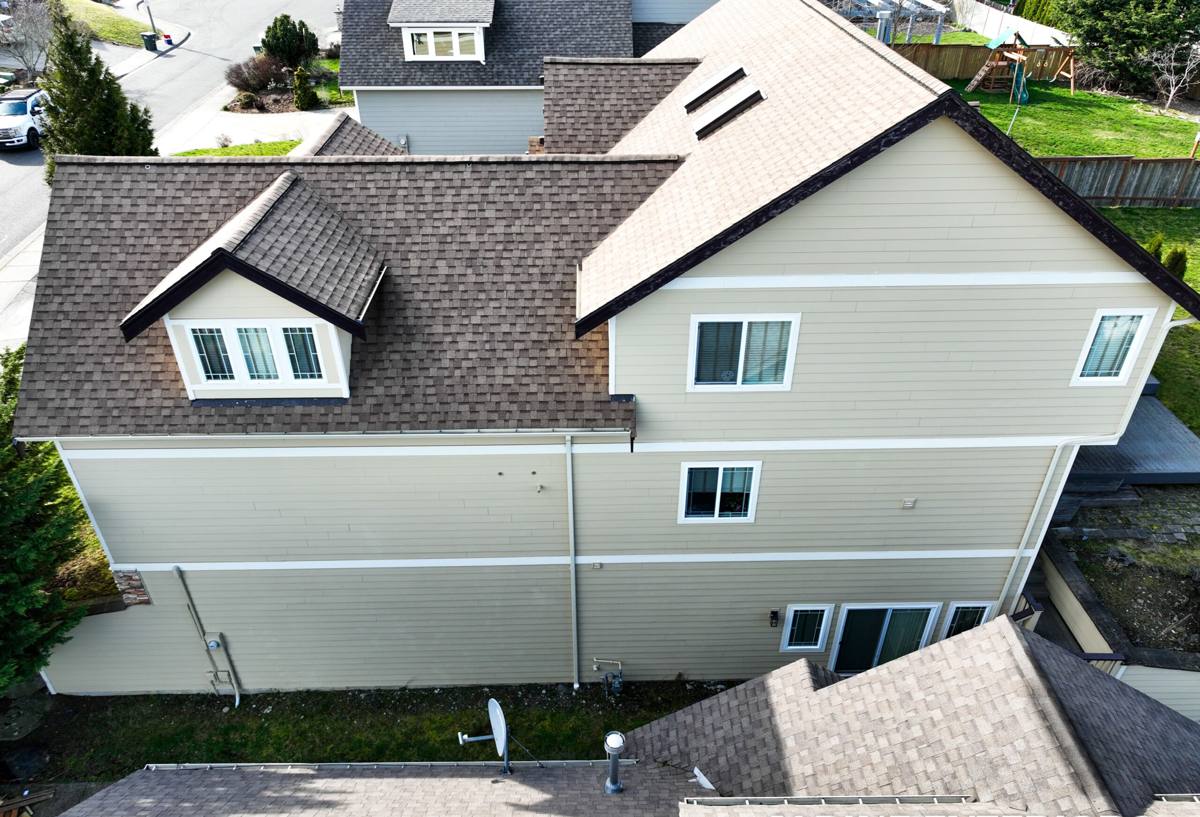
What Marine Air and Moss Season Do to a Roof Over Time
Two forces do most of the damage to roofs in this part of Bellingham: airborne salt and sustained moisture.
Salt air accelerates corrosion at any point where the protective coating on a metal panel is scratched, cut, or penetrated — panel edges, screw heads, and field cuts made during installation. It also speeds up galvanic corrosion when two dissimilar metals touch and stay wet together, which is why fastener and flashing material choice isn't a minor detail here.
Moss and moisture are the other half of the problem. Shaded roof sections in Barkley hold moss and organic debris longer than sun-exposed ones, and that debris traps water against seams, fasteners, and valleys. On a shingle roof that means slow rot underneath the mat. On a metal roof, trapped moisture and debris mostly threaten the finish and the fastener penetrations rather than the panel itself, but a poorly detailed roof can still develop leaks at those weak points over time.
None of this makes metal roofing a bad fit for Barkley — it makes it a fit that depends on getting the underlying details right.
Where Problems Actually Start
Almost every metal roof failure we see traces back to one of a handful of causes, not to the metal itself:
- Fasteners that weren't matched to the panel material, leading to corrosion at the screw or backout over time
- Flashing at valleys, chimneys, and wall transitions that wasn't lapped or sealed correctly for driving rain
- Panels installed without room to expand and contract with temperature swings, causing oil-canning or stress at the seams
- Underlayment skipped or substituted with a lower-grade product than the roof's exposure calls for
- Debris and moss left to accumulate in valleys and against low-slope transitions
Standing Seam vs. Exposed-Fastener Panels
Homeowners in Barkley usually end up choosing between two general categories of metal roofing, and each is a legitimate option depending on the roof, the budget, and how the home is used.
| Factor | Standing Seam | Exposed-Fastener Panel |
|---|---|---|
| How it's attached | Concealed clips; no fastener penetrations through the panel face | Screws driven through the panel face into the deck or purlins |
| Weather resistance in driving rain | Very high — no exposed penetrations for wind-driven water to work into | Good, but exposed screws and their washers are the long-term wear point |
| Maintenance over time | Minimal; panels expand and contract freely under the clips | Fastener washers should be checked periodically and replaced if they harden or crack |
| Typical cost | Higher material and labor cost | More budget-friendly, especially on larger or simpler roof planes |
| Best suited for | Primary residences, complex rooflines, anyone who wants the lowest long-term maintenance | Shops, additions, simpler roof shapes, or budget-conscious full replacements |
We don't treat exposed-fastener systems as a lesser product — they perform well when installed with the right fastener spacing, quality washers, and attention to penetration sealing. The tradeoff is simply that they carry more long-term maintenance points than a concealed-fastener standing seam roof, which matters more on a home exposed to Barkley's rain and salt air than it would somewhere drier.
What a Correct Metal Roofing Installation Actually Involves
The panel itself is the least likely part of a metal roof to fail. Most of what determines whether the roof performs for decades or develops problems in five years happens underneath and around the panels.
Underlayment and Deck Prep
We use synthetic underlayment rated for metal roofing, with self-adhered ice-and-water membrane at eaves, valleys, and any low-slope section — the areas where wind-driven rain is most likely to work its way backward under a panel edge. Before any underlayment goes down, the deck gets inspected and any soft or water-damaged sheathing gets replaced, not covered over.
Flashing and Transitions
Valleys, chimneys, skylights, and wall transitions are where roofs leak — not the open field of panels. Every one of these gets custom-formed flashing, correctly lapped with the water flow, not just caulked and hoped for.
Fastener and Metal Compatibility
Fasteners, flashing, and panel metal need to be compatible so two dissimilar metals aren't sitting wet against each other for years. This is a bigger deal in a coastal-influenced climate like Bellingham's than it would be further inland, and it's a detail that's easy for an inexperienced crew to get wrong.
Ventilation and Panel Movement
Metal expands and contracts with temperature more than most roofing materials, so panels need room to move at ridges, eaves, and penetrations. Proper attic or roof-deck ventilation also keeps condensation from forming on the underside of the panels, which matters through Whatcom County's damp winters.
Our Process From Estimate to Cleanup
We keep the process straightforward and try not to surprise anyone partway through:
- On-site inspection — we look at the existing roof, deck condition, ventilation, and any problem areas (moss buildup, past leak signs, flashing condition) before quoting anything.
- Honest estimate — a written scope covering panel type, underlayment, flashing details, and whether a tear-off or deck repair is needed, so you're pricing the actual job, not a placeholder number.
- Deck and structure prep — any damaged sheathing gets replaced before underlayment goes down, not patched around.
- Installation — underlayment, flashing, and panels installed to manufacturer spec and matched to the home's exposure and roof shape.
- Site cleanup and walk-through — old material and fasteners cleared from the property, and we walk the finished roof with you before calling the job done.
Keeping a Metal Roof Performing in Barkley's Climate
A well-installed metal roof needs far less attention than most roofing materials, but "low maintenance" isn't "no maintenance" in a climate this wet. A short annual routine keeps small issues from becoming repairs:
- Clear moss, needles, and leaf debris out of valleys and off low-slope sections, especially under overhanging trees
- Check that gutters and downspouts are flowing freely so water isn't backing up under eave flashing
- Look over exposed fasteners (if your roof uses them) for loose screws or worn washers every year or two
- Inspect flashing around chimneys, skylights, and vents for gaps or sealant that's dried out
- Watch for scratches or bare metal at panel edges where salt air can start corrosion, and touch up promptly if found
Cost Factors to Weigh
Metal roofing costs more upfront than asphalt shingles, and the range within metal roofing itself is wide depending on the choices below. We'd rather walk you through actual numbers for your roof than quote a generic per-square figure that doesn't hold up once the job starts.
| Factor | Why It Moves the Price |
|---|---|
| Panel system | Standing seam runs higher than exposed-fastener panel for material and labor |
| Roof complexity | More valleys, dormers, and penetrations mean more custom flashing and labor time |
| Tear-off vs. overlay | Removing an old roof and repairing deck issues adds cost but avoids covering problems |
| Accessibility | Steep pitches or difficult site access affect labor and equipment needs |
| Underlayment grade | Full ice-and-water coverage costs more than minimal underlayment but performs far better in driving rain |
Why a Crew That Already Works in Barkley Matters
A roof designed for a dry climate, or installed by a crew used to that kind of weather, tends to under-detail the flashing and underlayment work that Barkley's rain and salt air actually demand. A crew that regularly works this part of Bellingham knows which roof sections in a given neighborhood tend to hold moss longest, how wind off the bay hits certain roof orientations harder than others, and what level of underlayment and flashing detail actually holds up here — not just what a spec sheet says should work.
We're also familiar with the permitting and inspection process through the City of Bellingham and Whatcom County, so that part of the job doesn't become a delay. If your property is part of a planned neighborhood with its own exterior guidelines, we'll work with those requirements rather than around them.
Get a Straight Answer on Your Roof
If you're weighing metal roofing for a home in Barkley — whether it's a full replacement, a re-roof after storm damage, or a new build — we're glad to take a look and give you an honest read on what your roof actually needs. Use the form below to request a free, no-pressure estimate.