 Bellingham Exterior
 Building a Deck That Actually Holds Up in Puget
Puget is one of Bellingham's older, established neighborhoods, and a lot of the homes here have decks that were never built for what Whatcom County weather actually does to wood and fasteners year after year. A deck in Puget sits close enough to Bellingham Bay to catch salt-laden air, and far enough into a wet marine climate that it spends more months damp than dry. That combination is hard on decking, hard on hardware, and brutal on anything that isn't detailed for drainage. When we build or rebuild a deck in this neighborhood, we're not just following a generic plan set — we're building around the specific way this location weathers.
This page is about custom decks specifically for Puget homeowners: what the climate demands, what a properly built deck involves from the ground up, how our process works, and why it matters to hire a crew that already understands this part of Bellingham rather than one applying a one-size-fits-all approach.
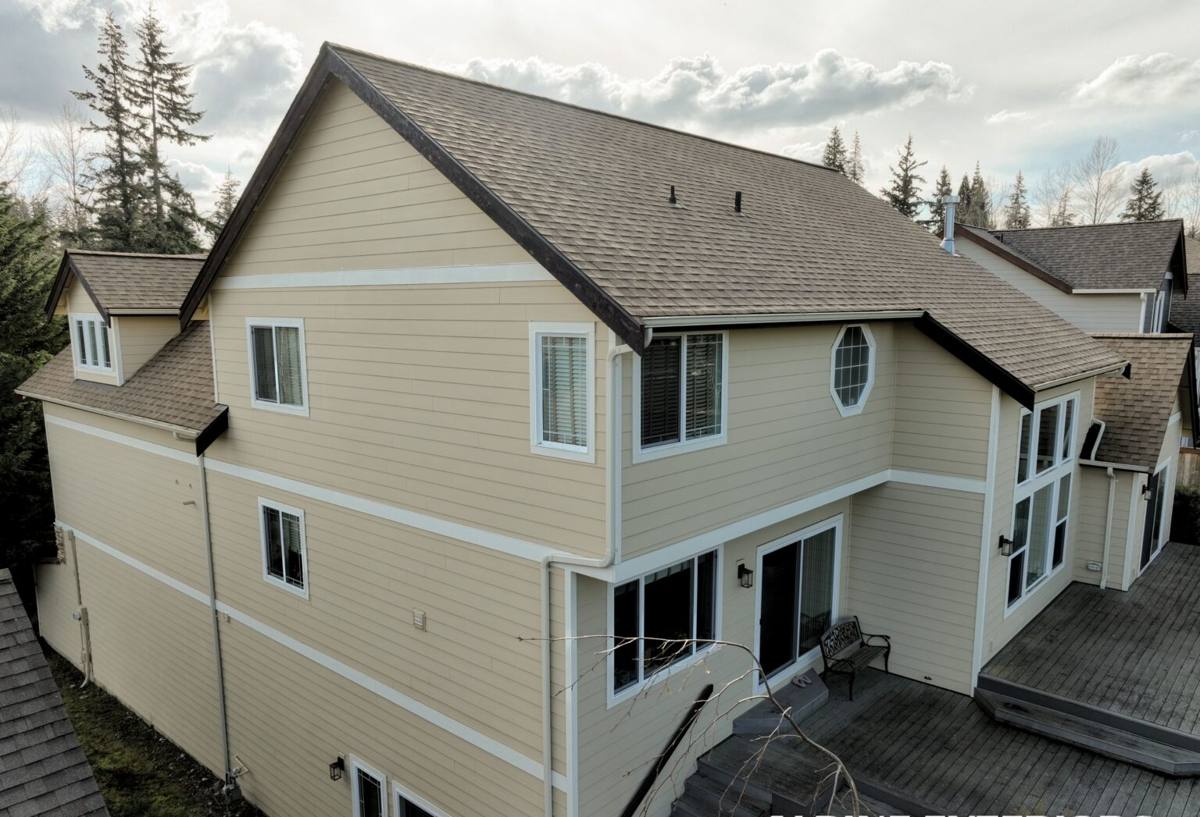
What Puget's Climate Actually Does to a Deck
Three things drive almost every deck problem we see in this neighborhood: salt air, driving rain, and a long moss season. None of them are dramatic on their own, but stacked together over a few winters they cause real damage.
Salt Air
Proximity to the bay means airborne salt settles on everything outdoors, including fasteners, flashing, and railing hardware. Standard zinc-coated screws and nails corrode faster here than they would further inland, and once a fastener starts rusting, it weakens the connection long before the wood around it shows any obvious problem. Aluminum and lower-grade steel components are especially vulnerable.
Driving Rain
Bellingham doesn't just get rain — it gets rain pushed sideways by wind coming off the water, which means it finds its way into joints, ledger connections, and any gap in the flashing that a calmer climate might never expose. A deck built for a drier region, with minimal flashing detail, will let water behind the ledger board and into the house framing within a few wet seasons.
Moss
Whatcom County's moss season runs long — shaded, north-facing, or poorly ventilated deck surfaces can stay damp for weeks at a stretch, and moss takes hold anywhere moisture lingers. Moss isn't just cosmetic. It holds water against the decking surface, accelerates rot in wood products, and makes composite and wood surfaces alike slick and slippery underfoot.
None of this means a deck in Puget can't last decades. It means the material choices, fastener specs, and drainage details have to be picked with this specific climate in mind, not a generic national spec sheet.
Choosing Decking Material for This Climate
There's no single "best" decking material — there's a best material for a given budget, sun exposure, and maintenance appetite. Here's how the common options actually perform in a Puget-style marine climate.
| Material | How it handles salt air & moisture | Moss resistance | Maintenance |
|---|---|---|---|
| Pressure-treated wood | Good if fasteners and flashing are corrosion-rated; the wood itself is treated for moisture | Needs regular cleaning/sealing or moss takes hold in shaded areas | Annual cleaning, re-sealing every 1-2 years |
| Cedar | Naturally moisture and insect resistant, but surface graying and softening happen faster near the bay | Moderate — still needs cleaning in shaded spots | Regular sealing to hold color and resist moisture uptake |
| Composite decking | Excellent — doesn't absorb moisture or corrode | Better than wood, but still needs periodic washing where shaded | Low — occasional washing, no sealing or staining |
| PVC decking | Excellent — fully moisture-resistant material | Good, though surface texture affects how easily moss grips | Lowest — soap and water cleaning only |
For homes in Puget specifically, we lean toward composite or PVC decking when budget allows, simply because the maintenance savings compound over a marine-climate lifespan — a wood deck that needs sealing every year is a bigger ask when the weather working against that seal coat is this consistent. That said, plenty of well-built wood decks in this neighborhood perform fine when the owner is willing to stay on top of cleaning and sealing. We'll walk through the honest trade-offs for your situation rather than push one product line.
Fasteners and Hardware
Whatever decking material you choose, the hardware underneath it matters just as much. In a salt-air environment we specify stainless steel or heavy-duty coated fasteners rated for corrosion resistance, along with structural connectors (joist hangers, post bases, ledger bolts) rated for the same exposure. This is one of the most common corners cut on older Puget decks — the decking looks fine on top while the fasteners holding it together are quietly failing underneath.
Structural Details That Matter More Here Than Elsewhere
A deck is only as good as what you can't see. In a climate like this, a few structural details make the difference between a deck that lasts and one that needs early rebuilding.
Ledger Board Flashing
Where the deck attaches to the house is the single most common failure point we find on older decks in this area. Proper flashing — installed in the correct layered sequence with the house's weather-resistive barrier — keeps driving rain from tracking behind the ledger and into the wall framing. This is not an area to shortcut, and it's often invisible once the deck is built, which is exactly why it gets skipped on lower-quality jobs.
Footings and Post Bases
Whatcom County soil holds moisture well into the dry months, so footings need to be set below frost depth and post bases need to keep wood posts elevated off concrete to avoid constant ground moisture wicking into the base of the post. Standing water at a post base is one of the fastest ways to rot a structural post from the bottom up.
Joist Spacing and Air Circulation
Tighter joist spacing adds strength, but decking also needs airflow underneath to dry out between rain events. We balance structural spacing with enough clearance and ventilation that the underside of the deck isn't trapping moisture against the joists — a common contributor to hidden rot on shaded decks.
Drainage Slope
Every deck surface should have a slight slope away from the house so water sheds instead of pooling. On a rainy-season budget of this many wet days per year, even a small flat spot becomes a standing puddle that accelerates moss growth and surface wear.
Design Considerations for Puget Homes
Beyond the technical build, a few design choices are worth thinking through specifically for this neighborhood:
- Sun and shade mapping: Mature trees and close-set homes common in Puget create shaded zones that hold moss longer — we plan railing and surface material choices around where your deck actually gets sun through the year.
- Wind exposure: Proximity to the bay means some Puget lots see stronger gusts than inland Bellingham; railing and post connections are specified to handle that load, not just code minimums.
- Multi-level layouts: Sloped lots are common in this part of Bellingham, and a multi-level deck can solve grade changes while keeping the structure code-compliant and properly supported.
- Covered sections: A partial roof or pergola over part of the deck extends usable outdoor time significantly in a climate where it rains more often than not — and it reduces moss buildup on the covered portion.
Our Process for a Puget Deck Project
Every property is different, but the process follows the same honest sequence:
- On-site assessment: We look at sun exposure, drainage patterns, existing structure (if there's a deck to replace), and how the new deck will tie into the house.
- Material and design walkthrough: We go over decking, railing, and structural options with real trade-offs — no upsell for its own sake.
- Permitting: Most deck projects in the City of Bellingham require a permit, especially anything attached to the house or above a certain height. We handle that process rather than leaving it to the homeowner.
- Demolition and site prep: If we're replacing an existing deck, we check the ledger connection and house framing behind it for hidden water damage before building anything new on top of it.
- Framing and structural work: Footings, posts, ledger flashing, and joists go in first, built to the corrosion-resistant and drainage standards this climate requires.
- Decking, railing, and finish work: Surface material and railing go on last, with fastening details appropriate to the product.
- Final walkthrough: We go over maintenance expectations for whatever material you chose so there are no surprises the first wet winter.
Maintenance Reality for a Marine Climate Deck
Even the best-built deck needs some seasonal attention in Whatcom County. Here's a practical checklist for keeping a Puget deck in good shape year-round:
- Sweep debris and standing leaves off the surface regularly — trapped organic material holds moisture and feeds moss growth.
- Wash the deck surface at least once a year (more often in shaded areas) to remove moss and algae before it gets a foothold.
- Check railing posts and stair connections annually for movement or corrosion at the hardware.
- Re-seal wood decking on the manufacturer's recommended schedule — skipping a season in this climate shows up fast.
- Keep gutters and downspouts near the deck clear so roof runoff isn't dumping extra water onto or near the structure.
- Look underneath the deck once a year for signs of standing water, soft wood, or rusted hardware at post bases.
Composite and PVC decking cut most of this list down to occasional washing, which is a big part of why they've become the practical choice for a lot of Puget homeowners who don't want an annual maintenance obligation hanging over them.
Permits and Local Requirements
Deck construction in Bellingham is subject to city building code and, depending on size, height, and attachment to the house, typically requires a permit and inspection. Requirements can also touch on setback from property lines, guardrail height, and stair geometry. We pull the required permits and coordinate inspections as part of the job rather than treating it as the homeowner's problem to sort out separately — it's a normal part of doing the work correctly.
Why Hiring a Crew That Already Works Puget Matters
A contractor who mostly works drier, inland climates can build a deck that looks correct and still fails early here, simply because the flashing detail, fastener grade, or drainage slope wasn't specified for what this neighborhood's weather actually does. We work throughout Bellingham and Whatcom County, and the decks we build in Puget get the same salt-air-rated hardware, drainage planning, and moss-conscious material advice regardless of the project size. That's not a marketing point — it's the difference between a deck that needs major repair in eight years and one that's still solid in twenty-five.
If you're planning a new deck or replacing one that's showing its age, we're happy to take a look and walk you through what makes sense for your property. Reach out for a free, no-pressure estimate using the form below.