 Bellingham Exterior
 Siding That Has to Work Against the Water, Not Just Near It
Homes in the Puget area near Bellingham sit close enough to the water that siding takes a different kind of beating than it would twenty miles inland. Salt-laden air works into seams and fastener heads. Driving rain off the Sound doesn't fall straight down — it hits siding sideways, which means anything that isn't properly lapped, flashed, and sealed eventually finds a way in. And then there's the long moss season, when short days and constant damp give algae and moss months to establish themselves on any surface that holds moisture. Siding installation here isn't just a cosmetic upgrade. It's a decision about how well your home's envelope will hold up against a specific, demanding climate, year after year.
We install siding for homeowners throughout Whatcom County, and the jobs we do in Puget get the same attention we'd give a home right on the water: careful sequencing, correct flashing details, and a product built to take coastal exposure without babying.
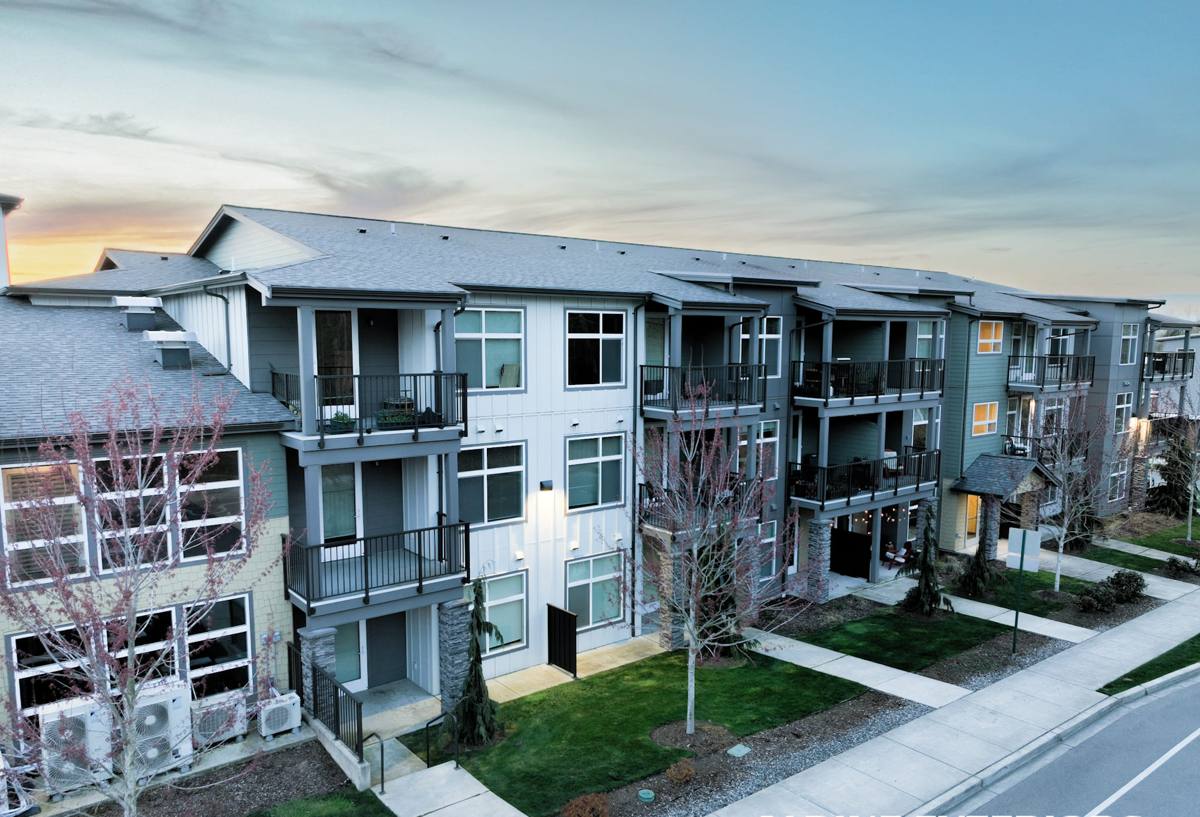
What Salt Air, Driving Rain, and Moss Actually Do to Siding
It helps to understand the specific failure patterns before talking about the fix. In Puget-area conditions, siding problems don't usually show up as one dramatic event — they build slowly, in ways that are easy to miss until repair costs start climbing.
Salt Air and Corrosion
Airborne salt accelerates corrosion on any exposed metal — nail heads, trim flashing, fastener caps. Once a fastener starts rusting, it weakens, and a siding panel that's no longer held tight is a panel that can flex, crack, or let water track behind it.
Driving Rain and Wind-Driven Moisture
Rain that comes in at an angle pushes past overlaps that would be perfectly adequate in a calmer climate. This is why lap spacing, house wrap detailing, and flashing at every penetration matter more here than in drier parts of the state — the margin for error is smaller.
The Long Moss Season
Bellingham's wet season stretches long, and anything that stays damp for extended periods becomes a host for moss and algae. Beyond looking bad, sustained moisture against a siding surface softens substrates that aren't built to handle it and keeps panels from ever fully drying out between rain events.
Why We Install Only James Hardie Fiber Cement in Puget
We made a decision as a company to install James Hardie fiber cement siding exclusively — not vinyl, not LP SmartSide, not primed wood, not other fiber cement brands. In a climate like this one, that decision matters more than it might elsewhere.
Non-Combustible and Dimensionally Stable
Fiber cement doesn't expand and contract with moisture and temperature swings the way wood-based or vinyl products can. That stability keeps caulk joints and paint lines intact longer, which directly reduces the number of entry points for wind-driven rain.
Climate-Engineered HZ Product Lines
James Hardie engineers its HardieZone products for different climate zones, and the Pacific Northwest falls into a category built around resisting moisture and biological growth rather than extreme heat or freeze-thaw cycling. That's a meaningful distinction for a Puget-area home that spends much of the year damp rather than dry.
ColorPlus Factory Finish
The ColorPlus finishing process bakes color onto the board at the factory under controlled conditions, which gives a more consistent, fade-resistant, and touch-up-friendly finish than field-applied paint. In a climate that limits good painting weather, that's a real practical advantage, not just a marketing point.
A Warranty Backed by the Manufacturer
Hardie's transferable limited warranty is tied to the product itself and holds up as long as installation follows their published specifications — which is exactly why we install to spec every time, not just close enough.
What a Correct Installation Actually Involves
Fiber cement siding performs the way it's supposed to only when it's installed correctly. The material can take the climate; sloppy installation can't. Here's where jobs typically go right or wrong.
| Detail | Correct Approach | Common Shortcut |
|---|---|---|
| Weather-resistive barrier | Continuous house wrap, properly lapped and taped at seams | Torn or gapped wrap, seams left untaped |
| Flashing at penetrations | Individual flashing at every window, door, and vent | Caulk used in place of flashing |
| Fastener placement | Corrosion-resistant fasteners at manufacturer-specified spacing | Standard fasteners, inconsistent spacing |
| Clearance to grade and roof lines | Minimum clearances maintained per Hardie specs | Siding installed too close to grade or roofing |
| Panel gaps and caulking | Manufacturer-specified gaps, high-quality sealant | Panels butted tight, gaps skipped or under-caulked |
Every row on the left side of that table is also a row that affects whether Hardie's warranty stays valid. Shortcuts don't just risk premature wear — they can void the coverage the homeowner is paying for.
Our Installation Process for Puget-Area Homes
- On-site assessment: We walk the exterior, check existing siding condition, look at moisture patterns, and note anything specific to the home's exposure to wind and rain.
- Product and color selection: We help you choose the right Hardie panel or plank profile and ColorPlus finish for the home's style and the site's exposure.
- Removal and substrate check: Old siding comes off, and we inspect sheathing underneath for any moisture damage that needs to be addressed before new siding goes up — this step gets skipped by crews in a hurry, and it shouldn't.
- Weather barrier installation: A continuous, properly lapped and sealed water-resistive barrier goes on before any siding.
- Flashing and trim: Flashing is installed at every window, door, and penetration before siding closes around it.
- Siding installation to spec: Panels are fastened, gapped, and lapped according to Hardie's published installation guidelines for our climate zone.
- Final inspection and caulking: We check every seam, corner, and penetration before calling the job finished.
What Drives the Cost of Siding Installation in Puget
Every home is different, but the same handful of factors move the price up or down on most jobs we quote in the Bellingham area.
| Factor | Why It Matters |
|---|---|
| Home size and wall complexity | More square footage and more corners, gables, and dormers mean more cutting, flashing, and labor |
| Existing siding removal | Tear-off of old material adds labor and disposal cost compared to installing over new sheathing |
| Substrate repair | Any rot or moisture damage found underneath old siding needs to be fixed before new siding goes on |
| Product profile and finish | Lap width, shingle-style panels, and specialty ColorPlus finishes vary in material cost |
| Trim and accessory work | Corner boards, window trim, and soffit work are often bundled with a full siding job |
| Site access and exposure | Homes with difficult access or heavy wind/rain exposure may need extra flashing and staging time |
We give a written estimate that breaks these out so you know exactly what you're paying for — not a single lump number with no explanation behind it.
Signs a Puget-Area Home Needs New Siding Now
- Visible cracking, warping, or buckling panels, especially on rain-facing walls
- Soft spots when you press on the siding, which usually points to moisture behind it
- Persistent moss or algae staining that returns quickly after cleaning
- Peeling or bubbling paint that keeps coming back in the same spots
- Rust streaks running down from fastener heads or trim
- Rising energy bills that suggest the wall assembly is no longer sealing well
- Visible gaps at seams, corners, or window trim
Any one of these on its own might just need a repair. Several at once, especially on a home that's had the original siding for a couple of decades, usually means it's time to talk about full replacement before small problems become sheathing or framing repairs.
Why It Matters That We Already Work in Puget
A crew that regularly works this part of Whatcom County knows what wind-driven rain does to a north- or west-facing wall here, understands how quickly moss reestablishes itself in our wet season, and doesn't have to guess at local permitting or inspection expectations. That familiarity shows up in the details — where extra flashing gets added without being asked, where clearances get double-checked because we've seen what happens when they're ignored on a home like yours. It's the difference between a crew installing siding in the Pacific Northwest for the first time and one that installs it here every week.
If your Puget-area home is due for new siding, or you just want an honest read on what condition your current siding is in, we're happy to take a look. Request a free, no-pressure estimate using the form below and we'll walk you through exactly what your home needs.