 Bellingham Exterior
 Roof Repair for Silver Beach's Lake Whatcom Setting
Silver Beach sits along the shoreline of Lake Whatcom, tucked under mature conifers and dense tree canopy that gives the neighborhood its character — and gives roofs a rougher time than most. Shade, moisture, and constant organic debris are a different set of problems than a roof out in the open deals with, and repairing a roof here means understanding that combination, not just patching a leak and moving on.
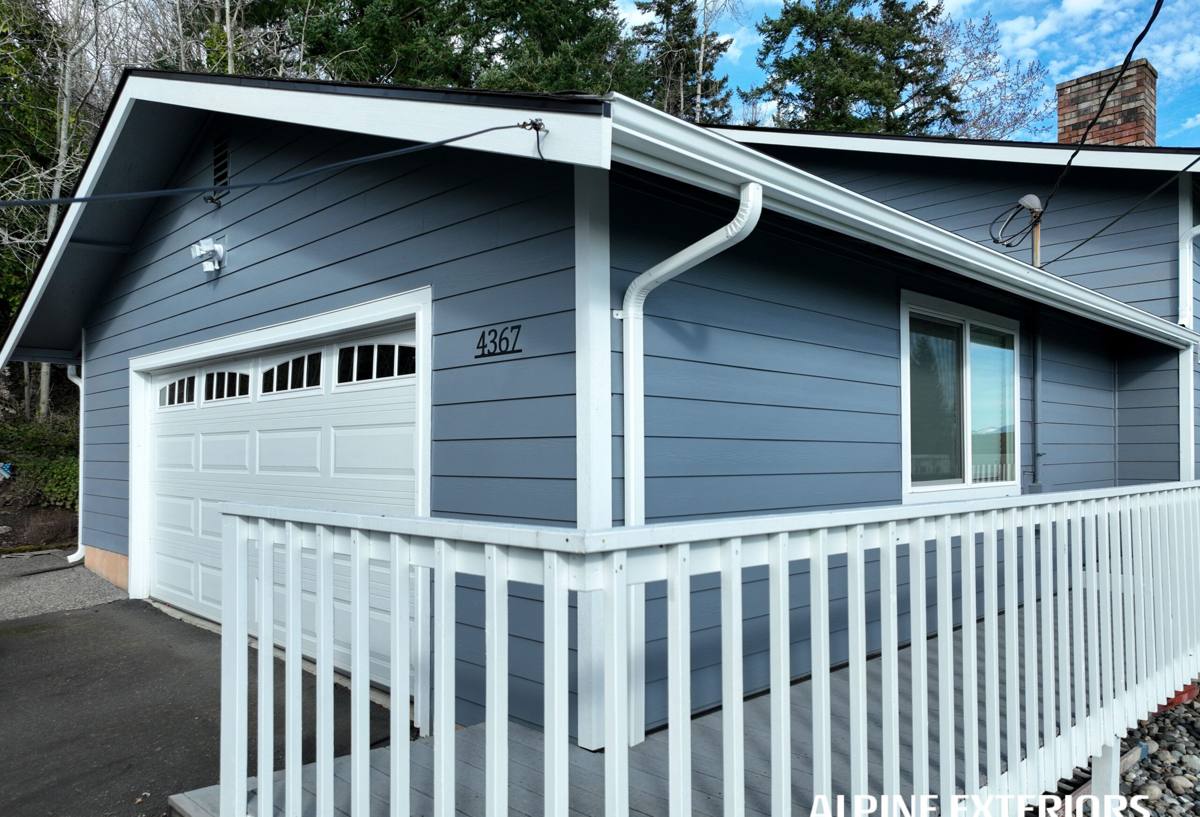
We've worked on homes throughout this part of Bellingham long enough to know which roof sections fail first in a shaded, lake-adjacent lot, and why. This page covers what roof repair actually looks like for Silver Beach homes, what a correct job includes, and how our process works from the first call to final cleanup.
Why Roofs Near Lake Whatcom Wear Differently
Bellingham and Whatcom County sit in a marine climate that brings long stretches of driving rain, salt-tinged air off the Sound and Bay, and a moss season that can run most of the year in shaded spots. Silver Beach adds its own layer to that: heavy tree cover along the lake keeps roof surfaces cooler and damper for longer after every storm, which is exactly the environment moss, lichen, and algae need to take hold.
The Shade Factor
A roof plane that gets direct sun for a few hours a day dries out between rains. A roof plane shaded most of the day by fir and cedar branches — common on Silver Beach lots — can stay damp for days. That extended dampness softens shingle granules faster, feeds moss growth in the shingle laps, and keeps gutters and valleys wet longer, which is where a lot of hidden rot starts.
Debris Load
Conifer needles, cedar fronds, and leaf litter collect in valleys and behind chimneys far more here than on an open, treeless lot. That debris holds moisture against the roofing material and can dam water flow during a heavy rain, forcing it sideways under shingles instead of down and off the roof.
Common Roof Problems We Find in Silver Beach Homes
Most repair calls in this neighborhood fall into a handful of categories. Recognizing which one you're dealing with helps set expectations before we ever get on the roof.
- Moss and algae growth in shaded valleys and north-facing slopes, which lifts shingle edges and traps moisture underneath
- Clogged valleys and gutters from needle and leaf debris, leading to water backing up under roofing material
- Flashing failures around chimneys, skylights, and roof-to-wall junctions, often from age or minor movement rather than storm damage
- Soft or delaminated decking found under long-term moss coverage or a slow leak that went unnoticed
- Granule loss and shingle cracking from repeated wet-dry cycling in shaded areas
- Ridge cap and nail failures where wind exposure off the lake has loosened fasteners over time
None of these are unusual for the area — they're the predictable result of a beautiful, tree-covered lot near the water. The point of a good repair is fixing the actual cause, not just the spot where water showed up inside the house.
What a Correct Roof Repair Actually Involves
A roof leak inside the house rarely shows up directly below the source. Water travels along decking and framing before it drips through, so a repair that starts and ends at the visible leak is a repair that's likely to fail again. A correct job works backward from the interior damage to the actual point of entry.
Inspection Comes First
We look at the whole roof plane, not just the reported trouble spot — checking flashing, valleys, penetrations, and the general condition of the surrounding shingles or roofing material. On a Silver Beach home, that inspection also means checking how much moss or organic buildup is present and whether tree branches are contributing to the problem directly.
Decking Matters As Much As the Surface
If water has been getting in for a while, the plywood or plank decking underneath may be soft, delaminated, or rotted. Repairing shingles over compromised decking doesn't hold — the new roofing material has nothing solid to grip, and the leak often returns. Any soft decking gets cut out and replaced before new roofing goes down.
Flashing and Underlayment
Most leaks that aren't storm damage trace back to flashing — the metal that seals joints at chimneys, walls, skylights, and valleys. Old or improperly lapped flashing is a frequent culprit. We also check the underlayment (the moisture barrier under the visible roofing) in the repair area, since a torn or degraded underlayment defeats the point of new shingles on top of it.
Matching Materials
A patch that doesn't match the surrounding roofing in style, color, and material weight stands out and can create a weak seam. We match shingle type and, where possible, manufacturer line so the repair blends in and performs consistently with the rest of the roof.
Our Repair Process, Start to Finish
- Initial contact and scheduling — you describe the issue (interior stain, visible moss, a missing shingle after a windstorm), and we schedule a visit
- On-site inspection — we assess the roof surface, flashing, valleys, and attic or ceiling access where relevant, and take note of tree cover and debris patterns specific to the lot
- Written estimate — a clear explanation of what's actually wrong, what needs to be done, and what it will cost, with no pressure to upsell into a full replacement unless the roof genuinely needs one
- Repair work — decking replacement where needed, flashing correction, matched roofing material, and proper resealing
- Debris and moss removal in the repair area and immediately surrounding sections, so the fix isn't undermined by material we left in place
- Cleanup and walkthrough — job site cleared of old material and debris, with a final look at the work together before we consider it done
Roof Repair vs. Replacement: How We Help You Decide
Not every problem calls for a new roof, and not every leak can be permanently solved with a patch. Here's how we generally think about the decision:
| Sign | What It Usually Means | Typical Path |
|---|---|---|
| Isolated leak, one flashing point or a few damaged shingles | Localized failure, surrounding roof still sound | Repair |
| Heavy moss coverage but decking is firm underneath | Surface and moisture issue, not structural | Cleaning and repair |
| Multiple soft spots or leaks across different roof planes | Widespread age or moisture damage | Replacement likely more cost-effective |
| Roof is past 20-25 years old with granule loss throughout | Material is at or near end of service life | Replacement worth evaluating |
| Repeated repairs to the same area over a few years | Underlying cause not yet resolved, or material is failing broadly | Depends on root cause — we'll tell you honestly |
We'll always tell you when a repair is the right call, even if a replacement would be a bigger job for us. A roof that's structurally sound doesn't need to be torn off just because it has a problem area.
Materials We Use and Why
For most Silver Beach repairs, we work with standard architectural asphalt shingles from established manufacturers, matched as closely as possible to what's already on your roof. In more exposed or shaded sections where moss has been a recurring issue, we'll sometimes recommend algae-resistant shingle lines, which use a copper-infused granule to slow regrowth — a reasonable trade-off for a lot with heavy tree cover, though no roofing material is maintenance-free under a full tree canopy.
At valleys and other water-concentration points, we use ice-and-water shield underlayment rather than standard felt, since those are the areas most likely to see backed-up water from needle and leaf debris. It costs a little more up front but it's the right call for a lake-adjacent, tree-covered lot, not an upsell.
We generally steer away from wood shake or shingle roofing for repair-and-patch work in heavily shaded, damp locations like Silver Beach. Wood roofing depends on airflow and sun exposure to dry out between rains, and a shaded lakeside lot doesn't give it that — it's simply a harder material to maintain long-term in this specific setting, not a knock on the product itself.
Maintenance Checklist for Silver Beach Homeowners
Between repairs, a little seasonal attention goes a long way toward avoiding the next call. Given the tree cover and moisture in this neighborhood, we'd suggest:
- Clear needle and leaf debris from valleys and gutters at least twice a year, more often under heavy tree cover
- Trim back branches that overhang or touch the roof surface to reduce shade, debris, and physical abrasion
- Check for visible moss growth each fall and address it before winter rains set in
- Look inside the attic periodically for staining, damp insulation, or daylight showing through the decking
- Have flashing around chimneys and skylights checked every few years, since sealant and metal both degrade with age
- Address small leaks quickly — a stain the size of a coin today can mean rotted decking in a year
Why Local Experience in Silver Beach Matters
A roofing crew that only occasionally works this side of Bellingham has to relearn the same lessons every time: how much moss buildup is normal versus a real problem here, how tree cover changes the timeline for drying and drainage, and how tight or sloped some Silver Beach lots are for staging equipment and material safely near the lake.
Working this neighborhood regularly means we're not guessing at any of that. We know what a healthy roof looks like under this much shade and what's a warning sign, and we plan around the access and safety realities of lakeside lots instead of figuring it out on the day of the job.
If you've got a leak, moss buildup, or storm damage on a Silver Beach roof, we're glad to take a look and give you a straight answer about what it actually needs. Reach out for a free, no-pressure estimate using the form below.