 Bellingham Exterior
 Building Decks for Sehome's Climate
Sehome sits close enough to Bellingham Bay that salt-laden air reaches yards throughout the neighborhood, and it shares the same weather pattern as the rest of Whatcom County: long stretches of driving rain from fall through spring, mild but damp summers, and a moss season that can run eight months or more under tree cover. A deck built to a generic national spec will struggle here. One built for this specific combination of salt exposure, rainfall, and shade performs for decades instead of years.
Custom deck work in Sehome means designing and building around three local realities: moisture that doesn't fully dry out between storms, airborne salt that accelerates corrosion on hardware, and mature trees and hillside lots that shade parts of many yards for much of the day. None of these are exotic problems, but they have to be addressed in the framing, the fasteners, and the finish — not patched later.
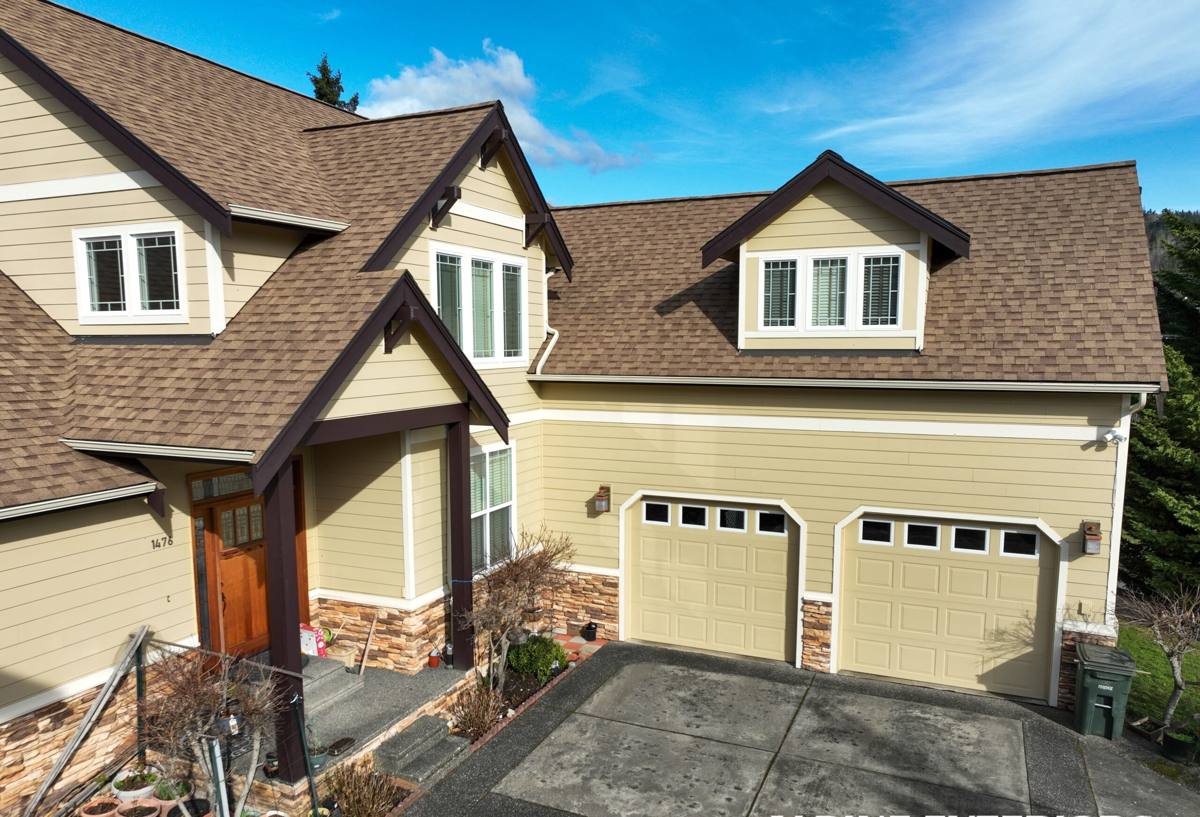
What a Correctly Built Deck Needs Here
Footings and Framing
Whatcom County's frost depth and soil drainage requirements determine footing size and depth, and Sehome's mix of older lots and sloped terrain means footing placement often has to work around existing grading, retaining walls, or root systems rather than a flat, uniform yard. We size footings to the actual soil and slope conditions on your property, not a one-size assumption, and we grade under the deck so water sheds away from the house instead of pooling against the foundation.
Ledger Board Flashing
The ledger board — where the deck attaches to the house — is the single most common failure point on decks in wet climates. If it isn't properly flashed with a moisture barrier and metal flashing that directs water out and away from the house wall, water gets trapped behind the deck and rots the rim joist or the house sheathing from the inside, often for years before it's visible. This is not an area to cut corners in a region that gets Bellingham's rainfall totals.
Airflow Underneath
Decks built low to the ground or against north-facing walls in shaded Sehome yards are the slowest to dry out after rain. We plan clearance and, where the design allows it, gaps or vents that let air move under the deck. Poor airflow is one of the biggest drivers of premature rot in joists and the undersides of deck boards, regardless of what decking material sits on top.
Choosing a Decking Material for a Salt-Air, High-Moss Climate
There's no universally "best" decking material — the right choice depends on how much sun the deck gets, how much maintenance you want to do, and your budget. Here's how the common options actually perform under Sehome's conditions:
| Material | Moss/algae resistance | Maintenance | Typical lifespan here |
|---|---|---|---|
| Pressure-treated lumber | Low — needs regular cleaning and sealing to shed moisture | Annual cleaning, re-sealing every 1-3 years | 15-20 years with upkeep |
| Cedar | Moderate — natural oils resist some rot, but surface still grows moss in shade | Cleaning and oil/stain every 1-2 years | 15-25 years with upkeep |
| Composite decking | Good — dense, low-absorption surface, but still needs periodic cleaning in shaded spots | Occasional washing, no staining/sealing | 25-30+ years |
| PVC/capped polymer | Best — fully non-absorbent surface | Occasional washing | 25-30+ years |
In heavily shaded parts of Sehome — under mature trees or on the north side of a house — we lean homeowners toward composite or capped polymer boards because they don't wick moisture into the board the way wood does, which is what feeds moss and surface rot. On open, sunnier lots, wood is a perfectly reasonable choice as long as the maintenance schedule is realistic. We'll walk your specific yard with you and give an honest read on which material fits the sun and shade pattern you actually have.
Moss, Algae, and Drainage: The Ongoing Battle
Moss and algae aren't cosmetic problems on a deck — they hold moisture against the board surface and make the deck slick and genuinely dangerous underfoot, especially on stairs. Whatcom County's long wet season and Sehome's tree cover mean most decks here will grow some moss on shaded boards no matter what material you choose. The goal isn't to eliminate that pressure entirely; it's to design and build so it doesn't turn into structural damage.
That means board spacing that allows water to drain through rather than pool, a slight slope away from the house built into the frame, and, where the site allows, keeping the deck out from directly under the densest tree canopy. It also means picking board profiles and fastening systems that don't create ledges and grooves where organic debris collects and holds moisture against the wood or composite surface.
Fasteners and Hardware
Salt air corrodes standard fasteners faster than manufacturers' generic ratings assume, especially within a few miles of the bay. We use stainless steel or hot-dip galvanized structural hardware and coated deck screws rated for coastal exposure, along with joist tape on framing members to keep moisture out of fastener penetrations. Cheaper electroplated hardware can start rusting and staining a deck within a couple of seasons in this environment — it's a false economy.
Permits and Code Considerations in Whatcom County
Most new decks and many significant deck rebuilds in Bellingham require a building permit, and inspections check footing depth, ledger attachment, guardrail height, and stair geometry against current code. Older Sehome homes sometimes have decks that predate current guardrail and stair codes, which matters if you're planning a repair or expansion rather than a full rebuild — code compliance can get triggered depending on the scope of work. We handle the permit process and inspections as part of the job so you're not left tracking down paperwork or scheduling inspectors yourself.
Our Process
- On-site assessment — we walk the property, check sun/shade exposure, existing drainage, soil, and (for rebuilds) the condition of the current structure.
- Design and material selection — sized to your yard, your budget, and how the space will actually be used, with an honest comparison of material trade-offs.
- Permitting — we prepare and submit what's needed for the scope of work and schedule required inspections.
- Framing and footings — built to the soil and slope conditions on your specific lot, not a generic template.
- Flashing, decking, and hardware installation — coastal-rated fasteners and proper ledger flashing throughout.
- Final walkthrough — we go over care and maintenance specific to the material and site conditions you have.
Deck Repair vs. Replacement
Not every aging deck in Sehome needs a full rebuild. If the framing and footings are sound and the damage is limited to surface boards, railings, or stairs, targeted repair is often the right call. But if we find rot at the ledger connection, undersized or corroded footings, or framing that's been chronically wet, patching the surface just delays a bigger problem — and the labor to remove and replace boards on a deck we'll need to tear into again in a few years usually isn't worth it. We'll tell you plainly which situation you're in before any work starts.
Maintenance Checklist for Sehome Decks
- Sweep leaves and debris off the deck surface regularly, especially in fall and through moss season
- Clean with a deck-safe cleaner (not just a pressure washer alone) once or twice a year to remove moss and algae before it embeds in the surface
- Check and re-seal or re-stain wood decking every 1-3 years depending on sun exposure
- Inspect fasteners and hardware annually for rust staining or loosening
- Confirm gaps between boards stay clear so water keeps draining through, not pooling
- Check the ledger flashing area periodically for any signs of water staining on the house siding above it
- Trim back overhanging branches that keep sections of the deck shaded and damp longer than the rest
Why Local Deck-Building Experience Matters
A crew that regularly works Sehome and the surrounding Bellingham neighborhoods already knows how the terrain, tree cover, and county permit process here actually work — which footing depths hold up on this soil, which fastener grades actually last near the bay, and which inspectors are checking for what. That local pattern recognition is the difference between a deck that's designed for "the Pacific Northwest" in general and one that's actually built for the conditions on your street.
If you're planning a new deck, an expansion, or need an honest opinion on whether your current deck needs repair or replacement, we're happy to take a look. Reach out for a free, no-pressure estimate using the form below — we'll assess your specific site and give you a straightforward recommendation.