 Bellingham Exterior
 Roof Repair Built for Sehome's Conditions
Sehome sits close enough to Bellingham Bay to catch salt-laden air off the water, and close enough to the hill and tree canopy that defines the neighborhood to deal with heavy shade, needle drop, and slow-drying roof surfaces. That combination is harder on a roof than either factor alone. Salt air accelerates corrosion on fasteners, flashing, and metal roof panels. Shade and tree cover keep moss and algae established longer into the year than roofs in open, sun-exposed parts of Whatcom County. Add in Bellingham's driving, wind-pushed rain — the kind that comes in sideways instead of straight down — and you get water finding its way into laps, seams, and fastener penetrations that would stay dry in a calmer climate.
A roof repair here has to account for all three of those stressors, not just patch the visible symptom. That's the difference between a repair that holds for years and one that reopens the same spot again next winter.
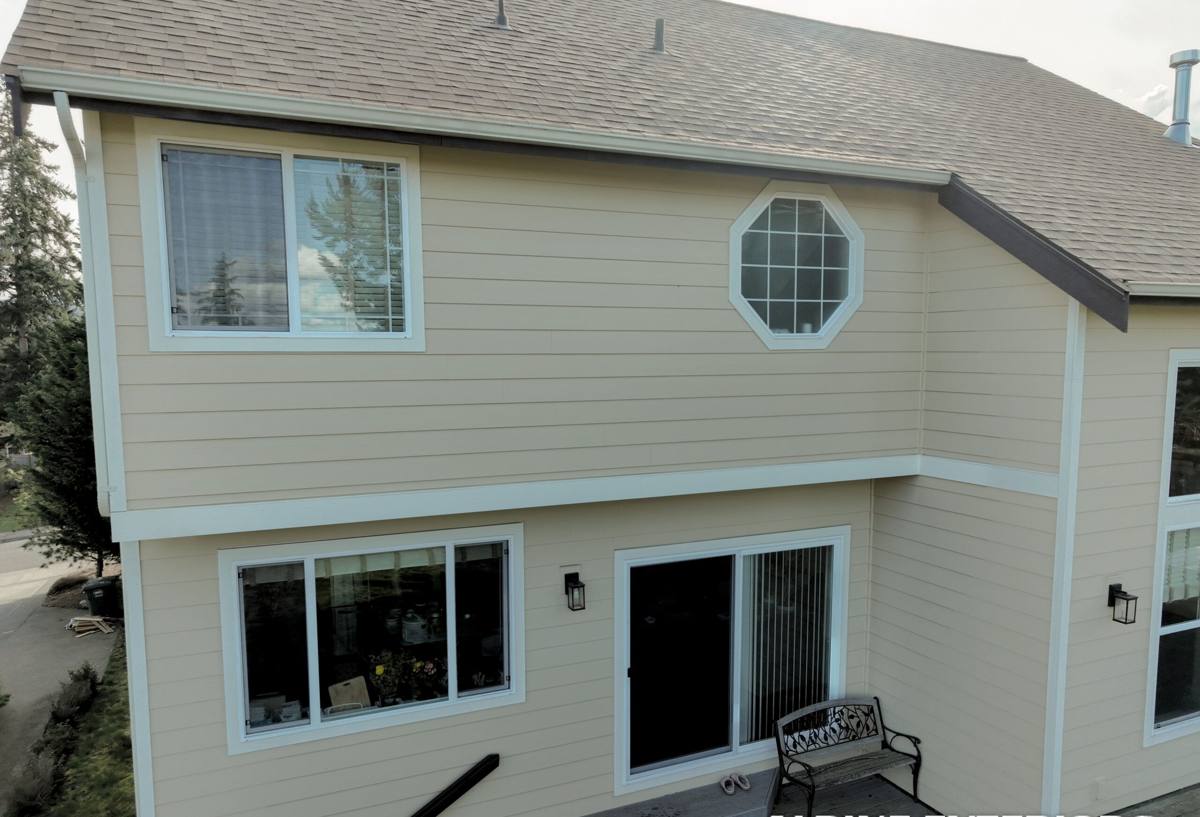
Signs a Sehome Roof Needs Repair
Most roof repair calls in this neighborhood start with one of a handful of common signs. None of these mean the whole roof is done — most are fixable if caught before they've had a chance to spread.
- A ceiling stain that appears or grows after a windy rainstorm specifically, not just any rain
- Granules collecting in gutters or at downspout outlets, a sign of shingle wear
- Visible moss lines running down from the ridge or from under overhanging branches
- Curling, cracked, or lifted shingle edges, especially on the roof faces that get the least sun
- Rusting or streaking around metal flashing, vent boots, or chimney counterflashing
- Soft or spongy decking felt underfoot in the attic near valleys or penetrations
- Daylight visible through the roof deck from inside the attic
If you're only seeing one or two of these, it's usually a targeted repair. If several show up at once, especially spread across different roof planes, that's worth a full inspection before deciding what to do.
What a Correct Repair Actually Involves
A roof repair that's done right isn't just replacing the shingles or panels that look damaged. It means tracing the water path back to its actual entry point, which is very often several feet away from where the stain or damage shows up inside the house. Water runs along the underside of decking and roofing felt before it drips, so the visible damage and the actual leak source are rarely in the same spot.
Steps that matter, whether the repair is small or large
- Confirm the actual entry point before removing anything — cutting into the wrong section wastes material and still leaves the leak active
- Pull back surrounding shingles or panels to inspect the underlayment and decking, not just the top layer
- Replace any decking that's delaminated or soft, not just covered over
- Reflash penetrations (vents, chimneys, skylights) rather than just re-sealing them with caulk, since sealant alone fails faster than proper flashing
- Match shingle or panel type and, where possible, color so the repair doesn't stand out or create a mismatched wear pattern
- Clear moss and debris from the surrounding area before final fastening, so trapped organic matter doesn't hold moisture against the new material immediately
Skipping the tear-back-and-inspect step is the single most common shortcut that leads to a repeat leak within a year or two.
Roofing Materials Common in Sehome
Sehome has a mix of housing ages and styles, which means a mix of roofing materials. Each has different repair considerations in this climate.
| Roof Type | Repair Consideration in This Climate |
|---|---|
| Asphalt composition shingle | Most common; granule loss and edge curling are the main aging signs; moss lifts edges over time if not managed |
| Cedar shake | Needs consistent airflow underneath to dry out between rains; shaded sections moss and rot faster than sun-exposed ones |
| Metal panel | Watch fastener corrosion in salt-influenced air; seams and panel laps are the usual repair points, not the panels themselves |
| Low-slope / torch-down (common on additions and older flat-roofed sections) | Seam and flashing failures are far more common than field membrane failure; standing water areas need grading correction, not just patching |
Knowing which category a roof falls into changes both the repair method and the realistic lifespan of the fix, which is something we walk through on-site rather than guessing from a photo.
How Our Repair Process Works
1. On-site inspection
We walk the roof and the attic where accessible, and look at gutters, flashing, penetrations, and any interior stains together, rather than treating them as separate problems.
2. Honest diagnosis
We tell you what's actually failing and why, including if the damage is limited to a small area or if it's a sign of broader wear that repair can only delay, not solve. We're not going to sell a full replacement when a repair will genuinely hold, and we're not going to patch something that needs more than that.
3. A clear repair plan
You get a written scope of what will be replaced, reflashed, or resealed, and roughly what it will cost, before work starts. No open-ended time-and-materials guessing.
4. The repair itself
Matched materials, proper flashing details, and decking replacement where needed — not surface patches over a hidden problem.
5. Cleanup and a final check
Debris and old material removed, and a final look to confirm the fix addresses the original complaint, not just the area that looked worst.
Moss, Algae, and Tree Debris Management
Because so much of Sehome sits under tree cover, moss and algae are less a one-time cleaning issue and more an ongoing maintenance factor. Moss holds moisture against the roof surface long after the rest of the roof has dried, and its root structure works into shingle granules and seams over time, which is what eventually lifts edges and opens gaps for water. A repair in a moss-prone area should include a light, roof-safe cleaning and treatment as part of the job, not just as an afterthought, and we'll flag if gutters or valleys are collecting enough needle and leaf debris to cause standing water between rain events.
This isn't about scrubbing a roof aggressively — that can do more damage than the moss itself. It's about controlled removal and treatment that doesn't strip granules or lift shingle tabs.
Repair vs. Replacement: What Actually Drives the Decision
| Factor | Leans Toward Repair | Leans Toward Replacement |
|---|---|---|
| Age of roofing material | Under roughly 15 years, condition otherwise sound | Near or past manufacturer-rated lifespan |
| Extent of damage | Isolated to one area, flashing, or penetration | Spread across multiple roof planes |
| Decking condition | Solid, dry decking under the affected area | Soft, delaminated, or repeatedly re-soaked decking |
| Leak history | First occurrence or single known cause | Recurring leaks in different spots over recent years |
| Moss/algae extent | Surface growth, edges intact | Growth has visibly lifted or displaced shingles |
Costs for roof repairs vary widely depending on how much decking replacement is needed, roof pitch and access, and material type — we give a firm number after inspection rather than a number over the phone, since a fair estimate depends on what we actually find once we're up there.
Why a Crew That Already Works in Sehome Matters
Roofing crews that regularly work this part of Bellingham already understand which roof faces in this neighborhood hold moss longest given the tree cover and hill shading, how far salt-influenced air reaches inland from the bay, and how driving rain off Puget Sound weather patterns tends to find weak spots in flashing versus field material. That local pattern recognition shortens the diagnosis step and reduces the chance of a repair that solves the symptom but misses the actual cause. It also means we're realistic about scheduling around Whatcom County's wetter months — timing a repair for a dry weather window matters as much as the repair method itself.
What to check before hiring anyone for roof repair
- Washington state contractor license and current liability insurance
- A written scope of work before any tear-off begins, not a verbal estimate only
- Clear answer on whether decking will be inspected and replaced if needed, not just covered
- Straight talk on repair vs. replacement, without pressure toward the more expensive option
- Experience with your specific roof type — shingle, cedar, metal, or low-slope
- A plan for moss and debris cleanup as part of the job, not billed as a surprise add-on
If you're dealing with a leak, visible moss, or just want an honest read on where your roof stands, we're happy to take a look. Estimates are free, there's no pressure to act on anything we find, and you'll get a straight answer about whether a repair makes sense — use the form below to get started.