 Bellingham Exterior
 Siding Installation Built for Cordata's Climate
Cordata sits on Bellingham's north side, close enough to the water that salt air is a real factor in how exterior materials age, and squarely inside the Pacific Northwest's long wet season. Homes here deal with a combination that's harder on siding than most homeowners realize: months of driving rain, humidity that never fully lets up, and shaded, tree-lined lots where moss and algae get a head start every fall and don't let go until late spring. Siding installation in this neighborhood isn't just about choosing a product and nailing it up — it's about installing the right material, correctly, with the water management details that Whatcom County's climate actually demands.
We install exclusively James Hardie fiber cement siding, and we do it with installation practices built around what Cordata's weather does to a home over ten, twenty, and thirty years — not just what looks good on install day.
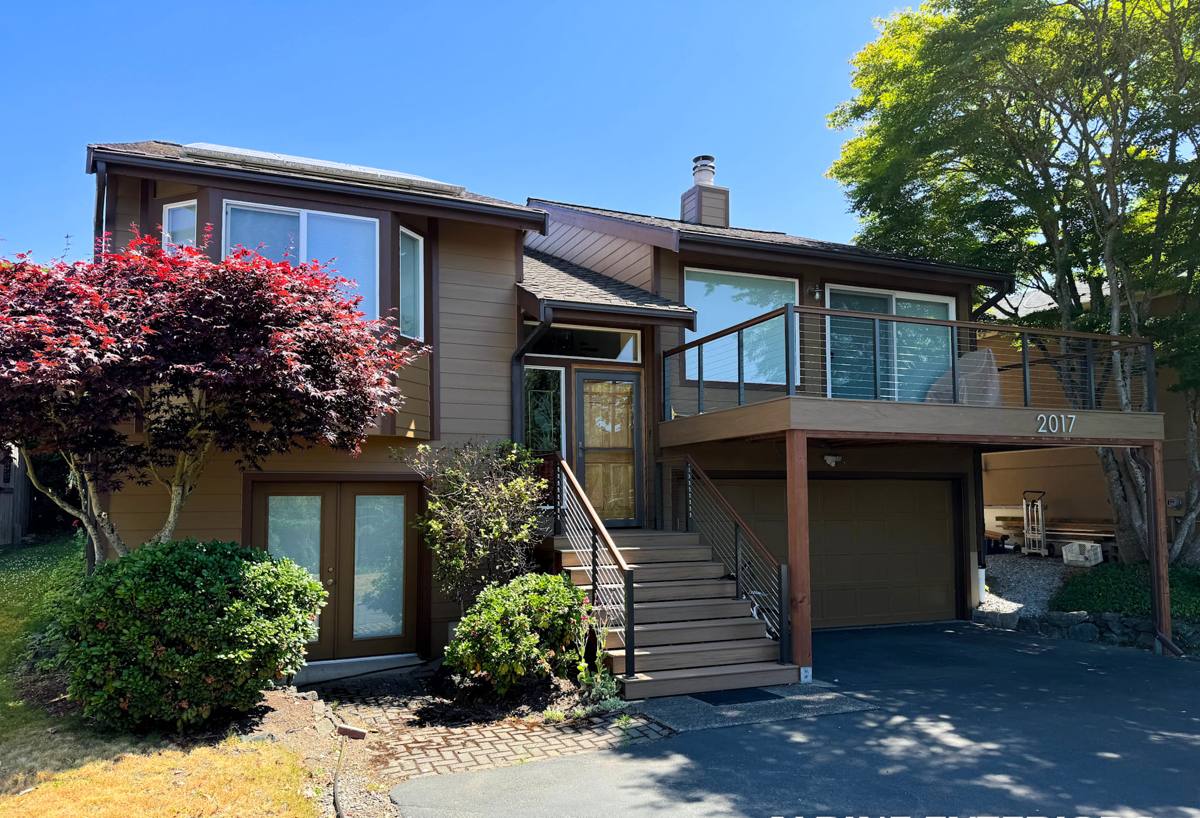
What Salt Air, Driving Rain, and Moss Season Do to Bellingham Siding
Salt Air
Homes within a few miles of Bellingham Bay get a slow, steady dose of salt-laden air. It doesn't damage siding as dramatically as direct water intrusion, but it accelerates corrosion of fasteners, trim flashing, and any metal components on the exterior. Over years, that corrosion can telegraph through paint, stain trim, and eventually compromise the very details meant to keep water out. It's a reason we're particular about the fasteners and flashing metals we use on every job, not just the siding material itself.
Driving Rain
Bellingham's rain rarely falls straight down. Wind off the Sound and the Strait pushes it sideways into walls, which means water is constantly testing every seam, joint, and penetration in a home's exterior. Siding that isn't installed with proper overlaps, flashing, and a drainage plane behind it will eventually let that wind-driven rain find a way in — usually silently, behind the wall, long before anyone sees a stain inside.
Moss Season
North-facing walls, shaded lots, and mature tree cover — all common in Cordata — create the damp, low-light conditions moss and algae thrive in. On some siding materials, that growth holds moisture against the surface for months at a stretch, which speeds up rot, delamination, and finish failure. The material matters here as much as the installation: a siding that resists moisture absorption at the surface gives moss less to hold onto and dries out faster between rain events.
Why We Install Only James Hardie Fiber Cement in Cordata
We made a deliberate decision years ago to install James Hardie fiber cement exclusively — not vinyl, not LP SmartSide, not primed wood, not other fiber cement brands. In a climate like this, that decision comes down to a few practical realities:
- Fiber cement doesn't feed rot. Unlike wood-based siding products, Hardie's cement-and-cellulose composition isn't a food source for the fungi that cause rot, which matters enormously in a climate that stays damp for most of the year.
- ColorPlus factory finish resists the grime that fuels algae and moss. The baked-on finish is more resistant to moisture absorption at the surface than field-applied paint, which means less for organic growth to hold onto and easier upkeep over time.
- HZ5 engineering is built for exactly this climate zone. James Hardie manufactures regionally-engineered product lines, and the HZ5 formulation is designed for the wetter, more humid climates of the Pacific Northwest — it's not a one-size-fits-all product being installed here out of convenience.
- Non-combustible material. Fiber cement doesn't burn, which is a meaningful, permanent advantage over wood-based and some engineered wood siding products, independent of climate.
- A warranty structure that actually reflects long-term performance, including transferability if the home sells — relevant in a neighborhood with a steady mix of long-term owners and turnover.
We won't install vinyl, LP SmartSide, primed spruce, cedar, or other fiber cement brands on a home, even when asked. That's not a knock on every homeowner's existing siding — plenty of those products have their place — but we've standardized our crews, our training, and our warranty backing around one system we trust to perform in this specific climate, and we'd rather turn down a job than install something we can't stand behind here.
What a Correct Siding Installation Actually Involves
Siding failures in the Pacific Northwest are rarely about the siding material itself — they're almost always about what's happening behind it. A correct installation is a system, not just a surface:
Water-Resistive Barrier and Drainage Plane
Every installation starts with a continuous water-resistive barrier behind the siding, and in a climate this wet, we build in a drainage gap so any moisture that does get past the cladding has somewhere to go and can dry out, instead of sitting against the sheathing.
Flashing at Every Penetration
Windows, doors, hose bibs, light fixtures, deck ledgers — every penetration through the siding is a potential entry point for wind-driven rain. Correct flashing detail at each one, installed in the right sequence with the water-resistive barrier, is what actually keeps water out over the long term.
Manufacturer-Spec Fastening and Clearances
James Hardie publishes specific installation requirements: fastener type and spacing, minimum clearance from grade, roof lines, and decks, and proper joint treatment. These aren't suggestions — they're what the product warranty is contingent on, and skipping them is one of the most common ways an otherwise good product fails early.
Caulking and Joint Treatment
Butt joints, trim intersections, and terminations all need the right sealant, applied correctly — not as a cosmetic finishing touch, but as part of the water management plan.
Our Installation Process
- On-site assessment. We walk the home, check the condition of the existing sheathing and water-resistive barrier where accessible, and identify any moisture damage or rot that needs to be addressed before new siding goes on — covering up a problem is worse than not covering it at all.
- Tear-off and substrate prep. Old siding comes off, sheathing is inspected and repaired as needed, and any damaged framing or rot is dealt with before we move forward.
- Water-resistive barrier and flashing installation. This is the step that determines how the home performs in ten years, and we don't rush it.
- Hardie siding installation to manufacturer spec. Correct fastening, clearances, and joint treatment, on every wall.
- Trim, caulking, and finish detailing. Clean lines at corners, windows, and transitions.
- Final walkthrough and cleanup. We review the finished work with the homeowner and leave the site clean.
Cost Factors for Siding Installation in Cordata
Every home is different, so exact numbers depend on a walkthrough, but these are the factors that most often move the price on a Cordata siding project:
| Factor | Why It Matters Here |
|---|---|
| Home size and wall complexity | More corners, gables, and dormers mean more cutting, flashing, and labor time |
| Existing siding condition | Rot or moisture damage found during tear-off requires sheathing or framing repair before new siding goes on |
| Siding profile selected | Lap siding, shingle-style panels, and board-and-batten each carry different material and labor costs |
| Trim and detail work | Homes with more windows, trim boards, and architectural detail require more precise, time-intensive installation |
| Access and lot conditions | Mature trees, tight side yards, and multi-story walls common on Cordata lots can affect staging and labor time |
| Color and finish selection | Factory ColorPlus finishes vary in cost by color and coating tier compared to primed-for-paint options |
Why Hiring a Crew That Already Works in Cordata Matters
Siding installation isn't just a product choice — it's a set of judgment calls made on-site, and a crew that already works this neighborhood makes better ones. We know what to expect from Cordata's typical lot conditions: the shade patterns, the drainage tendencies of the soil, and the wear patterns that show up on north- and west-facing walls first. We know how Bellingham's building department handles siding permits and inspections, so there are no surprises mid-project. And because we're local, warranty service and follow-up aren't a phone call to a call center — they're a crew that can be back on-site quickly if a question comes up after the job is done.
That local familiarity also shows up in smaller ways: knowing which details tend to need extra attention on homes of a certain age or construction style common to the area, and not treating every Cordata home like a generic installation.
Maintaining Your New Siding Through Whatcom County Winters
James Hardie siding is low-maintenance compared to wood-based products, but "low-maintenance" isn't "no-maintenance" in this climate. A simple seasonal routine keeps it performing the way it should:
- Rinse siding annually to remove pollen, road grime, and early moss or algae growth before it takes hold
- Keep gutters clear so overflow doesn't run down wall surfaces
- Trim back vegetation and tree limbs to reduce shade and improve airflow along walls prone to moss
- Inspect and refresh caulking at trim joints and penetrations every few years
- Address any impact damage or chipped finish promptly rather than letting it sit through a wet season
Choosing the Right Siding Contractor: A Homeowner's Checklist
Whether you go with us or someone else, these are the things worth confirming before any siding contractor starts work on a Cordata home:
- They can explain their water-resistive barrier and flashing approach in specific terms, not just "we'll seal it up"
- They install to the manufacturer's published fastening and clearance specifications
- They're licensed and insured to work in Washington State, and can provide proof
- They inspect and repair sheathing and framing issues before installing new siding, not after
- They stand behind both their labor and the manufacturer's material warranty, in writing
- They have direct, hands-on experience with the specific siding product they're proposing — not just a general contracting background
If you're planning a siding project for a Cordata home, we're happy to take a look and walk you through what your home specifically needs. There's no cost and no pressure to a free estimate — just a straight assessment of your siding's condition and what correct installation would involve.