 Bellingham Exterior
 Fairhaven's Waterfront Climate Is Hard on Siding
Fairhaven sits close to Bellingham Bay, and that proximity to open water shapes how siding ages here. Salt-laden air drifts in off the water and settles on exterior walls, where it speeds up corrosion of fasteners and metal trim and slowly breaks down finishes that weren't built to handle it. Add Whatcom County's long wet season — months of driving rain, often pushed sideways by wind off the water — and Fairhaven siding takes on moisture from more angles than siding in more sheltered, inland parts of Bellingham.
Then there's moss. The Pacific Northwest's mild, damp climate gives moss and algae a long growing season, and shaded lots, north-facing walls, and anything near mature trees stay damp for days at a stretch. Moss holds water against the wall surface and works into seams and laps, creating the kind of chronic dampness that rots wood-based siding and lifts paint long before a problem is visible from the street or sidewalk.
None of this means Fairhaven homes need constant attention. It means small issues — a cracked board, an open seam, a soft spot near a downspout — turn into bigger problems faster here than they would somewhere drier. Catching them early is most of the job.
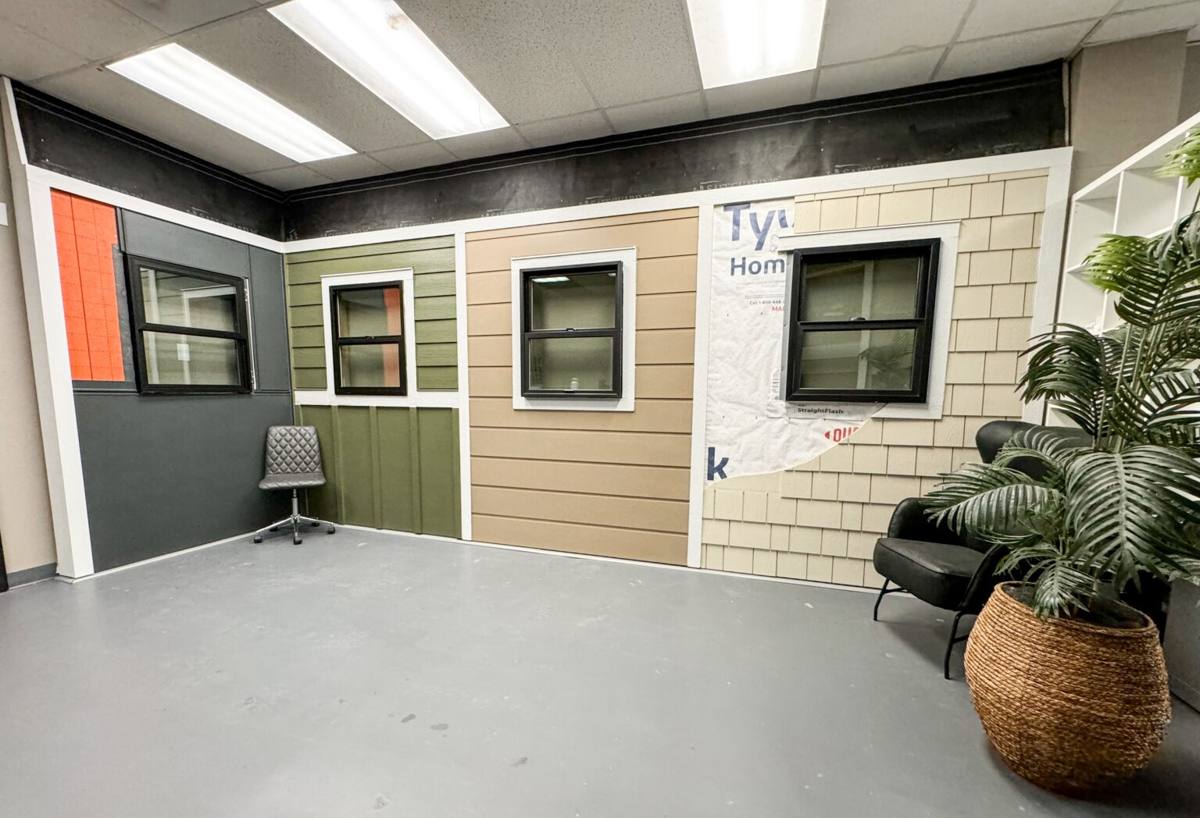
Signs a Fairhaven Home Needs Siding Repair
Most siding failures don't announce themselves loudly. They show up as small, easy-to-miss details that get worse with every wet season they're ignored. Walk your exterior a couple times a year and look for:
- Boards that feel soft, spongy, or flex when you press on them — a strong sign of moisture trapped underneath
- Visible cracks, splits, or gaps at butt joints and corners, especially on walls that face prevailing wind and rain
- Peeling, bubbling, or chalking paint that keeps coming back in the same spot no matter how often it's touched up
- Persistent moss or dark streaking that doesn't wash off, particularly on shaded or north-facing walls
- Staining or discoloration on interior walls or ceilings near exterior corners, a sign water has already gotten past the siding
- Siding that's pulling away from the wall, nail heads popping through the surface, or trim separating at the seams
- A noticeable rise in heating bills without a clear cause, which can point to moisture-compromised insulation behind damaged panels
Any one of these on its own might be minor. Several together, or any of them near a downspout, roofline, or window flashing, usually means water has been getting in longer than it looks.
What a Correct Siding Repair Actually Involves
It starts behind the siding, not at it
A repair that only replaces the visible damaged board and stops there is a patch, not a fix. Water damage almost always originates somewhere the siding itself can't be blamed for — a gap in flashing around a window, a failed seal where a deck ledger or hose bib penetrates the wall, a gutter that's been overflowing onto the wall below it. Before we touch the siding, we check the water-resistive barrier, flashing, and any penetrations in the repair area. If we replace boards without addressing what let water in, the same spot fails again within a season or two.
Matching materials and finish
Fairhaven has a real mix of housing stock — older homes with decades of additions and repairs layered on, alongside newer construction. That means the siding already on a wall isn't always consistent, and a repair has to account for what's actually there: board width, exposure, profile, and finish. Where we're patching into existing James Hardie siding, matching factory-finished ColorPlus boards keeps the repair invisible and keeps the color consistent over time, since field-applied paint weathers differently than factory finish. Where we're replacing a larger damaged section, that's often the point where it makes more sense to talk about re-siding the wall properly rather than chasing a match.
Fasteners and gaps matter more here than inland
With salt air in the mix, fastener choice isn't a minor detail. Corrosion-resistant fasteners installed to manufacturer spec, correct joint gaps for expansion, and proper caulking at seams all matter more on a home exposed to bay air than on a home twenty miles inland. Skipping these details is a common reason repairs that look fine on installation day fail early.
Repair or Replace? How We Make the Call
Not every damaged wall needs a full re-side, and not every problem area should just be patched. The right call depends on a few factors, and we walk through them with the homeowner before recommending either path.
| Factor | Leans toward repair | Leans toward replacement |
|---|---|---|
| Extent of damage | Isolated to one or two boards or a single wall section | Spread across multiple walls or recurring in several spots |
| Age and condition of remaining siding | Siding is younger, sound, and holding its finish well | Siding is near end of life, brittle, or failing broadly |
| Underlying cause | A one-time or easily corrected source, like a damaged flashing detail | A systemic issue, like widespread moisture intrusion behind the wall |
| Material match | Compatible boards or profile are available to match cleanly | Original material is discontinued or a match would be visibly inconsistent |
| Cost over time | Repair cost is modest relative to remaining siding life | Repeated repairs are starting to approach replacement cost |
We'd rather tell a homeowner honestly that a repair will hold for years than sell a full re-side that isn't needed yet — and just as honestly, we'll say when a wall has passed the point where patching makes sense.
Why We Repair — and Replace — With James Hardie Fiber Cement
When a repair calls for new material, or a damaged section is large enough that replacement is the better call, we work exclusively in James Hardie fiber cement. It's a decision we made based on how siding actually performs in a climate like this one, not brand preference. Fiber cement doesn't feed moss the way wood-based products can, it's non-combustible, and Hardie's HZ5 product line is engineered specifically for climates like western Washington's — freeze-thaw cycles, sustained moisture, and long wet seasons.
The factory-applied ColorPlus finish also matters for repair work specifically: it's baked on under controlled conditions, so it holds color and resists the chalking and peeling that field-applied paint is more prone to, especially in a salt-air environment. That's a real advantage when the goal is a repair that blends in today and still matches in five years. Hardie's warranty coverage is also transferable, which protects the investment if a Fairhaven home changes hands.
We don't install vinyl, LP SmartSide, Cemplank, Allura, or raw wood siding, including on repair jobs. That's not a knock on every homeowner who has one of those products already — plenty of it is on solid homes throughout Bellingham. It's that when we're the ones choosing the material that goes back on a wall, we've settled on the one we trust to hold up here.
Our Siding Repair Process in Fairhaven
- Inspection: We look at the damaged area and the surrounding siding, checking for moisture intrusion, flashing issues, and how far the problem actually extends beyond what's visible.
- Diagnosis: We identify the root cause — not just the symptom — so the repair addresses what let water or damage in, whether that's a gutter, a flashing gap, or a failed seal.
- Honest recommendation: We explain whether a targeted repair makes sense or whether the wall has reached the point where replacement is the better value, and walk through the reasoning.
- Repair or replacement: Damaged material comes out, the underlying barrier and flashing get corrected, and new James Hardie material goes in to spec — correct fasteners, gaps, and sealing for this climate.
- Final check: We confirm the repair is weathertight and the finish match is as close as the situation allows before calling the job done.
What Happens When Repairs Get Put Off
Deferred siding repair rarely stays a small problem in a climate like Fairhaven's. Water that gets behind siding doesn't dry out quickly here — the wet season is long enough that trapped moisture just sits and works on wood sheathing, framing, and insulation. A repair that would have been a few boards and a day's work can turn into sheathing replacement, insulation removal, and a much larger project if it sits through a couple of wet seasons unaddressed. Moss makes this worse by holding moisture against the wall even between rain events, extending the amount of time a compromised spot stays wet.
This is the practical argument for addressing siding issues while they're still small: it's almost always cheaper, faster, and less disruptive than waiting.
Why Hire a Crew That Already Works in Fairhaven
A contractor who regularly works near the bay knows what to check for beyond the obvious. They know which wall orientations in this area tend to hold moisture longest, how far salt air travels inland from the water on this stretch of coastline, and what a normal amount of weathering looks like on a Fairhaven home versus a sign of a real problem. That local pattern recognition shortens the diagnosis step and reduces the chance of missing a contributing cause.
It also means a crew that's used to matching into the mix of older and newer siding found throughout Fairhaven, rather than treating every repair as a generic, one-size-fits-all job.
Keeping Repaired Siding in Good Shape
Once a repair is done, a little maintenance keeps it — and the rest of the siding — performing well:
- Rinse moss and algae off siding surfaces before it has a chance to build up, especially on shaded or north-facing walls
- Keep gutters clear so overflow doesn't run down the wall behind the siding
- Trim back vegetation that keeps a wall section shaded and damp longer than the rest of the house
- Do a visual walk-around each spring and fall to catch new cracks, gaps, or soft spots early
- Re-caulk seams and joints as needed, since sealant has a shorter service life than the siding itself
If you're seeing damage, soft spots, or recurring moss on your Fairhaven home's siding, we're happy to take a look and give you a straight answer on what it needs. Reach out for a free, no-pressure estimate using the form below.