 Bellingham Exterior
 Siding Repair Built for Happy Valley's Climate
Happy Valley sits close enough to Bellingham Bay to catch the salt-laced air coming off the water, and close enough to the surrounding tree cover to stay shaded and damp for long stretches of the year. That combination is hard on exterior siding. Salt air accelerates corrosion on fasteners and metal trim. Driving rain off the Sound finds every gap, seam, and nail hole that wasn't sealed correctly the first time. And the long moss season common to Whatcom County keeps north-facing walls and shaded siding wet well after the rest of the neighborhood has dried out.
None of that means siding repair in Happy Valley has to be a losing battle. It means the repair has to account for those conditions specifically, not just patch what's visibly broken and move on. A repair that ignores moss growth patterns, doesn't check what's happening behind the siding, or uses the wrong fastener for a salt-air environment will fail again — often within a season or two.
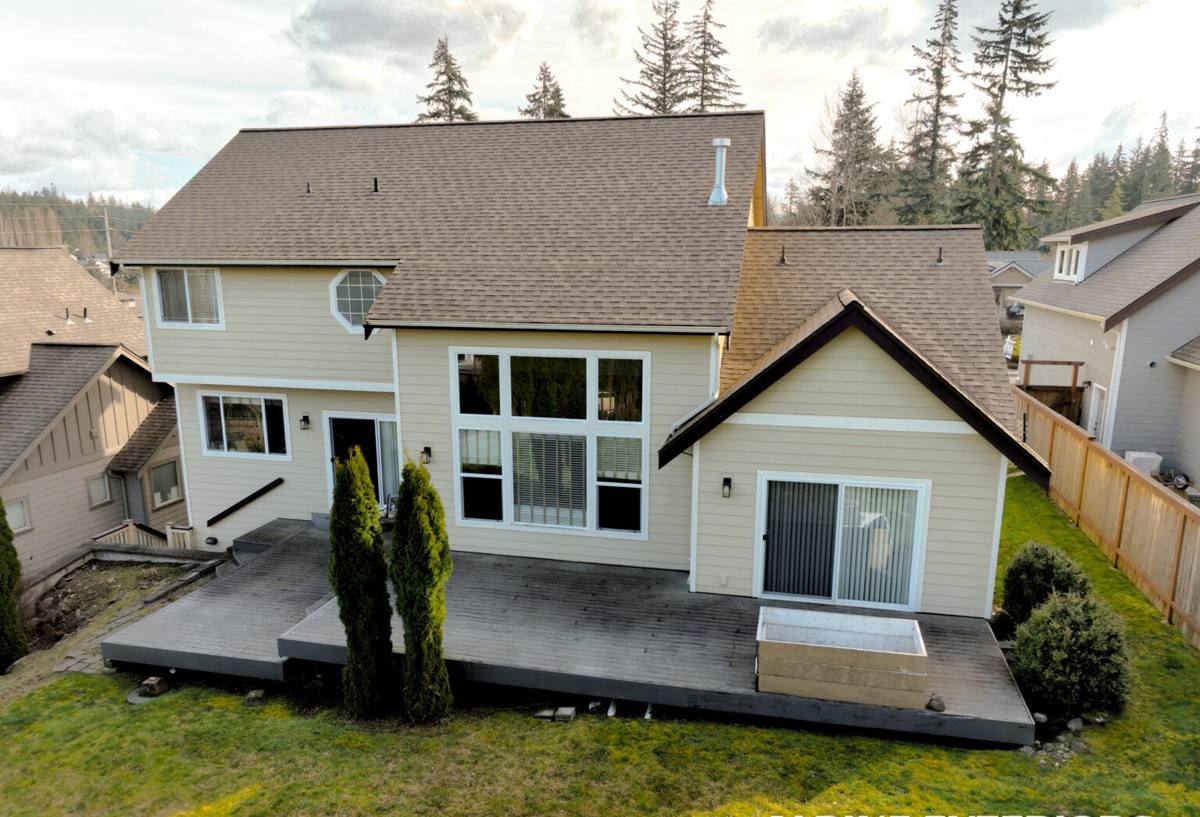
Signs Your Siding Needs Repair Now
Siding damage rarely announces itself all at once. It shows up in small signals first, and those signals matter more in a climate like this one because moisture problems compound quickly once they start.
- Soft, spongy, or crumbling siding when you press on it (a strong sign of moisture damage underneath)
- Persistent moss or dark streaking on the same section of wall every year, even after cleaning
- Visible cracking, splitting, or buckling boards, especially near corners and window trim
- Paint or ColorPlus finish that's bubbling, peeling, or failing in one localized area rather than evenly across the wall
- Gaps opening up at seams, butt joints, or where siding meets trim, window frames, or the foundation
- Rust staining running down from nail heads or metal flashing
- A musty smell near an exterior wall, or interior drywall staining that lines up with an exterior trouble spot
Any one of these on its own might be minor. Several showing up in the same area, or a problem that keeps coming back after cleaning or a quick patch, usually means water is getting behind the siding rather than just sitting on top of it.
What a Correct Siding Repair Actually Involves
A repair that's done right starts before anyone touches a piece of siding. The real work is figuring out how water is getting in and how far it's traveled, not just replacing the board that looks bad.
Finding the actual moisture path
Damaged siding is usually a symptom, not the root cause. We pull back the affected boards and check the weather-resistive barrier (the house wrap or building paper), the sheathing underneath, and the flashing at any nearby windows, doors, or penetrations. If the barrier is torn, the flashing is missing, or the sheathing has already started to soften, replacing just the visible siding will leave the real problem in place.
Matching or transitioning materials correctly
If the original siding is still in good shape structurally, a proper repair matches the profile, reveal, and finish as closely as possible so the patch doesn't stand out or create a new water-collection point. If the surrounding material has reached the end of its useful life, patching it isn't a favor to the homeowner — it's a repair that will need to be redone in a year or two once the material around it fails too.
Sealing and fastening for this climate
Given the salt exposure and rain volume in this area, fastener choice and sealant placement matter more here than they would somewhere drier and further from the coast. We use corrosion-resistant fasteners and seal penetrations with the expectation that this wall will see sustained wet weather for months at a stretch, not just occasional rain.
How Different Siding Materials Hold Up to Repair
What's on the house already changes what a repair can realistically accomplish. Here's how the materials we commonly find on Happy Valley homes behave when it comes time to fix them.
| Material | How it typically fails here | Repair reality |
|---|---|---|
| Cedar or primed wood | Absorbs moisture, swells, splits, and feeds moss growth in shaded, damp spots | Repairable if caught early; repeat problems are common once rot sets in |
| Vinyl siding | Cracks in cold snaps, warps near heat sources, fades unevenly with UV and salt exposure | Patching is possible but exact color/profile matches get harder to find as vinyl ages |
| OSB-based composite siding | Edge and seam swelling once moisture gets past the factory coating | Swollen sections generally need full-board replacement, not patching |
| James Hardie fiber cement | Rarely rots or absorbs moisture; damage is usually mechanical (impact) rather than weather-related | Damaged boards replace cleanly; ColorPlus finish is available to keep color match consistent |
This is also where our standard as a company comes into play. When a repair is small and localized, we work with what's already on the wall. But when a homeowner is looking at a section of wall — or a whole elevation — that's failed and needs to come off, we only install James Hardie fiber cement siding to replace it. We don't install vinyl, LP SmartSide, Cemplank, Allura, primed spruce, or cedar. That's not a sales position; it's a decision based on what holds up in exactly the conditions Happy Valley homes deal with every winter.
When Repair Isn't Enough
Part of an honest repair estimate is telling a homeowner when repair is the wrong call. If moisture has traveled well past the boards you can see, if a whole elevation is showing the same failure pattern, or if the siding has already been patched more than once in the same spot, further patching is usually just deferring a bigger expense while the sheathing underneath keeps degrading.
In those cases we recommend replacing the affected section — or the full wall — with James Hardie. It's non-combustible, engineered specifically for wet climates through Hardie's HZ product lines, holds its ColorPlus factory finish far longer than field-applied paint, and carries a strong transferable warranty. For a coastal, high-moisture neighborhood like Happy Valley, that combination matters more than it would in a drier part of the state.
Our Repair Process
Every repair job follows the same sequence, whether it's one damaged board or a full section:
- Inspection: We assess the visible damage and check the surrounding area, not just the spot that prompted the call.
- Diagnosis: We identify the actual cause — a failed seal, missing flashing, a moisture path, or simple material fatigue — before recommending a fix.
- Scope and estimate: We tell you honestly whether this is a patch, a section replacement, or something bigger, and what each option costs.
- Repair or replacement: We pull back only what needs to come off, check the barrier and sheathing underneath, and rebuild it correctly — including flashing and sealant, not just the siding itself.
- Finish match: Where we're patching existing material, we match profile and finish as closely as possible. Where we're replacing with Hardie, we match the ColorPlus color to the rest of the home.
- Final check: We walk the repaired area with you before we consider the job done.
What Siding Repair Typically Costs
Repair costs vary a lot depending on how much damage there is and whether it's cosmetic or structural. Rather than quote a number that won't apply to your house, here's what actually drives the price up or down.
| Cost factor | Why it matters |
|---|---|
| Extent of moisture damage behind the siding | Sheathing or framing repair adds significant cost beyond the siding itself |
| Material being repaired | Matching aging vinyl or cedar can take longer and cost more than clean fiber cement replacement |
| Wall height and access | Second-story or steep-slope sections take longer and may need additional equipment |
| Number of separate trouble spots | One localized repair costs far less than several scattered problem areas on the same visit |
| Trim and flashing condition | Failed flashing around windows or corners often needs to be replaced along with the siding |
We provide a written estimate that breaks down what we found and what it will take to fix it correctly, so there are no surprises once work starts.
Why It Matters That We Already Work in Happy Valley
A crew that already works this neighborhood knows what to expect before they pull the first board — how the tree cover keeps certain walls damp longer, how salt air off the bay affects fasteners and trim over time, and how a long, wet Whatcom County moss season shows up differently on a shaded wall than on one that gets full sun. That familiarity shortens the diagnostic part of the job and reduces the odds of missing a related problem nearby.
It also means we're not guessing at what holds up here. We've seen how different siding materials age in this specific combination of coastal moisture and shade, and that experience shapes both our repair recommendations and our decision to install James Hardie when a full replacement is the right call.
Keeping Your Repair From Becoming a Repeat Job
A few simple habits go a long way toward making a repair last in this climate:
- Keep gutters clear so overflow doesn't run down the siding face during heavy rain
- Trim back branches and shrubs that keep a wall shaded and damp longer than necessary
- Rinse moss and algae off siding before it takes hold rather than after it's established
- Check caulking around windows, doors, and trim yearly and re-seal where it's cracked or pulling away
- Have any new staining or soft spots looked at right away rather than waiting for the next dry season
If you're seeing any of the warning signs above on a Happy Valley home, or you just want an honest read on whether a spot needs a patch or something more, we're happy to take a look. Estimates are free and there's no pressure to move forward — fill out the form below and we'll get in touch.