 Bellingham Exterior
 Why Siding Repair in Silver Beach Isn't a One-Size Job
Silver Beach is one of the more distinctive residential pockets in Bellingham — a mix of home ages, wooded lots, and a setting where shade, moisture, and weather all interact a little differently than they do on an open, sun-exposed street a few miles away. That matters when it comes to siding. A repair approach that works fine on a dry, exposed wall in another part of Whatcom County can fail fast on a shaded, moisture-retentive wall in Silver Beach. We've done enough repair work in this specific pocket of Bellingham to know the difference, and this page is about that one job — siding repair, in this one neighborhood — not a generic rundown of siding problems everywhere.
Bellingham sits where salt air off Bellingham Bay meets heavy Pacific Northwest rainfall, and neighborhoods with mature tree canopy like Silver Beach feel both of those things plus the extra shade and slow-drying surfaces that come with tree cover. Add in a moss season that can run most of the year in a wet climate like this one, and you get a specific, repeatable pattern of siding damage that we see over and over on repair calls in this area.
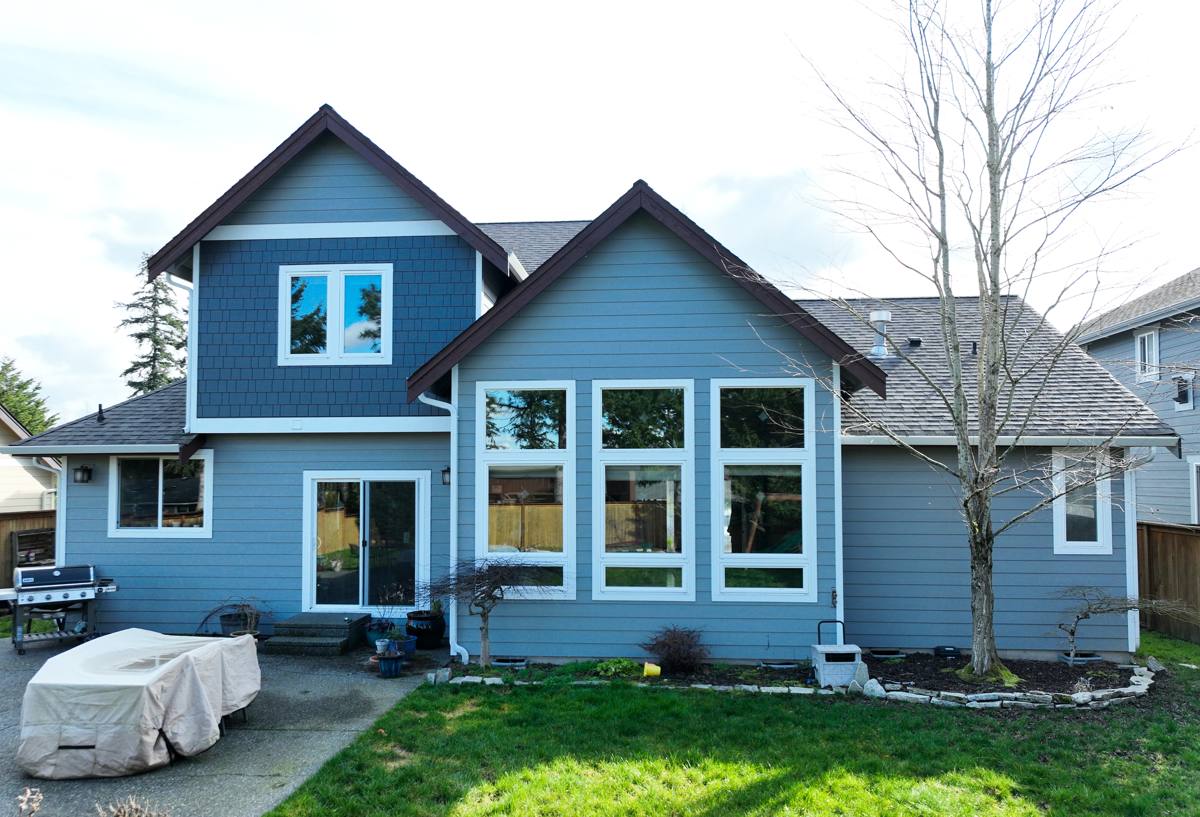
What Actually Fails on Silver Beach Siding
Most of the repair calls we get in this neighborhood fall into a handful of predictable categories. Knowing which one you're dealing with changes what the right fix actually looks like.
Moisture Trapped Behind the Boards
This is the one that causes real damage, and it's rarely visible from the ground. Wind-driven rain that gets behind a lap or panel doesn't dry out quickly on a shaded wall — it sits against the sheathing and framing, and over months and years that turns into soft wood, staining, and eventually rot that has nothing to do with what the siding surface looks like. By the time paint is bubbling or a board feels soft to the touch, the damage underneath is usually further along than the surface suggests.
Moss and Algae Buildup
A long moss season plus shaded, slow-drying siding is a near-perfect combination for organic growth on north-facing and tree-covered walls. Moss and algae aren't just cosmetic — they hold moisture against the siding surface, which shortens the life of paint and caulk and accelerates whatever moisture problems already exist underneath.
Caulk and Trim Failure
Caulk joints at trim, window returns, and butt joints are usually the first thing to give out in a wet, shaded climate. Once a caulk joint fails, that seam becomes a direct path for water into the wall assembly — and it's often the actual root cause behind siding "failures" that look like they're the siding's fault.
Fading and Finish Breakdown
Even in a shaded neighborhood, sun-exposed walls and south-facing gables take a real beating over the years. Factory-applied finishes hold up differently than field-applied paint, which is one of the reasons product choice matters as much as workmanship when it comes to repair.
Repair or Replace? How We Make the Call
Not every damaged section needs full replacement, and not every "repair" candidate should actually be repaired. We look at the extent of hidden moisture damage, the age and condition of the surrounding siding, and whether a patched section will actually match and perform like the rest of the wall.
| Signs pointing to repair | Signs pointing to replacement |
|---|---|
| Damage limited to one or two boards or a small section | Soft or rotted sheathing found behind multiple areas |
| Surrounding siding is sound, just cosmetically worn | Repeated moisture failures in the same wall area over time |
| Failure traced to a specific, fixable cause (flashing, caulk, one bad board) | Siding material is discontinued or won't reasonably color-match |
| Rest of the siding still has useful service life left | Overall siding age means the whole wall is nearing end of life anyway |
We'll always tell you honestly which category your home falls into. A patch job on a wall that's structurally failing underneath isn't a favor to a homeowner — it just delays a bigger problem and spends money that would have gone toward a real fix.
What a Correct Siding Repair Actually Involves
A Real Diagnostic Before Any Board Comes Off
Before we touch a fastener, we check for the things that don't show from the outside: soft sheathing, damp insulation, compromised house wrap, and how far moisture has actually traveled from the visible damage point. Skipping this step and just swapping a bad-looking board is how repairs fail again within a year or two.
Matching Material and Finish
A repair that doesn't match butts up against the existing wall like a patch, not a fix. That means matching plank width, exposure, texture, and finish as closely as the original installation allows — and being upfront with you when an exact match isn't possible, so you can decide whether to patch that section or extend the repair to a full elevation for a clean, uniform look.
Flashing and Water Management First
Siding is the last layer, not the only layer. Any repair we do addresses the flashing, house wrap, and drainage path behind the siding first — new boards over a bad water-management detail just repeats the original failure.
Fastening and Finish Work
Proper fastener placement, caulk at the right joints (and not at joints that should be left open to drain), and a finish that matches the surrounding wall are what separate a repair that looks and performs like part of the house from one that looks like an obvious patch.
Why We Only Repair With James Hardie Fiber Cement
We install and repair exclusively with James Hardie fiber cement siding, and that standard applies to repair work too — not just new installs. There are a few practical reasons that matters specifically for repair jobs in a climate like this one.
- Non-combustible material: fiber cement doesn't feed a fire the way wood-based products can, which matters for insurance and long-term peace of mind.
- ColorPlus factory finish: a baked-on factory finish holds color and resists fading far more consistently than field-applied paint, which matters when you're trying to match a repair to existing siding years later.
- HZ5 climate engineering: Hardie's HZ product lines are engineered for specific climate zones, including the wetter, moisture-heavy conditions typical of Western Washington.
- Moisture behavior: fiber cement doesn't swell, rot, or absorb water the way wood-based or engineered wood products can, which is exactly the failure mode we see most often on repair calls in shaded, damp settings like Silver Beach.
- Warranty structure: Hardie's transferable warranty coverage gives homeowners a real backstop, which matters more on a repair than most people expect — a mismatched patch job with no warranty backing is a common source of disputes down the line.
We don't install or repair with vinyl, LP SmartSide, Cemplank, Allura, or primed wood siding. That's a deliberate standard, not a sales pitch — we've made the call that fiber cement, installed and repaired correctly, is the product that holds up the way homeowners actually expect it to in this climate.
Our Process for Silver Beach Homeowners
- Free on-site assessment. We look at the actual damage, check for hidden moisture with the tools and experience to find it, and give you an honest read on scope.
- Clear scope and estimate. You'll know what's being repaired, why, and what it costs before any work starts — no surprise change orders for things we should have caught up front.
- Careful removal. Boards come off in a way that protects the surrounding siding and exposes the wall assembly cleanly, so we can confirm what's underneath.
- Repair the water management layer first. Flashing, house wrap, and drainage details get fixed before a single new board goes up.
- Install matched Hardie siding. New material is fit, fastened, and finished to match the surrounding wall as closely as possible.
- Final walkthrough. We show you what was found, what was fixed, and what (if anything) to keep an eye on going forward.
Cost Factors Worth Understanding
Siding repair pricing varies more than new installation pricing, because so much depends on what's found once the wall is opened up. These are the main variables that move the number.
| Factor | Why it matters |
|---|---|
| Extent of hidden moisture damage | Sheathing or framing repair adds labor and material beyond the visible siding fix |
| Height and accessibility | Second-story and steep-lot access (common on wooded, sloped Silver Beach lots) adds equipment and time |
| Color and profile matching | Discontinued colors or profiles may require a larger repair area for a consistent look |
| Number of separate problem areas | Several small repairs across a home often costs more in aggregate than one contiguous section |
| Underlying cause | A simple caulk or flashing fix costs far less than correcting a chronic drainage problem |
Between-Repair Maintenance: What Homeowners Can Do
Good maintenance habits won't prevent every issue, but they meaningfully extend the life of a repair and can help you catch the next problem before it becomes expensive.
- Walk the exterior once or twice a year and look specifically for moss buildup on shaded and north-facing walls
- Keep gutters clear so overflow isn't running down siding walls during heavy rain
- Trim back branches and vegetation that keep siding sections damp and shaded longer than the rest of the house
- Check caulk joints at trim, window returns, and butt joints for cracking or gaps
- Look for soft spots, bubbling paint, or dark staining near the bottom of walls and around penetrations
- Rinse (don't power-wash aggressively) visible moss and algae rather than letting it build up over multiple seasons
Why a Local Crew Matters in a Neighborhood Like Silver Beach
Siding repair is a trade where local, specific experience shows up in the details — knowing how shaded, tree-covered lots in this part of Bellingham tend to hold moisture, what a typical Silver Beach wall assembly looks like once it's opened up, and how the local moss season actually behaves on a house versus how it behaves in a manufacturer's marketing material. A crew that's done this repair work in this specific neighborhood, in this specific climate, brings judgment that a generic estimate can't replace — knowing when a section can genuinely be patched versus when that's just delaying the real fix.
If you've got a section of siding that's showing damage, staining, or wear in Silver Beach, we're happy to take a look and give you a straight answer — repair or replace, and why. Reach out for a free, no-pressure estimate using the form below.