 Bellingham Exterior
 Why Silver Beach Siding Takes More Punishment Than People Expect
Silver Beach sits close enough to Bellingham Bay that homes here deal with a different mix of weather stress than a house a few miles inland in Whatcom County. Salt-laden air off the water accelerates corrosion on fasteners and trim, wind-driven rain finds its way into seams and laps that would stay dry elsewhere, and the shaded, damp stretches of the neighborhood grow moss on siding almost as readily as they do on a roof. None of this is exotic — it's just Pacific Northwest coastal exposure doing what it does, year after year, to whatever material is on the wall.
The problem is that a lot of siding sold in this region was never engineered with that specific combination in mind. It was engineered to be affordable, or fast to install, or to look good on the day it goes up. Whether it holds up through fifteen winters of Silver Beach weather is a different question, and it's the question we start every estimate with.
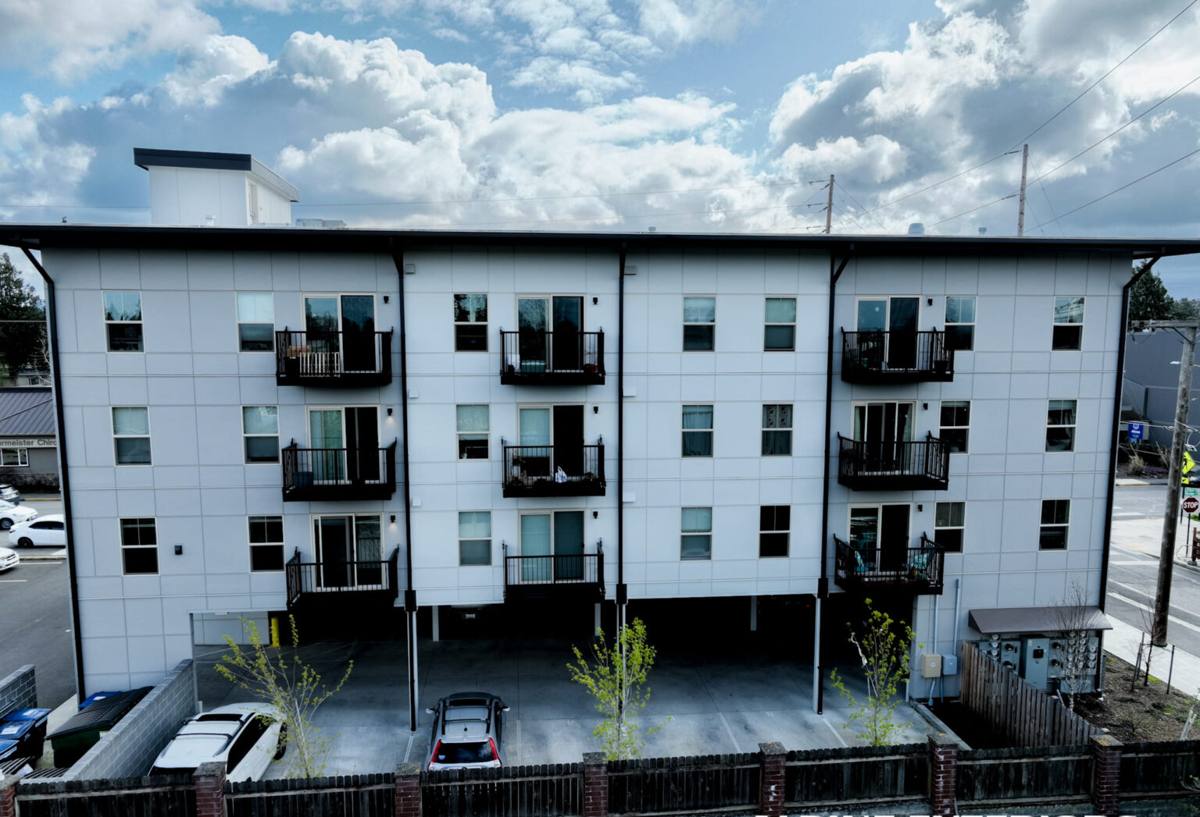
What Salt Air, Driving Rain, and Moss Season Actually Do
Salt Air and Metal Fasteners
Airborne salt speeds up corrosion on any exposed or under-protected metal — nail heads, trim flashing, hose bib penetrations. On siding systems that rely on exposed fastener heads or thin factory coatings, that corrosion shows up as rust streaking and eventually loosens the fastener's grip, which is exactly where water gets its next entry point.
Driving Rain and Wind-Loaded Walls
Silver Beach's proximity to open water means rain doesn't just fall here, it gets pushed sideways into siding laps, corner boards, and window trim during storms. A siding system with weak lap geometry, undersized overlaps, or a housewrap detail that wasn't installed with real drainage in mind will eventually let that water past the surface.
Moss Season and Sustained Moisture
Whatcom County's long wet season keeps shaded siding damp for extended stretches, and moss doesn't just grow on the surface — it holds moisture against whatever it's growing on. Materials that swell, delaminate, or lose paint adhesion when kept damp for weeks at a time are working against themselves in a neighborhood like this.
Why We Install Only James Hardie Fiber Cement Here
We made a standing decision to install James Hardie fiber cement siding exclusively — not vinyl, not LP SmartSide, not Cemplank or Allura, not primed cedar or spruce. That's not a marketing position; it's a practical one based on what actually survives coastal Whatcom County conditions with the least ongoing maintenance.
Fiber cement is fundamentally different from wood-based or engineered-wood siding: it's cement, sand, and cellulose fiber, so it doesn't absorb and swell with moisture the way wood-derived products can, and it doesn't feed the organic growth that shows up so readily in shaded, damp corners of this neighborhood. It's also non-combustible, which matters to insurers and to homeowners regardless of climate. James Hardie backs its siding with a factory-applied ColorPlus finish and a strong transferable warranty, which gives Silver Beach homeowners a documented, long-term backstop instead of a "we hope this holds up" situation.
The HZ5 Climate Engineering Detail
James Hardie engineers its HZ (HardieZone) product lines for specific climate zones, and the Pacific Northwest falls into the wetter HZ5 category. That means the product formulation and finish are matched to sustained moisture exposure rather than a one-size-fits-all national spec. For a neighborhood dealing with salt air, driving rain, and a long moss season simultaneously, that distinction is not a marketing footnote — it's the reason the material holds its finish and resists moisture-driven damage longer than generic siding products.
What a Correct Installation Actually Involves
Fiber cement siding is only as good as the installation behind it. We've seen Hardie product installed poorly enough to fail early, and cheaper products installed carefully enough to underperform less badly than they should. Installation quality matters as much as the material choice, especially in a coastal-adjacent neighborhood like Silver Beach.
- A drainage plane (rain screen or properly lapped housewrap) behind the siding so any water that gets past the surface has somewhere to go besides the sheathing
- Correct fastener type, length, and placement — Hardie specifies this closely, and it's not optional in a salt-air environment
- Proper lap and gap dimensions at every course, not tightened up to save material
- Flashing integrated at every window, door, and horizontal trim transition, not just caulked over
- Factory-cut and factory-painted edges kept intact wherever possible, since field-cut edges need to be sealed correctly to match the factory finish's protection
- Ventilation and clearance at the foundation line so moss and standing moisture don't get a head start at the bottom course
Any one of these done wrong shortens the life of an otherwise excellent product. This is the part of the job that separates a crew that occasionally installs Hardie from one that works this material and this climate every week.
Our Process for Silver Beach Projects
1. On-Site Assessment
We walk the exterior looking at existing siding condition, moss patterns, water staining, and any trouble spots specific to the home's orientation relative to wind and sun — Silver Beach lots vary enough in exposure that a generic assessment misses real detail.
2. Scope and Product Plan
We identify the right Hardie product line, profile, and color for the home, and lay out where flashing, trim, and drainage details need attention, especially around existing problem areas.
3. Tear-Off and Sheathing Check
Old siding comes off and we inspect the sheathing underneath for rot or moisture damage before anything new goes up — this step catches problems that would otherwise get sealed behind new siding.
4. Drainage Plane and Flashing Installation
Housewrap or rain screen, then flashing at every penetration and transition, done before a single piece of siding is hung.
5. Siding Installation to Manufacturer Spec
Fastening, laps, and gaps installed to James Hardie's published specifications, not shortcuts that speed up the job.
6. Final Walkthrough
We review the finished exterior with the homeowner, point out warranty registration steps, and answer questions about care going forward.
How Fiber Cement Compares in This Environment
| Factor | James Hardie Fiber Cement | Vinyl | Engineered Wood (LP-type) | Untreated/Primed Wood |
|---|---|---|---|---|
| Salt air / fastener corrosion resistance | Strong, with correct fasteners | Moderate — can become brittle over time | Moderate | Weak, depends on maintenance |
| Moisture and moss resistance | Strong, does not absorb or swell | Doesn't absorb, but traps moisture behind it | Vulnerable if coating is compromised | Vulnerable, needs regular treatment |
| Wind-driven rain performance | Strong when laps and flashing are correct | Depends heavily on installation | Moderate | Depends heavily on maintenance |
| Fire resistance | Non-combustible | Combustible | Combustible | Combustible |
| Finish longevity | Factory ColorPlus finish, long-term warranty | Color baked into material, can fade | Factory or field finish varies | Field-applied, needs repainting |
This isn't a claim that other materials are unusable everywhere — it's specific to what a Silver Beach exterior is asked to handle year-round. That combination is exactly why we standardized on one product line instead of offering several and letting price decide.
What Drives Cost on a Silver Beach Project
- Existing siding removal and sheathing condition — hidden moisture damage found during tear-off adds scope, and it's better found now than sealed behind new siding
- Home size and wall complexity — multiple stories, dormers, and trim-heavy elevations take more labor per square foot
- Product line and profile — lap width, texture, and color selection within the Hardie lineup affect material cost
- Trim and flashing scope — homes with a lot of window and door trim, or existing flashing problems, need more detail work
- Access and site conditions — lot slope, landscaping, and proximity to neighboring structures affect setup and staging time
We give homeowners a real number after a site visit, not a phone-quote guess — coastal-adjacent homes in this neighborhood vary enough in condition that a walkthrough is the only honest way to scope it.
Living With Fiber Cement Siding in Silver Beach
Once correctly installed, Hardie siding asks relatively little of a homeowner: periodic rinsing to keep salt residue and organic buildup from accumulating, prompt caulk touch-ups at trim joints if they show gaps, and an eye kept on gutters and grade so water is directed away from the foundation rather than left to sit against the bottom courses. None of that is unique to this neighborhood, but it matters more here than it would a few miles inland, simply because the exposure is higher.
Bellingham and the rest of Whatcom County share this same general exposure to Pacific storms and coastal moisture, but Silver Beach's closeness to the water puts it on the higher end of that range. A siding system and installation approach that only just gets by inland can fall short here, which is part of why we treat this as a distinct job rather than a one-size-fits-all install.
Why Local Experience in This Neighborhood Matters
A crew that has worked Silver Beach knows which elevations catch the worst of the wind-driven rain, where moss tends to establish first, and which existing construction details need extra attention during tear-off. That's knowledge that doesn't show up in a product spec sheet — it comes from doing the work in this specific neighborhood repeatedly and paying attention to what holds up and what doesn't. Combined with a single-product standard and installation done to manufacturer spec, that local experience is what keeps a Silver Beach exterior performing well for the long haul rather than needing early rework.
If you're weighing a siding replacement or want an honest read on how your current siding is holding up against Silver Beach's climate, we're glad to take a look. Reach out for a free, no-pressure estimate using the form below.