 Bellingham Exterior
 Custom Windows for South Hill's Exposed, Elevated Setting
South Hill sits up above the rest of Bellingham, and that elevation is exactly why homes there take a different kind of weather beating than houses down closer to the flats. You get more direct exposure to wind coming off Bellingham Bay, more sustained moisture on north and west-facing walls, and a longer moss season on anything shaded or slow to dry. Windows on these homes aren't just holes filled with glass — they're one of the main places where that weather either gets managed correctly or slowly finds its way into the wall.
We install and replace custom windows for homes throughout South Hill and the surrounding Bellingham area, and the work looks different from a generic replacement job elsewhere in Whatcom County. Older South Hill homes often have original wood-framed openings that were never square to begin with. Newer view-oriented homes on the hill lean on large glass areas to take advantage of the outlook, which changes the math on insulation and condensation. Either way, the goal is the same: windows that seal correctly, drain correctly, and hold up to years of Pacific Northwest weather without babysitting.
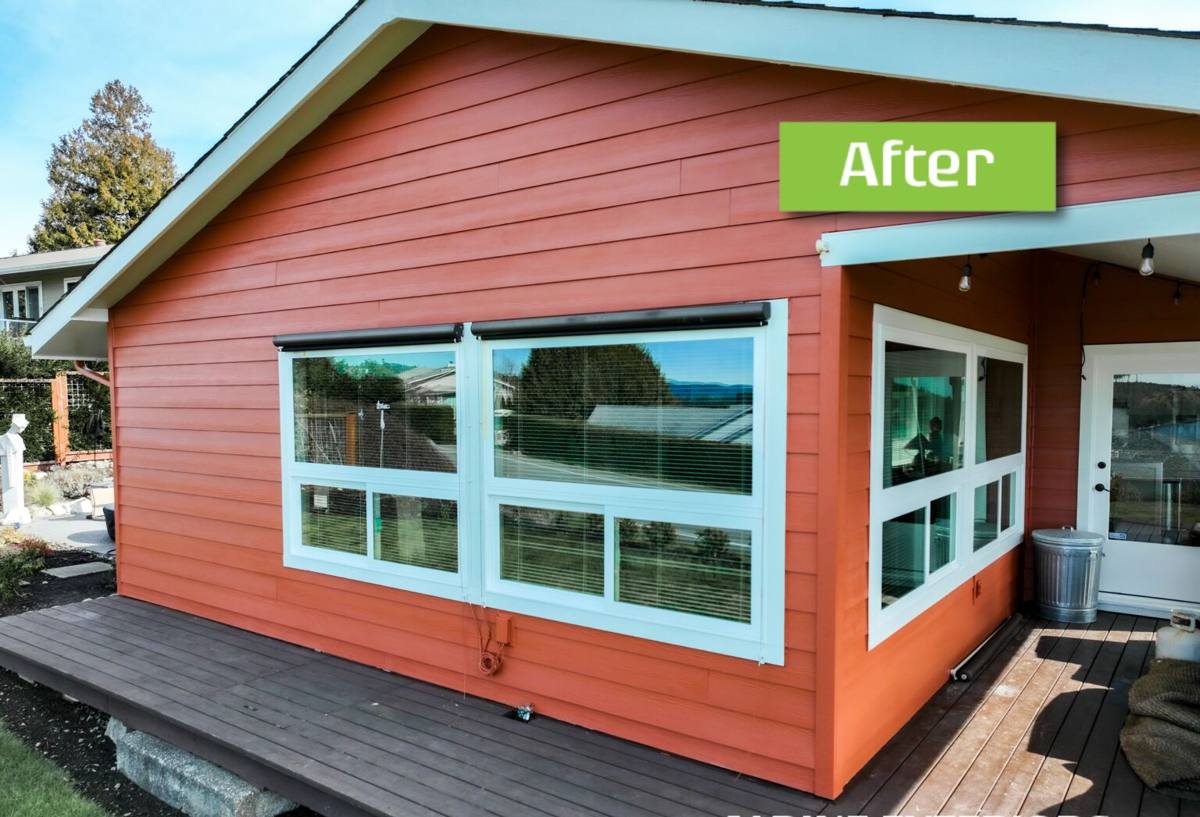
What South Hill's Climate Actually Does to Windows
Salt Air
Homes with any real exposure toward the bay pick up salt-laden air, especially during winter storms when wind pushes moisture inland. Salt air accelerates corrosion on unprotected metal hardware, pits and dulls certain finishes faster than inland homes ever see, and works its way into any gap in a window's weatherstripping or seal. It's a slow process, but it's constant, and it's one of the first things we factor into material and hardware recommendations for a South Hill home.
Driving Rain
Wind-driven rain off the Sound doesn't just fall on a window — it gets pushed sideways into every seam, sill, and joint under real pressure. A window that would perform fine in a calm rain can still leak under driving rain if the flashing detail behind it is wrong. This is the single biggest factor in whether a window replacement holds up here, and it has almost nothing to do with the window unit itself and everything to do with how it's flashed and sealed into the wall.
Moss Season
Bellingham's long wet, mild stretch from fall through spring keeps shaded surfaces damp for weeks at a time. Moss and algae take hold anywhere moisture lingers — on sills, in corners, along trim that doesn't shed water cleanly. Beyond looking bad, sustained dampness on wood trim or sills is what eventually leads to soft spots and rot if it isn't addressed as part of the window's design and flashing, not just cleaned off the surface.
Common Window Problems We See on South Hill Homes
- Condensation building up between panes, a sign the seal has failed on an older double-pane unit
- Soft or discolored wood at the bottom corners of sills, usually from years of water sitting instead of draining
- Drafts around the frame that get noticeably worse during wind-driven storms, pointing to a flashing or air-sealing gap rather than the glass itself
- Hardware that's stiff, corroded, or won't latch tightly anymore, common on homes with more direct bay-facing exposure
- Moss or dark staining building up on sills and lower trim that never fully dries between rain events
- Single-pane original windows in older homes that were never intended to meet today's comfort or efficiency expectations
None of these are unusual for a house this age in this location. They're predictable outcomes of years of this specific climate, and they're also all things a correctly installed replacement window is designed to solve.
Choosing the Right Window Material and Glass Package
There's no single "best" window for every South Hill home — the right choice depends on sun exposure, how close the home sits to the bay, whether it's a historic-character house or a newer build, and budget. Here's how the common material options actually compare in this climate, honestly:
| Material | Moisture & Salt-Air Performance | Maintenance | Best Fit |
|---|---|---|---|
| Vinyl | Won't rot or corrode; seams need quality installation to stay tight | Low — no painting, occasional cleaning | Value-focused replacements, rentals, most standard homes |
| Fiberglass | Very stable in temperature swings and moisture; holds finishes well near salt air | Low to moderate | Homes with heavy weather exposure or larger window sizes |
| Wood-Clad | Interior wood warmth with an exterior shell resisting rain and salt air, but only as good as the cladding seal | Moderate — watch cladding seams over time | Character and historic-style South Hill homes |
| Aluminum | Strong but conducts cold and can corrode faster in salt air without a quality finish | Moderate | Modern designs, larger view openings, commercial-style aesthetics |
On glass, most South Hill homes do best with a dual-pane, low-E package rated for our climate zone — it manages heat loss in winter and keeps the west and south sides of view homes from overheating in summer sun. For homes with real bay exposure, we'll also talk through corrosion-resistant hardware finishes and weatherstripping designed to stay flexible through the wet season rather than stiffening and cracking after a few winters.
What a Correct Custom Window Installation Actually Involves
The window unit itself is maybe a third of what determines whether the job holds up. The rest is in the details around it:
Flashing and Drainage
Every opening needs a flashing sequence that sheds water down and out, not into the wall cavity — sill pan flashing, properly lapped side and head flashing, and a drainage path that assumes some water will get past the window and needs somewhere safe to go. This is the single most important factor for driving-rain performance, and it's the step that gets skipped most often on rushed jobs.
Air Sealing and Insulation
The gap between the window frame and the rough opening needs to be sealed and insulated correctly — not stuffed, not left open. Done wrong, this is where drafts and condensation problems come from even with a brand-new window.
Sill and Trim Detailing
Sloped sills, proper drip edges, and trim that sheds water instead of holding it are what keep moss and rot from creeping back in a few years down the road. On older South Hill homes we also pay attention to matching trim profiles so a window replacement doesn't look out of place against original woodwork.
Fit to the Opening
Older homes settle, and openings are rarely perfectly square. A correct installation accounts for that reality with proper shimming and leveling rather than forcing a standard-size unit into an opening that doesn't match it.
Our Process, Start to Finish
- On-site assessment — we look at your home's actual exposure (bay-facing, shaded, elevation, existing window condition) before recommending anything
- Product and material walkthrough — honest trade-offs between materials and glass packages for your specific home and budget, no upselling to something you don't need
- Measurement and ordering — precise measurements for a proper custom fit, since few openings in older South Hill homes are truly standard size
- Removal and prep — careful tear-out that lets us inspect the framing and sill for hidden moisture damage before it's covered back up
- Flashing and installation — sill pan, house wrap integration, and flashing sequence done correctly, every time, not just when it's convenient
- Insulation, trim, and sealing — proper air sealing and trim work matched to your home's existing look
- Final walkthrough and cleanup — we check operation, seals, and site cleanup before calling the job done
Why a Crew That Already Works South Hill Matters
A window contractor who mostly works flat, sheltered lots elsewhere in Whatcom County isn't necessarily thinking about wind-driven rain pressure or salt-air hardware corrosion by default — those aren't universal concerns everywhere. Working regularly on South Hill and elsewhere around Bellingham means we've already accounted for the elevation, the exposure, and the age of housing stock common to the area. That shows up in small decisions — which hardware finish holds up, how much drainage capacity a sill needs, how to detail trim on an older home so a new window doesn't look bolted on — that don't come from a manufacturer's install manual.
It also means we're not guessing at permitting or typical construction details for homes in this part of Bellingham. We know what correct looks like here, because we see the results of incorrect installations regularly — the callbacks, the soft sills, the seals that failed within a few winters — and we build every job to avoid becoming one of those callbacks ourselves.
Signs It's Time to Look at Replacement
- Visible condensation or fogging between the panes of a double-pane window
- Noticeable drafts near the frame, especially during storms with wind off the bay
- Wood sills or trim that feel soft, spongy, or show dark staining
- Windows that are difficult to open, close, or lock properly
- Rising heating bills without another clear explanation
- Persistent moss or algae buildup on sills that returns shortly after cleaning
If your South Hill home is showing any of these signs, it's worth having someone take an honest look before small problems turn into framing repairs. We'd be glad to walk your home, point out what we see — good or bad — and put together a free, no-pressure estimate for custom windows built to actually hold up to this hill's weather. There's a form below whenever you're ready.