 Bellingham Exterior
 Storm Damage Roofing in Sudden Valley
Sudden Valley sits along Lake Whatcom in a heavily wooded stretch of Whatcom County, and that setting does two things to a roof at once. The tree cover means more falling limbs, more shaded roof planes, and a moss season that runs longer than it does on open, sun-exposed lots. The lake and the marine-influenced air moving through the valley mean wind-driven rain that doesn't just fall on a roof, it gets pushed sideways into valleys, flashing, and anywhere the roofing wasn't detailed to handle it. When a windstorm or a heavy rain event moves through, those two factors combine, and the damage isn't always something you can see from the driveway.
Storm damage roof repair here isn't a generic service we apply the same way everywhere in the county. A Sudden Valley roof has specific exposure — mature trees close to the structure, shaded north-facing slopes that stay damp longer, and rain that arrives with wind behind it rather than falling straight down. Repairing storm damage correctly on this kind of roof means understanding all of that before a single shingle gets touched.
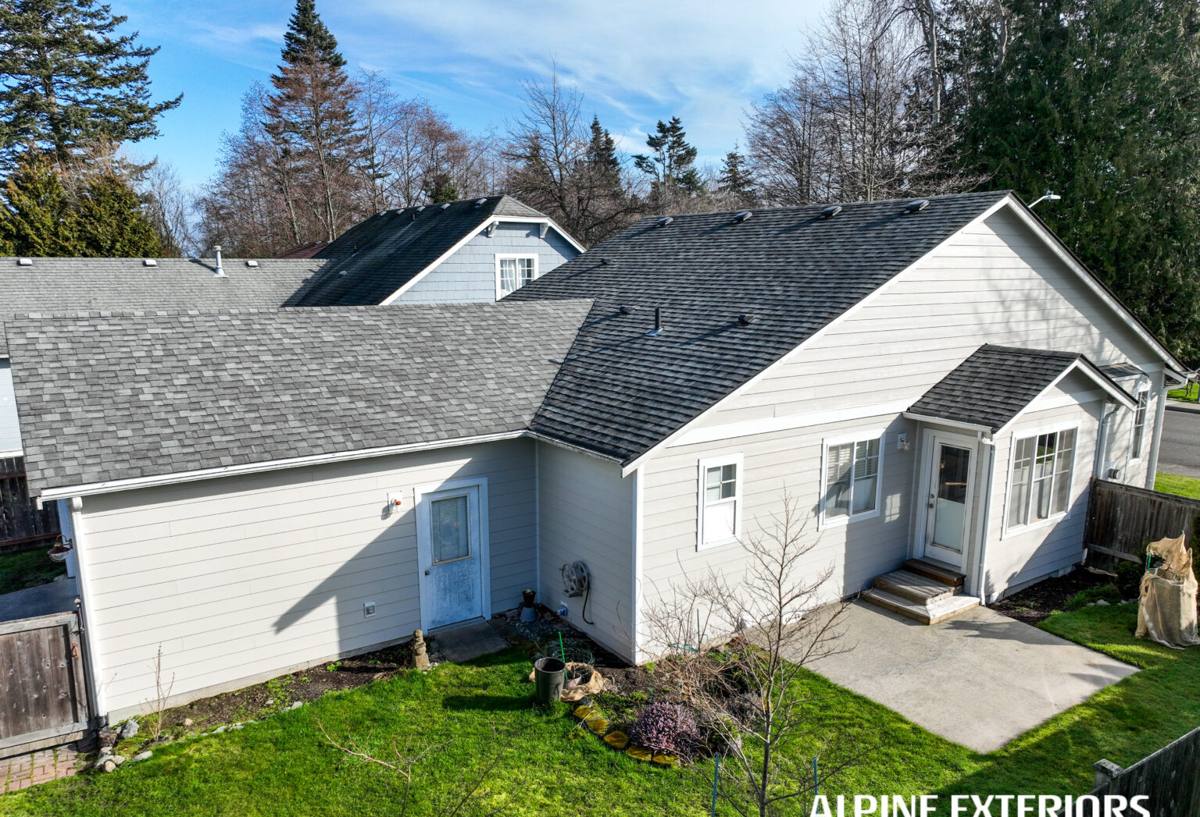
What Storms Actually Do to a Roof Here
Wind and Falling Debris
The same tree cover that gives Sudden Valley its character is also the biggest storm risk to the roofs under it. High wind knocks down limbs and sometimes whole trees, and even debris too small to punch through decking can crack shingles, tear off ridge cap, or dislodge flashing at a chimney or vent pipe. Wind alone, without any falling debris, can also lift shingle edges or peel back a section that was already weakened by age or a prior repair.
Wind-Driven Rain Finding the Weak Points
Rain that moves in sideways off the lake doesn't behave like rain falling straight down. It gets pushed up under shingle tabs, into roof valleys, and around any flashing that isn't lapped and sealed correctly. A roof that's held up fine for years can start leaking the first time a storm pushes rain at it from an angle the roof was never really tested against before.
Moss and Trapped Moisture Making Existing Damage Worse
Shaded, tree-covered roof sections in Sudden Valley often carry moss and organic buildup that a more open roof wouldn't. That growth holds water against the roofing material even after a storm passes, and it can work its way under lifted or cracked shingles left by wind. A repair on a moss-heavy section of roof isn't complete until the moss itself is addressed, or the same damage shows up again in the next wet stretch.
Damage That's Easy to Miss From the Ground
Some storm damage is obvious — a tarp-worthy hole, missing shingles you can see from the yard, a branch through the roof. A lot of it isn't. Homeowners often don't know they have a problem until a stain shows up on a ceiling, sometimes weeks after the storm that actually caused it.
- Lifted or creased shingle tabs that still look intact from a distance but no longer seal properly
- Flashing knocked loose or bent at chimneys, skylights, and roof-to-wall transitions
- Granule loss on shingles from wind and debris impact, which shortens the roof's remaining life even without a visible hole
- Gutters and downspouts pulled loose or clogged with storm debris, sending water where the roof edge and fascia weren't built to handle it
- Soft or discolored decking felt through the attic, a sign water has already gotten past the roofing surface
- Moss or debris mats holding water against a section of roof that took wind damage but hasn't fully shown it yet
If your home came through a recent storm and you're not sure whether it needs attention, that uncertainty is exactly the reason to get a roof looked at rather than wait for a leak to make the decision for you.
Our Storm Damage Repair Process
Inspection First, Not a Sales Pitch
We start with a full roof inspection, not just the section a homeowner points us to. Storm damage on one slope often means we should also check the roof's other faces, since the same wind event frequently affects more than one plane, especially on a roof with the kind of tree exposure common in Sudden Valley. We look at shingles, flashing, ridge and valley details, gutters, and attic decking where it's accessible.
An Honest Scope, in Writing
You get a clear written scope of what's damaged, what needs repair versus what's still sound, and what it will cost. We don't pad a storm repair with unrelated upsells, and we don't minimize damage that's going to come back as a leak in a few months. If a section of roof is beyond a reasonable repair and heading toward full replacement territory, we'll tell you that plainly instead of patching around it.
Repair That Matches How This Climate Behaves
Storm repairs get tied into the surrounding roofing correctly, not just patched over the damaged spot. That means matching shingle courses properly, re-lapping and sealing flashing the way it should have been done originally, and checking that repaired sections still shed wind-driven rain the way the rest of the roof does. A repair that looks fine but wasn't integrated into the existing roofing is often the reason a "fixed" roof leaks again in the next storm.
Insurance-Ready Documentation
Storm damage repairs are frequently covered by homeowners insurance, and we document what we find with the kind of detail an adjuster needs — photos, a written description of the damage, and a clear scope of repair. We're glad to walk you through what we're seeing and answer an adjuster's questions directly if that helps your claim move faster.
Repair vs. Replacement After a Storm
Not every storm-damaged roof needs to be replaced, and not every roof can be responsibly patched and called done. The right call depends on the roof's age, how much of it was affected, and what condition the rest of the roofing was in before the storm hit.
| Factor | Leans Toward Repair | Leans Toward Replacement |
|---|---|---|
| Roof age | Roofing is well within its expected lifespan | Roof was already near the end of its service life |
| Extent of damage | Isolated to one section or a handful of shingles | Spread across multiple slopes or large areas |
| Underlying decking | Decking is dry and sound where checked | Decking shows soft spots or water staining |
| Prior condition | Roof was in good shape before the storm | Roof already had moss, granule loss, or prior repairs stacking up |
| Material availability | Matching shingles are readily available | Discontinued product makes a seamless patch impractical |
We'll give you a straight recommendation based on what we actually find, not a default answer picked to fit one particular price point.
Why Local Storm Response Matters in Sudden Valley
A crew that already works this community knows what its roofs are up against before they climb the ladder. We know that tree-covered lots around the lake tend to hold moss on the same north-facing slopes year after year, that wind here often arrives with a lakeside push behind the rain, and that access on some Sudden Valley properties takes more planning around trees and driveways than a straightforward suburban lot. That's not something a crew unfamiliar with the area figures out efficiently on their first visit — it's something you already know if you've worked roofs here before.
After a storm, response time matters too. A damaged roof left exposed for days or weeks in this climate keeps taking on moisture the entire time, and what would have been a straightforward repair can turn into a decking replacement if it sits too long. Working locally in Bellingham and throughout Whatcom County means we can get eyes on storm damage and, where needed, a temporary tarp in place quickly, rather than a homeowner waiting on a crew coming from well outside the area.
What to Do Right After a Storm
- From the ground or a safe vantage point, look for obvious signs — missing shingles, visible holes, sagging areas, or debris resting on the roof
- Check the attic, if accessible, for new water stains, damp insulation, or daylight coming through the decking
- Photograph any visible exterior damage before debris is cleared, since that documentation helps with an insurance claim
- Avoid getting on the roof yourself after a storm — wet, moss-covered, or wind-damaged roofing is not a safe place to walk
- Call for an inspection promptly rather than waiting to see if a leak develops on its own
Getting an Honest Look at Your Roof
If your Sudden Valley home has been through a recent windstorm or heavy rain event and you're not sure whether the roof took real damage, the safest move is a proper inspection rather than a guess from the ground. We'll tell you plainly what we find, what it will take to fix it correctly for this climate, and whether repair or replacement makes more sense for your specific roof. Reach out below for a free, no-pressure estimate.