 Bellingham Exterior
 Roofing in Sudden Valley Takes a Different Kind of Beating
Sudden Valley sits in a heavily wooded, lake-side setting in Whatcom County, and that setting is exactly why roofs here don't age the same way roofs do in an open subdivision closer to town. Mature tree canopy keeps large sections of many roofs in shade for most of the day, which slows drying after every rain event. Add in the driving rain that comes through this part of Washington off and on all winter, and a long moss season that can run from fall through spring, and you have a roof environment that punishes anything less than a correctly installed, well-ventilated system.
None of this means Sudden Valley homes need exotic materials or gimmicks. It means the basics — tear-off done right, proper underlayment, correct flashing, and real attic ventilation — matter more here than they do in a drier, sunnier part of the county. A new roof installed without those basics in mind will show problems years before it should, regardless of what shingle or panel is on top.
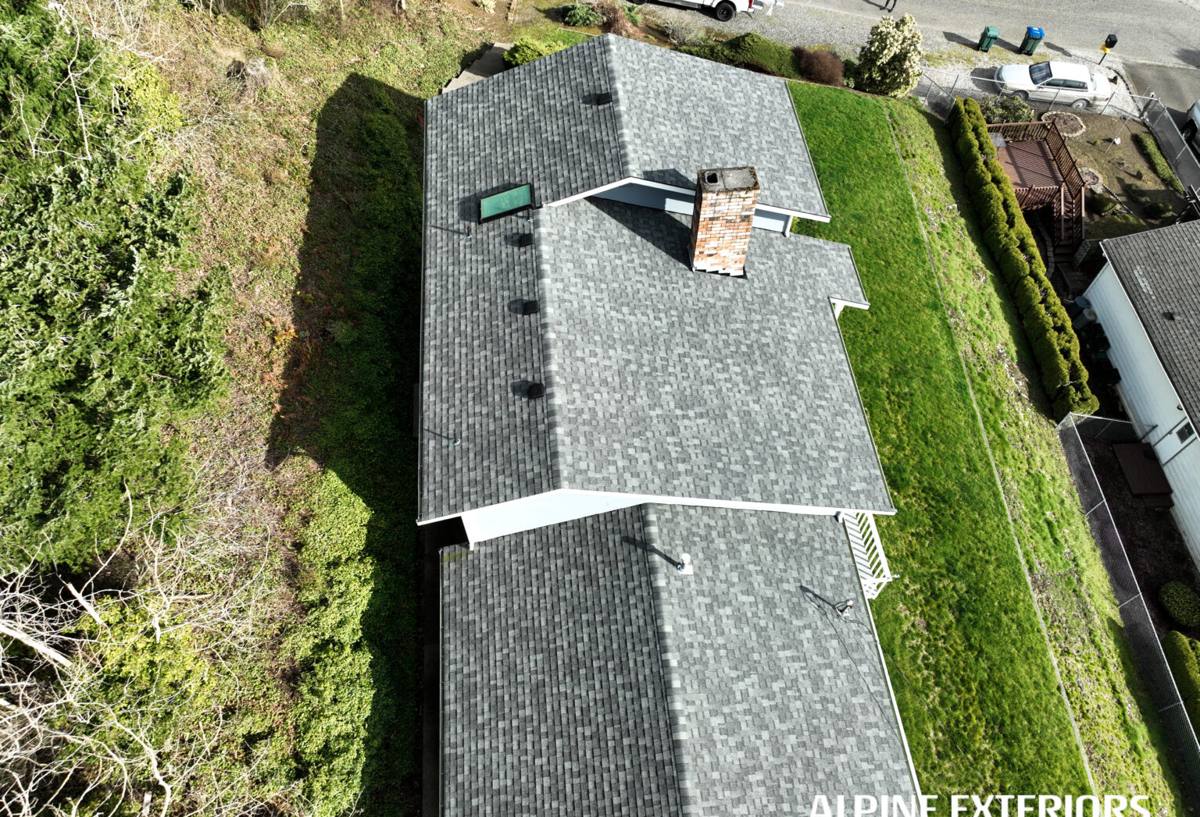
Signs a Repair Won't Cut It Anymore
Most homeowners call us first about a leak or a few missing shingles, and often that really is a repair. But there's a point where patching stops making financial sense and a full replacement is the honest recommendation. We look for:
- Granule loss heavy enough that you can see bare, shiny patches on multiple shingles, not just one storm-damaged spot
- Shingles that are cupping, curling, or cracking across large sections of the roof rather than in isolated areas
- Soft or spongy decking felt underfoot in the attic or during a walk-on inspection — a sign moisture has been getting past the roof covering for a while
- Moss and dark algae staining that keeps returning within a season or two of cleaning, even in areas that get some sun
- Daylight visible through the roof deck from inside the attic, or water staining on rafters and sheathing
- A roof already past 20-25 years old (asphalt) with two or more repair visits in the last few years
If we come out for what you think is a small repair and the roof is genuinely still sound, we'll tell you that. Recommending a full replacement on a roof with years of life left doesn't do either of us any favors.
What Actually Goes Into a Correct New Roof Installation
Tear-Off and Deck Inspection
We remove the old roofing down to the deck rather than layering over it. That's the only way to actually see the condition of the plywood or OSB sheathing underneath — and in a moss-heavy, shaded environment like Sudden Valley, hidden deck rot from years of trapped moisture is common enough that skipping this step is a real risk. Any soft or delaminated sheathing gets replaced before anything new goes down.
Underlayment and Ice/Water Protection
A synthetic underlayment goes down as the roof's real water barrier — the shingles or panels on top are the first line of defense, but the underlayment is what protects the deck if wind-driven rain gets past them, which it eventually will during a hard Whatcom County storm. Vulnerable areas like eaves and valleys get additional self-adhered membrane for extra protection against ice damming and wind-blown moisture.
Flashing
Flashing around chimneys, skylights, vent pipes, and roof-to-wall transitions is where the majority of leaks actually start on an otherwise good roof. We install new flashing rather than reusing old pieces, since bent, rusted, or improperly lapped flashing is one of the most common causes of the "mystery leak" calls we get on roofs that are only a few years old.
Ventilation
Balanced intake and exhaust ventilation keeps the attic temperature and moisture level in check. Without it, warm moist air trapped under a shaded roof condenses on the underside of the deck, which accelerates rot and helps moss and algae get a foothold from underneath, not just on the surface. This is one of the most overlooked parts of a new roof and one of the most important in this climate.
Choosing a Roofing Material for This Setting
There's no single "best" material for every Sudden Valley home — it depends on your roof's slope, sun exposure, budget, and how the house sits relative to tree cover. Here's how the common options actually compare for a shaded, rain-heavy lot:
| Material | How It Handles Moss/Shade | Typical Lifespan | Trade-Offs |
|---|---|---|---|
| Architectural asphalt shingle | Good with algae-resistant granules; still needs periodic cleaning in heavy shade | 25-30 years | Most affordable; widest color/style range |
| Standing seam metal | Sheds moisture fast, less surface for moss to grip | 40-60 years | Higher upfront cost; installation sensitivity matters more |
| Synthetic/composite shake | Resists moisture absorption better than wood; still benefits from cleaning | 30-50 years | Mid-to-upper cost; good if you want a wood-shake look without wood-shake maintenance |
| Cedar shake | Most vulnerable to moss and rot in constant shade without diligent upkeep | 20-30 years with upkeep | We're honest with clients that this is a higher-maintenance choice on heavily shaded Sudden Valley lots |
We install and stand behind asphalt, metal, and synthetic systems. We'll walk you through what performs well specifically on your lot's sun exposure rather than pushing one product across every job.
How Our Installation Process Works
- On-site inspection and measurement — we walk the roof, check the attic, and assess tree cover, slope, and existing ventilation before quoting anything.
- Written estimate — materials, scope, and price laid out plainly, no vague allowances.
- Scheduling around weather — we plan installation windows with Whatcom County's rain patterns in mind, not just calendar availability.
- Tear-off and deck repair — old roofing removed, deck inspected and repaired as needed.
- Underlayment, flashing, and ventilation installed — the parts that determine whether the roof performs in ten years, not just on day one.
- Final roofing material installed to manufacturer specifications so your warranty is actually valid.
- Cleanup and walk-through — magnetic sweep for debris, and we show you what was done.
What Drives the Cost of a New Roof
We won't quote a number without seeing the roof, but these are the real factors that move the price up or down:
| Factor | Why It Matters |
|---|---|
| Roof size and number of planes | More squares and more valleys/hips mean more material and labor |
| Roof pitch and accessibility | Steep roofs and lots with limited equipment access (common on wooded Sudden Valley lots) take more time and safety setup |
| Deck condition | Rotten sheathing found during tear-off adds material and labor not visible from the ground |
| Material choice | Asphalt, metal, and synthetic products carry different material and labor costs |
| Ventilation and flashing needs | Older homes often need ventilation upgrades that weren't required when originally built |
| Tear-off layers | Removing multiple old roofing layers costs more than a single-layer tear-off |
Why Local Experience in Sudden Valley Specifically Matters
A roofing crew that only occasionally works this side of Bellingham can miss things a crew that regularly works Sudden Valley won't. That includes knowing how to stage equipment and dumpsters on lots with limited road frontage and tree-lined driveways, understanding how the community's tree cover affects drying time and scheduling, and being familiar with any access or work-hour expectations that come with working inside a private, gated residential community. It also means we've seen how roofs in this specific setting actually fail over time — which is different from how a roof fails on an open, sunny lot elsewhere in Whatcom County — and we build the installation to account for that from the start rather than learning it on your roof.
After Installation: Keeping a New Roof Performing
A correctly installed roof still benefits from basic upkeep, especially under heavy tree cover. A simple annual routine goes a long way:
- Clear leaves and needles from valleys and gutters before fall rains set in
- Have moss or algae growth treated or gently removed before it spreads, rather than after it's established
- Check attic ventilation isn't blocked by insulation or debris
- Trim back tree limbs that overhang the roofline to reduce shade, debris, and abrasion
- Have flashing points (chimney, vents, skylights) visually checked after any major windstorm
A new roof is a significant investment, and the difference between one that lasts its full rated lifespan and one that starts failing early almost always comes down to installation quality and a little consistent upkeep — not luck.
If your Sudden Valley roof is showing its age or you're just weighing your options, we're glad to come take an honest look. The estimate is free, there's no pressure, and you'll get a straight answer about whether you need a new roof or just a repair — use the form below to get started.