 Bellingham Exterior
 Windows Built for Sunnyland's Version of Pacific Northwest Weather
Sunnyland is one of Bellingham's older, established residential neighborhoods, and like most of Whatcom County it sits close enough to Bellingham Bay to feel the effects of salt-laden air on top of everything else the Pacific Northwest throws at a house. Original single-pane and early dual-pane windows in this part of town were never engineered for the combination of moist salt air, wind-driven rain off the Salish Sea, and a moss season that can stretch from October well into spring. Over the decades that combination works on window frames, seals, and hardware in ways that aren't always obvious from inside the house.
When we talk about "energy-efficient windows" for a Sunnyland home, we mean something more specific than a marketing label. We mean glass and frame assemblies chosen and installed to hold their seal, resist moisture intrusion, and keep performing in a climate that is genuinely harder on building envelopes than most of the country. This page walks through what that actually looks like — the climate factors, the product decisions, the installation details that matter, and how we approach the job from first visit to final walkthrough.
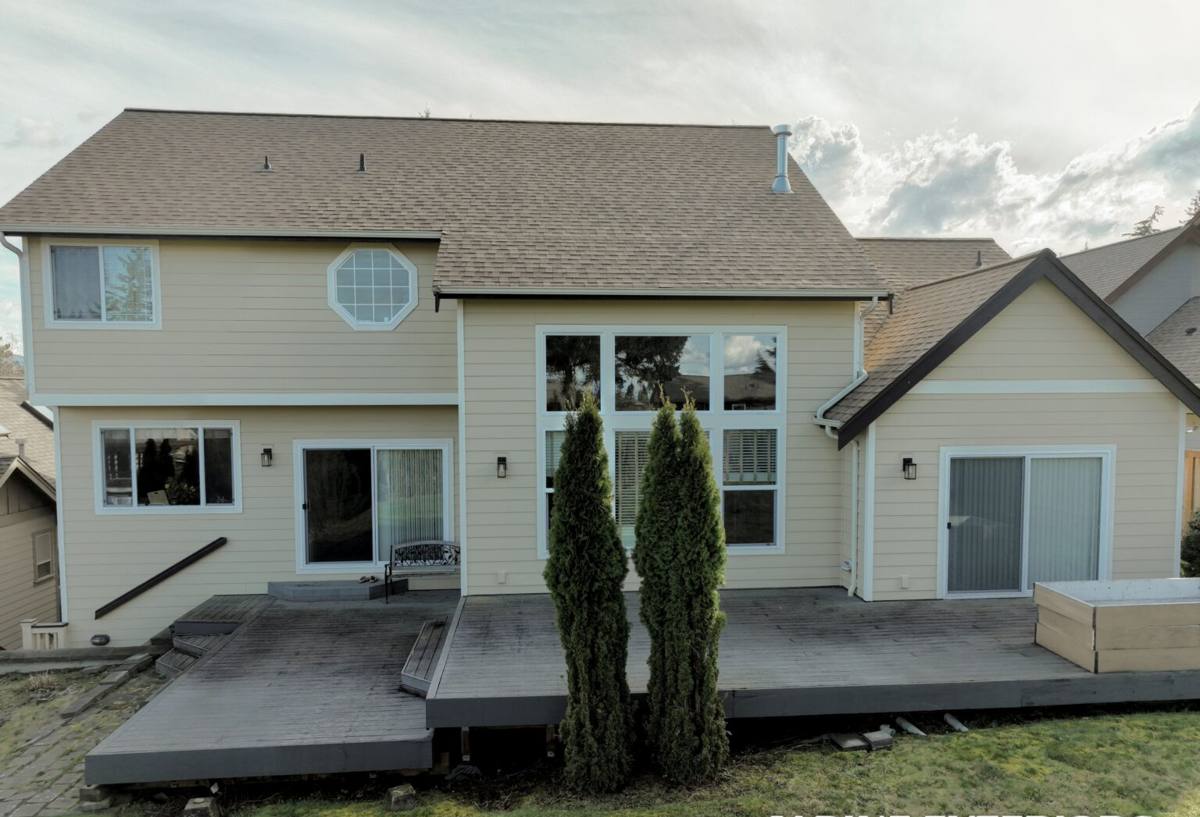
What Bellingham's Climate Does to Windows Over Time
Salt Air and Corrosion
Homes within a few miles of Bellingham Bay pick up airborne salt that settles on window hardware, screen frames, and exposed fasteners. Over years, this accelerates corrosion on lower-grade hinges, cranks, and cladding fasteners, and it can dull or pit finishes on softer metals. It's rarely dramatic — it's a slow degradation that shows up as stiff hardware, streaking, or a frame that looks tired well before its glass has actually failed.
Driving Rain
Whatcom County storms frequently come in sideways off the water, not straight down. Wind-driven rain finds any gap in flashing, sealant, or window-to-wall integration and pushes water where gravity alone never would. This is the single biggest reason a technically good window can still leak or rot out a sill — the window unit performed fine, but the installation around it didn't account for pressure-driven water.
The Long Moss Season
Bellingham's damp, mild winters and shaded lots common in older neighborhoods like Sunnyland create ideal moss conditions on north- and west-facing exteriors for much of the year. Moss and algae hold moisture against wood trim and sills far longer than open sun exposure would, which is exactly the kind of sustained dampness that breaks down wood window components and compromises caulking and weatherstripping ahead of schedule.
What "Energy-Efficient" Actually Means Here
Efficiency ratings are only useful if they're matched to the climate they're installed in. In Whatcom County, we're less concerned with keeping extreme summer heat out (our summers are mild) and more concerned with minimizing heat loss through a long, wet, and often overcast heating season, while also managing condensation risk from the moisture load in the air. That shifts which numbers matter most.
| Rating | What It Measures | Why It Matters in Bellingham |
|---|---|---|
| U-Factor | Rate of heat loss through the window | Lower is better — this is the primary number for our long, mild-but-damp heating season |
| SHGC (Solar Heat Gain Coefficient) | How much solar heat passes through the glass | Moderate values usually work well here; we rarely need aggressive solar blocking given our cloud cover |
| Air Leakage Rate | How much air passes through the assembly | Directly tied to draft complaints and to moisture getting into wall cavities |
| Condensation Resistance | How well the unit resists interior condensation | Important given our humidity — poor ratings mean fogged glass and wet sills all winter |
A window with an impressive U-factor on paper still won't perform if it's installed with poor flashing or the wrong sealant for our moisture load. Product selection and installation quality have to be considered together, not separately.
Frame Material Choices for a Coastal-Influenced Climate
There isn't one universally "correct" frame material — each has trade-offs, and the right call depends on the home's exposure, budget, and how much upkeep the owner wants to take on.
| Frame Material | Strengths | Trade-Offs in This Climate |
|---|---|---|
| Vinyl | Low maintenance, good thermal performance, resists moisture and salt corrosion well | Fewer color/finish options; quality varies significantly between manufacturers |
| Fiberglass | Very stable in temperature swings, strong, low expansion/contraction | Higher upfront cost than vinyl |
| Wood | Classic look, often expected on older Sunnyland-style homes | Requires diligent maintenance to stand up to driving rain and moss-season dampness; we're honest with owners about this commitment upfront |
| Wood-Clad | Interior wood look with an exterior weather barrier | Only as good as the cladding seal — a weak point if installation isn't precise |
| Aluminum | Slim sightlines, durable frame | Poor thermal break unless it's a thermally-broken product; not our default recommendation for this climate |
For most Sunnyland homes we lean toward vinyl or fiberglass for straightforward efficiency and low long-term maintenance, but we'll install wood or wood-clad when it matters for matching a home's original character — as long as the homeowner understands the upkeep that comes with it.
Signs Your Sunnyland Home's Windows Are Underperforming
Not every window that needs replacing looks obviously broken. Some of the clearest signals are subtle and easy to write off as "just an old house." Watch for:
- Condensation or fogging between the panes of a dual-pane window — this means the seal has failed and the gas fill (or air gap) is compromised
- Visible moss or dark staining building up on sills, trim, or the lower corners of the frame
- Drafts you can feel near the frame edges even with the window fully latched
- Hardware — cranks, locks, hinges — that feels stiff, gritty, or corroded
- Paint or finish that's bubbling, peeling, or discolored specifically around the window opening rather than the wall generally
- Noticeably higher heating bills in winter compared to similarly sized rooms elsewhere in the house
- Soft or spongy wood when you press a finger into the sill or lower sash
Any one of these on its own might be minor. Two or three together, especially on a wall that takes direct weather, usually mean the window assembly is past the point where caulk and weatherstripping alone will fix it.
What a Correct Installation Actually Involves
The window unit itself is maybe half the job. The other half — and arguably the more important half in a climate like ours — is how it's integrated into the wall. This is where driving rain either gets managed or gets in.
Flashing and Water Management
Proper installation means flashing the rough opening so any water that does reach the window is directed back out, not into the wall cavity. This includes sill pan flashing at the base of the opening, which is one of the most commonly skipped steps in lower-quality installs and one of the most consequential in a wind-driven-rain climate.
Sealant Selection and Placement
Not all sealants handle Bellingham's moisture and temperature range the same way. We use products rated for exterior exposure in wet climates, and we're deliberate about where sealant goes and — just as importantly — where it doesn't, since trapping moisture behind a fully sealed exterior can cause more damage than it prevents.
Insulation Around the Frame
The gap between the window frame and the rough opening needs to be insulated without over-packing it, which can bow the frame and affect operation. Low-expansion foam or backer rod and sealant, applied correctly, closes air leaks without distorting the unit.
Interior and Exterior Trim
Trim isn't just cosmetic — it's part of the weather seal and part of matching the character of an older Sunnyland home. We match trim profiles where it matters and make sure exterior trim is sealed and, where wood, properly primed and finished on all sides before installation, not just the face you see.
Our Process, Start to Finish
- On-site assessment: We walk the exterior and interior of each window opening, check for existing rot or moisture damage, and note exposure — which walls take the worst of the driving rain and which stay shaded and moss-prone.
- Product recommendation: Based on that assessment, budget, and the home's style, we recommend frame materials and glass packages suited to that specific opening, not a one-size answer for the whole house.
- Measurement and ordering: Precise measurements matter — a window that's slightly undersized for its opening creates gaps that are hard to seal correctly no matter how good the caulking job is.
- Removal and inspection: When we pull the old window, we inspect the rough opening for hidden rot or water damage before anything new goes in. This is often when we find the real cause of a draft or a soft sill.
- Installation with proper flashing and sealing: Sill pan flashing, correct sealant placement, and careful insulation around the frame, as described above.
- Interior and exterior finish work: Trim, paint or finish touch-up, and hardware adjustment so the window operates smoothly.
- Final walkthrough: We test every window we install — operation, locking, and a visual check of the seal — before we consider the job done.
Why Local Experience in Sunnyland and Bellingham Matters
A crew that's worked on homes throughout Whatcom County knows which walls in this kind of neighborhood take the worst weather, what moisture damage typically looks like once trim and siding are opened up, and which products actually hold up here versus which ones look good on a spec sheet but struggle with our salt air and rain patterns. That experience shows up in small decisions — where to add extra flashing, which sealant to use on a shaded north wall that never fully dries out, how to handle an older wood-frame opening that's slightly out of square after decades of settling.
It also means fewer surprises. Homes in established neighborhoods like Sunnyland often have layers of past repairs, non-original trim, or window openings that were modified at some point. Recognizing that on sight, rather than discovering it mid-install, keeps a project on schedule and avoids costly rework.
Cost Factors to Understand Before You Get Quotes
Window replacement pricing varies a lot from house to house, and honest contractors won't quote a whole-home number without seeing the openings. What we can tell you is what actually drives the cost up or down:
| Factor | Effect on Cost |
|---|---|
| Frame material (vinyl vs. fiberglass vs. wood) | Vinyl is typically the most budget-friendly; fiberglass and wood or wood-clad cost more upfront |
| Number and size of openings | More straightforward per-unit — larger jobs benefit from some efficiency, but total cost scales with window count and size |
| Condition of existing rough openings | Hidden rot or water damage found during removal adds repair time and materials |
| Glass package (double vs. triple pane, coatings) | Upgraded glass packages raise per-unit cost but improve long-term efficiency |
| Trim and finish complexity | Matching original wood trim profiles or custom finish work takes more labor than standard trim |
| Installation access | Second-story or hard-to-reach windows can add labor time |
We'd rather walk your specific windows and give you real numbers than guess at a range that doesn't apply to your house.
Maintaining Your Investment Through Moss Season
New windows still need some basic seasonal attention in this climate, especially through the long stretch of wet months when moss and algae growth is at its peak. A few habits go a long way:
- Rinse pollen, salt residue, and grime off exterior frames a couple times a year, more often on walls facing the water
- Keep gutters and downspouts clear so overflow doesn't run down onto window trim
- Trim back vegetation that shades window walls and keeps them damp longer than necessary
- Check and lubricate hardware annually, since corrosion from salt air is gradual and easy to miss until a crank or lock sticks
- Look at caulking lines once a year and have any cracked or separated sealant addressed before the wet season sets in
None of this is heavy maintenance, but skipping it in a climate like ours shortens the life of even a well-installed, high-quality window.
Let's Take a Look at Your Windows
If your Sunnyland home has windows that feel drafty, fog between the panes, or show moss and staining building up around the frames, it's worth having someone look at them who works in this exact climate every week. We offer free, no-pressure estimates — we'll walk your openings, tell you honestly what we see, and give you real numbers for your home rather than a generic range. Use the form below to get started.