 Bellingham Exterior
 Siding Replacement Services in Sunnyland
Sunnyland is one of Bellingham's older, more established residential neighborhoods, with a housing stock that spans mid-century bungalows through more recent infill construction. That mix means siding on Sunnyland homes is aging on very different timelines — some houses are due for a first-ever replacement of original wood siding, others are covering up a vinyl or engineered-wood retrofit that never performed the way it was supposed to. Whatever the starting point, siding replacement here has to account for the same thing: a marine climate that does not let up for most of the year.
We work on siding replacement across Whatcom County, but Sunnyland comes with its own set of considerations — mature tree cover on many lots, a mix of lot orientations relative to sun and prevailing wind, and homes old enough that the sheathing underneath the existing siding is an unknown until it's opened up. This page walks through what a correct siding replacement job looks like for this neighborhood specifically, not siding replacement in general.
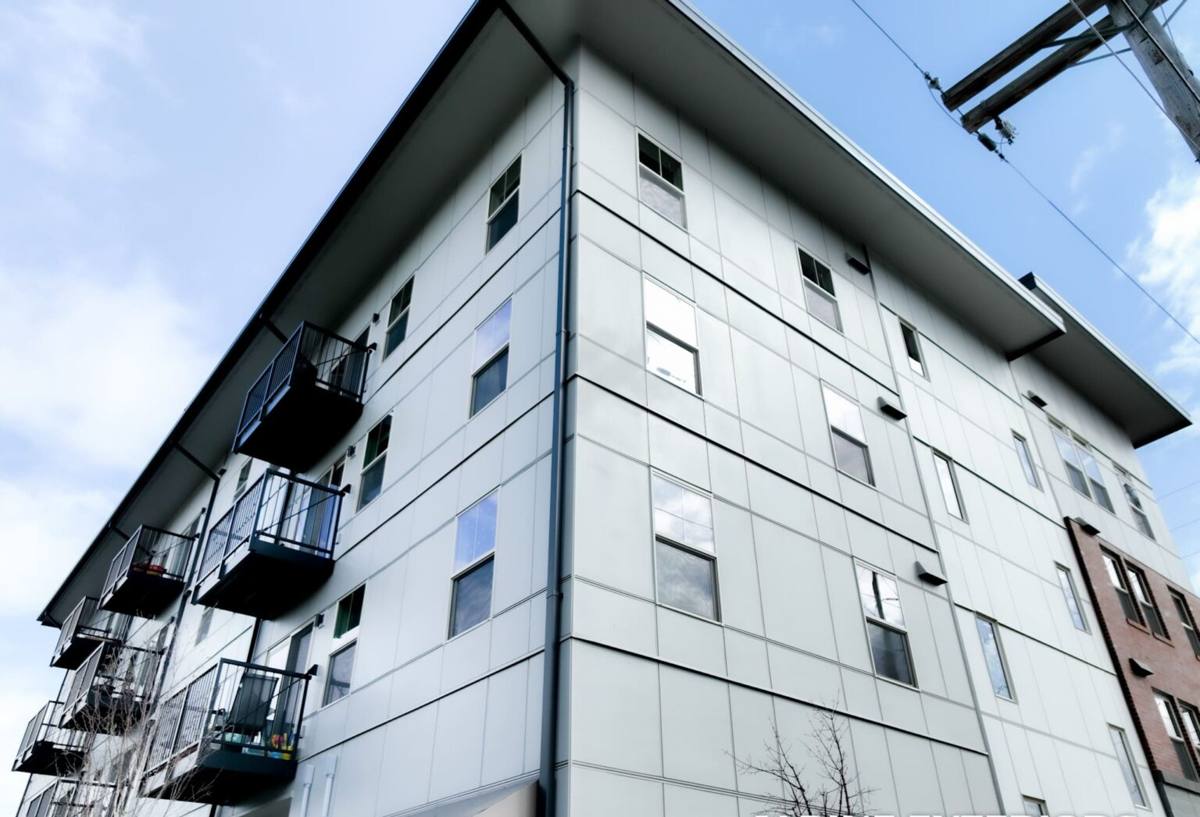
Why Bellingham's Climate Is Hard on Sunnyland Siding
Bellingham sits on the Salish Sea, and that proximity to salt water shows up in the way exterior materials age here. Salt-laden air accelerates corrosion on fasteners and metal trim, and it degrades certain paints and coatings faster than manufacturers' published lifespans assume. Add driving rain that comes in sideways during fall and winter storms, and siding has to shed water horizontally, not just vertically — a detail a lot of original installations were never built for.
Moisture and Mature Tree Canopy
Many Sunnyland lots have significant tree cover, which is part of what makes the neighborhood pleasant to live in — and part of what makes siding maintenance harder. Shade keeps siding damp longer after rain, and falling debris (needles, leaves, seed pods) collects in gaps and laps where it holds moisture against the wall. Combined with our long moss season, north- and west-facing walls in particular tend to develop moss and algae staining faster than siding on a more exposed, sun-facing elevation.
Wind-Driven Rain Off the Bay
Storms moving in off Bellingham Bay push rain into walls at an angle, which means water intrusion problems usually show up first at penetrations — window and door trim, hose bibs, light fixtures, dryer vents — rather than on open wall sections. Any siding replacement that doesn't address flashing and sealant detailing at these points is setting up the same failure to happen again, just a few years down the road.
Signs Your Sunnyland Home Needs Siding Replacement
Not every siding problem requires full replacement, but in this climate, cosmetic issues are often a sign of something happening behind the surface. Before assuming a repair or repaint will solve it, check for:
- Soft or spongy spots when you press on the siding, especially near the bottom courses or under windows
- Persistent moss or algae growth that comes back within weeks of cleaning, particularly on shaded walls
- Visible cupping, warping, or separation at panel seams and laps
- Paint that's peeling or bubbling rather than just fading — often a sign moisture is trying to escape from inside the wall
- Rust streaking from fasteners or trim, common on older aluminum or steel-clad homes near the water
- Rising energy bills with no other explanation, which can point to a compromised weather barrier behind the siding
- Visible gaps at corners, trim boards, or penetrations that weren't sealed correctly to begin with
If you're seeing two or more of these, it's worth having someone open up a section and look at the sheathing before deciding on a repair versus a full replacement.
Choosing the Right Siding Material
Homeowners in Sunnyland typically compare the same handful of materials when it's time to re-side. Each has real strengths — the honest differences show up in how they hold up to years of Whatcom County rain and moisture, not in a showroom.
| Material | Moisture behavior | Maintenance | Typical lifespan |
|---|---|---|---|
| Vinyl | Doesn't rot, but can warp, crack in cold, and trap moisture behind it if installed too tight | Low, but repairs are visible (color fades and rarely matches new panels) | 15–25 years |
| Cedar / wood | Attractive but absorbs moisture readily; needs a sound finish maintained on schedule | High — refinishing every few years in this climate | 10–20 years without disciplined upkeep |
| Engineered wood | Improved over raw wood but still wood-based; edge and cut-end sealing is critical | Moderate — inspection and caulk maintenance | 20–30 years if detailed correctly |
| James Hardie fiber cement | Non-combustible, dimensionally stable, engineered for wet climates | Low — factory ColorPlus finish, no annual refinishing | 30+ years with correct install and basic upkeep |
Why We Install Only James Hardie Fiber Cement
We standardized on James Hardie because it's the product we can stand behind fully in this climate, without qualifications. It doesn't absorb water the way wood-based products do, so it isn't prone to the swelling, rot, and repeated refinishing that drive most of the maintenance calls we get. The ColorPlus factory finish is baked on under controlled conditions, which holds up better against Bellingham's damp, low-sun winters than field-applied paint. It's also non-combustible, and it carries a strong transferable warranty backed by a manufacturer that engineers specific product lines for wet, humid regions like ours. We don't install vinyl, LP SmartSide, Cemplank, Allura, or primed wood siding — not because those products have no merit, but because after years of doing this work in Whatcom County, Hardie is the one we're willing to put our name behind.
What a Correct Siding Replacement Job Involves
The visible siding is the last thing that goes on — everything underneath it is what determines whether the job lasts 10 years or 40.
Tear-Off and Sheathing Inspection
Old siding comes off in full, not patched over, so we can see the sheathing underneath. This is where hidden rot, insect damage, or old moisture problems from a previous installation get found and fixed before anything new goes up. Skipping this step is the single most common reason a "new" siding job fails early.
Weather-Resistive Barrier and Flashing
A properly lapped weather-resistive barrier, correctly integrated flashing at every window, door, and penetration, and careful attention to how water is directed away from the wall assembly — this is the layer that actually keeps a home dry. Siding is the finish; this is the system.
Rain Screen / Drainage Gap
Where appropriate for the wall assembly, we build in a drainage gap behind the siding so any moisture that does get past the outer layer can drain and dry out instead of sitting against the sheathing. This detail matters more in a climate like ours than almost anywhere else in the country.
Fastening and Finish
James Hardie panels have specific fastening patterns, clearances, and caulking requirements published by the manufacturer — following them isn't optional if you want the warranty to mean anything. That includes correct nail placement, gaps at butt joints for expansion, and sealant only where Hardie's specifications call for it.
Our Siding Replacement Process
- On-site assessment of the current siding, sheathing condition where accessible, and the specific exposure of each wall (shade, wind direction, water runoff patterns)
- A written proposal covering scope, product line and color, and a realistic timeline
- Full tear-off and disposal of old siding
- Sheathing repair or replacement wherever moisture damage is found
- Installation of weather-resistive barrier, flashing, and drainage detailing
- Installation of James Hardie siding to manufacturer fastening and clearance specifications
- Site cleanup and a final walkthrough so you understand what was done and why
Why Local Experience in Sunnyland Matters
A crew that already works this neighborhood knows what tends to be hiding under the siding on a home of a given era, understands how Bellingham's permitting process works for exterior replacement, and isn't guessing at how a particular street's tree cover or wind exposure affects a wall assembly. That familiarity shows up in fewer surprises mid-project and in details — like where moss problems concentrate or which elevations need extra flashing attention — that a crew unfamiliar with the area might miss on the first pass.
Cost Factors for Siding Replacement in Sunnyland
Every home is different, but the same variables tend to drive the price up or down:
| Factor | Why it matters |
|---|---|
| Sheathing condition | Rot or damage found during tear-off adds repair scope before new siding can go on |
| Home size and wall complexity | More corners, dormers, and trim details mean more labor and material cutting |
| Product line and finish selection | Panel profile and ColorPlus finish options affect material cost |
| Access and site conditions | Mature trees, tight side yards, or steep grades affect setup and staging time |
| Existing siding type | Some materials (like old asbestos-cement or multiple layered re-sides) require careful, sometimes specialized removal |
We give straightforward, itemized proposals so you know what you're paying for and why — not a flat number with no explanation behind it.
Maintenance After Your New Siding Is Installed
One of the practical benefits of switching to James Hardie is how little ongoing maintenance it asks for compared to what most Sunnyland homeowners are used to. Occasional rinsing to keep moss and organic debris from building up in shaded areas, a visual check of caulking at penetrations every year or two, and prompt attention if anything physically damages a panel is about the extent of it — no repainting cycle, no annual sealant reapplication across the whole house.
If your Sunnyland home's siding is showing its age, or you just want an honest read on whether repair or replacement makes more sense, we're happy to take a look. Use the form below to request a free, no-pressure estimate.