 Bellingham Exterior
 Why Fairhaven's Coastal Climate Is Hard on Windows
Fairhaven sits close to Bellingham Bay, which means homes here take on a combination of weather stresses that inland Whatcom County properties don't deal with nearly as much. Salt-laden air off the water accelerates corrosion on hardware, fasteners, and unprotected metal components. Wind-driven rain doesn't just fall straight down here — it gets pushed sideways against west- and south-facing walls, which puts real pressure on flashing, sealant lines, and anything less than a fully engineered water management system around the window opening. And then there's moss season, which in this part of Washington isn't really a season at all — it's most of the year. Moisture that lingers on sills, trim, and cladding feeds moss and algae growth that traps even more water against the building.
None of this is exotic knowledge if you've lived in Bellingham for a while, but it matters enormously when it comes to window installation. A window that's installed correctly for a dry inland climate can still fail early in a spot like Fairhaven if the installer didn't account for the extra wind-driven moisture load and the corrosive effect of salt air. This is a local performance issue, not just a product issue.
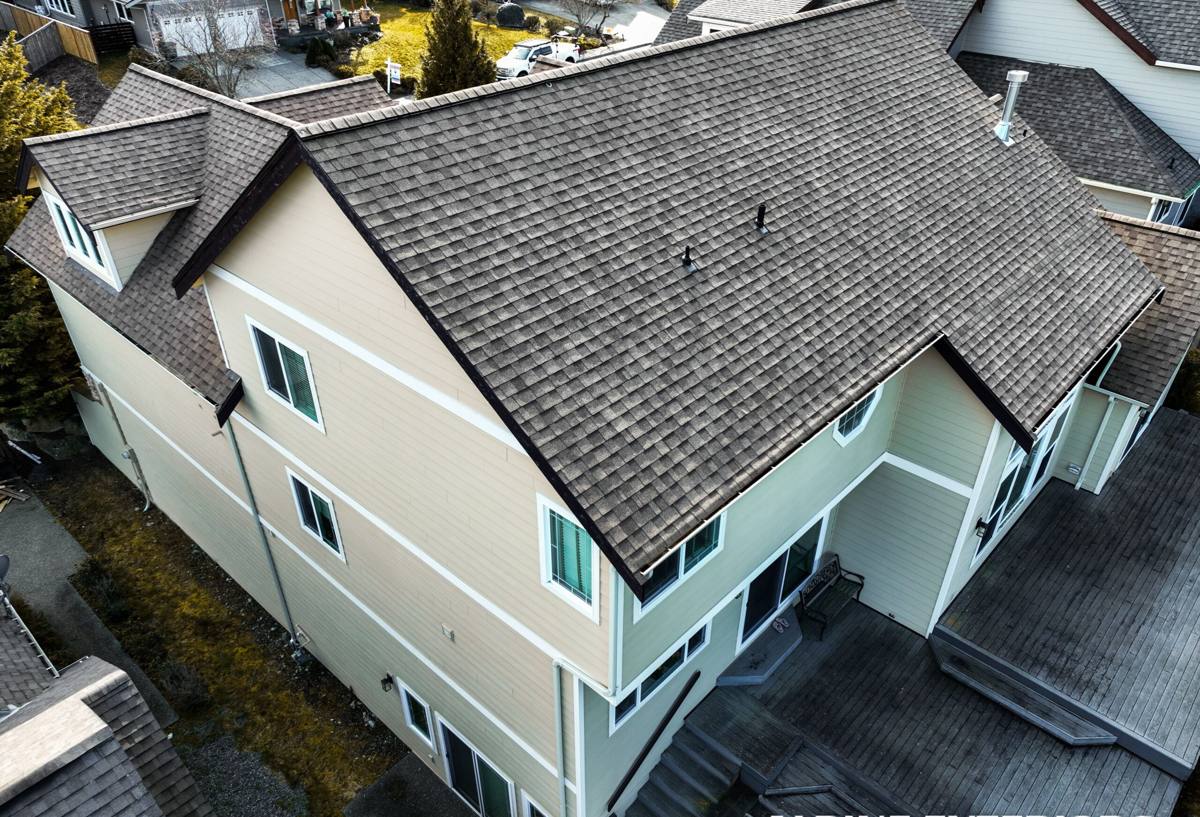
What Makes Fairhaven Homes Different
Fairhaven is one of Bellingham's older, more established neighborhoods, and a lot of the housing stock reflects that. Many homes were built well before modern energy codes and window flashing standards existed, which means their window openings often weren't built with today's moisture barriers, sill pans, or drainage planes in mind.
Older Framing, Different Assumptions
Original window openings in older Fairhaven homes are frequently out of square, have settled slightly over the decades, or were built around window units with dimensions that don't match anything on the market today. That affects whether a straightforward insert replacement will work cleanly or whether the opening needs to be rebuilt as part of a full-frame installation.
Character and Street Appearance
Fairhaven has a strong sense of neighborhood character, and homeowners here are often understandably picky about keeping a consistent look — matching trim profiles, sightlines, and glass proportions rather than dropping in a generic replacement window that looks out of place. If your property sits within a designated historic area, there may also be local review requirements around exterior changes, including windows; it's worth a quick check with the City of Bellingham before ordering anything, since rules can vary block to block.
Signs It's Time to Replace or Repair Your Windows
Coastal moisture exposure tends to show up in specific, recognizable ways before a window fully fails. Catching these early usually means a smaller, cheaper fix.
- Fogging or moisture between panes of double-glazed glass — the seal has failed and the insulating gas is gone
- Soft, spongy, or discolored wood trim or sill material around the window
- Visible gaps where caulking or sealant has pulled away or cracked
- Persistent drafts near the window frame even when it's fully latched
- Difficulty opening, closing, or locking — often a sign the frame has swelled or shifted
- Moss or dark streaking building up on the sill or the wall directly below the window
- Paint that's bubbling or peeling specifically around the window opening, not the whole wall
Any one of these on its own might just need a repair. Several at once, especially on a wall that faces the water or prevailing wind, usually points to a window that's reached the end of its useful life.
What a Correct Window Installation Actually Involves
The window unit itself is only part of the job. In a wind-driven-rain environment like Fairhaven, how the opening is prepped and sealed matters as much as what brand of window goes in it.
Water Management Comes First
A correctly installed window starts with a sloped sill pan that directs any water that gets past the window back outward, not into the wall cavity. Self-adhered flashing tape gets integrated with the home's weather-resistive barrier in the correct shingle-lap order — meaning each layer overlaps the one below it so water always sheds downward and outward, never into a seam.
Sealing and Fastening
Exterior sealant needs to be rated for the movement and UV exposure this climate delivers, and it has to be applied at the right points — sealing the whole perimeter solid actually traps moisture rather than letting it drain, which is a common mistake on lower-quality installs. Fasteners and hardware exposed to salt air do better with corrosion-resistant coatings rather than standard finishes.
Insulation and Air Sealing
The gap between the window frame and the rough opening needs to be filled with a low-expansion foam or backer rod and sealant — not stuffed with fiberglass batting, which does little for air sealing and nothing for water control.
Choosing the Right Frame Material for Salt Air and Rain
There's no single "best" window material for every home — it depends on your budget, how much maintenance you want to take on, and how exposed your walls are to wind and salt spray.
| Frame Material | Coastal Performance | Maintenance | Typical Trade-Off |
|---|---|---|---|
| Vinyl | Good — won't corrode or rot | Low | Limited color/profile options; can expand and contract with temperature swings |
| Fiberglass | Very good — dimensionally stable, resists moisture | Low | Higher upfront cost than vinyl |
| Wood-clad | Good if cladding is intact; vulnerable where cladding is breached | Moderate to high | Best classic appearance for historic-style homes; needs monitoring at joints |
| Aluminum | Poor near salt air unless marine-grade coated | Moderate | Prone to corrosion and condensation in this climate without upgrades |
For homes closest to the water, we generally steer clients toward vinyl or fiberglass for the window body, and toward wood-clad only when matching a historic exterior is a priority and the homeowner is comfortable with the added upkeep. We avoid recommending uncoated aluminum frames for waterfront-adjacent walls in Fairhaven — not because the material is inherently bad, but because standard aluminum's poor thermal and corrosion performance in salt air creates maintenance headaches that aren't worth it for most homeowners here.
Retrofit vs. Full-Frame Replacement
This is one of the first decisions we walk through with Fairhaven homeowners, since it affects both cost and how well the new window will actually perform.
Retrofit (Insert) Replacement
A new window is installed inside the existing frame, which stays in place. This is faster and less invasive, and it works well when the existing frame is square, dry, and structurally sound. The trade-off is a slightly smaller glass area, since the new unit fits inside the old frame.
Full-Frame Replacement
The old frame is removed entirely down to the rough opening, exposing the sheathing and framing underneath. This costs more and takes longer, but it's the right call when there's any hidden water damage, rot, or when the flashing and moisture barrier need to be rebuilt to modern standards — which is common on older Fairhaven homes that were never flashed correctly in the first place.
We won't know which approach your home needs until we open things up and take a look. Any contractor who quotes a firm price over the phone without inspecting the opening is guessing.
Our Installation Process
- On-site assessment — we inspect the existing window, frame condition, and surrounding wall for hidden moisture damage before recommending retrofit or full-frame replacement
- Measurement and product selection — exact opening dimensions and a frame material suited to that wall's sun, wind, and rain exposure
- Prep and removal — careful removal of the old unit, with immediate weatherproofing if the opening will be exposed overnight
- Sill pan, flashing, and moisture barrier integration — built to shed water outward, tied properly into the existing weather-resistive barrier
- Window installation and air sealing — unit set, shimmed level and plumb, insulated, and sealed at the correct points
- Exterior and interior trim finish — matched to the home's existing profiles where that matters to you
- Final walkthrough — operation check, seal check, and a look at the job with you before we consider it done
Why Local Experience in Fairhaven Matters
A crew that regularly works in Fairhaven already knows what to expect from the housing stock — older window openings, the exposure certain streets get off the bay, and how the historic character of the area factors into material and trim choices. That familiarity shortens the assessment phase and avoids surprises mid-project. It also means we're realistic about scheduling around Whatcom County's wetter stretches, since an opening left exposed during the wrong week of weather is how water damage happens during a project, not after it.
Beyond the technical side, local experience means accountability. We're not driving in from out of the area for a one-off job — we're working in Bellingham neighborhoods we'll be back in.
Questions to Ask Before You Hire a Window Installer
- Are you licensed and insured to work in Washington State, and can you provide proof?
- Will you inspect the existing frame and sheathing before quoting retrofit vs. full-frame replacement?
- What flashing and sill pan method do you use, and how does it handle wind-driven rain?
- What's the warranty on both the window product and your labor, and who do I call if something fails?
- Have you worked on homes in Fairhaven or similar coastal Bellingham neighborhoods before?
- How do you protect the opening if weather rolls in mid-installation?
If a contractor can't give you clear, specific answers to these, that's worth noting before you sign anything.
If you're weighing whether your Fairhaven home needs a window repair or a full replacement, we're happy to take a look and give you a straight answer — no pressure, no obligation. Fill out the form below and we'll set up a free estimate.