 Bellingham Exterior
 Window Installation Built for Lynden's Climate
Lynden sits inland from Bellingham Bay, but it isn't spared from the marine air that moves through Whatcom County most of the year. Homes here deal with the same driving rain, damp winters, and long moss season that the rest of the region does, and windows are one of the first places that weather finds a way in. A window that's a quarter-inch out of level, or flashed the wrong way, won't show a problem on day one. It shows up eighteen months later as a soft spot in the sill, a musty smell in the wall cavity, or a fogged-up pane that never should have fogged.
We install windows in Lynden the way we'd want them installed in our own house: correct flashing sequence, proper sealant, and a frame that's actually square and plumb before a single screw goes in. That's the whole job, honestly. The product matters, but the installation is what determines whether it lasts twenty years or leaks in five.
What Lynden Homes Are Up Against
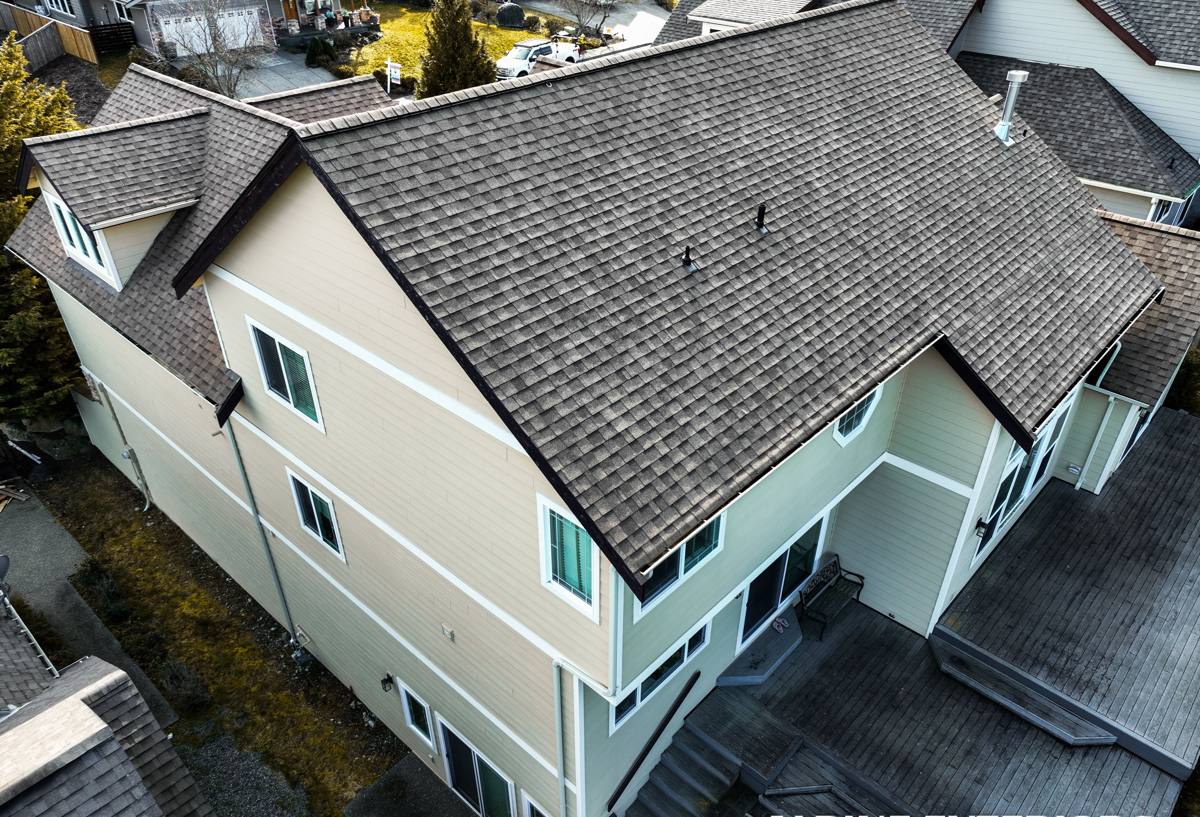
Whatcom County's weather pattern is what installers call "wind-driven rain" — rain that doesn't just fall straight down but gets pushed sideways into walls and window openings during storms off the Salish Sea. Combine that with the humidity that hangs around most of the fall and winter, and you get conditions that punish any gap in a window's weather barrier. A few things we see consistently on Lynden homes:
- Moss and mildew staining on north- and west-facing window trim, a sign that moisture is sitting against the wood longer than it should
- Condensation between panes on older dual-pane units, meaning the seal has failed and the insulating gas is gone
- Soft or spongy sills where water has been getting behind old caulk for years without anyone noticing
- Drafts around older wood or aluminum frames, especially on farmhouses and homes built before modern flashing standards were common
- Painted-shut or swollen sashes on wood windows that have absorbed moisture over multiple wet seasons
None of this is unique to any one street or subdivision — it's what happens to windows anywhere in this climate that weren't installed with the local weather in mind, or that have simply reached the end of their service life.
Older Farmhouses vs. Newer Construction
Lynden has a real mix of housing stock — long-established farmhouses with original wood-frame windows, mid-century homes with aluminum-frame single or dual pane units, and newer builds with vinyl windows that are now old enough to start failing at the seals. Each of these needs a different approach. Older wood-frame openings often have settled or slightly out-of-square rough openings that need to be corrected, not just covered up. Aluminum-frame retrofits usually need extra attention to insulation, since aluminum conducts cold straight through. Newer vinyl units that are failing are frequently a straightforward swap, but only if the original installation was done right — if it wasn't, we fix that at the same time.
What Correct Window Installation Actually Involves
"Window installation" gets treated like a simple swap-and-caulk job by some crews, but a proper install has a specific sequence, and skipping steps is exactly how leaks start.
Before the Old Window Comes Out
We inspect the rough opening for rot, soft framing, or signs of past water intrusion. If the sheathing or framing underneath is compromised, that gets addressed before a new window goes in — installing a good window into bad framing just delays the same problem.
Flashing and Weather Barrier
This is the step that determines whether water stays out for the life of the window. Flashing tape and the house's weather-resistive barrier need to be integrated in the right order — bottom, sides, then top — so that any water that does get past the window sheds down and out, never behind the siding. This is also the step that's easiest to rush and hardest to inspect after the fact, which is exactly why it matters who's doing it.
Setting the Window
The window has to be shimmed level, plumb, and square — not just "close enough to look right." An out-of-square frame puts stress on the sash and hardware, which shows up later as windows that are hard to open, don't latch cleanly, or let air through at the corners.
Sealing and Insulating
Low-expansion foam or backer rod and sealant around the frame, and a proper exterior sealant bead sized for the gap — not just a thick smear of caulk over a problem. Interior air sealing matters too, since it's what stops condensation from forming inside the wall cavity.
Trim and Finish
Exterior trim gets back-primed and sealed at every joint before it goes up, since end grain and joints are where wood trim starts absorbing moisture first — a detail that matters even more given how long our wet season runs.
Choosing the Right Window for a Lynden Home
There's no single "best" window — the right choice depends on the home's age, exposure, and what you're trying to fix (energy loss, drafts, condensation, noise, or just tired-looking old windows). Here's how the common frame materials generally compare for this climate:
| Frame Material | Moisture Behavior | Maintenance | Typical Fit for Lynden Homes |
|---|---|---|---|
| Vinyl | Doesn't rot or corrode; performs well in wet climates | Low — occasional cleaning | Strong default for most retrofits and new construction |
| Fiberglass | Very stable, minimal expansion/contraction with temperature swings | Low | Good for larger openings or homes wanting a more premium feel |
| Wood-clad | Good if the cladding and seals stay intact; interior wood still needs protection | Higher — finish and seals need periodic attention | Best for homes prioritizing a traditional wood interior look |
| Aluminum (bare) | Prone to condensation without a thermal break; conducts cold | Moderate | Generally not our recommendation for full-time living spaces here |
We don't push one brand or material on every job. What we do insist on is glass and frame performance suited to a marine climate — good seals, a proper thermal break where applicable, and hardware that won't corrode from years of damp air.
Our Installation Process in Lynden
- On-site assessment — we look at each window opening individually, not just the house as a whole, since exposure varies wall to wall
- Product selection — we walk through frame material, glass package, and grille options based on the home's style and your priorities
- Written estimate — clear scope, so you know what's included before any work starts
- Removal and opening inspection — old windows come out carefully, and we check the framing underneath before anything new goes in
- Flashing and installation — done in the sequence above, every time, not just on the ones someone might inspect closely
- Sealing, trim, and cleanup — interior and exterior finish work, with the job site left clean
- Final walkthrough — we test operation on every window before we consider the job done
Why a Crew That Already Works This Area Matters
Installing windows correctly in a marine climate isn't guesswork — it's a set of habits built from doing it here, repeatedly, in this weather. A crew that mostly works drier climates can install a technically fine window and still get the flashing sequence wrong for wind-driven rain, because that's not the failure mode they're used to guarding against. Working across Whatcom County, including Lynden and the surrounding rural properties, means we're used to sizing jobs around agricultural dust and pollen season, scheduling around the wettest stretches of fall and winter, and recognizing the specific ways moss, moisture, and salt-laden marine air wear on window trim and hardware over time. That local pattern recognition is part of what you're paying for, not just the labor.
Cost Factors to Expect
Every home is different, so we don't quote sight-unseen, but these are the main variables that move the price on a Lynden window job:
| Factor | Why It Matters |
|---|---|
| Number and size of openings | More or larger windows mean more material and labor |
| Frame material and glass package | Vinyl, fiberglass, and wood-clad carry different price points; upgraded glass (low-E, tempered, etc.) adds cost |
| Condition of the existing opening | Rot repair or reframing adds time before installation can even begin |
| Retrofit vs. full-frame replacement | Full-frame replacement costs more but is often necessary when the original flashing has failed |
| Trim and finish scope | Matching existing interior trim or upgrading exterior trim adds labor |
We'll walk you through where your specific project falls on each of these before you commit to anything.
What to Check Before Hiring Anyone for This Job
- Do they explain their flashing sequence, or just say "we'll seal it up good"?
- Are they licensed and insured to do exterior work in Washington?
- Do they inspect the rough opening before installing, or just swap window-for-window regardless of condition?
- Is the estimate written and itemized, or a vague verbal number?
- Do they stand behind both the product warranty and their own installation workmanship?
- Can they speak specifically to how they handle wind-driven rain and marine air, not just generic "energy efficient windows" talk?
A window installer who can answer these clearly, without hedging, is worth more than one offering the lowest number on the page.
Let's Look at Your Windows
If your Lynden home has windows that are drafty, fogged, sticking, or just showing their age, we're glad to come take a look and give you an honest read on what's going on — no pressure, no hard sell. Fill out the form below for a free estimate, and we'll walk the property with you and talk through what actually makes sense for your home and budget.