 Bellingham Exterior
 Windows Built for Puget's Weather, Not Just the Showroom
Puget sits close enough to the water and the tree line that its homes take a different kind of weather beating than houses a few miles inland. Salt-laden air off the bay, wind-driven rain that finds its way sideways under poorly flashed trim, and a moss season that seems to stretch longer every year all work against a window's weakest points: the seals, the sill, and the hardware. A window that's merely "installed" will look fine for a season or two. A window that's installed correctly for this specific environment will still be sealing tight a decade later.
This page is about one job, done right, in one place: replacing or installing windows in Puget homes around Bellingham. We're not going to give you a generic rundown of window types — we're going to walk through what actually matters here, in this climate, in Whatcom County.
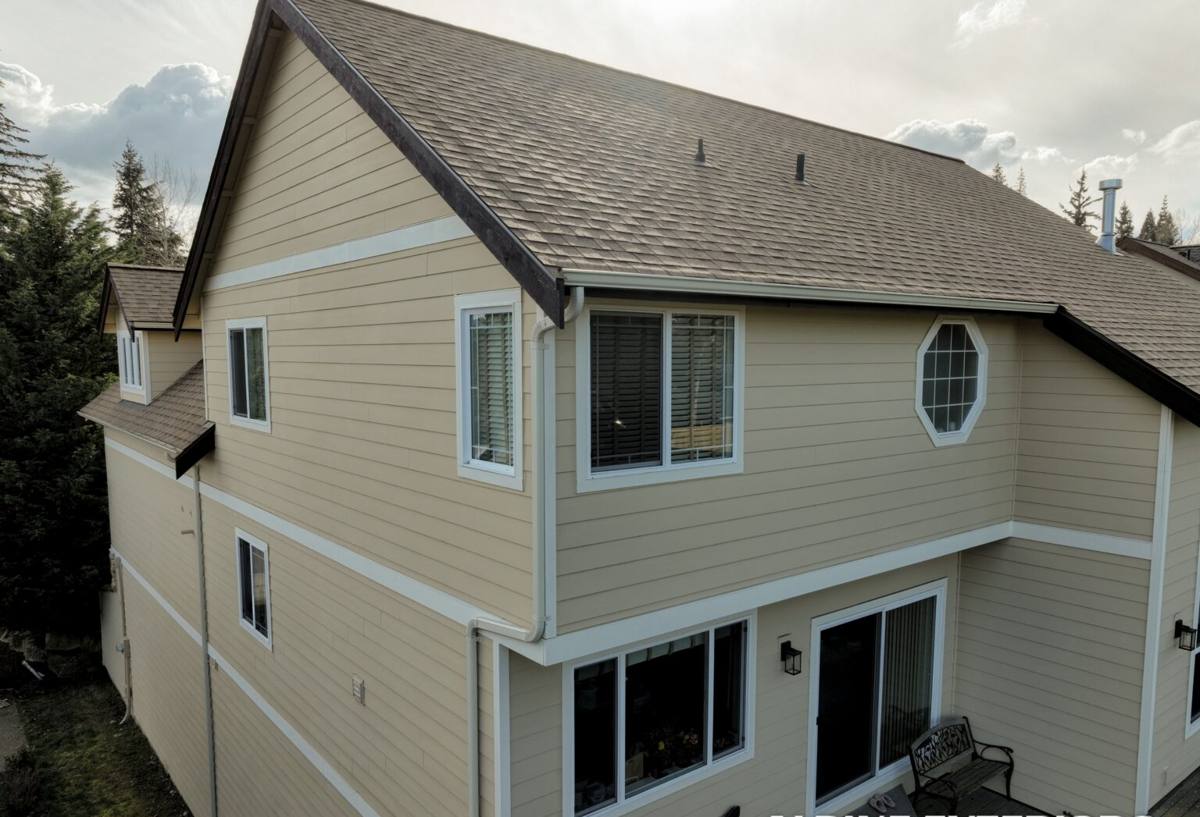
What This Climate Actually Does to a Window
Every region has its own failure pattern, and Puget's is fairly consistent once you've seen enough of it.
Moisture Intrusion
Driving rain off the water doesn't fall straight down — it hits siding and window trim at an angle, which means any gap in flashing or sealant becomes an entry point. Once water gets behind a window frame, it doesn't dry out quickly in this climate. It sits, and it starts rotting sheathing and framing from the inside, often long before any staining shows up indoors.
Salt Air and Hardware Corrosion
Proximity to salt water accelerates corrosion on window hardware, screws, and lesser-grade aluminum components. Locks get stiff, cranks seize, and finishes pit years ahead of what you'd see on the same product in a drier inland climate.
Moss and Algae
Bellingham's long, damp moss season isn't just a roof problem. Moss and green algae take hold on north-facing window trim, sills, and anywhere caulk lines hold moisture, which both looks bad and slowly breaks down cheaper sealants and painted wood surfaces.
Signs a Puget Home's Windows Need Attention
Homeowners in this area usually notice one of these before anything else:
- Fogging or a visible haze between panes — the seal has failed and the insulating gas is gone
- Soft or discolored trim and sill wood, especially on walls facing the prevailing wind and rain
- Drafts you can feel near the frame even with the window fully latched
- Cranks, locks, or sliders that have gotten stiff or gritty from corrosion
- Visible moss, algae, or persistent black streaking around the frame or sill
- Condensation forming on the inside of the glass regularly, even in mild weather
- Paint that's peeling or bubbling specifically around the window opening, not the wall generally
What a Correct Installation Actually Involves
The window itself is only part of the job. In a climate like this, the flashing and sealing details around it matter as much or more than the product brand.
Removal and Opening Prep
Once the old window is out, the opening gets inspected for hidden rot or moisture damage before anything new goes in. Installing a new window into a compromised opening just seals the problem back up — it doesn't fix it.
Flashing and Weatherproofing
This is the step that determines whether a window lasts 10 years or 30 in this environment. A proper install uses a sloped sill pan so any water that does get past the window drains back out instead of pooling, along with flashing tape and house wrap integration that shed water down and out, not into the wall cavity. This is the exact detail that fails most often in lower-quality installs — not the window unit itself.
Sealing and Finish Work
Exterior sealants need to be rated for sustained moisture exposure, not just general-purpose caulk that looks fine on day one and cracks by the second wet season. Interior finish work should restore insulation and vapor control around the frame so the opening performs as well as the surrounding wall.
Choosing a Window Frame for This Environment
There's no single "best" window material — there are trade-offs, and the right call depends on the specific wall, exposure, and budget. Here's how the common options actually behave in a salt-air, high-moisture climate like Puget's:
| Frame Material | Moisture Behavior | Maintenance | Typical Trade-off |
|---|---|---|---|
| Vinyl | Won't rot or corrode; performs well near salt air | Low — occasional cleaning | Frame color/finish options are more limited |
| Fiberglass | Very stable in moisture and temperature swings | Low | Higher upfront cost than vinyl |
| Aluminum | Prone to corrosion and condensation in salt air unless thermally broken | Moderate to high | Better for large commercial spans than residential coastal use |
| Wood / Wood-clad | Needs a fully intact exterior cladding or paint layer to keep moisture out | High — regular repainting/resealing | Best look for period homes, highest upkeep in this climate |
For most Puget homes, we steer clients toward vinyl or fiberglass for anything facing prevailing wind and rain, and reserve wood or wood-clad for sheltered elevations where the maintenance burden is manageable and the look matters more.
How We Approach a Puget Job, Start to Finish
Estimate and Measurement
We walk the exterior and take a close look at existing trim, sill condition, and siding type before quoting anything, because the flashing detail changes depending on what's already there. We also point out any rot or moisture issues we find during this walk, whether or not you move forward.
Installation Day
Openings are done one at a time so the house isn't left exposed to weather overnight, which matters more here than in drier climates. Old units are removed, openings inspected and repaired as needed, then the new window is set, shimmed level and plumb, flashed, and sealed before trim goes back on.
Final Check and Cleanup
Every unit gets operated and checked for square, level, and smooth function before we call the job done, and the site is cleaned up so there's no debris left behind.
What Affects the Cost of a Window Installation Here
We won't quote exact pricing on a page — every house is different — but these are the factors that actually move the number, in order of typical impact:
| Factor | Why It Matters |
|---|---|
| Number of windows | Bigger jobs bring down the per-window cost of mobilization and setup |
| Frame material | Vinyl is generally the lowest upfront cost, fiberglass and wood-clad run higher |
| Extent of rot or hidden damage | Repairs to sheathing or framing found during removal add time and material |
| Window size and configuration | Large picture windows or complex operable units cost more than standard sliders or single-hungs |
| Trim and siding work | Matching existing trim profiles or repairing surrounding siding adds labor |
| Access and floor level | Second-story or hard-to-reach openings take longer and need more setup |
Why It Matters to Hire a Crew That Already Works This Area
Whatcom County's building codes and inspection expectations aren't identical to what a crew coming up from further south might be used to, and a contractor who regularly works Puget and the surrounding Bellingham area already knows the flashing and moisture details that matter for this specific exposure — because they've gone back and fixed the ones that were done wrong. That's not something you can fully substitute with a generic national install crew running the same process everywhere, regardless of climate. Local experience shows up in the small decisions: how the sill pan is sloped, which sealant is rated for this level of sustained moisture, and where extra flashing is worth the added time even when it's not strictly required.
Living With New Windows Through Moss Season
A correctly installed window still benefits from basic upkeep in this climate. A few habits go a long way:
- Rinse frames and sills a couple times a year to clear salt residue and organic buildup before it takes hold
- Keep weep holes on vinyl and fiberglass frames clear of debris so water can drain as designed
- Check exterior caulk lines each fall, before the wettest months, for cracking or separation
- Trim back vegetation that keeps window trim shaded and damp, which is what encourages moss growth in the first place
- Operate cranks and locks periodically through the winter so hardware doesn't seize up from disuse and moisture
If you're noticing drafts, fogged glass, soft trim, or you're just planning ahead for a home in Puget, we're happy to take a look and give you a straightforward, no-pressure estimate — no invented urgency, just an honest read on what your windows actually need. Use the form below to get started.