 Bellingham Exterior
 Why Birchwood Windows Wear Out Faster Than You'd Expect
Birchwood sits close enough to Bellingham Bay that salt-laden air is a real factor in how exterior materials age, not just a talking point. Combine that with the driving rain that comes off the Sound during fall and winter storms, and you've got two forces working against ordinary windows at the same time: corrosion on hardware and fasteners, and water intrusion at every joint, seam, and sill. Add Whatcom County's long, gray moss season — months of shaded dampness that lets algae and moss get a foothold on anything that doesn't dry out quickly — and older windows in this neighborhood take a beating that a lot of manufacturers never designed for.
None of that means Birchwood homes need something exotic. It means the details that get skipped on a rushed installation — flashing, sealant choice, drainage paths — matter more here than they would in a drier inland climate. A window that's "fine" in eastern Washington can fail early in Birchwood if it wasn't installed with this specific climate in mind.
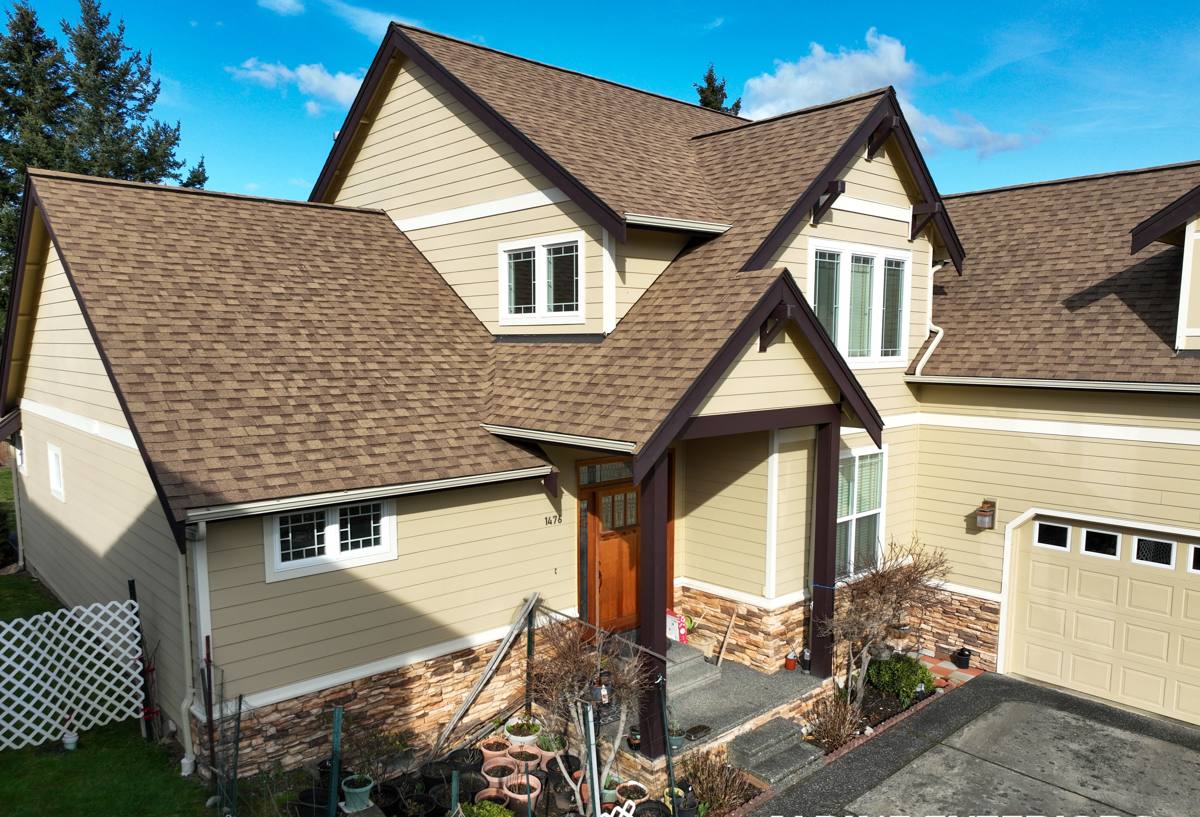
Signs a Birchwood Home Needs Window Replacement
Windows rarely fail all at once. They send signals for months, sometimes years, before a homeowner notices. Here's what we look for, and what you can check yourself:
- Fogging or a milky haze between the panes of double-pane glass — a sign the seal has failed and the insulating gas has escaped
- Wood sills or frames that feel soft, spongy, or discolored when you press on them
- Visible gaps around the frame, or daylight showing where the sash meets the frame
- Windows that stick, won't stay open, or take real effort to latch
- Persistent condensation on the inside of the glass during cold, wet stretches
- Moss or dark algae staining building up on the frame or sill, especially on north- or west-facing windows
- A noticeable draft near the window even when it's fully closed and locked
- Heating bills that have crept up without an obvious explanation
Any one of these on its own might just mean a repair. Several together, especially on a home that's had its original windows for 20-plus years, usually means replacement is the more honest recommendation.
What a Correct Window Replacement Job Actually Involves
Flashing and Moisture Management
The window itself is only part of the job. What happens around the opening — the flashing, the sill pan, the way water is directed back out instead of into the wall cavity — is what determines whether the installation holds up through years of driving rain. A correct install includes a sloped sill pan so any water that gets past the glass drains outward instead of pooling, properly lapped flashing tape integrated with the home's existing water-resistive barrier, and sealant used only where it belongs — not as a substitute for proper flashing.
Insulation and Air Sealing
The gap between the new window frame and the rough opening needs to be filled with a material that stays flexible and doesn't trap moisture — low-expansion foam or backer rod and sealant, not stuffed fiberglass batting that can wick water. Skipping this step is one of the most common ways a technically "new" window still drafts and still lets moisture into the wall assembly.
Choosing the Right Window for Whatcom County Conditions
There's no single "best" window material — the right choice depends on your home's exposure, your budget, and how much upkeep you want to take on. Here's how the common options hold up in a salt-air, high-rainfall climate like Birchwood's:
| Frame Material | How It Handles Salt Air & Moisture | Maintenance |
|---|---|---|
| Vinyl | Doesn't corrode or rot; performs well in coastal air | Low — occasional cleaning |
| Fiberglass | Very stable, resists moisture and won't corrode; handles temperature swings well | Low — durable finish |
| Wood-clad (exterior-clad, wood interior) | Good if the cladding and flashing detail is done correctly; exposed or damaged cladding invites rot | Moderate — interior wood may need refinishing over time |
| Aluminum | Prone to corrosion in salt air unless it's a marine-grade or well-coated product; conducts cold, which increases condensation risk | Higher — watch for pitting and corrosion near the coast |
Because of that corrosion risk, we're generally cautious about recommending bare or poorly coated aluminum frames for homes this close to the water — not because aluminum is a bad product everywhere, but because Birchwood's air quality for metal is simply tougher than it is a few miles inland.
Full-Frame vs. Insert Replacement — What Fits Your Birchwood Home
There are two basic approaches to replacing a window, and the right one depends on the condition of what's already there:
| Factor | Insert (Pocket) Replacement | Full-Frame Replacement |
|---|---|---|
| Existing frame condition | Sound, dry, no rot | Damaged, soft, or previously water-stained |
| Access to flashing & wall assembly | Limited — original flashing stays in place | Full — flashing and sill pan can be rebuilt |
| Best suited for | Homes with well-maintained original construction | Homes with a history of leaks, rot, or older, unflashed openings |
| Relative cost | Generally lower | Generally higher, due to added carpentry and exterior finish work |
Given how much wear driving rain and moss can put on an opening over a few decades, we don't assume insert replacement is the right call just because it's less invasive. If we find soft framing or old water staining once the trim comes off, we'll tell you honestly — even if that means recommending the more involved option.
Our Window Replacement Process
- On-site assessment — we look at each window's condition, the framing behind it, and how exposed that side of the house is to wind-driven rain
- Product recommendation — we walk through frame material and glass options suited to your home's exposure and your budget, without pushing you toward the most expensive option by default
- Precise measuring and ordering — accurate measurements avoid gaps, shimming problems, or delays
- Careful removal — old windows come out without unnecessary damage to surrounding siding or trim
- Opening prep — any soft wood, old caulk, or failed flashing gets addressed before the new window goes in, not covered over
- Installation and sealing — new sill pan, flashing, insulation, and sealant, installed to shed water outward
- Interior and exterior finish work — trim, caulking, and touch-up so the finished look matches the rest of the home
- Final walkthrough — we test operation, check the seal, and answer any questions before we consider the job done
Why Hiring a Crew That Already Works Birchwood Matters
A crew that regularly works in Birchwood and the surrounding Bellingham neighborhoods has already seen how this specific stretch of Whatcom County treats exterior materials — which sides of a house take the worst of the driving rain, how fast moss builds up on shaded north walls, and how quickly an unflashed opening can turn into a rot problem near the water. That's different from general window-installation experience. It's the difference between a crew that follows a national playbook and one that adjusts the flashing detail because they know what this climate actually does to a house over ten winters.
Local crews are also more familiar with the permitting expectations that apply to work in and around Bellingham, and can plan around the realities of a job site here — narrower lots, mature trees close to the house, and weather windows that don't always cooperate with a rigid schedule.
Keeping New Windows Performing Through Whatcom County Winters
A correctly installed window should need very little from you, but a few habits go a long way in this climate:
- Keep weep holes (the small drainage openings along the bottom of the frame) clear of dirt, leaves, and moss
- Rinse frames periodically, especially on sides of the house exposed to salt air or road spray
- Trim back vegetation that keeps a window in constant shade — reducing the damp conditions that let moss and algae take hold
- Check caulking annually where the frame meets the siding, and address any cracking before it lets water in
- Wipe down interior tracks so sashes continue to operate smoothly
None of this takes much time, but it's the difference between a window that looks and performs well for decades and one that starts showing problems again in five or six years.
If you're noticing drafts, fogged glass, or moss buildup on your windows, we're happy to take a look and give you a straightforward, no-pressure estimate — no hard sell, just an honest read on what your Birchwood home actually needs. Reach out using the form below to get started.