 Bellingham Exterior
 Blaine's Weather Doesn't Go Easy on Windows
Blaine sits at the northern edge of Whatcom County, close enough to open water that homes here take a different beating than houses further inland around Bellingham. Salt-laden air off the water works on aluminum hardware and unprotected steel fasteners year-round. Wind-driven rain, common through the fall and winter months, doesn't just hit windows head-on — it gets pushed sideways and upward under poorly flashed trim, which is how a lot of "mystery" water stains actually start. And then there's moss season, that long stretch of grey, damp weather where anything shaded or north-facing stays wet for days at a time. Old glazing, tired weatherstripping, and worn sills don't hold up well against that combination.
None of this means Blaine homes need anything exotic. It means the details that get skipped on a rushed job — flashing sequence, sill pitch, sealant choice, fastener type — matter more here than they would in a drier climate. A window that's "basically fine" somewhere else can be a slow leak waiting to happen on a coastal Whatcom County exposure.
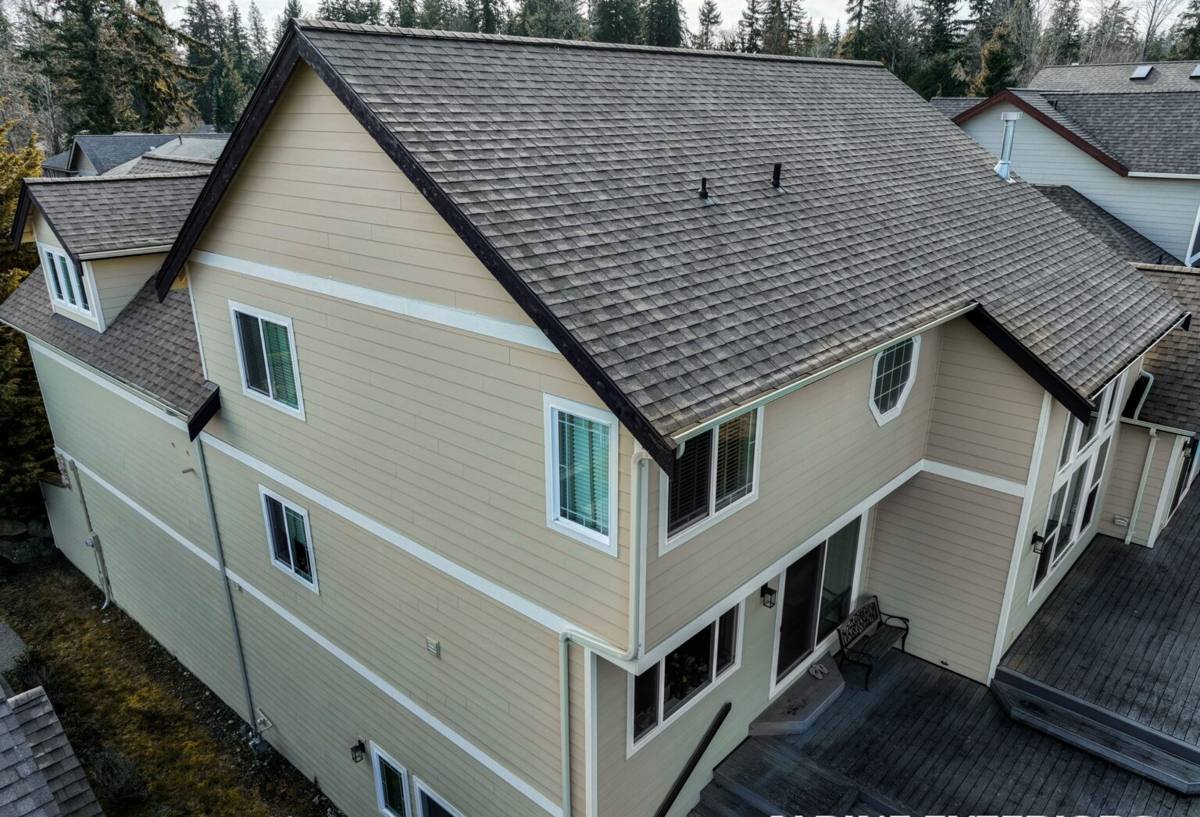
Signs Your Windows Are Past Their Job
Most homeowners don't replace windows because they woke up one day and decided to. They replace them because the windows started telling on themselves. Here's what we look for, and what you can check yourself before calling anyone:
- Condensation or fogging between the panes of a double-pane window — the seal has failed and it won't clear up on its own
- Visible daylight or a draft around the frame when the window is closed and locked
- Wood trim or sill that's soft, discolored, or has a musty smell, especially on north- or west-facing walls
- Difficulty opening, closing, or locking — swollen frames or worn balances are common after years of damp cycles
- Paint or finish peeling from the inside of the frame, which often means moisture is getting trapped rather than draining out
- Noticeably higher heating bills without any other explanation
- Moss or dark streaking building up on the exterior sill or the wall just below it
One or two of these on an older window is normal wear. Several at once, especially fogging plus soft wood, usually means the window has already let water in more than once.
What a Correct Window Replacement Actually Involves
Swapping an old window for a new one is the easy part to see. The parts that actually determine whether the job holds up for the next twenty years happen underneath, and they're the same steps whether we're working in Blaine, Bellingham proper, or anywhere else in the county — they just carry more consequence here because of how much wind-driven rain the area sees.
Flashing and Water Management
Every opening needs a water-resistive barrier that's integrated correctly with the house wrap or building paper already on the wall, not just caulked over the top of it. Flashing tape goes on in a specific order — sill first, jambs, then head — so water is always directed out and down, never trapped behind the new window. This is the single most common shortcut we see on older or rushed installs, and it's the reason a "new" window can still leak.
Insulation and Air Sealing
The gap between the window frame and the rough opening needs to be filled with a low-expansion foam or backer rod and sealant made for that gap — not packed solid with standard can foam, which can bow the frame and cause the sash to bind. Done right, this step closes off drafts and gives you the comfort improvement most people actually notice first.
Fastening for Wind Exposure
Homes with more open exposure to wind need fasteners placed and spaced according to the window manufacturer's wind load specs, not just "enough screws to hold it." Skipping this doesn't usually show up on day one — it shows up as a loose, rattling, or leaking window a few storms later.
Picking a Frame Material That Can Handle the Coast
There's no single "best" window for every house — it depends on your siding, your budget, and how much upkeep you want to take on. Here's how the common options actually compare for a salt-air, high-moisture exposure like Blaine's:
| Frame Material | How It Handles Salt Air & Moisture | Maintenance | General Price Position |
|---|---|---|---|
| Vinyl | Won't corrode or rot; performs well in coastal air | Low — occasional cleaning | Most affordable |
| Fiberglass | Very stable in temperature swings and damp cycles; excellent long-term durability | Low | Mid to upper range |
| Wood-clad | Interior wood warmth with an exterior shell, but cladding seams need attention near the coast | Moderate to higher — watch cladding joints and interior wood over time | Upper range |
| Aluminum | Prone to corrosion and condensation in salt air unless thermally broken and well finished | Higher — hardware and finish need monitoring | Varies widely |
We don't push one brand or material as a cure-all. For most Blaine homes we're steering clients toward vinyl or fiberglass for the frame itself, because both shrug off moisture without needing a maintenance routine — but the right call still depends on your siding type, your home's style, and what you're trying to fix.
What Drives the Cost of a Window Replacement Job
We're not going to hand you a number here that doesn't mean anything without seeing the house — window pricing swings a lot based on size, count, and access. What we can do is walk through what actually moves the price up or down, so an estimate makes sense when you get one:
| Factor | Why It Matters |
|---|---|
| Full-frame vs. insert replacement | Full-frame removes down to the rough opening and costs more, but it's often the right call when there's existing water damage or you're changing window size |
| Number and size of openings | Larger openings and picture windows cost more per unit than standard bedroom-size windows |
| Glass package | Upgraded low-E coatings and gas fills add cost but pay back in comfort on a house exposed to wind and cold snaps |
| Existing damage found during removal | Soft sheathing or rot around an opening needs to be repaired before the new window goes in — this is common on older homes here and worth budgeting a contingency for |
| Access and story height | Second-story or hard-to-reach windows take more labor and sometimes staging |
How We Handle a Blaine Window Job, Start to Finish
Assessment and Measurement
We start by actually looking at each opening — not just measuring for a new window, but checking the sill, the sheathing where we can see it, and the current flashing condition. This is where we catch hidden rot before it becomes a surprise on install day.
Ordering and Lead Times
Once you approve a scope and window selection, we place the order. Lead times vary by manufacturer and by season, and we'll give you a realistic window rather than an optimistic one.
Install Day
Old windows come out, any damaged framing gets repaired, new flashing and water barrier go in per manufacturer spec, and the new window is set, shimmed level and plumb, insulated, and fastened to wind load spec. Interior and exterior trim gets finished to match.
Cleanup and Walkthrough
We clean up debris and old materials, then walk every window with you — operation, locks, and a look at the finished exterior — before we consider the job done.
Why Hiring a Crew That Already Works Blaine Matters
Window replacement isn't a job where "close enough" experience translates cleanly. A crew that already works Blaine and the surrounding Whatcom County coastline has seen what actually fails on homes exposed to this kind of salt air and wind-driven rain — not in theory, but on real jobs. That shows up in small decisions: which sealant holds up against this air, how much slope to build into a sill, where moss and standing moisture tend to collect on this style of house. It also means we're not learning your area's building department requirements from scratch, and we're not a stranger to callbacks if something needs a second look after a storm season.
Being based out of Bellingham keeps us close enough to show up quickly for a walkthrough, a follow-up, or a warranty question — not just for the install itself.
Living With New Windows in a Marine Climate
New windows cut down on maintenance, but they don't eliminate it in a climate like this. A little seasonal attention keeps them performing:
- Wipe down sills and tracks periodically, especially after the wetter months, to keep moss and grime from building up
- Check exterior caulking annually where trim meets siding — small gaps are easy to reseal before they become leaks
- Keep weep holes on vinyl and fiberglass frames clear so water can drain rather than pool
- Operate locks and hardware a few times through the year so mechanisms don't seize up during long stretches when windows stay shut
If you're noticing drafts, fogged glass, or soft trim on a Blaine home, we're happy to come take an honest look. There's no pressure and no obligation — just a straightforward assessment of what your windows actually need, using the estimate form below.