 Bellingham Exterior
 Siding Replacement for the York Area of Bellingham
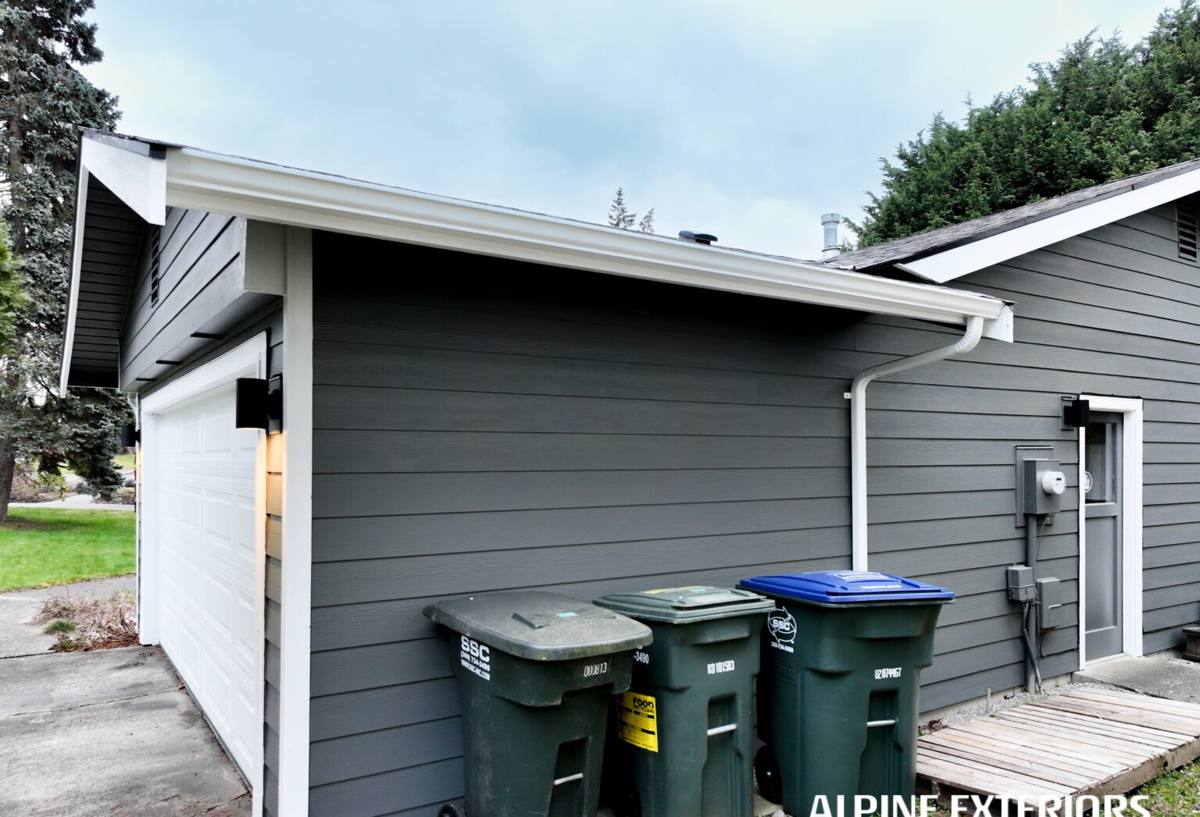
Homes in and around York deal with a specific combination of weather that not every siding product, and not every installation crew, is set up to handle well. Bellingham sits close to the water, which means salt-laden air moves through neighborhoods on a regular basis. Add in Whatcom County's long stretch of driving rain from fall through spring, and a moss season that can run for months on shaded north- and west-facing walls, and you have a climate that finds every weakness in a siding system within a few years. We install James Hardie fiber cement siding, and we do it specifically with York's exposure conditions in mind — not a generic install pulled from a manual written for a drier climate.
What This Climate Does to Siding Over Time
It helps to understand the actual mechanisms at work, because they explain almost every siding failure we get called out to inspect.
Salt Air and Metal Fasteners
Coastal moisture carries salt that accelerates corrosion on exposed metal — fasteners, flashing, and trim edges. Over years, corroding fasteners can loosen their grip on siding panels, and rust staining can bleed through paint film. This isn't unique to York, but homes closer to the water see it develop faster than homes further inland.
Driving Rain and Wind-Driven Moisture
Bellingham's rain rarely falls straight down. Wind pushes it sideways into wall assemblies, which means siding laps, butt joints, and penetrations (hose bibs, vents, light fixtures) take on water pressure that a calm-climate installation detail wouldn't need to resist. Weak points show up as staining, soft trim, or interior moisture over time.
Moss, Algae, and Constant Dampness
Shaded walls and roof-adjacent siding stay damp for extended stretches during our wet months. That dampness is exactly what moss and algae need to establish themselves on a surface. Some siding materials tolerate this fine; others absorb moisture into the substrate itself, which is a very different and more serious problem than a cosmetic green tinge.
Why We Only Install James Hardie Fiber Cement
We made a decision early on to standardize on one siding system rather than offer a menu of products with a menu of trade-offs. James Hardie fiber cement is manufactured from cement, sand, and cellulose fibers — it does not have an organic wood component that can absorb water and swell, rot, or feed moss growth the way wood-based or wood-fiber siding products can. It's also non-combustible, which matters increasingly in Washington as wildfire smoke and ember exposure become a bigger part of the conversation around home materials, even west of the Cascades.
James Hardie's HZ5 product line is engineered specifically for climates like ours — freeze-thaw cycling, sustained moisture, and coastal exposure. The factory-applied ColorPlus finish is baked on under controlled conditions, which gives it better adhesion and UV resistance than field-applied paint, and it comes with its own finish warranty separate from the product warranty. For a York home facing salt air and near-constant damp shade on at least one exposure, that combination of moisture resistance, non-combustibility, and finish durability is why we don't install anything else.
What a Correct Siding Replacement Actually Involves
Siding replacement is not just removing old boards and nailing up new ones. In a climate like Bellingham's, the work that happens underneath the siding matters as much as the siding itself.
- Full tear-off and inspection: Old siding comes off so we can see the sheathing underneath — this is where hidden rot, soft spots, or prior water damage actually gets found.
- Sheathing repair: Any compromised sheathing gets replaced before anything new goes up. Installing new siding over damaged sheathing just hides a problem that keeps getting worse.
- Weather-resistive barrier: A new house wrap or equivalent moisture barrier goes on correctly lapped, shingle-style, so water sheds down and out rather than working its way inward.
- Flashing at every penetration: Windows, doors, vents, hose bibs, and any wall-mounted fixture get proper flashing details — this is the single most common place we find failures on older installs.
- Rainscreen or drainage plane consideration: On exposures that see heavy driving rain, a drainage gap behind the siding lets any incidental moisture drain and dry instead of sitting against the panel.
- James Hardie panel installation to manufacturer spec: Correct fastener type and spacing, correct clearances from grade and roofing, and correct joint treatment at butt seams.
- Caulking and sealant at manufacturer-specified locations only: Over-caulking traps moisture; under-caulking lets it in. Hardie's install guide specifies exactly where sealant belongs.
Why Fastener and Flashing Detail Matters More Here Than Elsewhere
We put extra attention on fastener corrosion resistance and flashing quality specifically because of the coastal salt exposure common around York. A corner-cutting install might use standard fasteners and minimal flashing and look fine on day one — the failures from that kind of shortcut typically take three to seven years to show up, by which point the labor to fix it (removing siding to correct flashing) costs more than doing it right the first time would have.
Signs a York Home May Need Siding Replacement Now
Not every siding issue means a full replacement, but these signs are worth an inspection sooner rather than later, especially with our wet season ahead of us most of the year:
| Sign | What It Usually Means |
|---|---|
| Persistent moss or algae that returns after cleaning | The surface is staying damp longer than it should — could be a shading/drainage issue or a moisture-retentive material |
| Soft or spongy spots when pressed | Moisture has reached the substrate; likely rot underneath the visible surface |
| Paint that's peeling, bubbling, or chalking heavily | Moisture is trying to escape from behind the siding, or the finish has reached end of life |
| Visible gaps or warping at seams | Panels have expanded/contracted or shifted — common with wood-based products in wet-dry cycling |
| Rust streaking near fasteners or trim | Fastener corrosion, often accelerated by coastal salt air |
| Rising interior humidity or musty smell near exterior walls | Possible moisture intrusion behind the wall assembly — worth investigating promptly |
Our Process for a York Siding Replacement
We keep the process straightforward and communicate at each stage so there are no surprises.
- On-site assessment: We walk the exterior, check current siding condition, note problem exposures (typically north/west walls and anything near mature trees or shade), and discuss your goals and budget.
- Written estimate: A clear scope of work — what's being removed, what's being repaired, what James Hardie product line and color is proposed, and a firm price.
- Scheduling around our wet season: We plan tear-off and dry-in timing to minimize the number of days your home's sheathing is exposed to weather.
- Tear-off and sheathing inspection: Old material removed, substrate inspected and repaired as needed, documented and discussed with you before we close anything up.
- Weather barrier, flashing, and drainage details: Installed to manufacturer and code specification, with particular attention to penetrations and exposures.
- James Hardie installation: Panels, trim, and fastening installed to spec by a crew trained specifically on this product.
- Final walkthrough: We go over the finished work together before calling the job complete.
Realistic Timelines and Cost Factors
Every home is different, but the biggest cost and timeline drivers on a York-area siding replacement tend to be the same handful of factors:
| Factor | Why It Matters |
|---|---|
| Extent of hidden sheathing damage found during tear-off | More rot means more repair before new siding can go on — this is the most common source of a revised estimate |
| Home size and number of stories | More square footage and taller walls mean more material, more labor, and more staging/scaffolding |
| Number of penetrations, corners, and trim details | Windows, vents, and architectural detailing all add flashing and cutting time |
| Siding profile and color selection | Lap width, textures, and custom ColorPlus colors can affect material lead time and cost |
| Access and site conditions | Tight lot lines, landscaping, or difficult access add setup time |
| Weather windows | We schedule tear-off during drier stretches when possible to limit exposure time |
Why a Crew That Already Works York Matters
General exterior contractors who mostly work drier inland markets sometimes underestimate how much flashing and drainage detail matters here — and it shows up years later, not on install day. A crew that already does regular work in and around Bellingham has already seen how this specific coastal, high-rainfall climate behaves against different wall orientations, roof lines, and shade patterns. That's not a marketing point — it changes real decisions on site: where to add extra flashing, which exposures need a drainage gap most, and how to sequence work around actual weather rather than a generic schedule. It also means faster response if something needs a warranty check or follow-up after the job is done, since we're not driving in from out of the area.
What Ongoing Maintenance Looks Like After Installation
James Hardie siding is genuinely low-maintenance compared to wood-based alternatives, but "low-maintenance" doesn't mean "zero-maintenance" in a climate like ours. A simple annual routine keeps a new install performing the way it should for decades:
- Rinse siding annually to clear pollen, dust, and early moss/algae growth before it establishes
- Keep gutters clear so overflow doesn't run down wall surfaces
- Trim back vegetation and tree limbs that keep any wall exposure in constant shade and dampness
- Re-caulk only at manufacturer-specified joints if sealant shows cracking, and avoid adding extra caulk elsewhere
- Watch for and address any exterior fixture leaks (hose bibs, light boxes) promptly, since these are common water entry points
Get a Free, No-Pressure Estimate
If your York-area home is showing early wear from salt air, driving rain, or moss, or if you're simply planning ahead for a siding replacement, we're happy to take a look and give you an honest assessment — no obligation, no pressure. Use the form below to request a free estimate and we'll schedule a time to walk your home's exterior with you.