 Bellingham Exterior
 Asphalt Shingle Roofing Built for Blaine's Coastline
Blaine sits right where Whatcom County meets the water, and that location comes with a specific set of roofing problems that inland Bellingham homes don't deal with in the same way. Salt-laden air off the coast, driving rain that comes in sideways during winter storms, and a moss season that can stretch for most of the year all put extra stress on an asphalt shingle roof. A roof that would hold up fine in a drier, more sheltered part of the county can wear out faster here if it wasn't installed with these conditions in mind.
This page covers what asphalt shingle roofing actually needs to perform in Blaine, what a correct installation or repair involves, and how we approach the work. It's written for homeowners trying to figure out whether they need a repair, a partial re-roof, or a full replacement, and what questions to ask whoever ends up doing the work.
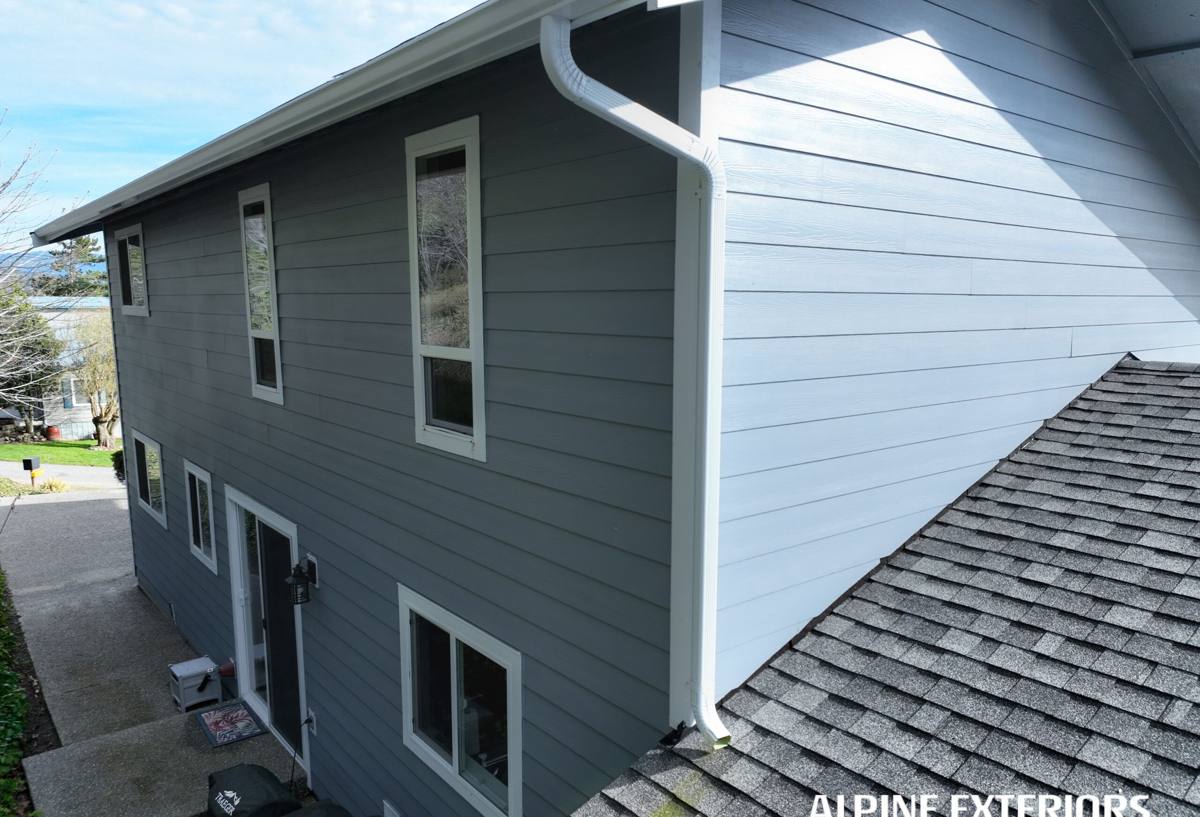
Why Blaine's Climate Is Hard on Shingles
Salt Air and Metal Components
Asphalt shingles themselves aren't particularly vulnerable to salt, but the metal components tied into the roofing system are. Nails, flashing, drip edge, vent housings, and fasteners can corrode faster in a coastal air environment than they would a few miles inland. Once flashing or fasteners start to corrode, water finds a way in long before the shingles themselves show visible wear. This is one of the most overlooked failure points on coastal roofs.
Driving Rain and Wind-Driven Moisture
Blaine gets its share of storms that come off the water with real force behind the rain. Wind-driven rain doesn't just fall straight down — it gets pushed sideways and even slightly upward under shingle edges, valleys, and around penetrations like vent pipes and chimneys. A roofing system that relies only on the shingles for waterproofing, without proper underlayment and flashing detail, is more likely to leak in these conditions than one built with a full water-shedding system underneath.
Moss and Sustained Moisture
Whatcom County's long, wet season gives moss plenty of time to establish itself on north-facing slopes and shaded areas. Moss holds moisture against the shingle surface far longer than the shingle is designed to handle, which accelerates granule loss and can lift shingle edges over time. It also traps debris in valleys, which contributes to water backing up under shingles during heavy rain.
What a Correct Installation Needs to Include
A shingle roof is a system, not a single product. In a coastal, high-moisture area like Blaine, every layer of that system matters more than it might in a drier climate.
- Ice-and-water shield or a comparable self-adhering membrane at eaves, valleys, and around all roof penetrations
- Synthetic or felt underlayment across the full roof deck, not just patched in weak spots
- Corrosion-resistant flashing and fasteners suited to a coastal air environment
- Proper attic and roof ventilation to manage condensation and moisture buildup from below
- Correctly lapped and sealed valley work, since valleys are where wind-driven rain and moss debris cause the most trouble
- Starter strip and ridge cap installed to manufacturer spec, not just laid on by eye
Skipping any one of these doesn't always show up right away. It shows up two, five, or ten years later as a leak that seems to come from nowhere, when really it came from a corner that was cut during installation.
Signs Your Blaine Roof Needs a Closer Look
Because coastal wear patterns aren't always obvious from the ground, it helps to know what to check for, especially after a hard winter storm season.
- Granules collecting in gutters or at the base of downspouts
- Visible moss growth on shaded or north-facing slopes
- Dark streaking or staining that doesn't wash off with rain
- Curling, cupping, or lifted shingle edges, especially near valleys and eaves
- Rust staining around vent pipes, flashing, or metal chimney caps
- Soft spots or sagging when walking the roof deck (or visible sag from the ground)
- Water stains on interior ceilings, especially after a windy rainstorm rather than a calm one
Any one of these on its own isn't necessarily an emergency, but a few of them together usually means the roof is past the point where a small patch will hold for long.
Choosing a Shingle for This Environment
Not every asphalt shingle product performs the same way in a coastal, moss-prone climate. The differences that matter most in Blaine are wind rating, algae resistance, and how the product handles sustained moisture rather than occasional rain.
| Shingle Type | Wind Performance | Moss/Algae Resistance | Best Fit For |
|---|---|---|---|
| Standard 3-tab | Lower wind rating, more prone to edge lift in gusts off the water | Minimal built-in resistance | Budget-driven projects on more sheltered lots |
| Architectural (laminated) | Higher wind rating, heavier profile resists uplift better | Often available with algae-resistant granules | Most Blaine homes, especially exposed or waterfront lots |
| Impact-resistant architectural | Highest wind rating in the asphalt category | Algae-resistant granule options typically included | Homes with direct water exposure or a history of storm damage |
We don't push homeowners toward the most expensive option by default. If a home is tucked away from direct wind exposure, a solid architectural shingle is often the right balance of cost and durability. If it's more exposed to the water and wind, spending more upfront on wind rating and algae resistance tends to pay off in fewer callbacks and a longer service life.
Repair or Replace? What Actually Drives That Decision
A lot of homeowners assume any leak means a full replacement, and a lot of others assume a repair will always be cheaper in the long run. Neither assumption holds up on its own — it depends on the age, extent, and cause of the damage.
| Factor | Leans Toward Repair | Leans Toward Replacement |
|---|---|---|
| Roof age | Under 10-12 years | Approaching or past typical shingle lifespan |
| Damage extent | Isolated to one slope or penetration | Spread across multiple slopes or both leak and granule loss present |
| Underlying deck condition | Solid, no soft spots | Soft decking or signs of long-term moisture intrusion |
| Moss/algae history | Recently treated, minimal buildup | Chronic moss with granule loss underneath |
| Flashing/ventilation | Up to current standards | Outdated, corroded, or missing entirely |
We walk the roof and give an honest read on which side of this table the home falls on before recommending either option. A repair that's likely to fail again within a year or two isn't a good use of anyone's money, and a full replacement isn't warranted just because a roof is a few years old and had one storm-related leak.
Our Process
Whether the job is a repair or a full replacement, the approach is the same in principle: understand what's actually happening on the roof before recommending a fix.
- On-site inspection of the roof surface, flashing, valleys, and attic ventilation where accessible
- A clear explanation of what we found, including photos of anything that needs attention
- A written estimate that spells out materials, scope, and what's included — no vague line items
- For replacements, full tear-off and deck inspection rather than roofing over existing layers
- Installation of underlayment, flashing, and shingles to manufacturer specification, sized to Blaine's exposure and moisture conditions
- Final walkthrough so the homeowner can see the finished work and ask questions before we consider the job done
Maintenance During a Long Moss Season
Even a well-installed roof benefits from some routine attention in this climate. Gutters should be cleared regularly so runoff isn't backing up under the shingle edge, and moss should be treated before it establishes rather than after it's already visible from the street. Physically scraping moss off shingles causes more granule damage than treating it with an appropriate moss-control product and letting rain wash it away over time. We can advise on a maintenance schedule that fits the specific slope orientation and shading of a given roof, since a heavily shaded north slope needs more frequent attention than a sun-exposed south slope.
Why Local Experience in Blaine Matters
A crew that already works in Blaine and along the rest of the Whatcom County coastline knows which slopes on a typical home tend to hold moss longest, how much wind exposure to plan for on a waterfront or near-waterfront lot, and which flashing and fastener choices actually hold up here versus in a drier inland climate. That's not something you get from a general roofing checklist — it comes from repeatedly seeing how roofs in this specific area age and fail. It also means we're not learning on a homeowner's roof how the local weather behaves.
If you're dealing with a leak, visible moss, or just want an honest read on where your roof stands, we're happy to take a look. Reach out for a free, no-pressure estimate using the form below.