 Bellingham Exterior
 Siding Built for What Barkley Actually Deals With
Barkley sits close enough to Bellingham Bay and the broader Puget Sound airshed that salt-laden air is a real factor in how exterior materials age here — not just near the water, but for several miles inland as wind carries it. Combine that with Whatcom County's driving, wind-pushed rain events and the long stretch of gray, low-sun months that let moss and algae get a foothold on north- and shade-facing walls, and you've got a climate that is genuinely tougher on siding than most manufacturers' generic marketing admits. Homes in Barkley take this on from multiple sides at once: horizontal rain hits vertical wall assemblies directly, moisture sits longer because dry-out windows are short in fall and winter, and organic growth spreads on any surface that stays damp and shaded for weeks at a stretch.
None of that means siding is doomed here — it means the material and the installation both have to be chosen with this specific environment in mind, not swapped in from a spec sheet written for Arizona or the Midwest.
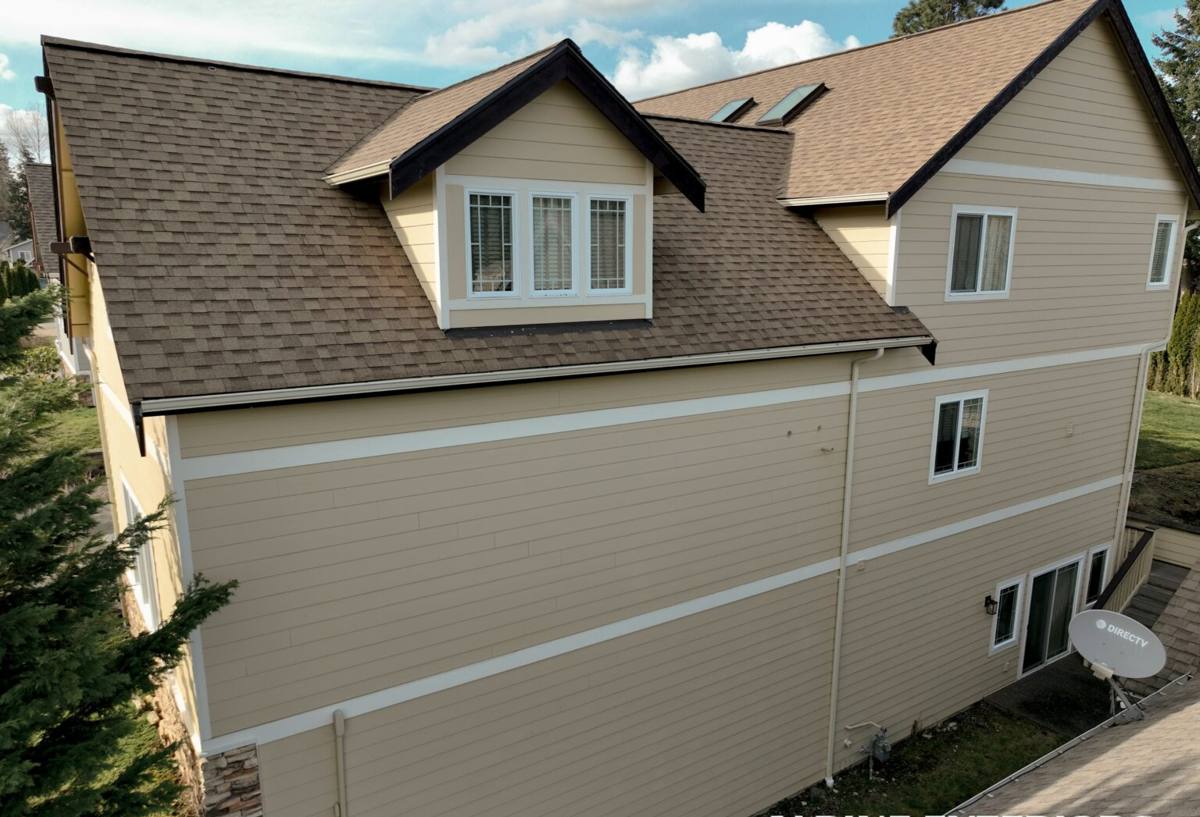
Why Fiber Cement Holds Up in This Environment
Fiber cement is a mix of cement, sand, and cellulose fibers, engineered to be dimensionally stable when it gets wet and dry repeatedly — which is exactly the cycle Barkley siding goes through most of the year. It doesn't absorb moisture the way wood does, it won't rot from prolonged dampness the way untreated or under-primed wood products can, and it doesn't expand and contract with humidity swings the way vinyl does, which matters when a Barkley wall can go from soaked to sunny to soaked again in a single week.
It's also non-combustible, which is a genuine safety upgrade over wood-based siding products, and it holds paint or factory finish far longer than wood because it isn't fighting the substrate movement that causes coatings to crack and peel.
Where This Matters Most on a Barkley Home
- North- and west-facing walls that stay shaded and catch the prevailing wind-driven rain
- Lower wall sections near grade, foundation planters, or downspout splash zones
- Areas under roof valleys or gutter overflow points where water volume is highest
- Anywhere previous siding shows moss, black streaking, or soft spots at butt joints
What a Correct Fiber Cement Installation Actually Involves
Fiber cement siding is only as good as the assembly behind it. A huge share of siding failures we're called out to inspect in this region aren't material failures — they're installation shortcuts that let water get behind the cladding, where it has nowhere to go and no reason to dry out quickly.
Water Management Comes First
Before a single course of siding goes up, the wall needs a correctly lapped weather-resistant barrier, properly flashed window and door openings, and flashing or kick-out details at every roof-to-wall intersection. This is the layer that actually keeps a house dry — the siding is the second line of defense, not the only one.
Clearances and Fastening
Fiber cement panels need proper clearance from grade, roofing, decks, and horizontal surfaces so water can't wick up into the material or sit against a cut edge. Fasteners have to be placed per the manufacturer's engineering — not just "close enough" — because over-driven or misplaced nails create stress points that crack the board over time, especially through freeze-thaw cycles and constant wet-dry swings.
Cut Edges and Caulking
Every field cut exposes raw fiber cement that needs to be sealed before installation, and joints need the right sealant applied correctly — not smeared on as an afterthought. Sloppy caulking is one of the most common causes of early moisture intrusion we see on homes that otherwise have the right material on the wall.
Why We Install Only James Hardie Products
We install James Hardie fiber cement exclusively — not other fiber cement brands, not vinyl, not LP SmartSide, not primed wood. That's a deliberate standard, not a sales preference. Hardie's HZ5 product line is engineered specifically for climates like ours, with moisture and freeze-thaw performance built into the formulation rather than added on. The ColorPlus factory finish is baked on under controlled conditions, which gives far more consistent, long-lasting color than field-applied paint can match, especially on a house that's going to spend a lot of its life damp. Hardie also backs its products with a strong, transferable limited warranty and has the longest track record of any fiber cement manufacturer in wet coastal climates in the Pacific Northwest — which matters more here than almost anywhere else in the country.
We'd rather install one product system correctly and stand behind it than juggle multiple brands with different tolerances, fastening specs, and warranty terms.
Our Process on a Barkley Home
1. On-Site Assessment
We walk the exterior and look specifically at the things that matter in this climate: existing moisture damage, moss and algae patterns, flashing condition at roof lines and openings, and how the home's grading and drainage direct water around the walls.
2. Tear-Off and Substrate Check
Old siding comes off and we inspect the sheathing underneath before anything new goes up. If there's rot or hidden moisture damage from years of driving rain finding a weak point, that gets addressed before we move forward — installing new siding over a compromised wall just hides the problem instead of solving it.
3. Weather Barrier and Flashing
We install or correct the weather-resistant barrier and flashing details first, since this is the part of the job that determines how the house performs in year eight or year fifteen, not just on install day.
4. Hardie Installation to Spec
Panels or lap siding go up per James Hardie's fastening and clearance requirements, with every cut edge sealed and every joint properly caulked.
5. Final Walkthrough
We review the finished work with the homeowner, including where trim, flashing, and clearances were addressed, so there's a clear picture of what was done and why.
Comparing Siding Options for a Climate Like This
| Factor | James Hardie Fiber Cement | Vinyl | Untreated/Primed Wood |
|---|---|---|---|
| Moisture & rot resistance | Engineered for wet climates (HZ5) | Doesn't rot, but seams can trap water behind panels | Vulnerable to rot without diligent upkeep |
| Moss/algae resistance | Factory finish resists staining better than field paint | Can stain and is hard to fully clean without damage | Absorbs moisture, feeds organic growth |
| Performance in driving rain | Stable, non-warping when properly flashed | Can flex, crack, or blow off in high wind-driven rain | Prone to swelling and cupping |
| Finish longevity | Factory ColorPlus finish, long fade resistance | Color molded in, but can chalk and fade | Needs repainting every few years |
| Fire resistance | Non-combustible | Melts/deforms under heat | Combustible |
Signs Your Barkley Home's Siding Needs Attention
- Dark streaking or green/black growth that returns quickly after cleaning
- Soft, spongy, or bubbling sections, especially near the bottom of walls or under windows
- Paint that's peeling or cracking in sheets rather than just fading evenly
- Visible gaps, warping, or cupping in board seams
- Interior signs like musty smells or staining on walls that back up to exterior siding
- Siding that's original to a home more than 20-25 years old and has never been fully evaluated
Why a Crew That Already Works in Barkley Matters
Siding contractors who mostly work in drier parts of the country plan around a different set of variables. A crew that regularly works Bellingham and the surrounding Whatcom County neighborhoods already understands how to sequence a job around our rain windows, how much lead time to build in for weather delays, and which parts of a wall assembly tend to be weak points on homes of the age and construction style common in this area. That familiarity shows up in small but important decisions — how tight to run a schedule, where to expect hidden moisture issues before the tear-off even starts, and how to detail flashing so it actually performs through a real Pacific Northwest winter rather than just looking correct on install day.
Caring for Fiber Cement Siding After Installation
Correctly installed James Hardie siding is low-maintenance, not zero-maintenance. A periodic rinse-down helps prevent moss and algae from establishing on shaded walls, and it's worth doing a visual check after major storms for any caulking that's separated or trim that's come loose. Keeping gutters clear and grade sloped away from the foundation does more for long-term siding performance than almost anything else a homeowner can control. Because the ColorPlus finish is factory-applied, there's no repainting cycle to keep up with under normal conditions, which is one less maintenance task competing for attention during our wetter months.
If you're weighing a siding project on a Barkley home and want a straight assessment of what your walls actually need, we're happy to take a look and put together a free, no-pressure estimate.