 Bellingham Exterior
 Building New in Barkley? The Windows Are Where Problems Start — Or Never Start At All
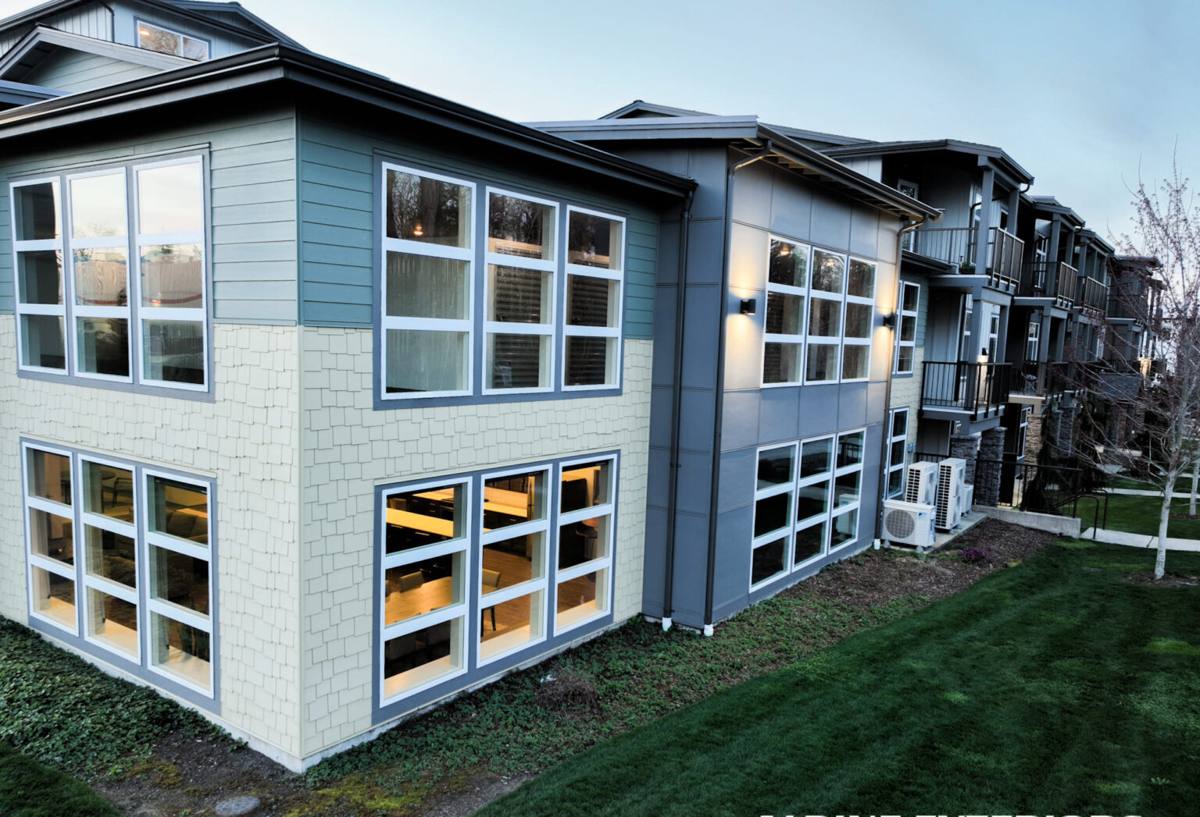
Barkley is one of Bellingham's newer, still-growing neighborhoods, which means a steady stream of new-construction and near-new homes going up alongside established streets. New construction gives you one real advantage over a remodel: you get to do the window install right the first time, before drywall, siding, and paint cover up the parts that actually keep water out. Get the rough opening, flashing, and window selection right during the build, and you won't touch those windows again for decades. Get it wrong, and the first sign of trouble is usually a stain on drywall two or three winters later — by then the fix means opening up finished wall, not just re-caulking a trim board.
We work new-construction window installs across Bellingham and Whatcom County, and Barkley's mix of infill lots and larger builds gives us a good cross-section of what local framing crews, builders, and homeowners are dealing with right now. This page is about doing the window opening correctly on a new build in this specific area — not a general "why replace your windows" pitch.
What Bellingham's Climate Actually Demands From a New-Construction Window Install
Whatcom County sits right on Bellingham Bay, and that location shapes three things every new-construction window has to handle from day one.
Wind-Driven Rain
Our rain rarely just falls straight down — storms off the Sound push it sideways into wall assemblies, especially on west- and southwest-facing elevations. A window that's watertight in a light drizzle can still leak under wind pressure if the flashing sequence around it wasn't layered correctly. This matters more at the construction stage than any other time, because the flashing details are only accessible before the siding goes on.
Salt Air
Being close to the bay means a low but constant level of salt in the air, which accelerates corrosion on unprotected fasteners, low-grade hardware, and some metal window components over time. It's not dramatic, but it's cumulative — a window with weak hardware or fasteners that aren't rated for coastal exposure will show it years before an equivalent window a few miles inland would.
Moss and Sustained Moisture
Bellingham's long wet season and mature tree cover mean moss and algae growth on north-facing and shaded surfaces for much of the year. On windows, that shows up as sustained moisture sitting against sills, trim, and sealant joints for days at a time instead of drying quickly. Materials and details that can't tolerate that kind of prolonged dampness fail faster here than they would in a drier climate.
None of this means Barkley needs exotic products. It means the standard details — sill pans, flashing laps, sealant selection, hardware grade — have to actually be followed, not shortcut, because this climate finds every shortcut eventually.
New-Construction vs. Retrofit Installation: Why the Method Matters
"New-construction window" refers to a specific install method, not just a window installed in a new house. These windows have a nailing fin around the perimeter that gets integrated directly into the wall's water-resistive barrier (WRB) before siding goes on. That's different from a retrofit or insert window, which gets installed into an existing finished opening without disturbing the exterior wall.
| Factor | New-Construction (Nail-Fin) | Retrofit / Insert |
|---|---|---|
| When it's used | New builds, additions, full wall openings | Existing homes keeping the current opening size |
| Weatherproofing control | Full access to flash the opening and WRB from scratch | Limited to what's reachable without removing siding |
| Best long-term seal | Highest, when flashing sequence is followed correctly | Good, but relies on the condition of the existing frame |
| Sizing flexibility | Opening is built to the window, not the reverse | Window is sized to fit inside the existing opening |
| Typical use in Barkley | New builds, second stories, additions | Existing Barkley-area homes not under construction |
On a new build, there's no excuse for cutting corners on this — the wall is open, and doing it right costs the same in labor whether the crew is careful or not. The difference is entirely in whether the details are followed.
What a Correct New-Construction Window Install Actually Involves
Rough Opening Preparation
Before any window arrives on site, the rough opening needs to be square, level, and sized correctly with the manufacturer's tolerances in mind — typically a small, consistent gap around the window unit for shimming and expansion. Openings that are out of square by even a small margin cause windows to bind, operate poorly, or compress unevenly against the frame, which shows up later as air leaks or difficulty opening and closing.
The Flashing Sequence
This is the part that actually keeps water out, and it has to happen in the right order:
- Sill pan flashing installed first, sloped to drain any water that gets past the window back to the exterior
- Window set into the opening, plumb and level, fastened per manufacturer spec
- Side flashing tape applied over the nailing fin, lapped correctly with the WRB below it
- Head flashing installed last, lapped over the WRB above so water sheds down and over every layer beneath it — never the reverse
- All flashing tape pressed and rolled for full adhesion, especially in cooler or damp conditions common on Bellingham job sites much of the year
Every layer has to shed water onto the layer below it, like shingles on a roof. A single layer installed backward — head flashing tucked under the WRB instead of over it, for example — can undo the whole system, and it's invisible once the siding goes on.
Air Sealing and Insulation
The gap between the window frame and rough opening needs to be sealed for air and insulated, but not overfilled with expanding foam, which can bow the frame and cause operational problems. A low-expansion foam or backer rod and sealant approach, used correctly, keeps the assembly both airtight and functioning properly for the life of the window.
Choosing the Right Window for a Barkley New Build
Frame Material
Vinyl, fiberglass, and wood-clad frames all show up in new construction, and each has real trade-offs rather than a single "best" answer. Vinyl is cost-effective and low-maintenance, which suits our damp climate well. Fiberglass holds up to temperature swings with less expansion and contraction and takes paint if a builder wants a specific color. Wood-clad offers a traditional interior look but carries more maintenance responsibility on the exterior cladding over time — something to weigh honestly against Bellingham's wet season rather than just its appearance.
Glass Package
Double-pane, low-E glass with argon gas fill is a sensible baseline for this climate — it manages heat loss through our long heating season without adding unnecessary cost. Triple-pane glass adds performance and can help with noise on busier Barkley streets, but it's a genuine upgrade in cost and weight, not something to default to without reason.
Hardware and Fasteners
Given the salt air off the bay, we favor corrosion-resistant hardware and fasteners rated for coastal or near-coastal exposure rather than standard-grade components. It's a small cost difference at install time and a real difference in how the window operates ten or fifteen years out.
How We Work Barkley New-Construction Projects
Whether we're working directly for a homeowner building in Barkley or coordinating with a general contractor or framing crew, the sequence is the same: we confirm rough opening sizes against the ordered window schedule before the windows arrive, so there are no surprises on install day. We install using the full flashing sequence described above, document it as we go, and coordinate timing with the siding or exterior finish trade so the WRB and flashing layers are protected and properly lapped before anything gets covered up.
We also walk the openings with the builder or homeowner before cladding goes on, while the flashing is still visible and any issue is still a five-minute fix instead of a wall-opening repair. That step gets skipped more often than it should on tight construction schedules, and it's the single easiest way to avoid problems later.
Common Mistakes We Catch on New-Construction Sites
These are the issues we see most often when we're brought in partway through a build, or asked to inspect another crew's work before siding goes on:
- Head flashing installed under the WRB instead of over it, reversing the drainage plane
- Sill pans missing or not sloped to drain outward
- Flashing tape not pressed firmly, especially in cold or damp conditions, leaving it prone to lifting
- Rough openings out of square, causing the window to bind or seal unevenly
- Expanding foam overfilled around the frame, bowing it and affecting operation
- Standard-grade fasteners used where coastal-rated hardware should have been specified
Every one of these is invisible once the exterior finish is on — which is exactly why catching them during construction matters so much more than catching them later.
Why a Crew That Already Works Barkley Matters
A crew that installs windows regularly in this specific area already knows how Bellingham's wind-driven rain behaves against different elevations, what Whatcom County's building department expects to see at a window inspection, and how the salt air off the bay affects material choices differently than it would on a job 20 miles inland. That's the difference between a generic install and one that's actually built for where it's going. We're not learning the local climate on your project — we've already seen how it treats new construction across Bellingham, Barkley included.
If you're building or planning a new build in Barkley and want the window install done right from the rough opening forward, we're happy to walk the plans or the site and give you a straightforward, no-pressure estimate — just fill out the form below.