 Bellingham Exterior
 Roof Repair for Birchwood Homes
Birchwood sits close enough to the water and the tree line that its roofs work harder than roofs in drier parts of the country. If you own a home in this part of Bellingham, you already know the pattern: a wet fall and winter, a mossy spring, and by summer you're noticing a stain on a ceiling or a shingle that's gone missing after the last windstorm. Roof repair here isn't a one-size-fits-all job. It's about understanding what Whatcom County weather does to a roof over time and fixing the actual cause, not just the visible symptom.
This page covers what roof repair looks like specifically for Birchwood properties — the conditions driving the damage, what a correct repair involves, and how we approach the work when we come out to your home.
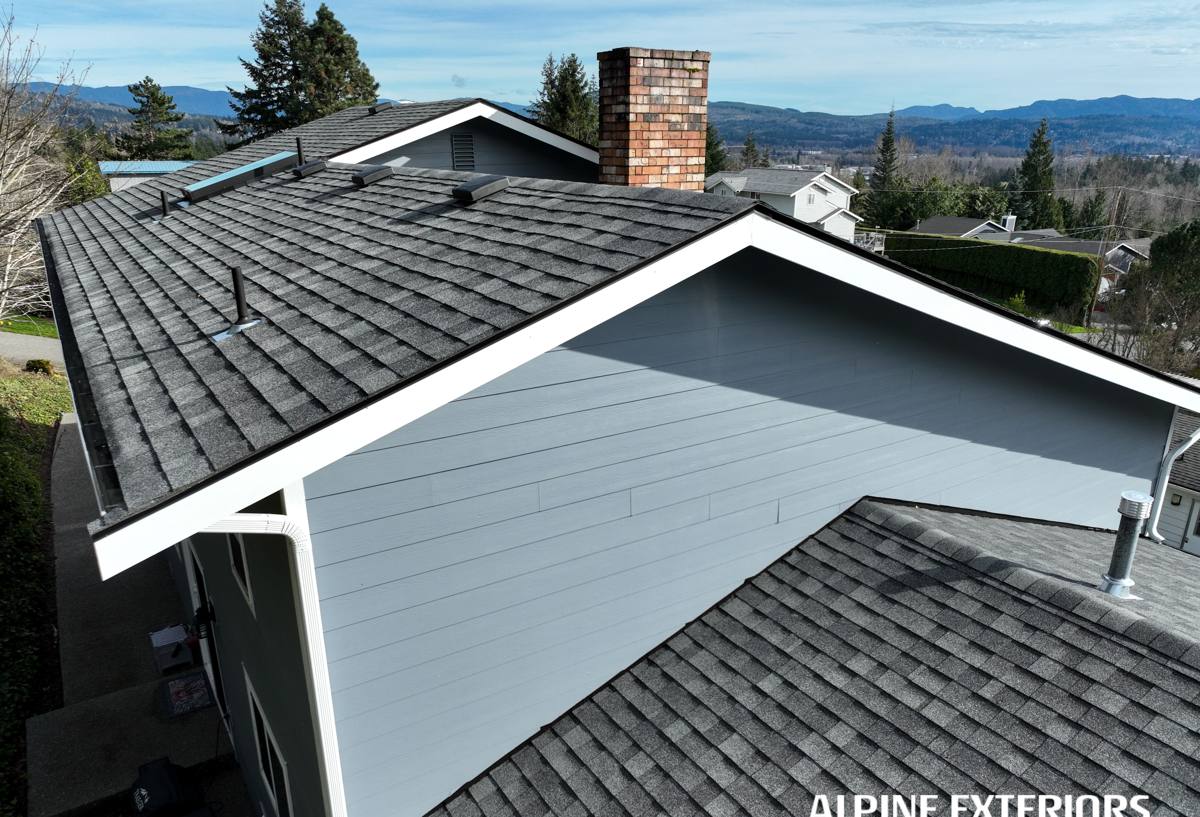
Why Local Climate Is the Real Driver of Roof Damage
Bellingham's roofs don't fail because the materials are bad. They fail because of what sits on top of and inside those materials year after year. Three things matter most for a neighborhood like Birchwood:
Salt Air and Coastal Moisture
Being near Bellingham Bay means homes here get a steady dose of salt-laden air, especially during storms blowing in off the water. That moisture works its way into fasteners, flashing, and any exposed metal on the roof. Over years, it accelerates corrosion on nails, vents, and valley flashing faster than you'd see in an inland town, even one just a few miles away.
Driving Rain
Whatcom County doesn't just get a lot of rain — it gets wind-driven rain that comes in at an angle instead of falling straight down. That matters because a roof can shed vertical rain just fine and still leak under driving rain, since water gets pushed up under shingle edges, into gaps around penetrations, and behind poorly lapped flashing. Repairs that only address "the spot where it drips inside" without checking how wind-driven water reaches that spot tend to fail again within a season or two.
A Long Moss Season
Between the shade from mature trees common in older Bellingham neighborhoods and the region's mild, damp climate, moss has months to establish itself on north-facing and shaded roof slopes. Moss isn't just cosmetic — it holds moisture against the roofing material, lifts shingle edges as it grows, and works its way under laps and around fasteners. Left alone, a moss mat can shorten the useful life of an asphalt roof significantly.
Common Repair Issues We See on Birchwood Roofs
Most repair calls in this area fall into a handful of categories. Recognizing which one you're dealing with helps set expectations for the scope of work.
- Moss-related shingle lift — shingles curling or separating along shaded slopes where moss has been established for more than a season
- Flashing failures — leaks around chimneys, skylights, vent pipes, and roof-to-wall transitions where the flashing metal has corroded or was never lapped correctly
- Wind and storm damage — missing, cracked, or lifted shingles after a windstorm, often on the west- or southwest-facing slope that takes the brunt of incoming weather
- Clogged or damaged gutters and valleys — debris buildup that backs water up under the roofing material instead of letting it drain
- Nail and fastener corrosion — a slower, less visible issue tied to salt air exposure that shows up as loose shingles even without storm damage
- Underlayment failure — on older roofs, the felt or synthetic underlayment beneath the shingles has broken down, letting water reach the roof deck even when the shingles above look mostly intact
What a Correct Roof Repair Actually Involves
A repair that lasts starts before anyone touches a shingle. Here's what we consider a complete job, as opposed to a quick patch.
Finding the Real Source
Water almost never shows up inside the house directly below where it entered the roof — it travels along rafters, sheathing, and insulation before it becomes a visible stain. A correct repair traces the path backward from the interior evidence to the actual entry point, which is often several feet away and sometimes on a different roof plane entirely.
Matching Materials, Not Just Covering the Gap
Patching a repair with mismatched shingle profiles, the wrong flashing metal, or incompatible sealants creates a weak point that fails faster than the surrounding roof. We match shingle type, exposure, and color as closely as possible, and we use flashing metal and fasteners rated for coastal exposure so the repair doesn't become the next corrosion point.
Checking What's Underneath
If underlayment or decking is compromised, replacing shingles on top of it is a temporary fix at best. Any repair involving a suspected leak includes a check of the deck and underlayment in that area, not just a shingle swap.
Addressing the Cause, Not Just the Symptom
If moss caused the lift, the repair includes moss and debris removal from the affected area — not just replacing the damaged shingles and leaving the conditions that caused the problem in place.
Our Repair Process
- Inspection and diagnosis. We walk the roof (weather permitting) and check the attic or interior access points where visible, tracing suspected leaks to their actual source rather than assuming based on where the stain appears.
- Written scope and honest options. You get a clear explanation of what's actually wrong, what a repair will and won't solve, and — if the roof is old enough or damaged enough that repair isn't the better value — an honest recommendation to that effect.
- The repair itself. Matched materials, proper flashing technique, and fasteners suited to coastal exposure. We clean up moss and debris in the repair area as part of the job, not as an upsell.
- Final check. We confirm the repair area sheds water correctly and walk you through what we found and fixed before we leave.
Repair vs. Replacement: How to Think About It
Not every roof problem in Birchwood needs a full replacement, and not every leak is fixable with a patch. Here's a general framework — your specific roof's age, material, and condition still matter more than any rule of thumb.
| Factor | Favors Repair | Favors Replacement |
|---|---|---|
| Age of roof | Under 15 years | Approaching or past manufacturer's expected lifespan |
| Extent of damage | Localized to one area or slope | Multiple areas, or damage spread across several slopes |
| Underlayment/decking condition | Sound, dry, no rot | Soft spots, rot, or widespread moisture damage |
| Moss history | Recently addressed, isolated growth | Long-term, untreated moss with shingle granule loss underneath |
| Prior repairs | First or second repair on this roof | Repeated repairs to the same area over recent years |
Materials That Hold Up in This Climate
When a repair calls for new material, or when a homeowner asks what we'd choose given the local conditions, we favor products with a track record in wet, coastal Pacific Northwest climates over anything that trades durability for a lower upfront cost. Heavier-weight architectural shingles resist wind uplift better than economy-grade shingles, and corrosion-resistant flashing and fasteners matter more here than they would inland. We're upfront that better materials cost more at the outset — the trade-off is fewer repeat repair calls over the life of the roof.
Moss and Debris: What Homeowners Can Do Between Visits
A lot of roof longevity in Birchwood comes down to what happens between professional visits. This is a practical maintenance checklist for homeowners who want to stretch the life of their roof and catch problems early:
- Keep gutters and valleys clear of leaves and needles, especially before the fall rains start
- Look at shaded, north-facing slopes each spring for early moss growth before it spreads
- Trim back branches that overhang the roof to reduce shade and debris buildup
- Check attic spaces occasionally for damp insulation, musty smell, or daylight coming through the decking
- Have flashing around chimneys and skylights looked at every few years, since these are the most common leak points
- Avoid pressure-washing moss off yourself — it can drive water and granules under the shingles and do more harm than the moss itself
Why a Crew That Already Works Birchwood Matters
Roofing crews who work regularly in this part of Bellingham build a working knowledge of how local homes are built, what materials were common when they were roofed, and which conditions — a shaded lot, a west-facing slope catching storm wind, an older flashing detail — tend to cause trouble. That local pattern recognition shortens diagnosis time and reduces the odds of a repair that misses the real cause. It also means we're not guessing at how Whatcom County's driving rain and salt air behave against a roof — we see it on a regular basis.
We also know that access, permitting, and scheduling around this area's weather windows are different from working a dry-climate market. Repairs get scheduled with an eye on the forecast, not just the calendar, because a roof repair started in the wrong weather window can do more harm than good.
Getting an Honest Assessment
If you're dealing with a leak, missing shingles after a storm, or a roof that's showing its age under a heavy moss mat, the first step is a straightforward inspection — not a sales pitch. We'll tell you plainly whether you're looking at a repair, and what that repair actually involves, or whether your money is better spent planning for replacement.
If you're in Birchwood or anywhere else in the greater Bellingham area, we're happy to come take a look. Use the form below to request a free, no-pressure estimate, and we'll get back to you to schedule a time to inspect your roof.