 Bellingham Exterior
 New-Construction Windows in Cordata: What the Job Actually Involves
New-construction window work is a different job than replacing windows in an existing wall. On a new build, the windows go in before the siding, before the interior finish, and often before the roof is fully dried in. That means the window installer isn't just setting a unit into a rough opening — they're building the first line of defense against water for a house that hasn't been tested by a single Pacific Northwest winter yet. In Cordata, where new residential construction has been steady as the neighborhood has filled in north of downtown Bellingham, we do a fair amount of this work directly with builders, general contractors, and owner-builders who want the window package done right the first time rather than chased with sealant later.
Done correctly, new-construction window installation sets the flashing, the water-resistive barrier laps, and the rough opening tolerances that the rest of the building envelope depends on for the next 30-plus years. Done poorly, it's the single most common source of framing rot and drywall staining we get called out to diagnose in homes that are barely a decade old.
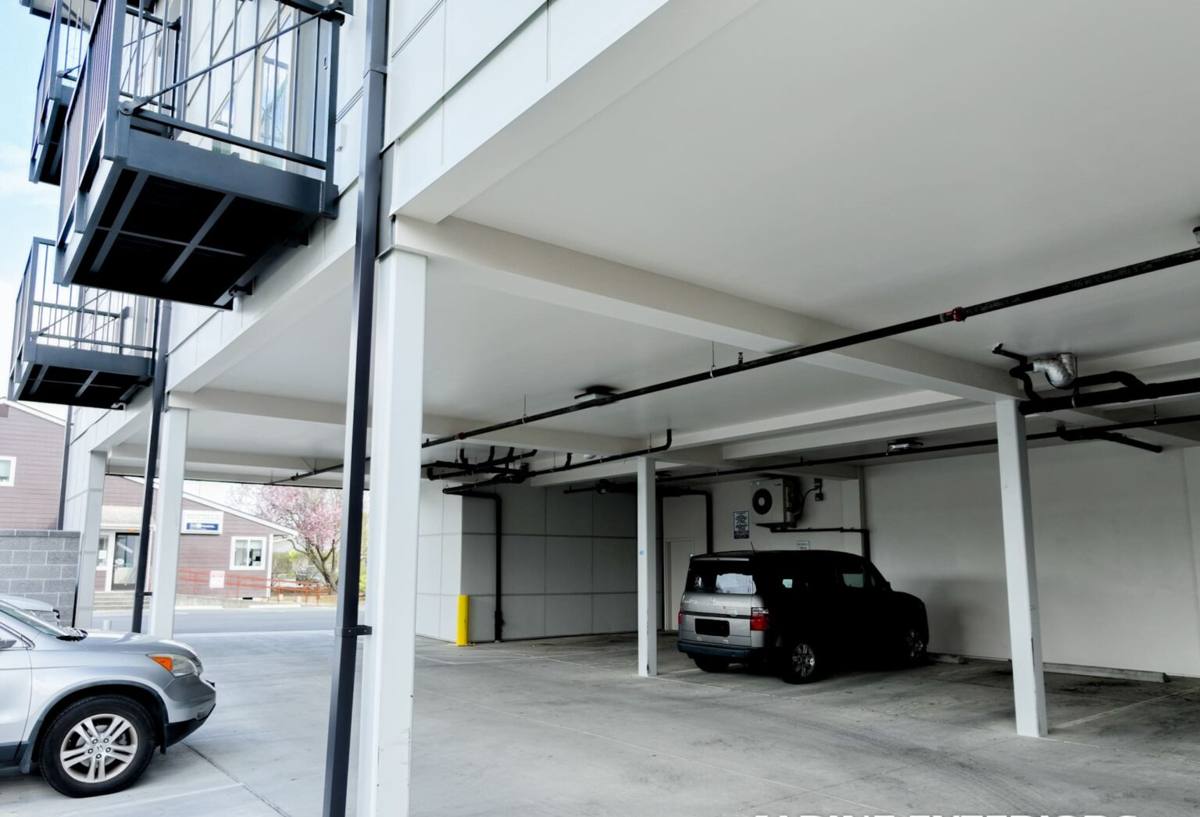
Why Cordata's Climate Shapes the Window Spec
Whatcom County sits in a wet marine climate, and Cordata gets the full package: long stretches of driving, wind-pushed rain in the fall and winter, humid air off Bellingham Bay and the Salish Sea that carries a mild salt content, and a moss and algae season that runs longer here than it does even a couple hours south. None of that is dramatic on its own, but stacked together over years it's hard on anything with a seam, a fastener, or an exposed sill.
- Driving rain means wind-driven water hits window assemblies at an angle, not just straight down — flashing details that only shed vertical water fail here.
- Salt-influenced air accelerates corrosion on lower-grade hardware, screws, and cladding fasteners over time.
- Extended moss and algae season keeps north-facing and shaded sills damp longer, which matters for sill pan drainage and finish durability.
This is why we don't spec or flash new-construction windows here the same way a crew in a dry climate would. The materials and the sequencing both need to account for water that's going to find every gap, eventually, if you let it.
Choosing the Right Window Type for New Construction
New construction gives you a real choice of frame material because you're not constrained by an existing opening or old cladding — the window can be specified to match the wall assembly from scratch. For Cordata's climate, the trade-offs usually come down to moisture behavior, long-term maintenance, and how the frame handles constant damp exposure.
| Frame Material | Moisture / Salt-Air Behavior | Maintenance | Typical Fit |
|---|---|---|---|
| Vinyl | Won't corrode or rot; performs well in wet, salt-influenced air | Low — occasional cleaning | Most cost-conscious new builds and spec homes |
| Fiberglass | Very stable in wet cycling, minimal expansion/contraction, resists corrosion | Low | Higher-performance builds, larger openings |
| Aluminum-clad wood | Good weather protection outside, but any breach at the cladding seam risks the wood core | Moderate — cladding seams need periodic inspection | Owners prioritizing interior wood aesthetics |
| Bare aluminum | Conducts cold and can promote condensation; older alloys are more vulnerable to salt-air corrosion over decades | Moderate to high | Rarely our first recommendation residentially in this climate |
We'll walk through this with you based on your budget, your builder's spec, and how exposed the elevation is — a window on a covered porch faces a different reality than one on an open, weather-facing wall.
Flashing, Weather Barriers, and Installation Sequencing
The window unit itself is only part of the story. What actually keeps water out of the wall is the sequence of flashing tape, sill pans, and weather-resistive barrier laps around the opening — and that sequence has to be right before the window ever gets set. This is the part of new-construction work that's invisible once the siding goes on, and it's also the part that determines whether you have a dry wall in year fifteen.
What a correct installation sequence looks like
- Rough opening is checked for square, level, and correct dimension before the window arrives on site.
- A sloped sill pan is installed so any water that gets past the window drains back out, not into the framing.
- Flashing tape is applied in the correct shingle-lap order — sill first, then jambs, then head — so water always sheds downward and outward.
- The window is set, shimmed, and fastened per the manufacturer's specification, not just "however it fits."
- The head flashing integrates with the weather-resistive barrier above it, with the barrier lapping over the flashing, not under it.
- Interior and exterior sealant joints are placed where the manufacturer specifies — sealing every possible gap can actually trap water instead of letting it drain.
Skipping or reordering any of these steps is the most common cause of hidden water intrusion we find in newer Whatcom County homes. It doesn't show up at final walkthrough. It shows up three to eight years later as a soft spot below a window or a stain that keeps coming back no matter how many times someone caulks it.
Working With Builders and GCs on New Construction Timelines
Most of our new-construction window work in Cordata comes through coordination with a builder or general contractor rather than directly from a homeowner picking materials off a showroom floor. That coordination matters because window installation sits on the critical path — framing has to be complete and squared, the weather-resistive barrier has to be on and lapped correctly before we start, and siding crews are usually waiting on us to finish before they can begin their own work.
We work from the plan set and window schedule the builder provides, confirm rough openings against actual unit sizes before ordering (a mismatch here is one of the most common causes of delay on a new build), and communicate directly with the GC on scheduling so the envelope stays dry between our work and the siding going on. If you're an owner-builder managing your own trades in Cordata, we're glad to work that relationship directly with you as well.
Energy Code and Performance Considerations
New construction in Washington has to meet the state energy code, which sets minimum performance requirements for window U-factor (how well the window resists heat loss) and, depending on the specific compliance path your builder is using, sometimes solar heat gain coefficient as well. For a house in Bellingham's climate zone, that generally pushes toward double- or triple-pane units with low-E coatings and insulated frames — not because it's a marketing feature, but because it's what keeps heating costs reasonable through a long, wet, overcast winter.
We coordinate window specs with your builder or designer to make sure what goes in the wall actually matches what's on the energy code compliance documents for the project — a mismatch there can hold up your final inspection.
Checklist: What to Confirm Before Windows Go In
- Rough openings measured and verified against actual window unit dimensions
- Sill pans specified for every opening, not just the most exposed ones
- Weather-resistive barrier installed and inspected before window delivery
- Window U-factor and performance ratings match the project's energy code compliance path
- Frame material selected with the elevation's sun, rain, and wind exposure in mind
- Flashing and sealant sequence confirmed against manufacturer instructions, not generic practice
- Schedule coordinated with siding and trim crews so the envelope isn't left exposed longer than necessary
Our Process for Cordata New-Construction Window Installs
We start with the plan set and window schedule, verify rough openings on site before ordering, and confirm frame material and glazing package against both the builder's spec and the realities of the specific lot — a shaded, north-facing wall in a wooded part of Cordata drains and dries differently than an open, sun-exposed elevation. From there we handle sill pan and flashing installation to a consistent, documented sequence, set and shim every unit to the manufacturer's tolerances, and coordinate our schedule with your GC or siding crew so the building stays weathertight at every stage. We stand behind the flashing and installation work we do, separate from the manufacturer's product warranty on the windows themselves.
Why Hiring a Crew That Already Works Cordata Matters
Window installation technique doesn't change much from one Whatcom County neighborhood to the next, but the judgment calls do — how much exposure a given elevation actually gets, how long moss and moisture sit on a shaded wall before it matters, how a builder's typical wall assembly in this area is put together. A crew that's done this work across Cordata and the rest of Bellingham has already seen how these houses perform a few winters in, which shapes how carefully we handle the details that don't show up on a plan set: pan slope, lap order, fastener spacing. That's the difference between a window package that just looks finished at closing and one that's still dry in year twenty.
If you're building, remodeling, or managing trades on a new-construction project in Cordata, we're happy to provide a free, no-pressure estimate on the window package — just fill out the form below and we'll take it from there.