 Bellingham Exterior
 Why Barkley Homes Wear Differently
Barkley sits close enough to Bellingham Bay that salt-laden air reaches its rooflines and siding on a regular basis, and it takes the same wind-driven rain and long, damp stretches that define exterior maintenance across Whatcom County. Add a moss season that can run from early fall through late spring, and you have a set of conditions that pushes ordinary siding materials toward the end of their useful life faster than homeowners expect. We've replaced siding on homes throughout this part of Bellingham, and the pattern is consistent: whatever went up during the original build eventually loses the fight with moisture, and the homeowner is left deciding whether to patch it again or replace it properly.
This page is about that second option, specifically for Barkley homes. We're not going to give you a generic siding pitch — we're going to walk through what replacement actually involves here, what's usually found once the old siding comes off, and why we only put James Hardie fiber cement back on.
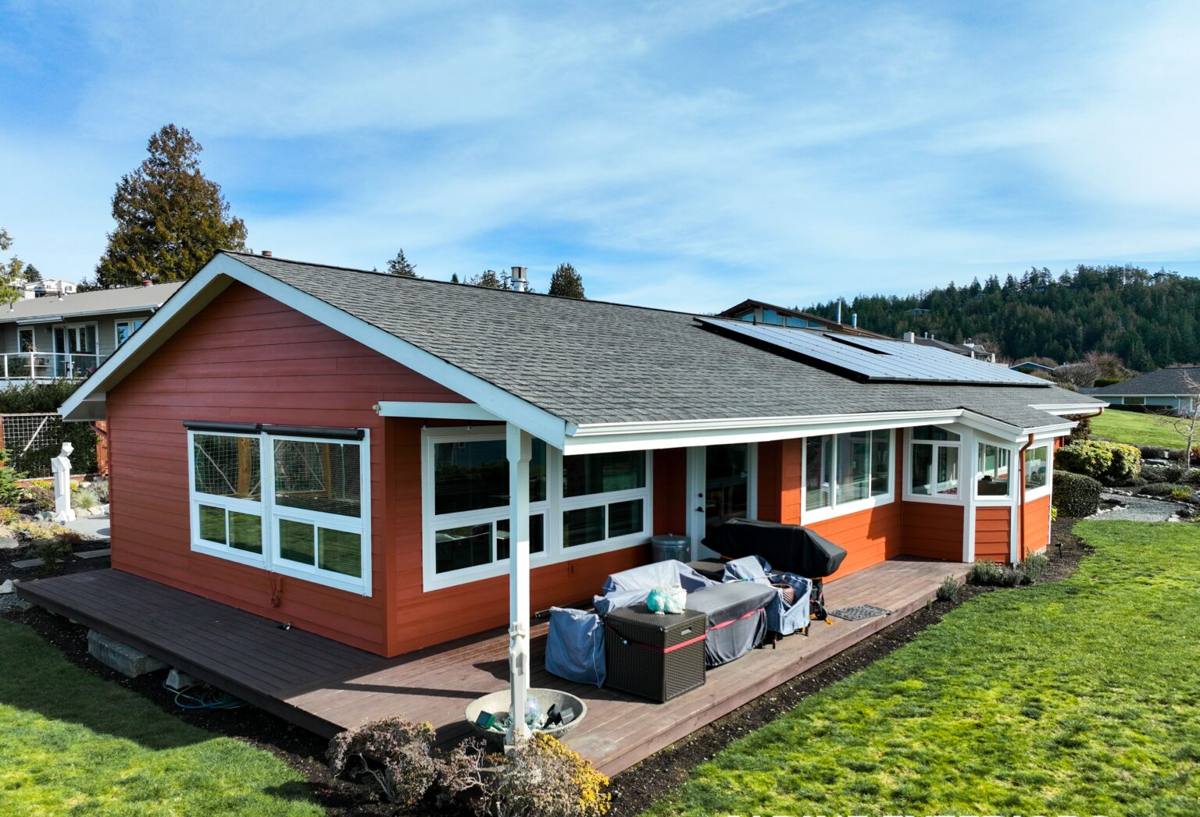
Signs Your Siding Needs Replacing, Not Just Repair
A lot of siding problems get patched for years before anyone calls a contractor for a real assessment. In Barkley, we typically see homeowners reach out once one or more of the following shows up:
- Soft or spongy spots when you press on the siding, especially near the bottom courses and around window trim
- Persistent moss or algae staining that comes back within weeks of being cleaned off
- Visible cupping, warping, or separation at panel seams
- Paint that won't hold — blistering, peeling, or needing a repaint every two to three years
- Cracks or chips that expose bare material underneath, especially after a hard freeze
- A musty smell near exterior walls, which often points to moisture that's already gotten past the siding
Any one of these can sometimes be repaired locally. But when several show up at once, or when the siding is original to a home built more than 15–20 years ago, patching usually just delays a bigger repair bill while moisture keeps working on the structure underneath.
Repair vs. Replace: A Practical Line
If damage is isolated to one wall or a small section — say, siding near a downspout that's been overflowing — targeted repair can make sense. If the damage is spread across multiple elevations, or if you find soft sheathing when you probe around it, replacement is almost always the more honest recommendation, because the underlying moisture problem isn't a siding problem anymore — it's a wall assembly problem.
What's Usually Hiding Behind Old Siding
When we tear off old siding on a Barkley home, we're not just looking at what's visible from the street. The tear-off is when the real condition of the wall gets revealed, and it's the most important part of the job. Depending on the age and original build quality of the home, we commonly find:
- Water-stained or delaminating sheathing, particularly around window and door openings
- A weather-resistive barrier (house wrap) that's torn, improperly lapped, or missing entirely in spots
- Flashing that was never properly integrated with the siding, letting water track behind it for years
- Insulation that's compressed, wet, or has lost R-value from long-term moisture exposure
- Evidence of past pest activity in softened wood, which often follows moisture intrusion
This is why we treat every replacement as a wall inspection, not just a siding swap. Installing new material over compromised sheathing or a failed water barrier just resets the clock on the same problem. Any damaged sheathing gets replaced, house wrap gets corrected or replaced, and flashing details get rebuilt properly before a single piece of new siding goes up.
Why We Replace With James Hardie Fiber Cement — Only
We install James Hardie fiber cement siding exclusively. We don't offer vinyl, LP SmartSide, Cemplank, Allura, primed spruce, or cedar as alternatives, and that's a deliberate standard, not a lack of options.
Vinyl is inexpensive and low-maintenance in mild climates, but it's a petroleum-based product that can warp in temperature swings and doesn't hold paint if you ever want to change the color — and it offers no real fire resistance. Engineered wood products like LP SmartSide perform well when installation and maintenance are followed to the letter, but they're wood-based, meaning any gap in caulking or flashing gives moisture a path into a material that can swell and deteriorate. Primed spruce and cedar are attractive, traditional choices, but raw and lightly primed wood siding demands aggressive, ongoing maintenance to survive a climate like Whatcom County's — repainting cycles, caulk checks, and moss treatment become a permanent part of homeownership.
James Hardie fiber cement is cement, sand, and cellulose fibers — it doesn't absorb water the way wood-based products do, it won't warp like vinyl, and it's non-combustible. Hardie's ColorPlus factory finish is baked on under controlled conditions, which holds up better against UV and moisture than field-applied paint, and it comes with a real transferable warranty. In a location dealing with salt air and near-constant moisture exposure, that combination is why it's the only product we put our name behind.
Choosing the Right Hardie Product Line for a Barkley Home
Barkley includes a mix of newer construction and established homes, and the right Hardie profile depends on the home's style as much as its exposure. HardiePlank lap siding is the most common choice and comes in several textures, including smooth and cedar-look woodgrain, so it can match a traditional look or a more contemporary one. HardiePanel works well for homes with vertical siding sections or board-and-batten accents, which show up on some of the newer builds in the area. HardieTrim finishes out corners, window and door surrounds, and fascia so the whole exterior reads as one coherent system rather than mismatched materials.
For homes on more exposed lots — higher wind exposure or more direct rain — we also look at Hardie's HZ5 product line, engineered specifically for wetter, harsher climate zones, which the Pacific Northwest generally falls into.
The Replacement Process, Start to Finish
A siding replacement isn't a single task, it's a sequence, and skipping steps is where most failures down the road actually start:
- Assessment and walk-through — we look at every elevation, check for soft spots, and give you an honest read on what we expect to find once tear-off starts.
- Tear-off — old siding comes off in full, and we inspect sheathing, framing, and the water barrier as we go.
- Repair — any damaged sheathing or framing gets addressed before anything new goes up. This step isn't optional, even if it adds time or cost.
- Water management rebuild — house wrap, flashing at windows, doors, and penetrations, and proper drainage planes get installed or corrected.
- Hardie installation — siding, trim, and accessories go up to manufacturer specification, including correct fastening, clearances, and caulking at joints.
- Finish and walkthrough — final trim, paint touch-up where needed, cleanup, and a walk-through so you know exactly what was done and why.
Cost Factors for Barkley Siding Replacement
Every home is different, but the variables that move the price on a Barkley replacement job tend to be the same ones every time:
| Factor | Why It Matters |
|---|---|
| Home size and number of stories | More surface area and more difficult access (scaffolding, lifts) increase labor time |
| Condition of sheathing underneath | Hidden water damage found during tear-off adds repair scope that can't be priced sight-unseen |
| Siding profile and trim complexity | Board-and-batten, extensive trim work, or multiple accent materials take more time than simple lap siding |
| Window and door count | Each opening needs its own flashing and trim detail, which adds labor |
| Existing material being removed | Some materials (like old stucco or certain wood products) are more labor-intensive to strip than others |
We give firm, written estimates after an in-person assessment — not a phone quote — because the only honest way to price this work is to actually see the home and, where possible, the condition of the wall underneath.
What Correct Installation Looks Like
James Hardie siding performs the way it's rated to perform only when it's installed to spec. A poor installation of a good product can fail just as fast as a good installation of a poor product. On every Barkley job, our crew follows the same non-negotiables:
- Proper clearance between siding and grade, decks, patios, and roof lines to avoid wicking moisture
- Correct nail placement and fastening pattern — not just "close enough"
- Factory-cut edges sealed and field cuts primed before installation
- Weather-resistive barrier lapped correctly, shingle-style, so water sheds outward at every seam
- Flashing integrated at every window, door, and penetration — not just caulked over
- Butt joints and trim gaps caulked with a product rated for the application, not general-purpose sealant
Why a Crew That Already Works Barkley Matters
Every neighborhood in Bellingham has its own quirks — prevailing wind direction, typical lot drainage, how much shade a street gets and how long moss has a chance to establish. A crew that's already replaced siding on homes near yours has a working sense of what tends to be found once old siding comes off in this specific area, and that translates into fewer surprises and a more accurate estimate up front. It also means we're not learning Whatcom County's climate on your project — we're applying what we've already confirmed works here.
If your Barkley home's siding is showing its age — or you just want an honest opinion on repair versus replacement — we're happy to take a look. Reach out for a free, no-pressure estimate, and we'll give you a straight answer about what your home actually needs.