 Bellingham Exterior
 Roof Repair Built for Birch Bay's Conditions
Birch Bay sits right where Whatcom County meets Puget Sound, and that location shapes everything about how a roof ages here. Homes along the waterfront and back into the surrounding neighborhoods deal with a combination most inland Washington roofs never see: salt-laden air off the bay, wind-driven rain that finds its way under loose or lifted materials, and a wet season that stretches long enough to let moss and moisture take hold before summer ever dries things out. A roof repair here isn't just patching a leak — it's addressing why that leak started in the first place, and making sure the fix holds up against the same conditions that caused the problem.
We're a Bellingham-based exterior crew that works Birch Bay regularly, not a company that shows up once and disappears. That matters more than most homeowners realize until they've dealt with a repair that failed within a year because it wasn't matched to the local climate.
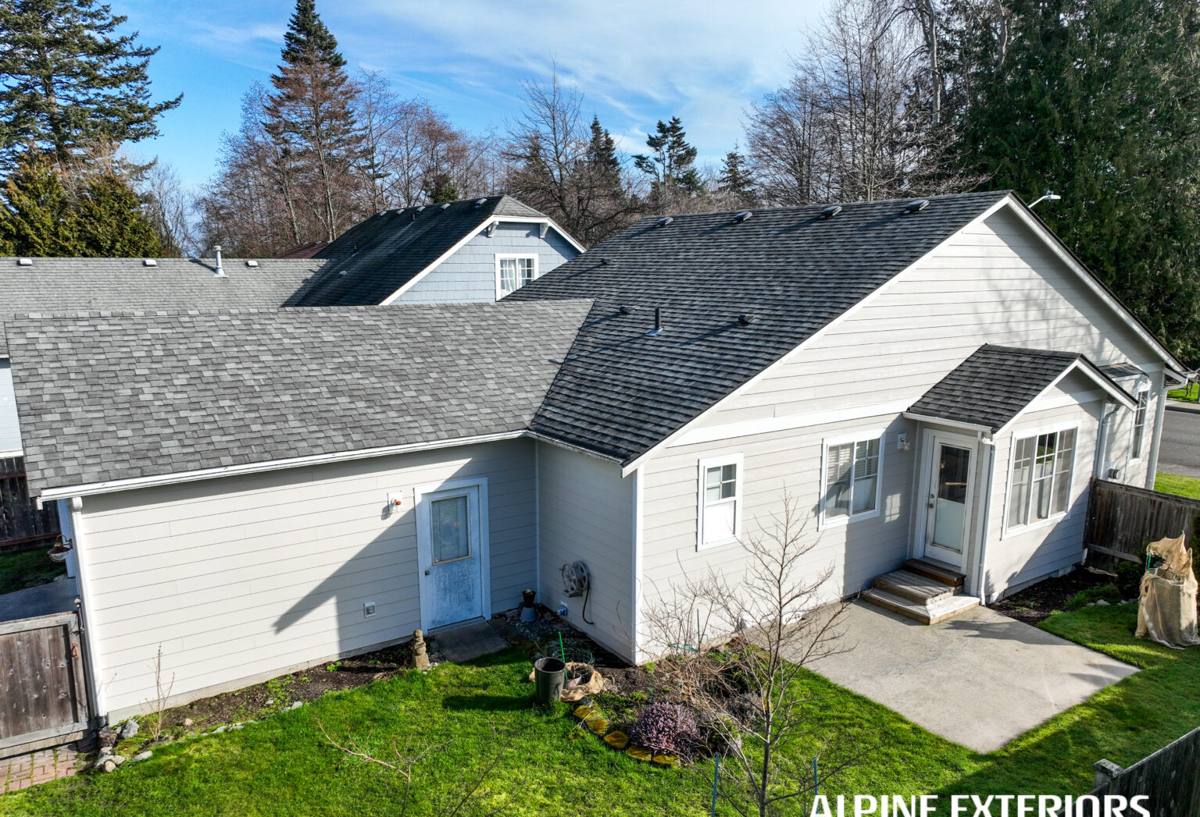
What Makes Birch Bay Roofs Different
Salt Air and Metal Fasteners
Proximity to the water means airborne salt settles on roofing surfaces and, more importantly, on exposed metal — flashing, fasteners, vent caps, and gutter hardware. Salt exposure accelerates corrosion on lower-grade or improperly coated metal components. A repair that reuses corroded fasteners or unprotected flashing is a repair that's already on a shorter clock than it should be.
Driving Rain and Wind Exposure
Birch Bay's open exposure to wind off the water means rain doesn't just fall straight down — it drives sideways under ridge caps, around chimney flashing, and into any gap where a shingle has lifted even slightly. This is why leaks here often show up in places a homeowner wouldn't expect, like interior walls near roof valleys rather than directly under an obvious hole.
A Long Moss Season
Cool, damp conditions for much of the year give moss and algae plenty of time to establish themselves on north-facing slopes and shaded sections of roof. Moss isn't just cosmetic — its root structure lifts shingle edges and holds moisture against the roof deck, which is one of the most common hidden causes of rot and leaks we find when we pull back an aging roof section in this area.
Signs Your Birch Bay Roof Needs Repair
- Water stains on interior ceilings or upper walls, especially after a windy rainstorm
- Visible moss buildup, particularly on shaded or north-facing slopes
- Shingles that are curling, cracking, or missing granules in patches
- Flashing around chimneys, skylights, or roof valleys that looks lifted, rusted, or gapped
- Sagging sections of roofline or soft spots you can feel when walking a flat or low-slope area
- Granules collecting in gutters or at downspout outlets
- Daylight visible through the attic roof deck
- Higher heating bills that suggest air and moisture are getting in where they shouldn't
Not every one of these means a full replacement. Most of them, caught early, are exactly what a targeted repair is meant to fix.
What a Correct Repair Actually Involves
A roof repair done right isn't just sealing the spot where water is showing up inside the house. Water often travels along the roof deck or down a rafter before it appears on a ceiling, so the visible stain and the actual entry point can be several feet apart. Our approach starts with tracing the problem back to its source, not just treating the symptom.
Diagnosis Before Repair
We inspect the full roof surface, not just the area where the leak is showing. That includes checking flashing at every penetration — chimneys, vents, skylights — along with valleys, ridge lines, and the condition of the underlayment where it's accessible. In a lot of Birch Bay homes, the real culprit is aging or improperly installed flashing rather than the shingles themselves.
Matching Materials and Fasteners to the Climate
Given the salt air exposure, we use corrosion-resistant fasteners and flashing rather than standard-grade hardware. It costs a little more up front and saves a callback down the road. We also match shingle or roofing material as closely as possible to what's already on the roof, both for appearance and so the repaired section weathers at a similar rate to the rest of the roof.
Addressing Moss and Underlying Moisture
If moss or algae contributed to the damage, removal and treatment are part of the repair, not an afterthought. We also check the roof deck underneath affected shingles for soft spots or rot — patching over a compromised deck is a repair that won't last, regardless of how good the shingle work looks on top.
Proper Sealing and Flashing Detail
Wind-driven rain punishes sloppy flashing work more than it punishes a slightly worn shingle. We pay particular attention to step flashing at walls and chimneys, valley flashing, and ridge caps — these are the details that determine whether a repair holds through a real Whatcom County windstorm or fails at the first one.
Our Process, Start to Finish
- Inspection and diagnosis — We walk the roof (or use appropriate access for steep or fragile roofs) and identify the actual source of the problem, not just where it's showing up inside.
- Honest assessment — We tell you plainly whether this is a repair or whether the roof's overall condition means a repair would just be a short-term patch. We'd rather lose a small job than sell you a repair that won't hold.
- Written scope and estimate — You know what's being done and roughly what it will cost before any work starts.
- Repair work — Removal of damaged material, deck inspection and repair if needed, moss/debris removal, new flashing and fasteners where appropriate, and matched roofing material installed to manufacturer specs.
- Cleanup and walk-through — Job site cleared of debris and old material, and we walk you through what was done and what to watch for going forward.
Repair Costs: What Actually Drives the Price
Every roof repair is different, but the factors that move the price up or down are consistent. Rather than quote a number that won't apply to your specific situation, here's what actually determines cost:
| Factor | Why It Matters |
|---|---|
| Size of damaged area | A single lifted shingle costs far less to fix than a section with deck damage |
| Roof deck condition | Rotted decking under the shingles adds material and labor beyond surface repair |
| Flashing complexity | Chimneys, valleys, and multiple penetrations take more time to flash correctly than open field shingle work |
| Roof pitch and access | Steep or high roofs require more safety setup and time |
| Material match | Older or discontinued shingle profiles can be harder to match, sometimes requiring a wider repair area |
| Moss or algae removal | Heavier buildup adds cleaning and treatment time before repair work can begin |
Broadly, small, contained repairs are a modest expense measured in a few hundred dollars, while repairs involving deck replacement, extensive flashing work, or larger damaged sections climb from there. We'll always give you the real number for your roof after inspection — not a phone estimate.
Repair or Replace? How We Help You Decide
Not every damaged roof needs a repair, and not every aging roof needs full replacement. The decision usually comes down to a few honest questions:
- Is the damage isolated to one area, or scattered across the whole roof surface?
- How much life is left in the rest of the roofing material based on its age and general condition?
- Is the roof deck sound underneath, or is rot spreading beyond the visible problem area?
- Has moss or moisture damage been ongoing long enough to affect multiple sections?
- Would a repair leave a visibly mismatched patch on a highly visible roof plane?
If a roof is otherwise in good shape and the damage is contained, repair is almost always the right call — it's less disruptive and less expensive. If we find widespread deck rot, repeated past patch jobs, or a roof nearing the end of its expected service life, we'll tell you that directly and explain why a repair would likely be a short-term fix rather than a real solution.
Why Hiring a Crew That Already Works Birch Bay Matters
Roofing crews that don't regularly work coastal Whatcom County can miss things that are obvious to someone who does. Corrosion patterns on fasteners, the way moss establishes on shaded slopes in this specific climate, and how wind off the bay drives rain into flashing details are all things you learn from repeated exposure to the same conditions — not from a general roofing background alone.
Working locally also means we're not far away if a repair needs a follow-up check after a bad storm, and we're familiar with the general building patterns and roofing materials common to Birch Bay and the surrounding Bellingham area. That local familiarity shortens the diagnosis process and helps us avoid guessing.
Maintenance That Extends the Life of a Repair
A good repair lasts longer with a small amount of ongoing attention, especially in this climate:
- Keep gutters and downspouts clear so water isn't backing up under roof edges
- Have moss treated or removed before it spreads across a full slope, not after
- Trim back overhanging branches that keep shaded roof areas damp longer than necessary
- Schedule a roof check after major windstorms, particularly if you've had prior repairs
- Address small issues — a lifted shingle, a minor flashing gap — before the next wet season, not during it
None of this requires a major investment of time, but it makes a real difference in how long a repair, or the roof as a whole, holds up against Birch Bay's weather.
Get a Free, No-Pressure Estimate
If you're dealing with a leak, visible moss, damaged flashing, or you just want an honest opinion on your roof's condition, we're happy to come take a look. There's no obligation and no pressure — just a straight assessment of what your roof actually needs, backed by the fact that we know what Birch Bay roofs go through year to year. Fill out the form below to request your free estimate.