 Bellingham Exterior
 Roofing in Birchwood: A Different Set of Demands
Birchwood sits close enough to the water and the tree canopy that its homes take a specific kind of beating. It's not one dramatic storm that wears out a roof here — it's the steady combination of salt-laden air off Bellingham Bay, long stretches of driving rain from fall through spring, and shade from mature trees that keeps roof surfaces damp long after the rain stops. That last part matters more than most homeowners realize, because damp, shaded roof decking is exactly what moss and moisture need to start doing real damage.
A new roof installation in this neighborhood isn't just about swapping old material for new. It's about building a roof system that's matched to Whatcom County's climate from the deck up — not just the shingles or panels you see from the street, but the underlayment, ventilation, flashing, and edge details that determine whether that roof is still performing well in fifteen or twenty years.
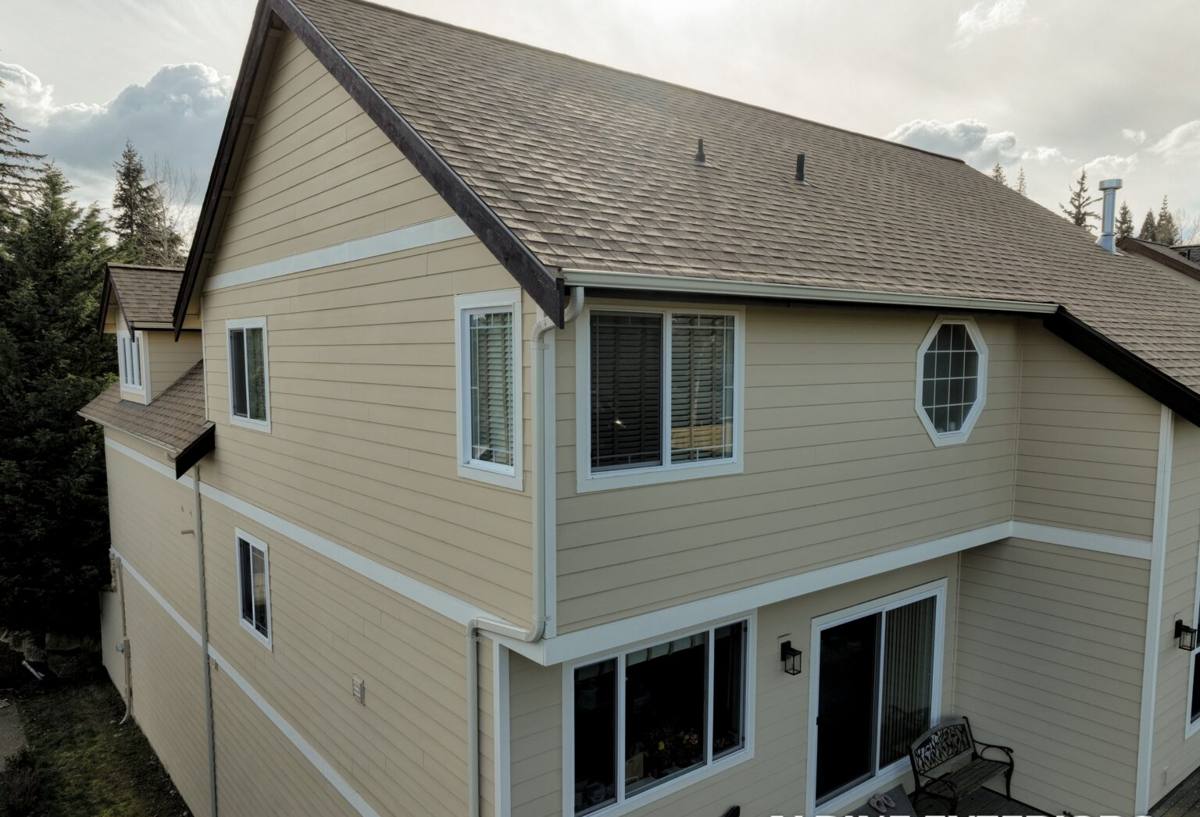
What Local Conditions Do to an Underbuilt Roof
Salt Air and Metal Fatigue
Homes closer to the water deal with airborne salt that accelerates corrosion on any exposed metal — nails, flashing, vent stacks, gutter hardware. A roof built with standard-grade fasteners and flashing in a coastal-influenced area will show rust and wear years before the same roof would inland. This is one of the first things we check and correct on any Birchwood installation.
Driving Rain and Wind-Driven Water
Bellingham doesn't usually get the kind of rainfall totals that make headlines, but it gets a lot of sideways rain — wind-driven moisture that gets pushed up under shingle edges, around chimneys, and into valleys instead of just running downhill. A roof that's only detailed for straight-down rain will eventually leak at these pressure points, even if every shingle is nailed correctly.
Moss and the Shade Problem
Trees are part of what makes Birchwood a nice place to live, but shade means roof surfaces stay damp longer, and damp surfaces grow moss. Moss holds moisture against the roofing material, works its way under shingle tabs, and lifts edges — which is how a moss problem quietly turns into a leak problem. New installation is the best time to build in moss resistance, because retrofitting it later is far more limited.
What a Correctly Installed New Roof Includes
"New roof" can mean very different things depending on who's doing the work. A correct installation in this climate is a full system, not a single layer of material. At minimum, that means:
- Tear-off to the deck (not a layover) so we can inspect and repair the sheathing underneath
- Deck repair or replacement anywhere wood has softened from long-term moisture exposure
- A water-resistant underlayment rated for our rainfall patterns, not just the manufacturer's minimum
- Ice-and-water shield at eaves, valleys, and any low-slope transitions, even though we don't get heavy ice — it's just as effective against wind-driven rain
- New flashing at every penetration: chimneys, skylights, plumbing vents, and wall-to-roof transitions
- Balanced intake and exhaust ventilation so the attic can actually dry out between wet spells
- Corrosion-resistant fasteners and flashing appropriate for a coastal-influenced climate
- Moss-resistant granules or strategically placed zinc/copper strips on shaded slopes, where appropriate
Skip any one of these and you haven't built a lesser roof — you've built a roof with a known weak point that will show up on a specific timeline, usually within five to ten years.
Choosing Materials for Birchwood's Climate
There's no single "best" roofing material for every home — slope, tree cover, sun exposure, and budget all factor in. What matters is understanding the honest trade-offs for our conditions.
| Material | How It Handles Our Climate | Maintenance Reality |
|---|---|---|
| Architectural asphalt shingle | Good performance and value; algae-resistant granules help on shaded slopes | Periodic moss and gutter maintenance; typical service life 20-30 years |
| Standing-seam metal | Sheds rain and moss growth very well on steeper slopes; handles wind-driven rain cleanly at seams | Low maintenance, but fasteners and flashing must be corrosion-rated near the water |
| Synthetic/composite shingle | Resists moisture absorption better than wood-look alternatives; holds up under shade | Low to moderate; check manufacturer warranty terms on coastal use |
| Cedar shake | Traditional look, but absorbs and holds moisture in shaded, damp conditions | Highest maintenance burden here; moss and rot risk is real without diligent upkeep |
We'll walk through these trade-offs against your home's specific slope and tree exposure rather than pushing one product. Our job is to tell you honestly what will hold up on your roof, not just what's easiest to install.
Our New Roof Installation Process
1. On-Site Assessment
We look at slope, existing ventilation, tree coverage, and any current signs of moss, staining, or soft decking. This is also where we talk through material options honestly, based on what your specific roof faces.
2. Written Scope and Estimate
You get a clear breakdown of materials, labor, and what's included — tear-off, deck repair allowances, flashing, ventilation work — so there are no surprise change orders once we start.
3. Permitting
Most full roof replacements in Bellingham require a permit through the City or Whatcom County, depending on where the property sits. We handle that process as part of the job.
4. Tear-Off and Deck Inspection
Old material comes off down to the deck. This is the point where hidden moisture damage — usually from a slow leak that was never obvious from inside the house — gets found and fixed before anything new goes on.
5. Installation
Underlayment, flashing, ventilation components, and the finish material go on in that order, with attention to the details that matter most here: valley and eave protection, penetration flashing, and ridge/soffit ventilation balance.
6. Final Walkthrough
We walk the property with you, cover care and moss-prevention basics specific to your roof's exposure, and make sure debris and old material are fully cleared.
Ventilation: The Part That's Easy to Get Wrong
A roof can be installed with high-quality shingles and still fail early if the attic underneath can't breathe properly. In our climate, an attic that traps humid air will condense moisture on the underside of the decking — and that moisture damage looks identical to a roof leak, even though the roof covering did nothing wrong. Correct installation means matching intake ventilation (usually soffit vents) with exhaust ventilation (ridge vents or equivalent) so air actually moves through the attic space instead of stagnating. This is one of the most common shortcuts we see on underbuilt roofs, and it's also one of the cheapest things to get right during a new installation.
Timing and Scheduling in Whatcom County
Roofing can be done in most seasons here, but scheduling around our wetter months takes more planning — tear-off exposes the deck, and we need a reasonable dry window to work safely and keep the structure protected. Spring through early fall tends to offer more predictable weather windows, but a well-run crew can still do quality work outside that range by staging the job around forecasts and using proper temporary protection. What we won't do is rush a tear-off into a stretch of weather that puts your home's interior at risk.
Why Local Installation Experience Matters in Birchwood
A roof installed by a crew unfamiliar with this specific mix of salt exposure, tree shade, and coastal rain patterns will often look correct on day one and still underperform within a few years — because the failure points here aren't always visible at installation. Knowing which slopes in a shaded neighborhood like Birchwood need extra moss resistance, which fastener grade actually holds up this close to the water, and how local permitting works isn't something that shows up on a spec sheet. It comes from doing this specific work, in this specific area, repeatedly.
Questions Worth Asking Before You Sign
- Is this a full tear-off to the deck, or a layover installation?
- What underlayment and ice-and-water shield are included, and where will they be placed?
- What's the plan for attic ventilation, and does it match the new roof system?
- Are fasteners and flashing rated for coastal/salt-air exposure?
- Who is pulling the permit, and is that cost included in the estimate?
- What's the manufacturer's warranty, and what's the workmanship warranty separately?
- How will moss-prone areas of the roof be treated differently from sunnier slopes?
If your roof in Birchwood is aging, showing moss buildup, or you're just planning ahead, we're happy to take a look and give you a straightforward, no-pressure estimate — use the form below to get started.