 Bellingham Exterior
 Why Blaine's Climate Puts Real Demands on a Roof
Blaine sits at the northern edge of Whatcom County, close enough to Semiahmoo Bay and Drayton Harbor that salt-laden air reaches most homes in town, not just the ones with a water view. Add in driving rain that comes ashore with real force and a moss season that barely lets up most of the year, and a roof here works harder than the same roof would in a drier, more sheltered part of the county. That combination is exactly what pushes a lot of Blaine homeowners toward metal roofing instead of standard asphalt shingles.
A metal roof can genuinely outperform other roofing materials in this climate, but only if it's the right system, installed the right way, with real attention to the details that matter here — flashing, fastening, underlayment, and ventilation. This page covers what Blaine's climate actually does to a roof, what a correctly installed metal roof involves, and how our process works for a metal roofing project in this part of Whatcom County.
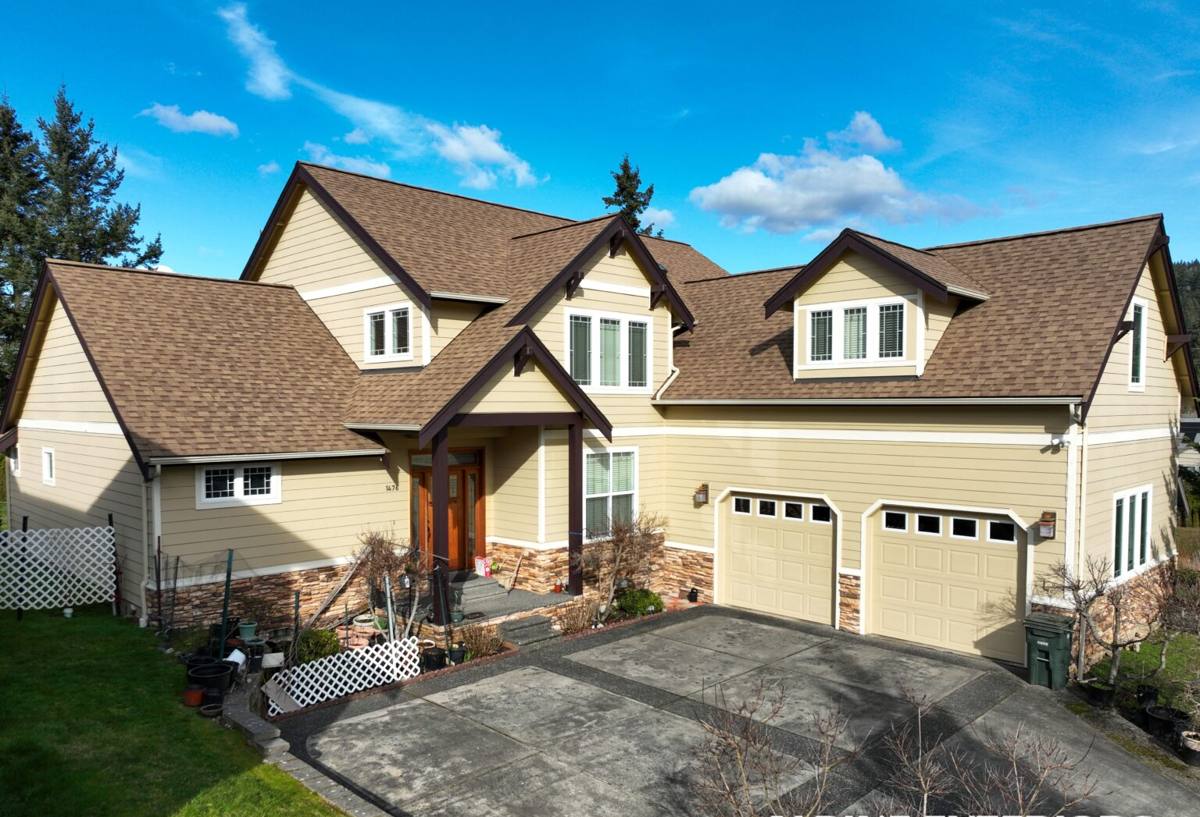
What Salt Air, Wind-Driven Rain, and Moss Do to a Roof
Salt Air Off the Bay and Harbor
Homes near Semiahmoo Bay and Drayton Harbor take a steadier dose of salt-laden air than towns set further inland, and a roof sits directly in it with no wall to shield it. Salt accelerates corrosion in exposed metal — fasteners, flashing, panel edges, ridge caps — and once corrosion starts at a cut edge or fastener hole, it works from the inside out, often well before it's visible from the ground. That's a big part of why fastener grade and panel coating matter more here than they would on a roof a few miles inland.
Wind-Driven Rain
Storms coming off the water in Blaine don't just fall straight down; wind pushes rain sideways and up under laps, ridge caps, and flashing details that a calmer climate would rarely test. A roof that sheds water fine on a still day can still take on moisture the moment wind gets involved, working it up under a lap or around a penetration that a gentler storm would never reach. That wind-driven pattern shows up more in Blaine than it does in more sheltered parts of the county, simply because there's less terrain to break the wind up before it hits the house.
A Moss Season That Runs Most of the Year
Mild temperatures and near-constant moisture give moss a long growing season here, and shaded or north-facing roof planes are usually first to show it. Moss holds water against a roofing surface long after a storm has passed, and on some materials that trapped moisture works its way into seams and fastener penetrations over time. Metal sheds moss better than most roofing materials, but it isn't immune — valleys, debris buildup, and heavily shaded slopes still need regular attention.
Why Metal Roofing Fits This Climate
Metal roofing holds up well against exactly the conditions that wear other roofing materials down fastest in Blaine. A correctly installed metal roof:
- Sheds wind-driven rain more reliably than a lapped shingle surface, when flashing and laps are detailed correctly
- Gives moss less to grip than a granulated shingle surface, since there's no porous mat for spores to take hold in
- Holds up to decades of coastal exposure without the granule loss and mat breakdown that shortens shingle life
- Sheds heavy or wind-driven rain without absorbing moisture into the roofing material itself
- Carries a service life that, for most well-installed systems, outlasts two or more asphalt shingle roof replacements
None of that happens automatically just because the material is metal. The system, the coating, and the installation details are what actually determine whether a metal roof performs the way it's supposed to in a climate like this one.
Choosing the Right Metal Roofing System
Standing Seam vs. Exposed-Fastener Panels
Standing seam panels use a concealed fastening system — the fasteners sit under raised seams where wind and rain never reach them directly, and the panels are free to expand and contract with temperature changes without stressing the fastener. Exposed-fastener panels are fastened directly through the face of the panel, which costs less upfront but leaves every fastener penetration exposed to weather and salt air from day one. Exposed fasteners also rely on rubber washers that harden and shrink over years of UV and moisture exposure, and once that seal starts to fail, that's a leak point directly through the roofing surface.
Steel vs. Aluminum
Steel panels, properly coated, hold up well across most of Whatcom County, but aluminum has a real advantage in coastal exposure — it doesn't rust, it only forms a stable oxide layer, which matters more the closer a home sits to Semiahmoo Bay or Drayton Harbor. Steel usually costs less and is plenty durable for homes set back from the water; aluminum is worth the added cost for homes taking the fullest brunt of salt air.
| System | Fastener Exposure | Salt Air Performance | Typical Lifespan |
|---|---|---|---|
| Standing seam (steel) | Concealed under seams | Strong with a quality coating | 40-60 years |
| Standing seam (aluminum) | Concealed under seams | Excellent — resists corrosion by nature | 50+ years |
| Exposed-fastener panel (steel) | Through-panel, gasketed | Moderate — fasteners are the weak point | 25-40 years |
| Asphalt shingle (for comparison) | N/A | Weak — granule and mat breakdown over time | 15-25 years |
What a Correctly Installed Metal Roof Involves Here
The panels get most of the attention when homeowners picture a metal roof, but in Blaine's climate, what's underneath and around the panels is what actually determines whether the roof performs. A correct install for this area includes:
- Full tear-off and deck inspection rather than installing over old roofing, so any hidden rot or soft decking gets caught and fixed before it's covered up
- A synthetic or self-adhered underlayment rated for the panel system, with self-adhered membrane at eaves, valleys, and penetrations where wind-driven rain is most likely to get pushed
- Corrosion-resistant fasteners and flashing matched to the panel metal, since mismatched metals in contact with each other can accelerate corrosion through galvanic reaction
- Properly lapped and sealed ridge caps, valleys, and wall flashing — the transition points where most roof leaks actually start
- Panel fastening and clip spacing that allows for thermal expansion and contraction rather than fixing panels rigidly in place
- Balanced intake and exhaust ventilation, so moisture from inside the home doesn't condense against the underside of the roof deck
- Ice-and-water protection or additional underlayment at eaves and valleys where the roof's slope and exposure call for it
Skip any one of those and the roof can still look right for a while. The problems that follow — a slow leak at a valley, corrosion starting at a fastener, panels working loose from thermal movement — usually take a season or two of Blaine weather to show up.
How Our Process Works
We start with a roof and attic inspection to see what's actually there — deck condition, existing ventilation, how close the home sits to the water, and which roof planes take the most wind and shade through the day. From there we go over panel system and metal options that fit the budget and the home's actual exposure, rather than defaulting to one product for every job.
Permitting in Blaine and the rest of Whatcom County generally follows standard structural and building code requirements for a full roof replacement, and we handle that as part of the job rather than leaving it for the homeowner to sort out. Once permitted, the work follows the sequence above: tear-off and deck inspection first, then underlayment, then panels, flashing, and ridge work, finished with a walkthrough of what the specific system you chose needs going forward — which for most metal roofs is very little, but not nothing.
What Your Metal Roof Still Needs From You
A well-installed metal roof in the right system needs less upkeep than most other roofing materials, but it isn't maintenance-free in this climate. Worth keeping in mind:
- Clear debris out of valleys and off any low-slope sections a couple times a year, since trapped organic material holds moisture against the panel
- Rinse off salt residue and general grime periodically if the home sits close to the bay or harbor
- Check exposed-fastener systems, if that's what's installed, every year or two for washer wear, especially heading into the wet season
- Keep gutters clear so water isn't backing up under eave flashing during heavy rain
- Trim back overhanging branches that hold moisture against the roof or drop debris into valleys
- Have any scratched or damaged coating touched up promptly — bare metal exposed to salt air corrodes faster than most homeowners expect
Why It Matters That We Already Work Blaine
A crew that mostly roofs further inland can still install a metal roof competently, but a Blaine job has variables that don't come up as often elsewhere in Whatcom County — corrosion-grade fastener and flashing requirements from sustained salt exposure, wind-driven rain that tests laps and penetrations harder than a sheltered site would, and a moss season that runs longer here than in drier parts of the county. Working this area regularly means we're not guessing at those requirements on your roof. We've seen which panel systems and coatings actually hold up against Blaine's specific mix of salt air, wind, and moisture, and which details are worth the extra time rather than an upsell.
That familiarity also shows up in the smaller judgment calls — which roof planes need extra attention for wind exposure on a particular lot, or being straightforward about what a metal roof here realistically needs to last versus what's just an added cost.
Get a Straight Answer About Your Roof
Whether you're replacing a roof that's reached the end of its life, weighing metal against another material, or want an honest read on what a metal roof would take on your Blaine home, we're happy to walk the roof with you and lay out the options plainly. Reach out below for a free, no-pressure estimate.